Artwork
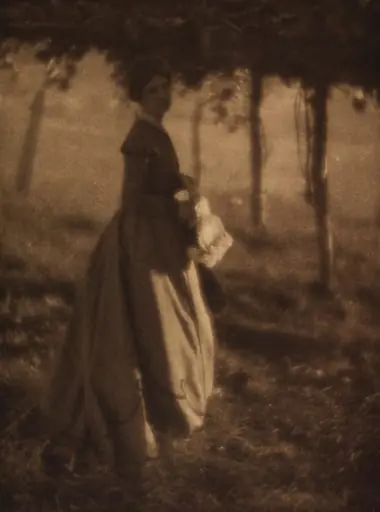
The Orchard
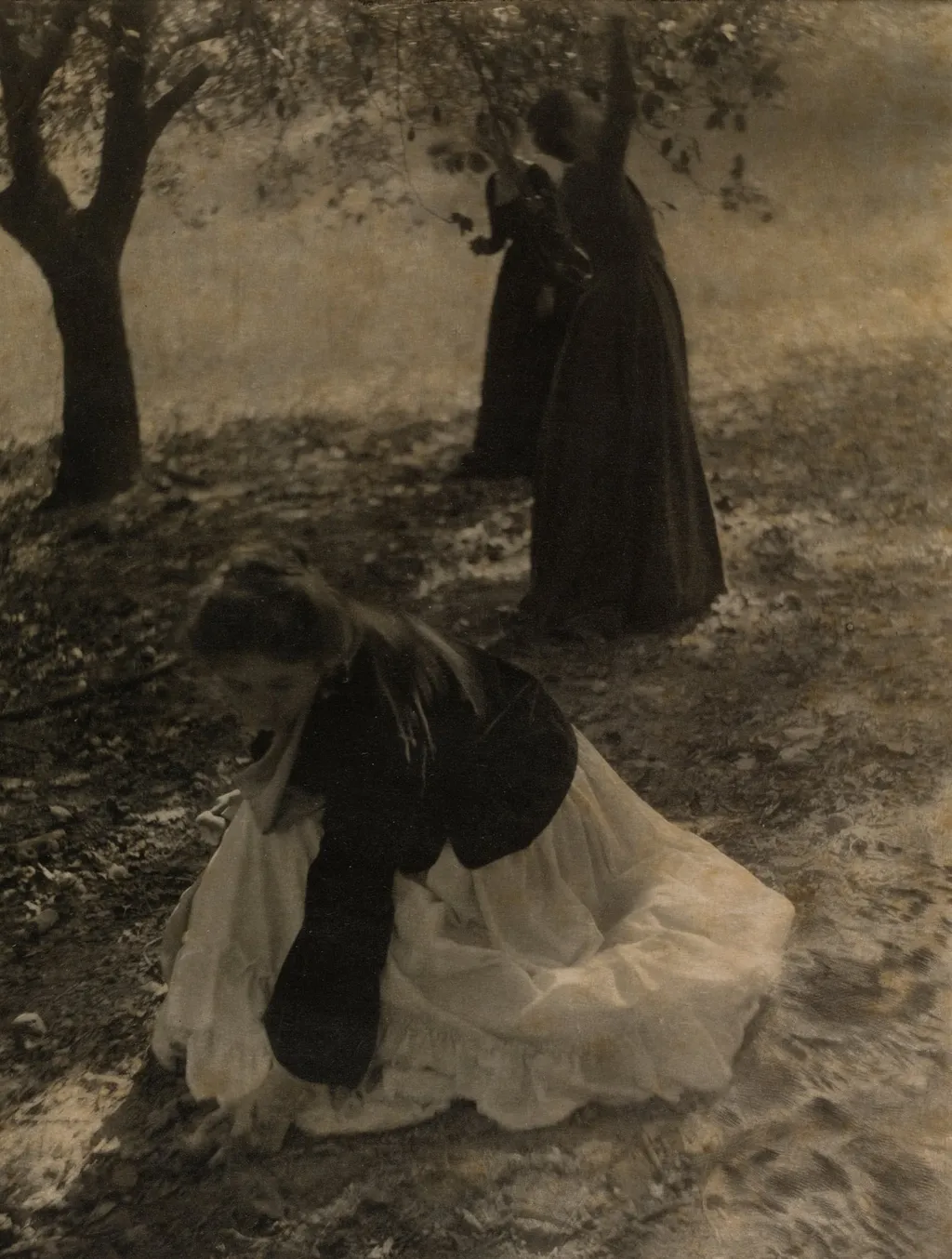
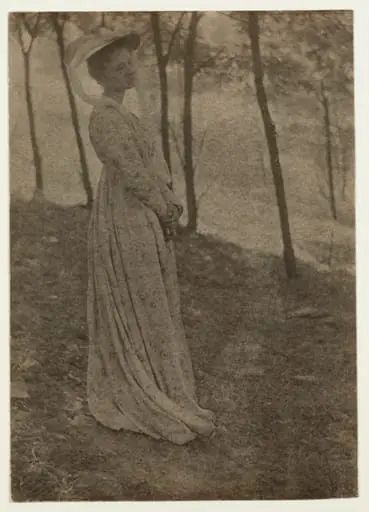
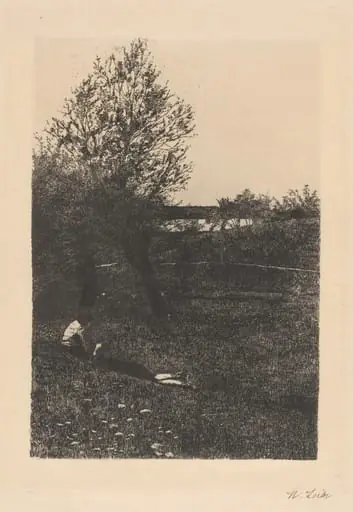
The Orchard is a photography by Clarence H. White. It dates from 1902 and is held in the collection of the Cleveland Museum of Art.
About this work
Overview
The composition relies on subtle tonal contrasts to evoke introspection, characteristic of White’s pictorialist approach to photography as an art form.
Taken in 1902, The Orchard is a gelatin silver print by Clarence H. White, now in the collection of The Cleveland Museum of Art. The image captures a solitary figure seated on a bench beneath winter-bare trees, rendered with a quiet stillness that emphasizes mood over narrative. The composition relies on subtle tonal contrasts to evoke introspection, characteristic of White’s pictorialist approach to photography as an art form.
Subject & Meaning
A single figure, wrapped in loose fabric, sits motionless on a bench, legs crossed and hands resting in the lap. The anonymity of the person invites contemplation rather than identification. The barren trees and muted ground suggest solitude and the passage of time, reinforcing a meditative atmosphere. The scene avoids explicit storytelling, instead offering a visual pause, aligned with the symbolic aims of early 20th-century pictorialism.
Technique & Style
White employed soft focus and careful lighting to blur sharp edges, enhancing the image’s atmospheric quality. The interplay of light and shadow—chiaroscuro—creates depth without harsh contrast, guiding the viewer’s eye toward the seated figure. The print’s tonal range, from deep blacks to delicate grays, was achieved through meticulous darkroom work, reflecting White’s commitment to photography as a handcrafted medium.
History & Provenance
Created during White’s early career, The Orchard emerged from his exploration of natural settings as subjects for artistic expression. It entered The Cleveland Museum of Art’s collection in the 20th century, where it remains part of their holdings of American pictorialist photography. The work’s preservation reflects its significance in documenting photography’s transition from documentation to fine art.
Context
In the early 1900s, photographers like White sought to elevate photography beyond mere recording, aligning it with painting and printmaking. The Orchard reflects this movement, drawing from Romantic and Symbolist traditions that valued emotion and atmosphere. White’s work was part of a broader effort to establish photography’s legitimacy within the fine arts, particularly through controlled composition and tonal nuance.
Legacy
The Orchard exemplifies White’s influence on American pictorialism and his role in shaping photography’s artistic identity. Its quiet aesthetic continues to inform approaches to photographic composition that prioritize mood and texture. The work remains a reference point in discussions about the medium’s capacity for emotional resonance, separate from documentary function.
Artist & collection

Artist
Clarence Hudson White was an American photographer, teacher and a founding member of the Photo-Secession movement.