Artwork
A Woman of the Sabines
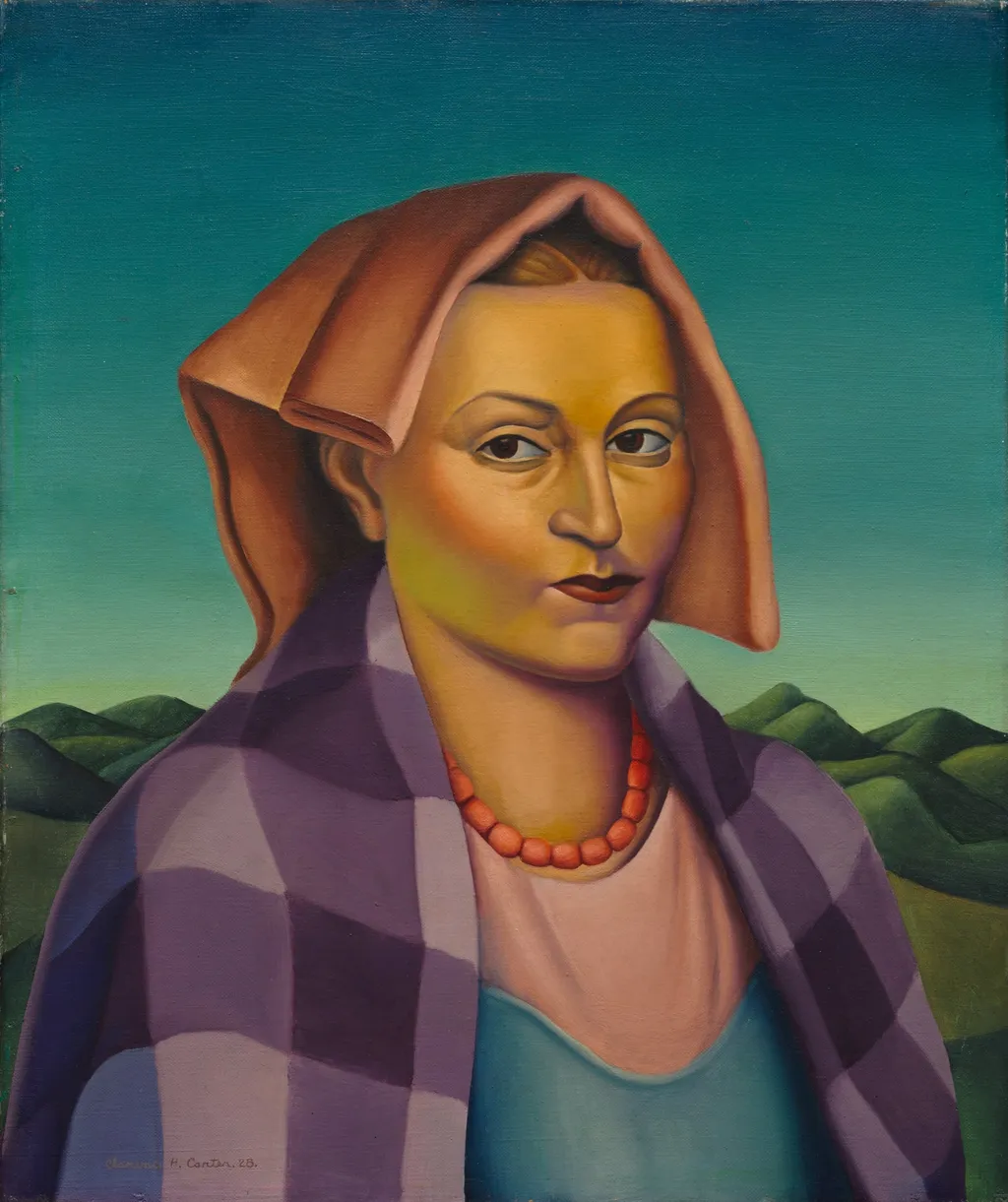
A Woman of the Sabines is an unspecified painting by the American Impressionist artist Clarence Holbrook Carter. It dates from 1928 and is held in the collection of the Cleveland Museum of Art.
About this work
Overview
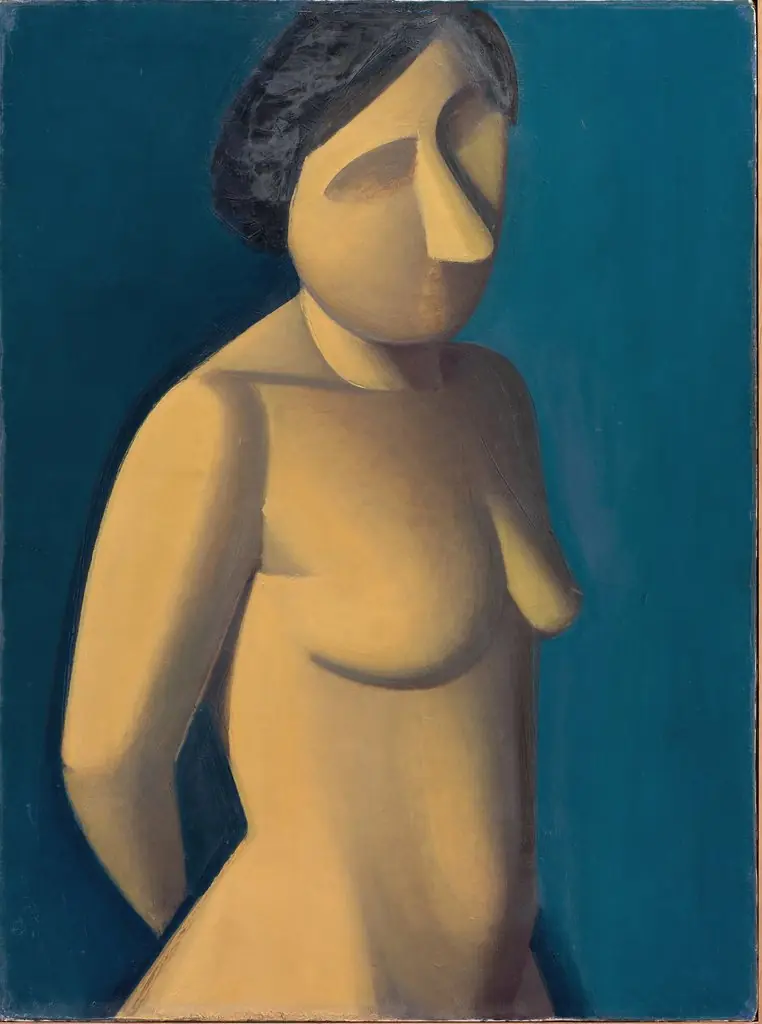
Painted in 1928 by Clarence Holbrook Carter, A Woman of the Sabines is a portrait that blends symbolic abstraction with a quiet, introspective realism. The work resides in the collection of The Cleveland Museum of Art, where it stands as an early example of Carter’s exploration of mythic and archetypal themes through the human figure.
Subject & Meaning
The subject is a solitary female figure, rendered with elongated proportions and a still, statuesque presence. Though titled after the legendary Sabine women of Roman antiquity, the painting does not depict a narrative scene. Instead, it evokes timeless qualities of endurance and quiet dignity, using classical allusion to frame a modern psychological portrait.
Technique & Style
Carter employed a muted palette and smooth, controlled brushwork to create a sense of stillness. Forms are simplified yet precise, with attention to the contours of the figure and the subtle modeling of light across skin and fabric. The background is neutral, drawing focus to the figure’s composed posture and enigmatic expression.
History & Provenance
Completed in 1928, the painting entered The Cleveland Museum of Art’s collection shortly after its creation. It was among Carter’s early works to gain institutional recognition, reflecting his growing interest in merging modernist formal concerns with mythological references during the interwar period.
Context
Created during a time when American artists were redefining portraiture beyond literal representation, the painting reflects broader interests in symbolism and psychological depth. Carter, influenced by European modernism and American regionalism, sought to infuse everyday subjects with universal resonance, distancing his work from pure realism.
Legacy
A Woman of the Sabines remains a key example of Carter’s early synthesis of classical reference and modernist simplification. While not widely reproduced, it is frequently cited in studies of American interwar painting for its quiet innovation and its role in expanding the boundaries of portraiture in the United States.
Artist & collection
Artist
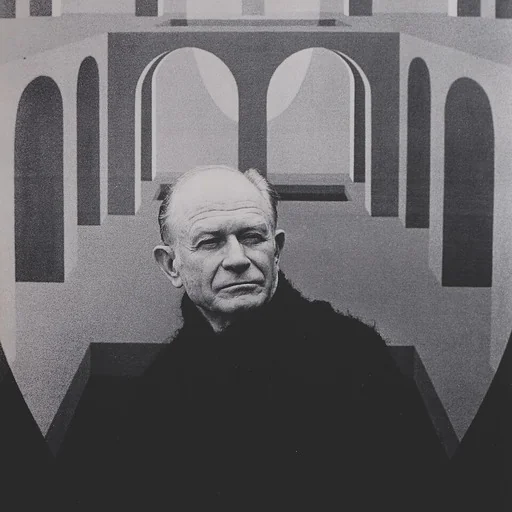
Clarence Holbrook Carter, known to friends as "Cartie," was an American artist who worked primarily in oil and watercolor. He is considered one of Cleveland’s most renowned painters.