Artwork
Coast Scene with Europa and the Bull
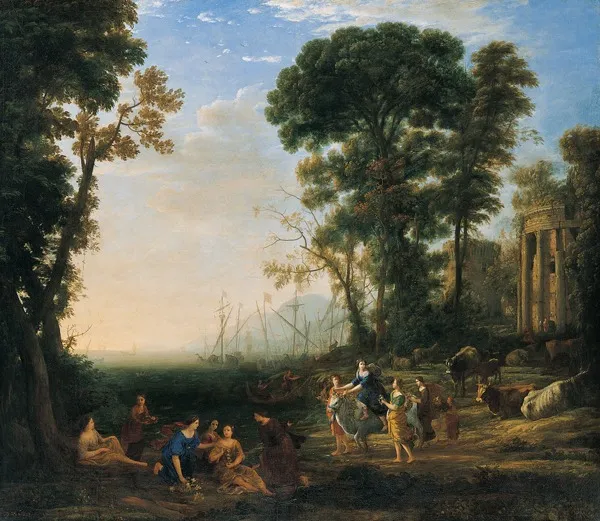
Coast Scene with Europa and the Bull is an oil painting by the Barbizon school artist Claude Lorrain. It dates from 1634 and is held in the collection of the Kimbell Art Museum.
About this work
Overview
Painted in 1634, this oil-on-canvas work by Claude Lorrain presents a coastal landscape infused with mythological narrative.
Painted in 1634, this oil-on-canvas work by Claude Lorrain presents a coastal landscape infused with mythological narrative. Though rooted in the Baroque tradition, the painting emphasizes atmospheric harmony over dramatic intensity. Lorrain, a French artist who lived and worked primarily in Rome, favored serene natural settings as the foundation for his compositions, often integrating classical stories into them with subtle restraint.
Subject & Meaning
The scene illustrates the myth of Europa, a Phoenician princess abducted by Zeus in the form of a gentle bull. Figures gathered on the shore observe the moment of departure, their presence grounding the divine event in a human context. Lorrain does not emphasize action or emotion; instead, the narrative unfolds quietly within the landscape, inviting contemplation rather than spectacle, aligning with classical ideals of restraint and balance.
Technique & Style
Lorrain employed thin, layered oil glazes to achieve luminous atmospheric effects, particularly in the sky and water. His brushwork is precise yet unobtrusive, allowing light to modulate the scene’s tonal range from warm foregrounds to cool, hazy distances. The composition is structured with careful linear perspective, guiding the viewer’s eye toward the horizon, where land, sea, and sky merge in a harmonious gradient.
History & Provenance
The painting entered the Kimbell Art Museum’s collection in the 20th century, having passed through several private European collections since its creation. It was likely commissioned by a patron familiar with classical literature and Italianate aesthetics. Its survival in good condition reflects its sustained appreciation among collectors who valued Lorrain’s poetic landscapes over more overtly dramatic narratives of his contemporaries.
Context
In early 17th-century Italy, landscape painting was gaining status as an independent genre, moving beyond mere background for religious or mythological scenes. Lorrain helped define this shift by making nature the primary subject, with figures scaled to enhance spatial depth rather than dominate it. His work resonated with humanist ideals, blending classical myth with observed naturalism in a way that influenced generations of landscape painters.
Legacy
Lorrain’s integration of myth into tranquil landscapes became a model for later artists across Europe, particularly in England and France. His use of light and composition informed the development of Romantic and even early Impressionist approaches to nature. Though not part of the Barbizon school, his emphasis on mood and atmosphere prefigured its concerns, establishing a quiet, enduring tradition in landscape painting that valued serenity over spectacle.
Artist & collection
Artist
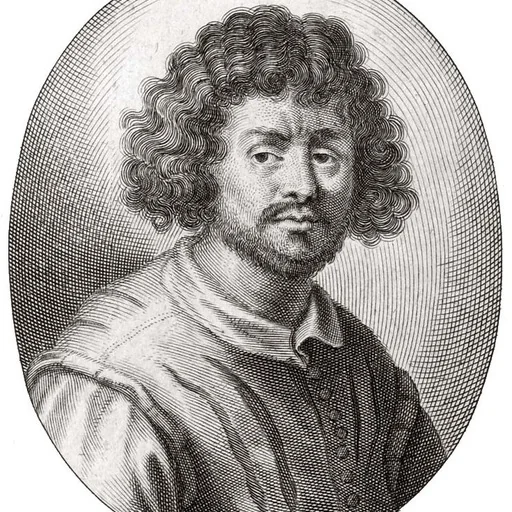
Claude Lorrain (French: ; born Claude Gellée , called le Lorrain in French; traditionally just Claude in English; c.

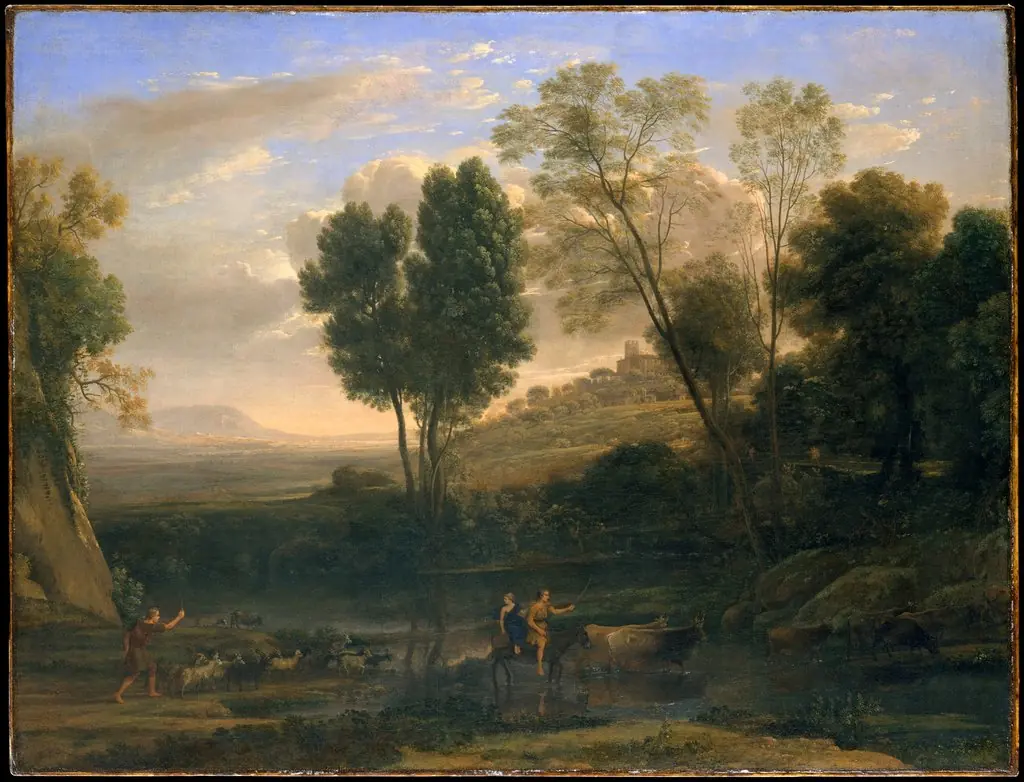
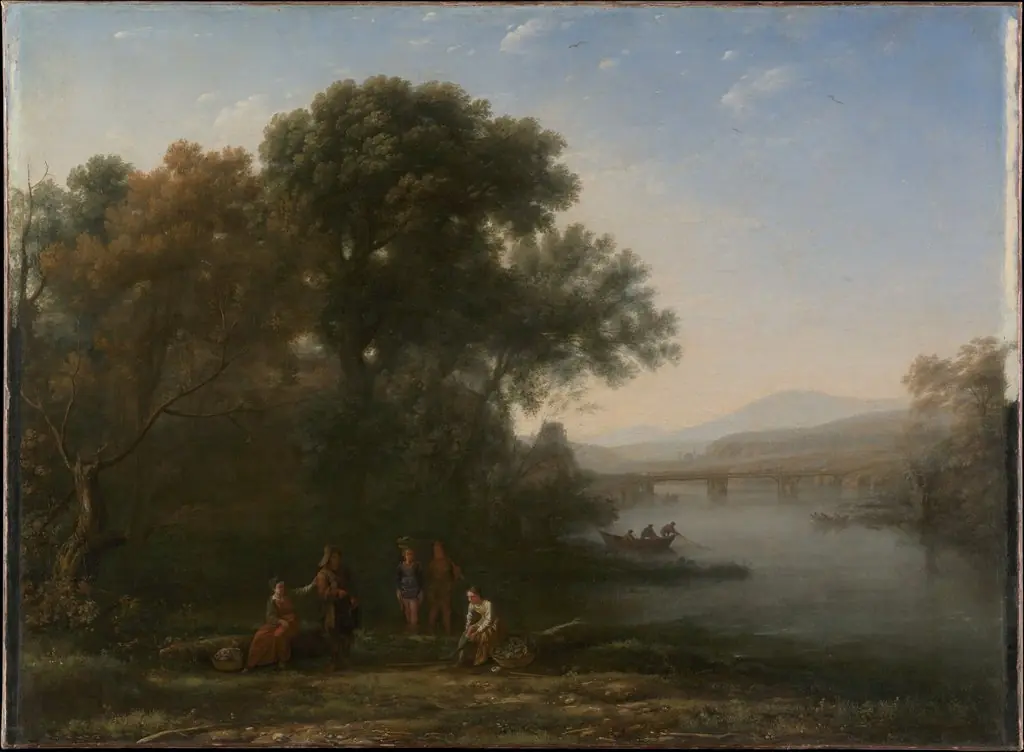
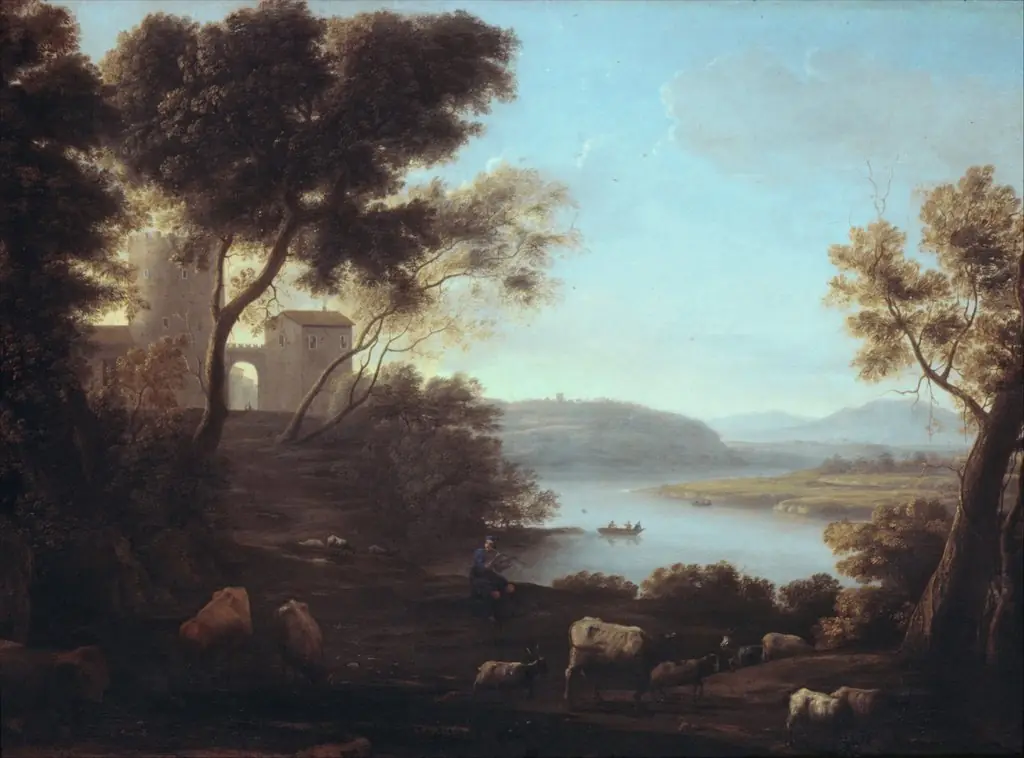
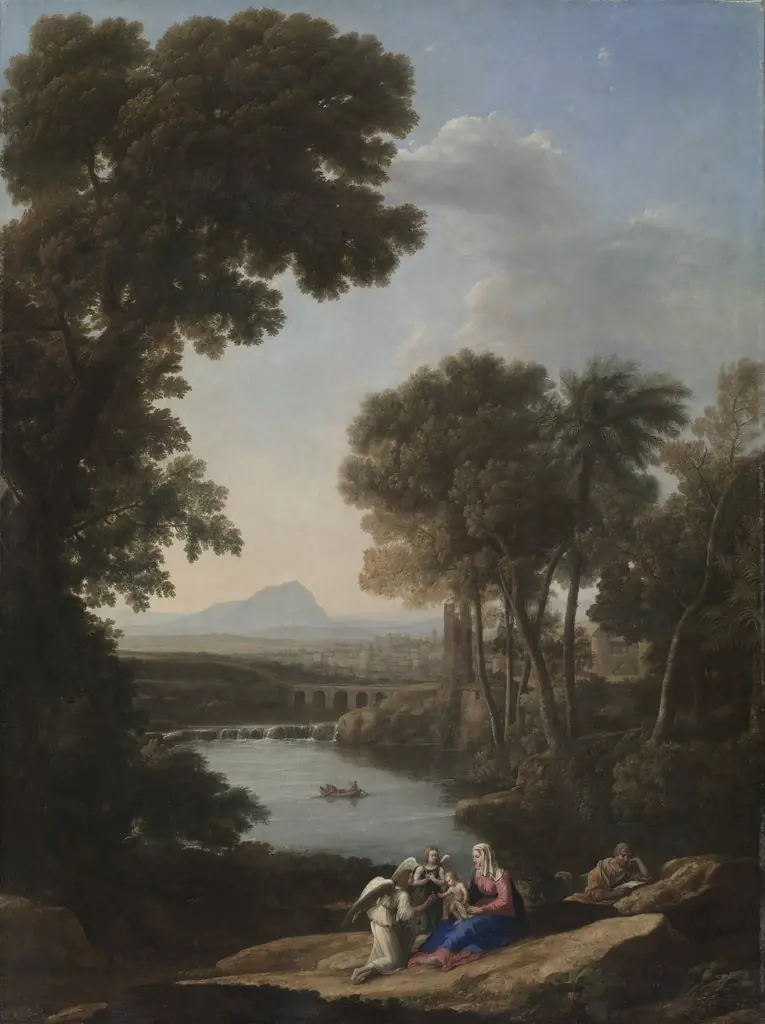
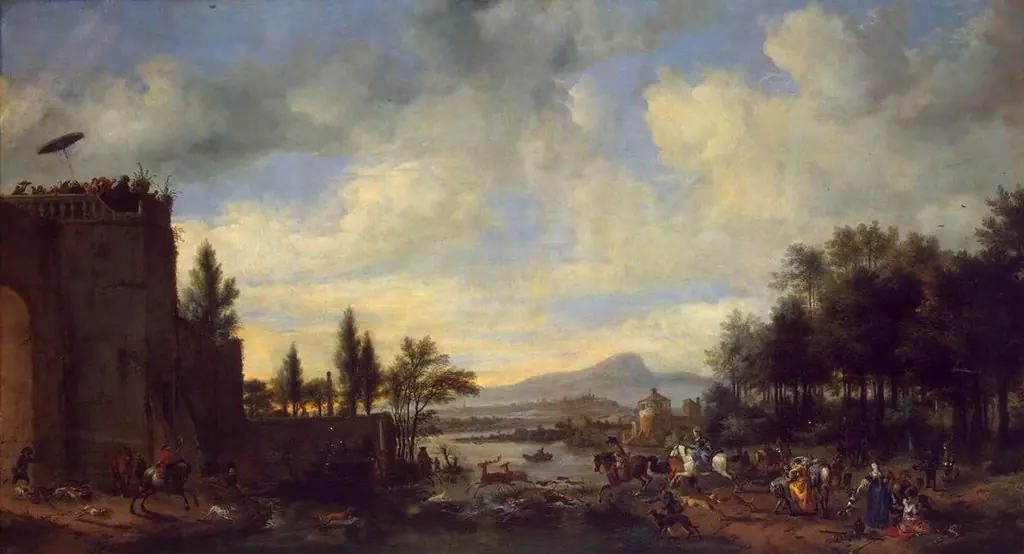 Deer Hunt
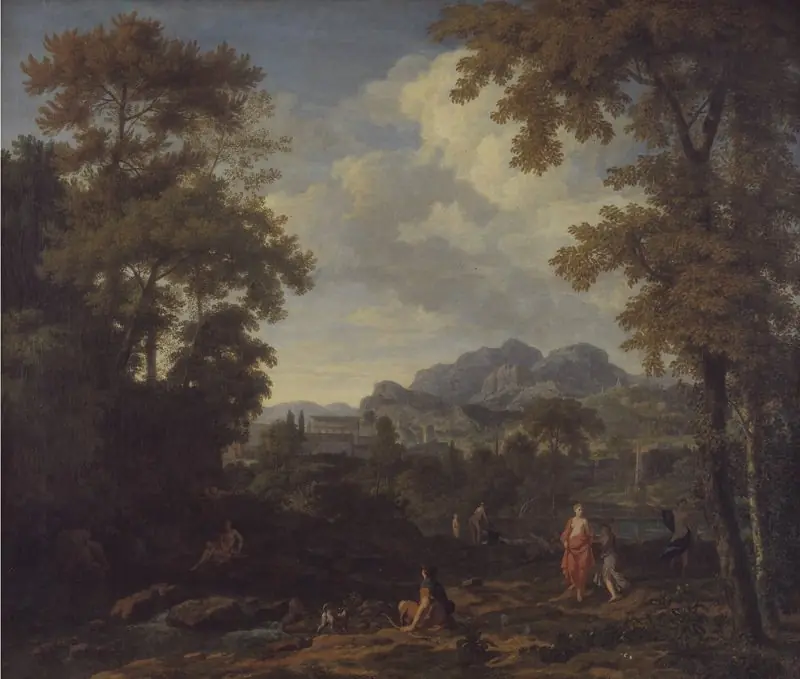 Classical Landscape with Diana (?) and her Nymphs
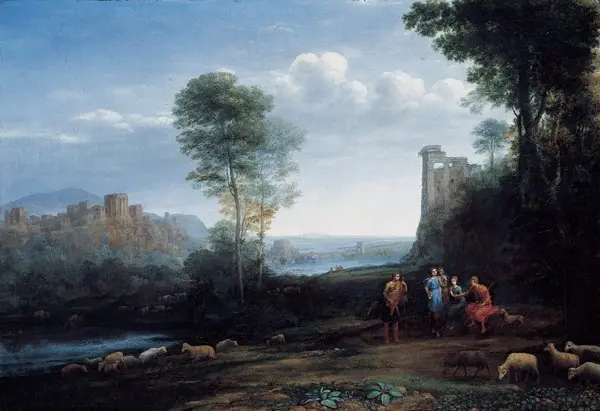 Pastoral Landscape
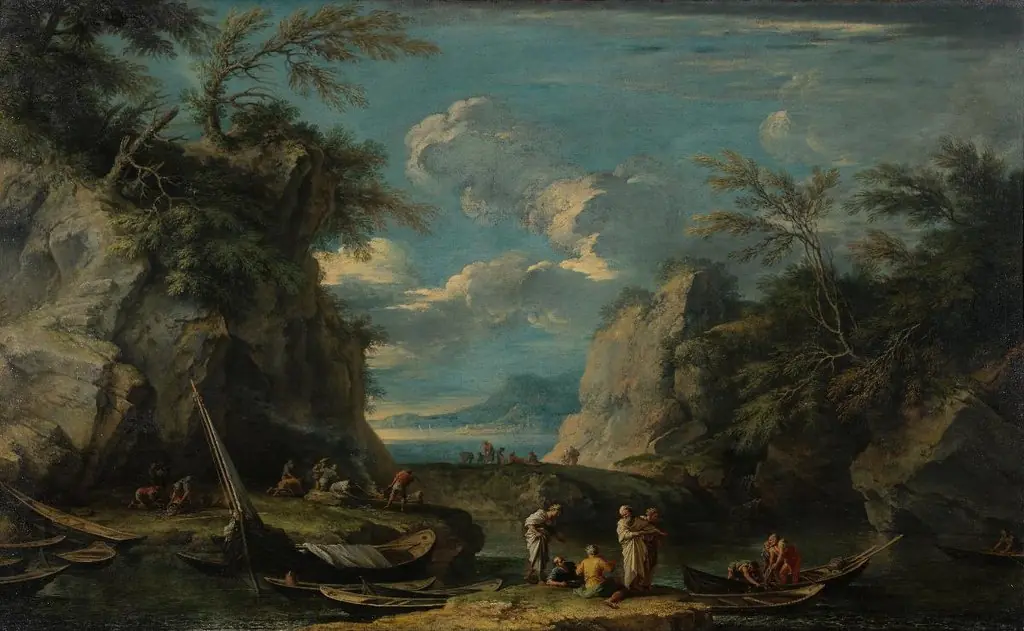 Paesaggio con Pitagora e pescatori
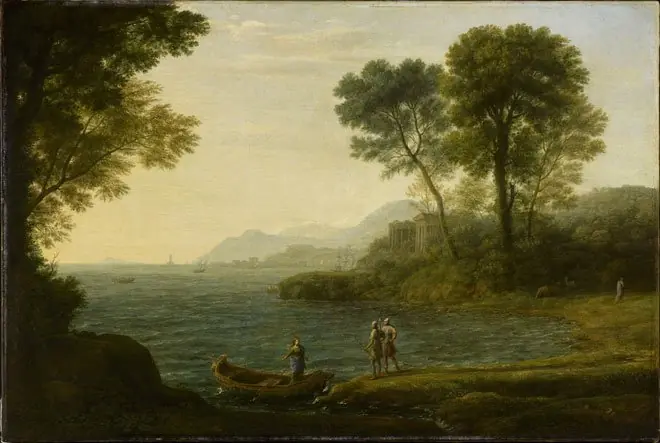 Marine avec l'embarquement de Carlo et Ubaldo
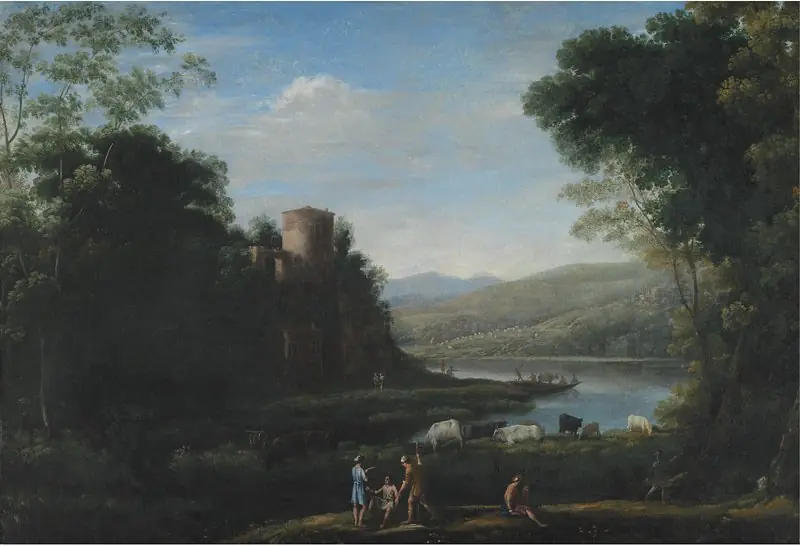 River Landscape with Herdsmen
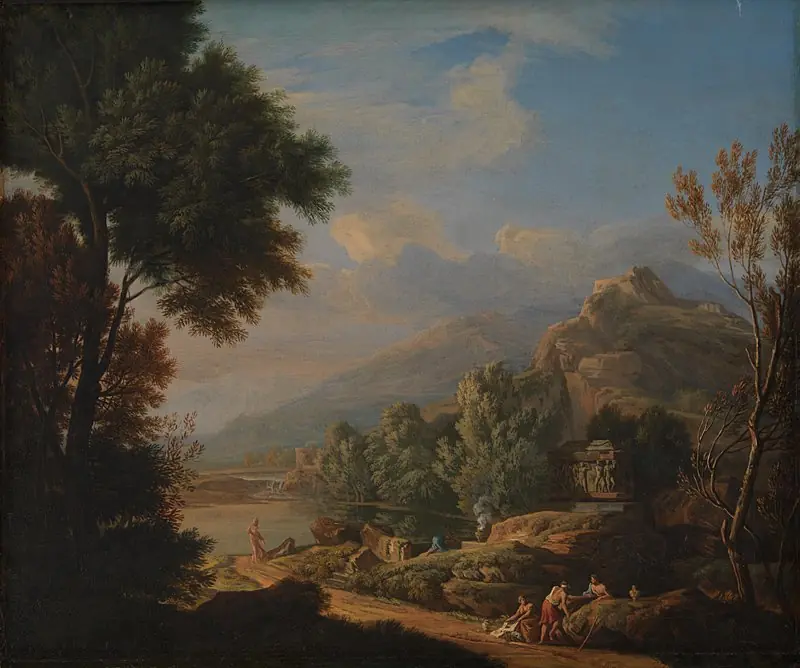 Arcadian Landscape
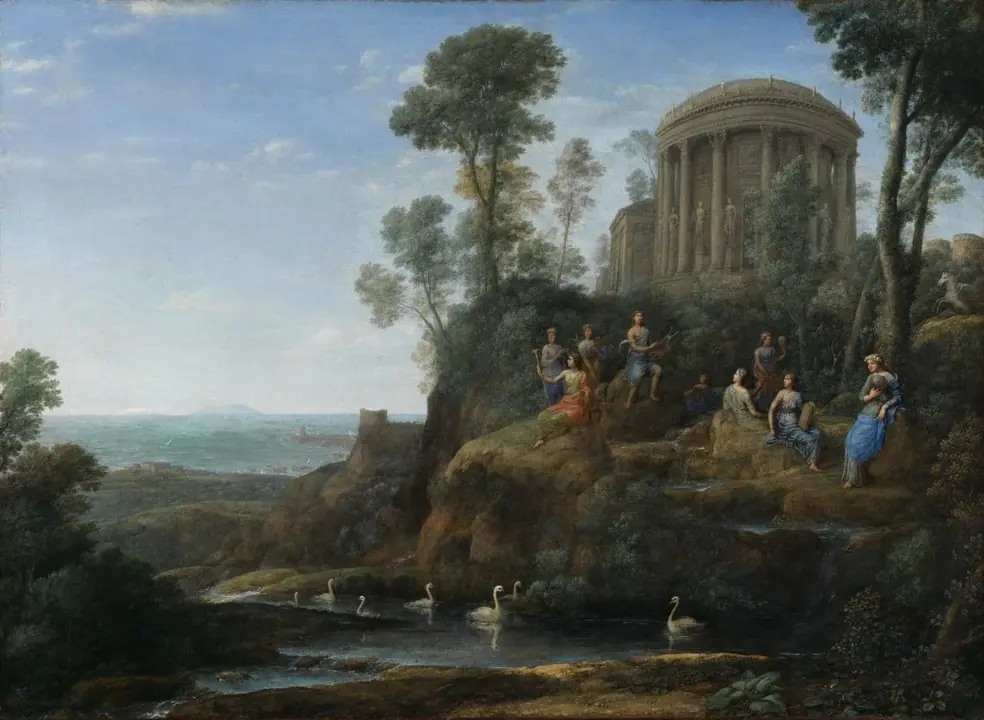 Apollo and the Muses on Mount Helicon
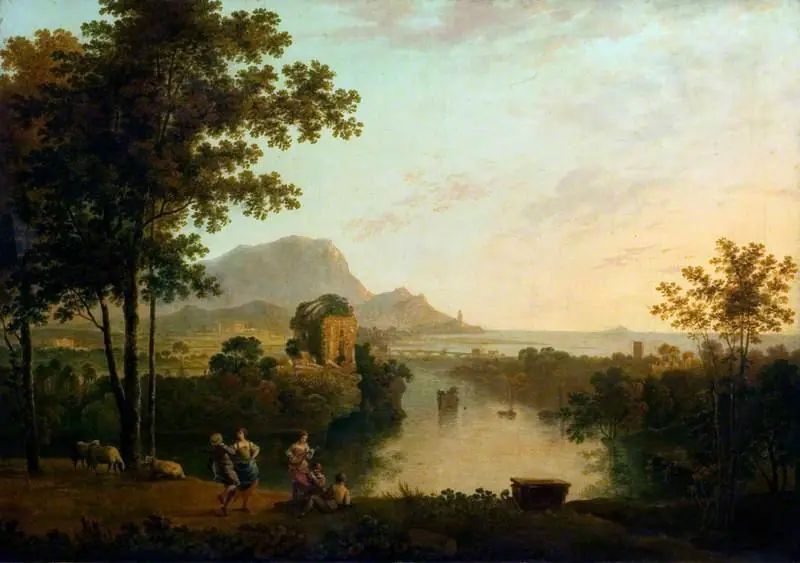 Landscape Composition: River Mouth with Peasants Dancing
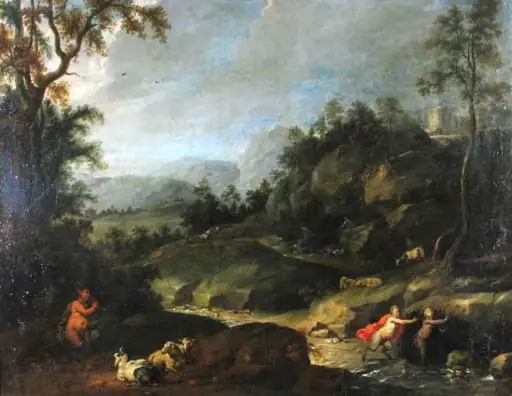 Nimfa Syrinx urmărită de satir
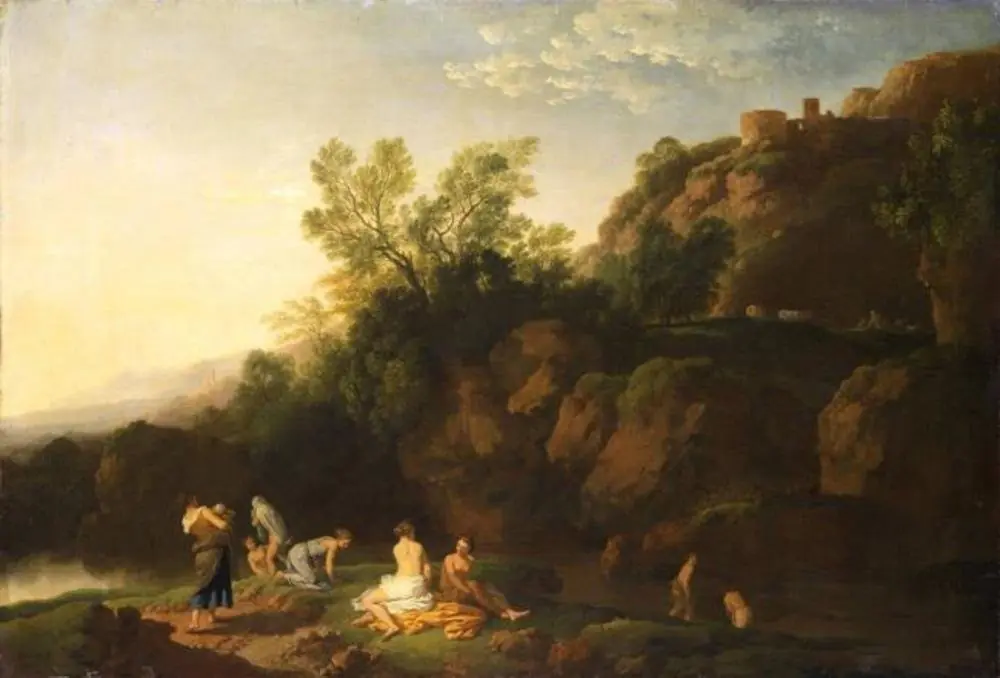 Southern landscape with bathing women
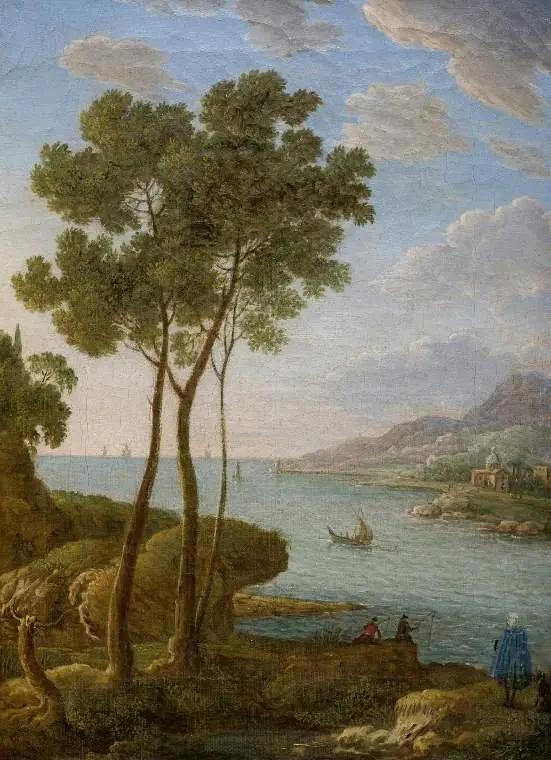 Coast Scene