Artwork
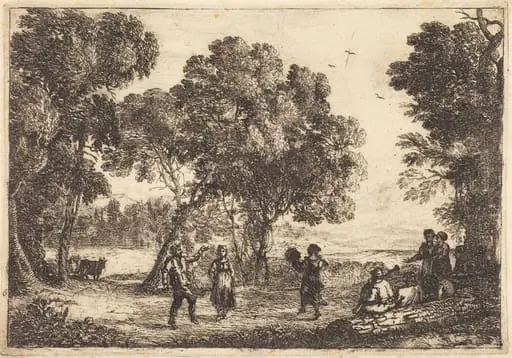
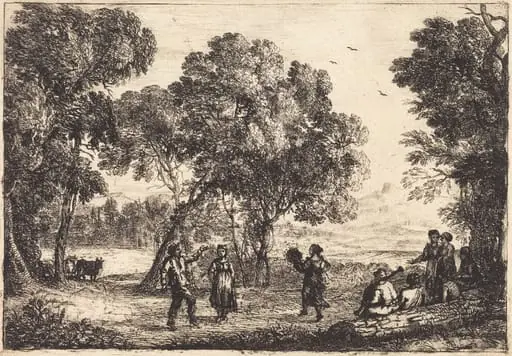
Landscape with a Country Dance (Small Plate)
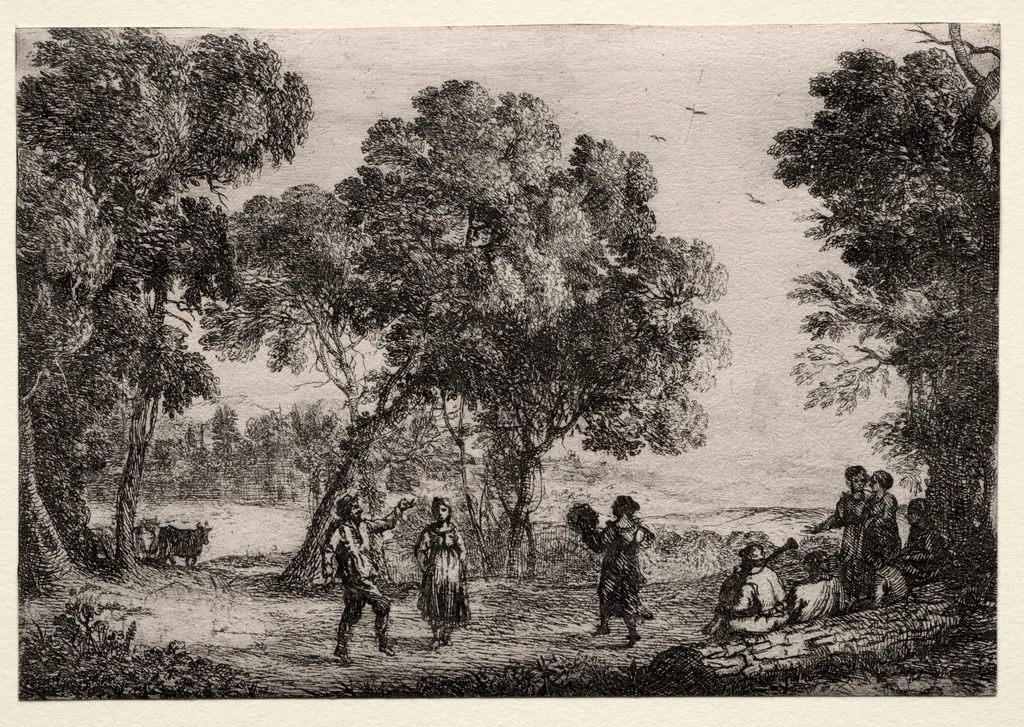
Landscape with a Country Dance (Small Plate) is a print by the Baroque artist Claude Lorrain. It dates from 1637 and is held in the collection of the Cleveland Museum of Art.
About this work
Overview
Created around 1637, this small copperplate print by Claude Lorrain captures a rural dance scene in a landscape setting. Though primarily known as a painter, Lorrain also produced etchings that extended his compositional vision. The work belongs to a series of prints derived from his drawings, intended to disseminate his idealized natural scenes to a broader audience across Europe.
Subject & Meaning
A group of peasants engages in a communal dance beneath a large tree, surrounded by onlookers and animals. The scene evokes a quiet celebration of rural life, neither idealized nor satirical. Lorrain’s inclusion of human figures within the landscape serves not as narrative climax but as a subtle humanizing element, anchoring the natural world in quiet, everyday ritual.
Technique & Style
Lorrain employed fine, controlled etching lines to suggest texture and depth, with delicate hatching modeling the forms of trees, figures, and terrain.
Lorrain employed fine, controlled etching lines to suggest texture and depth, with delicate hatching modeling the forms of trees, figures, and terrain. Light falls gently across the scene, creating soft contrasts that guide the eye from foreground dancers to distant hills. The composition balances horizontal bands of earth, sky, and foliage, characteristic of his structured yet atmospheric approach.
History & Provenance
The print was made during Lorrain’s mature period in Rome, where he had settled after arriving in Italy as a youth. It likely circulated among collectors and artists, serving as both artistic reference and decorative object. Surviving impressions are rare, with most held in institutional collections, reflecting its limited initial print run and enduring scholarly interest.
Context
In 17th-century Italy, landscape was gaining status as an independent genre, moving beyond mere backdrop for religious or mythological scenes. Lorrain’s prints contributed to this shift, offering viewers a contemplative vision of nature infused with human presence. His work aligned with broader European tastes for harmonious, poetic scenery over dramatic or theatrical subjects.
Legacy
Lorrain’s landscape prints influenced generations of artists, particularly in England, where his compositions shaped the aesthetic of topographical drawing and Romantic landscape painting. Though less celebrated than his oil paintings, these small plates preserved his compositional principles and helped standardize the idea of landscape as a vehicle for quiet, enduring beauty.
Artist & collection
Artist
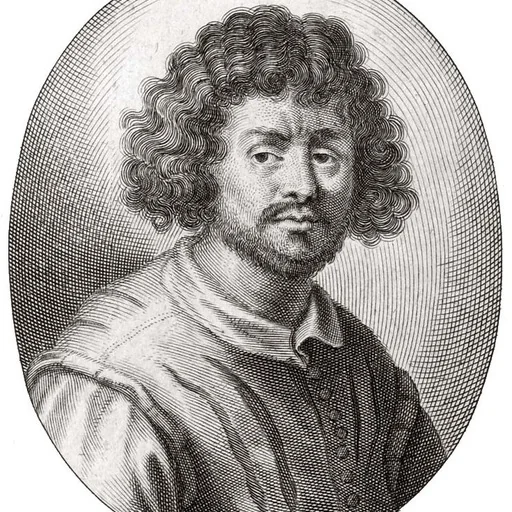
Claude Lorrain (French: ; born Claude Gellée , called le Lorrain in French; traditionally just Claude in English; c.

 Dance Under the Trees
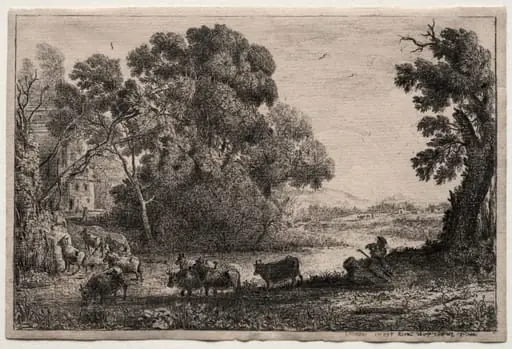 The Cowherder
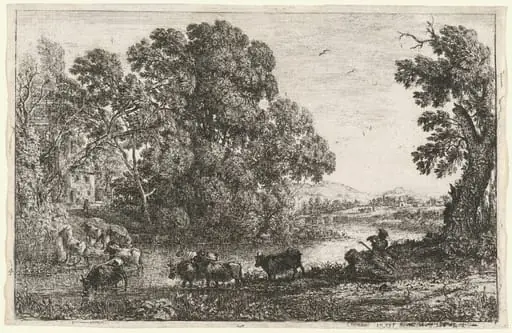 The Cowherd (Le bouvier)
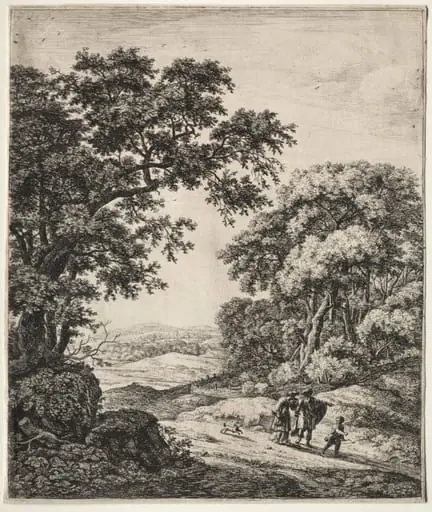 Six large upright landscapes with scenes from the Old Testament: Abraham Dismissing Hagar and Ishmael
 Six large upright landscapes with scenes from the Old Testament
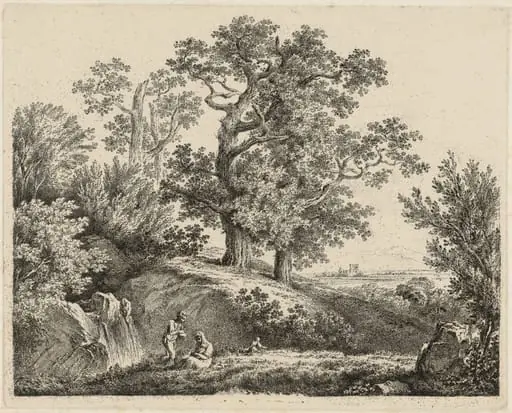 Landscape with a Waterfall and a Resting Family
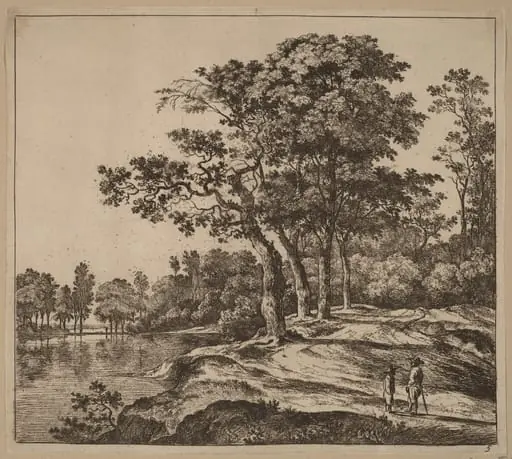 Landscape with Four Trees
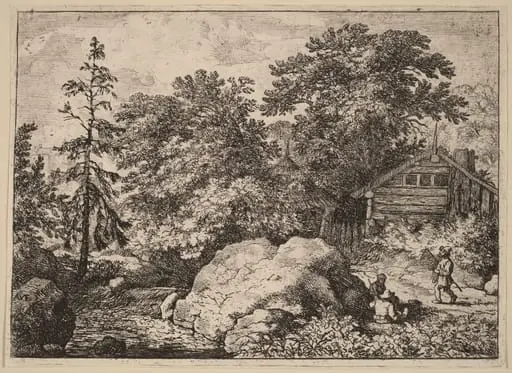 The Knoll
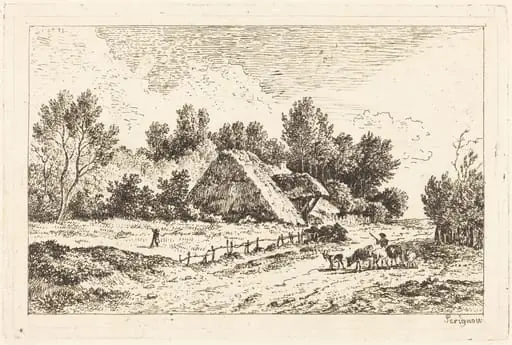 A Low Cottage with a Herdsman Leading His Flock
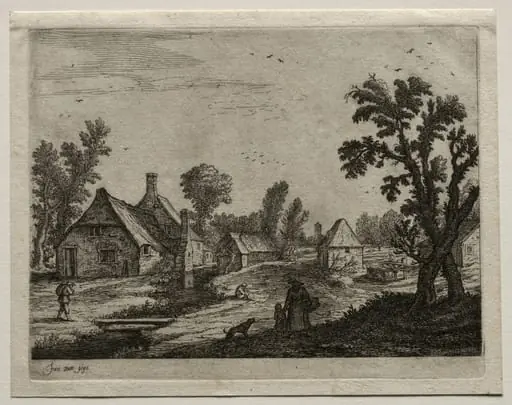 The Plank over the Stream
 The Country Dance (Small Plate) (La danse sous les arbres)
 The Cowherd