Artwork
Dance Under the Trees
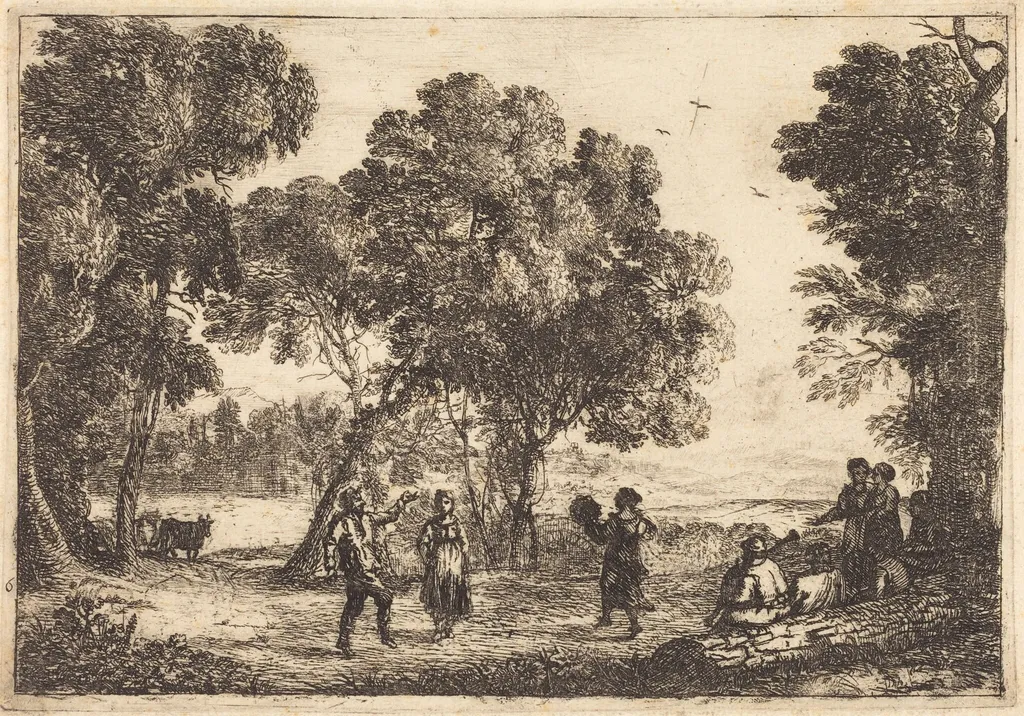
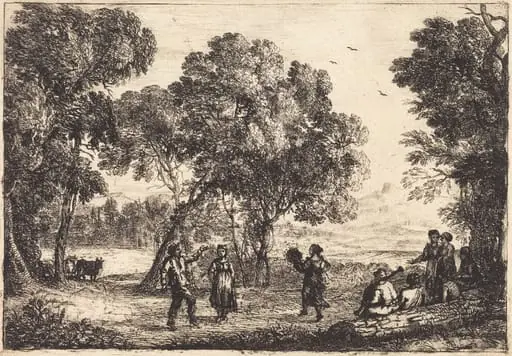
Dance Under the Trees is an ink print by the Baroque artist Claude Lorrain. It dates from 1637 and is held in the collection of the National Gallery of Art.
About this work
Overview
Dance Under the Trees is an etching in black on laid paper, created by Claude Lorrain around 1637. This print captures a serene outdoor gathering, blending natural and human elements within a wooded landscape.
Subject & Meaning
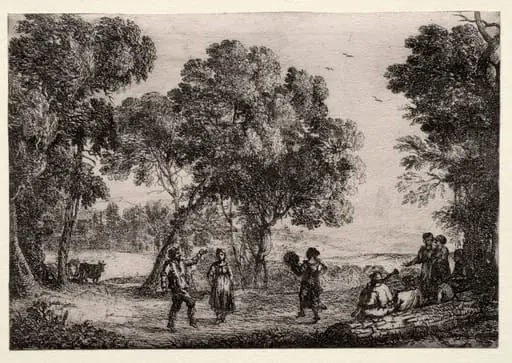
The etching portrays a group of people dancing and relaxing beneath trees, near a river, with cows grazing in the distance. The scene incorporates small figures, a characteristic of Lorrain's work, which often drew upon biblical or classical themes to enrich his landscapes.
Technique & Style
Lorrain employed the etching technique to create the print, scratching designs into a metal plate before inking and printing it on laid paper. The result is a nuanced black-and-white composition, typical of Lorrain's Baroque style, emphasizing harmony between figures and landscape.
History & Provenance
Created during Lorrain's time in Italy, where he spent most of his career, Dance Under the Trees reflects his innovative approach to landscape painting and etching, notable for integrating small, classically inspired figures into natural settings.
Context
This work is part of Lorrain's broader contribution to elevating landscape art in the Baroque period, moving beyond mere background to a central theme, enriched by subtle human presence and classical allusions.
Legacy
Dance Under the Trees contributes to Lorrain's legacy as a pioneer in landscape art, influencing subsequent generations with his balanced integration of natural beauty and classical motifs in both painting and etching.
Own this work as a print
Artist & collection
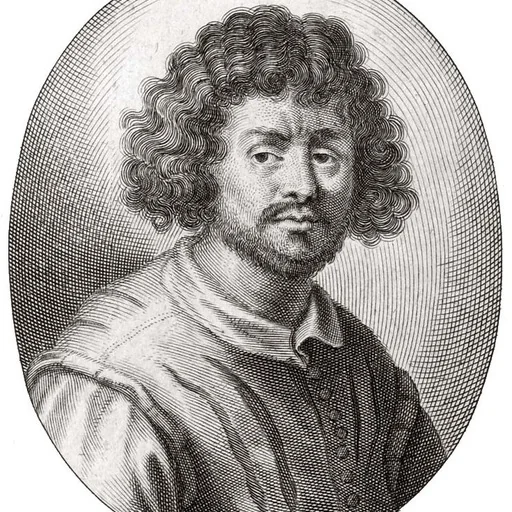
Artist
Claude Lorrain (French: ; born Claude Gellée , called le Lorrain in French; traditionally just Claude in English; c.

 The Country Dance (Small Plate) (La danse sous les arbres)
 Landscape with a Country Dance (Small Plate)
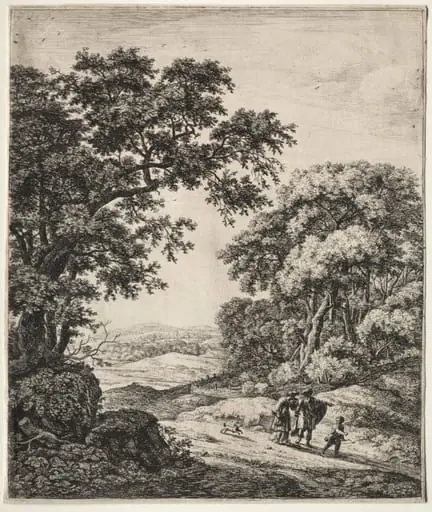 Six large upright landscapes with scenes from the Old Testament: Abraham Dismissing Hagar and Ishmael
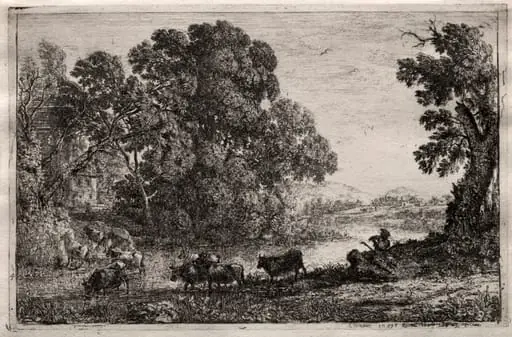 The Cowherd
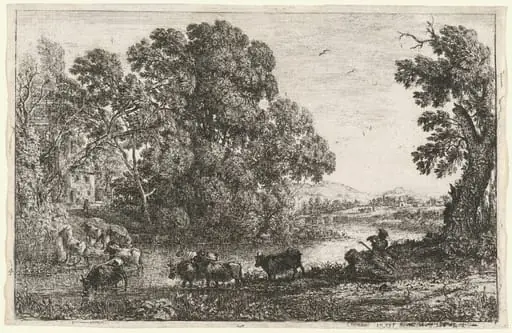 The Cowherd (Le bouvier)
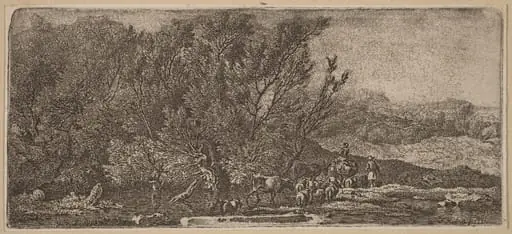 Shepherds with Their Herd Fording a Stream
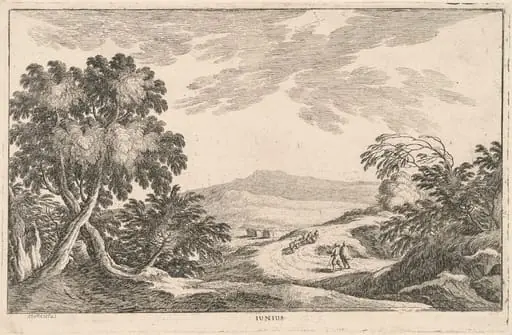 Iunius (June)
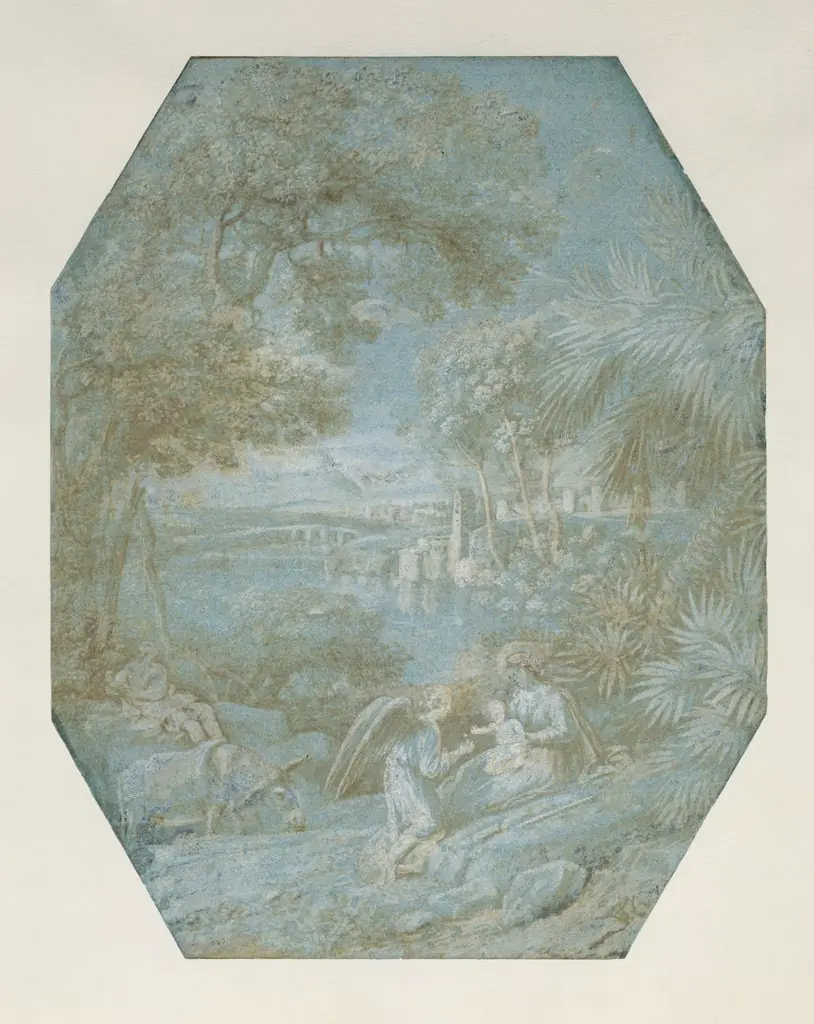
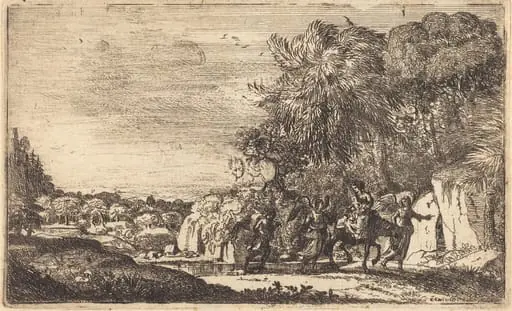 The Flight into Egypt (La fuite en Egypte)
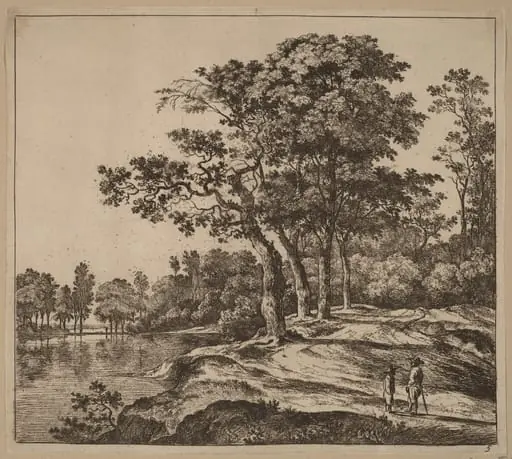 Landscape with Four Trees
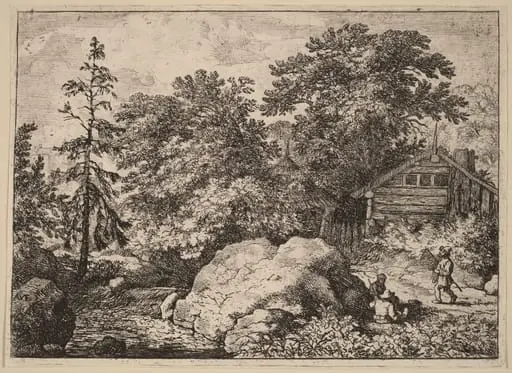 The Knoll
 Village Kermesse with Peasants Feasting Under a Pergola
 Edge of a Wood with Peasants Going to Market