Artwork
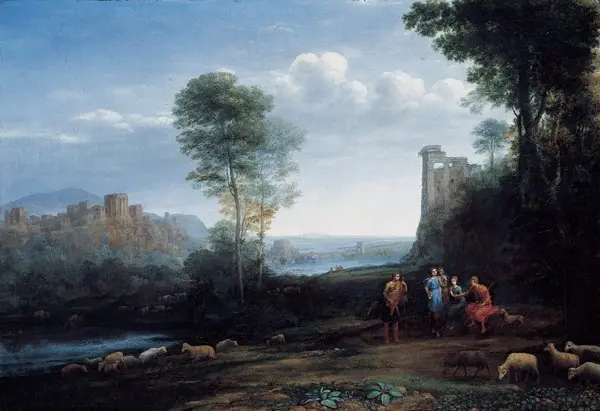
Landscape with Christ on the Road to Emmaus
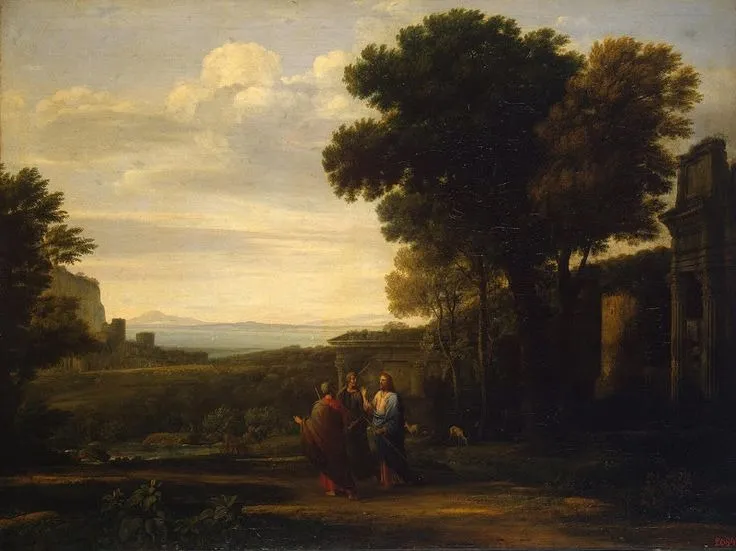
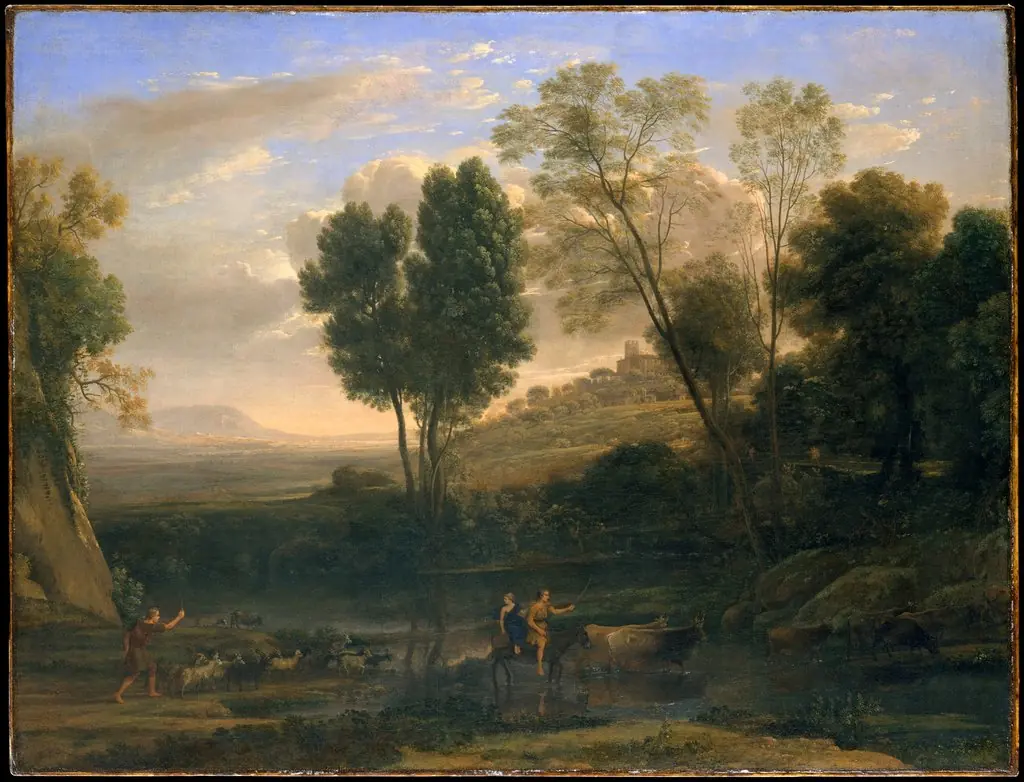
Landscape with Christ on the Road to Emmaus is an oil painting by the French Classical Baroque artist Claude Lorrain. It dates from 1660 and is held in the collection of the Hermitage Museum.
About this work
Overview
Painted in 1660, *Landscape with Christ on the Road to Emmaus* is an oil painting by Claude Lorrain, a Baroque-era artist known for elevating landscapes with historical and religious themes. The work is characteristic of the French Classical Baroque movement and is part of the State Hermitage Museum's collection.
Subject & Meaning
The painting depicts a biblical scene from the New Testament where Christ, unrecognized, walks with two disciples towards Emmaus. The composition balances a serene natural setting with the religious significance of the encounter, reflecting Lorrain's approach to blending landscape with historical narrative.
Technique & Style
Lorrain employed smooth, detailed brushwork and a thoughtful color palette to achieve depth and atmosphere. Warm sunlight on the foreground path contrasts with the cooler tones of the distant, rolling hills, emphasizing the interplay between figure and landscape.
History & Provenance
Created in 1660, the painting is attributed to Claude Lorrain's mature period in Italy. It is now housed in the State Hermitage Museum, St. Petersburg, as part of its Baroque collection.
Context
This work exemplifies the Baroque era's tendency to incorporate religious subjects into landscapes, a specialty of Lorrain's. It aligns with the French Classical Baroque movement's emphasis on harmony and balance.
Legacy
*Landscape with Christ on the Road to Emmaus* contributes to Lorrain's legacy as a pivotal figure in Baroque landscape painting, influencing subsequent generations with his unique blend of natural beauty and religious narrative.
Artist & collection
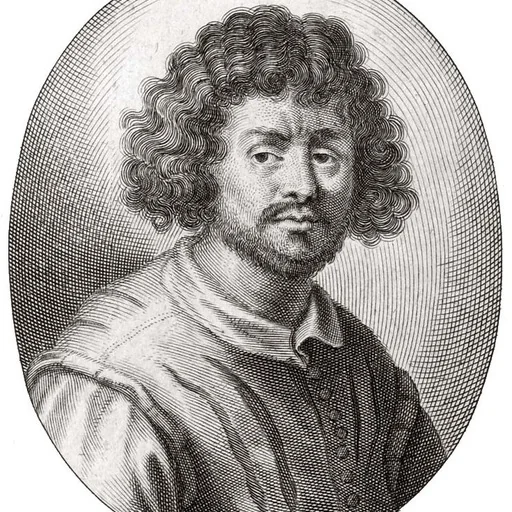
Artist
Claude Lorrain (French: ; born Claude Gellée , called le Lorrain in French; traditionally just Claude in English; c.

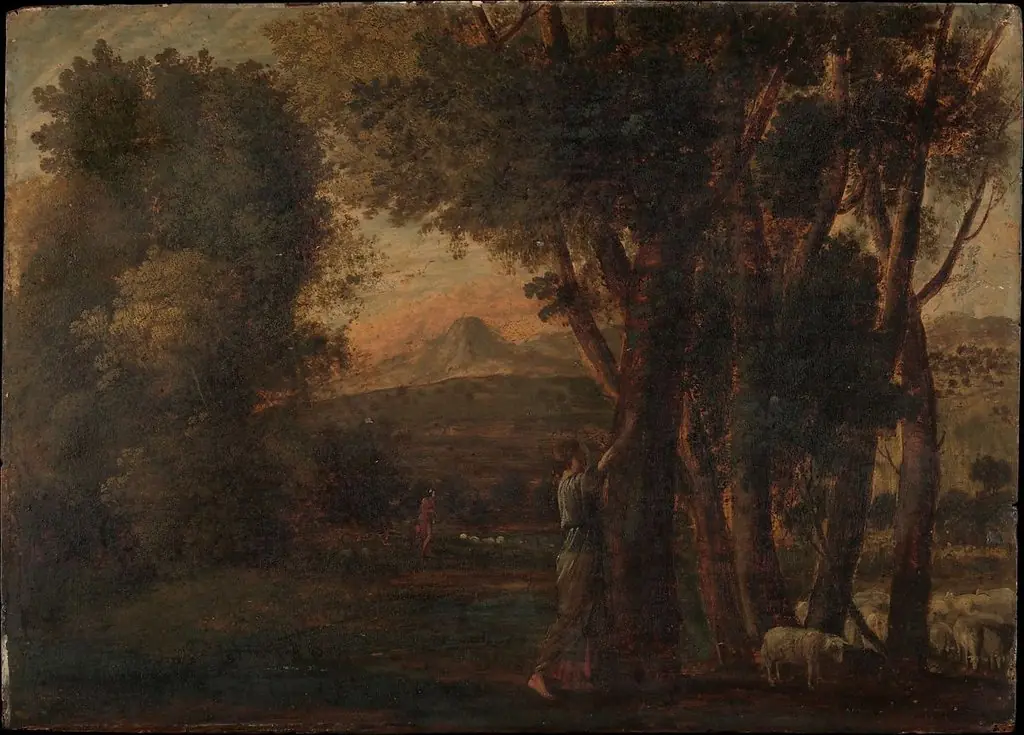
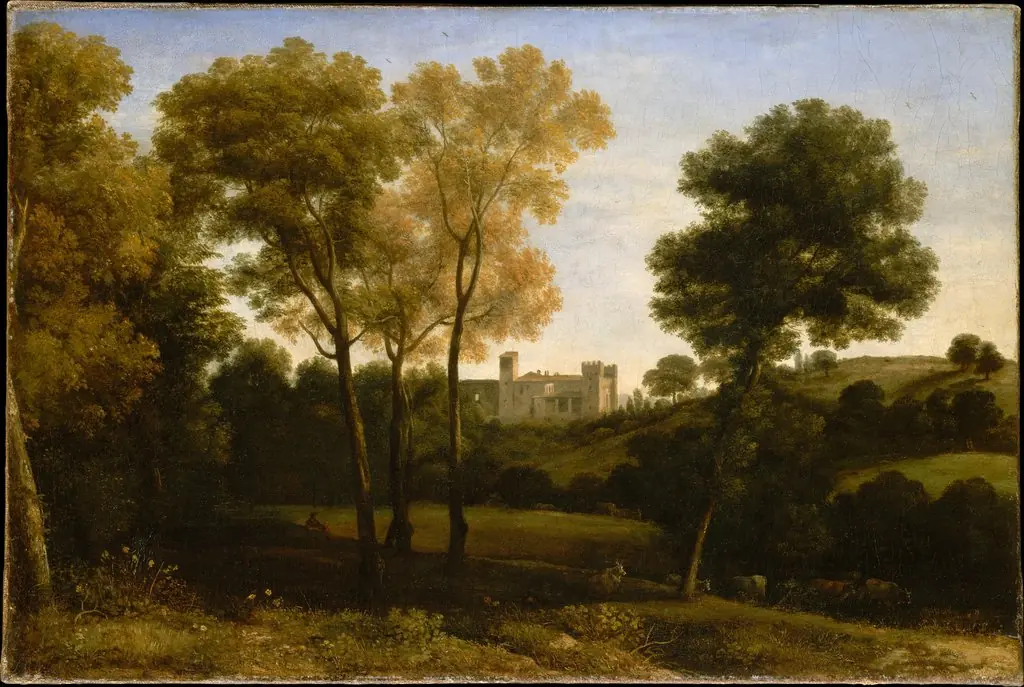
 Pastoral Landscape
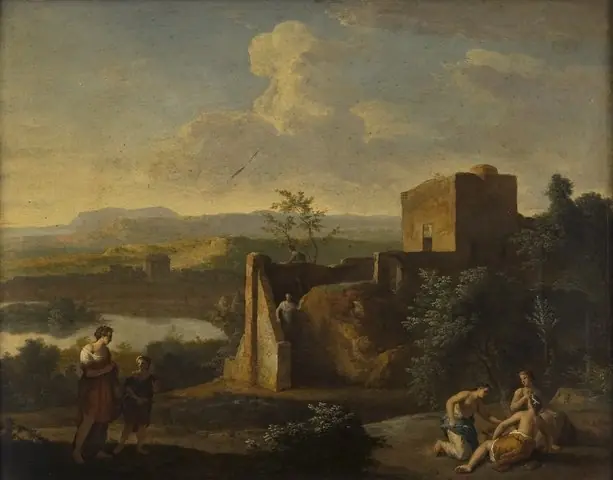 Idyllic Landscape with Watch-tower
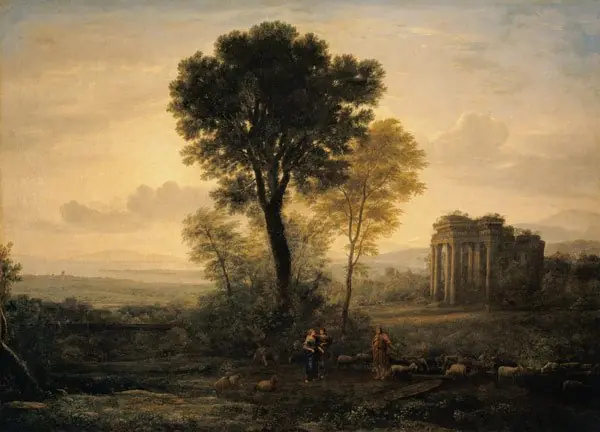 Landscape with Jacob, Rachel and Leah at the Well (Morning)
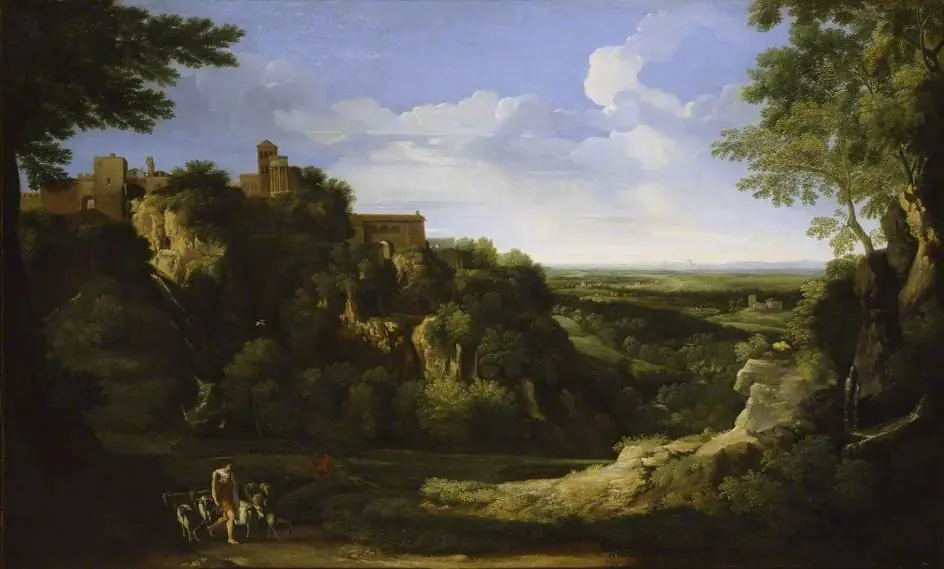 View of Tivoli with Rome in the distance
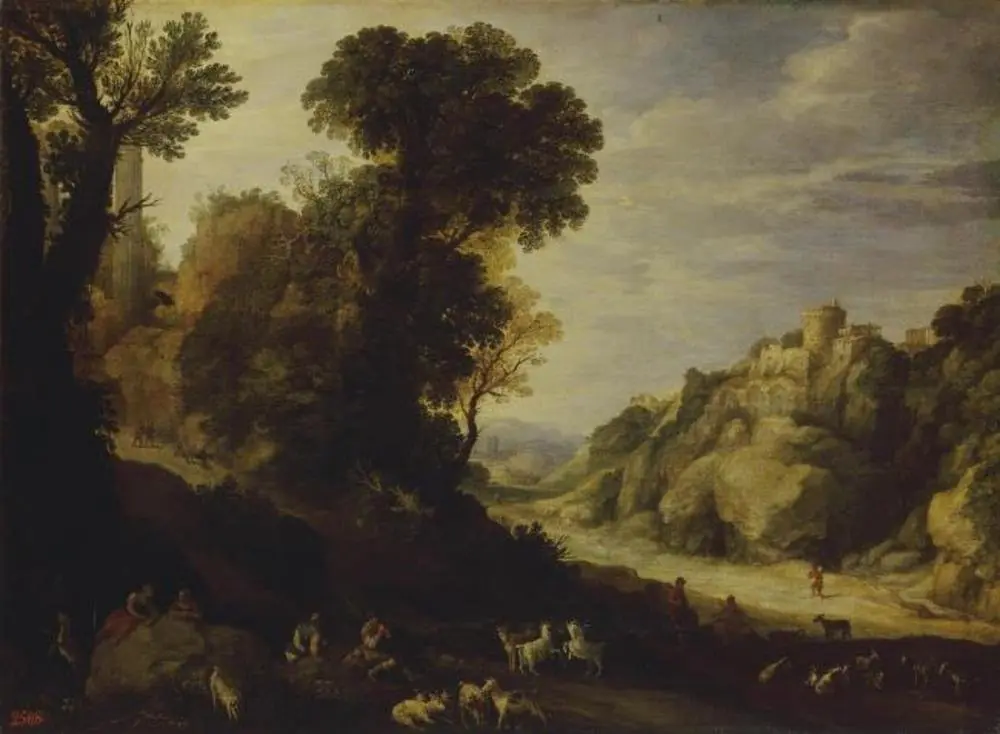 Mountainous Landscape
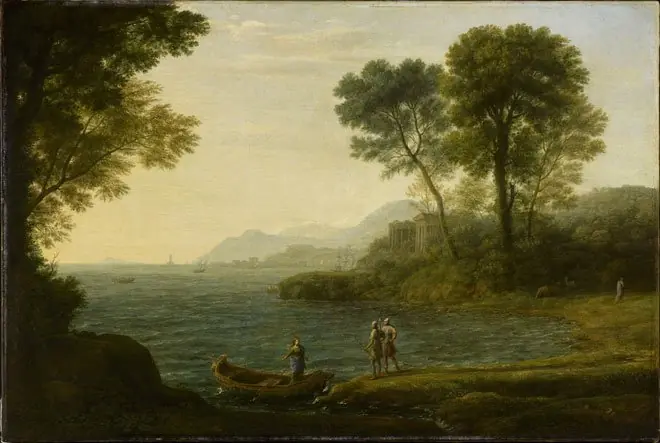 Marine avec l'embarquement de Carlo et Ubaldo
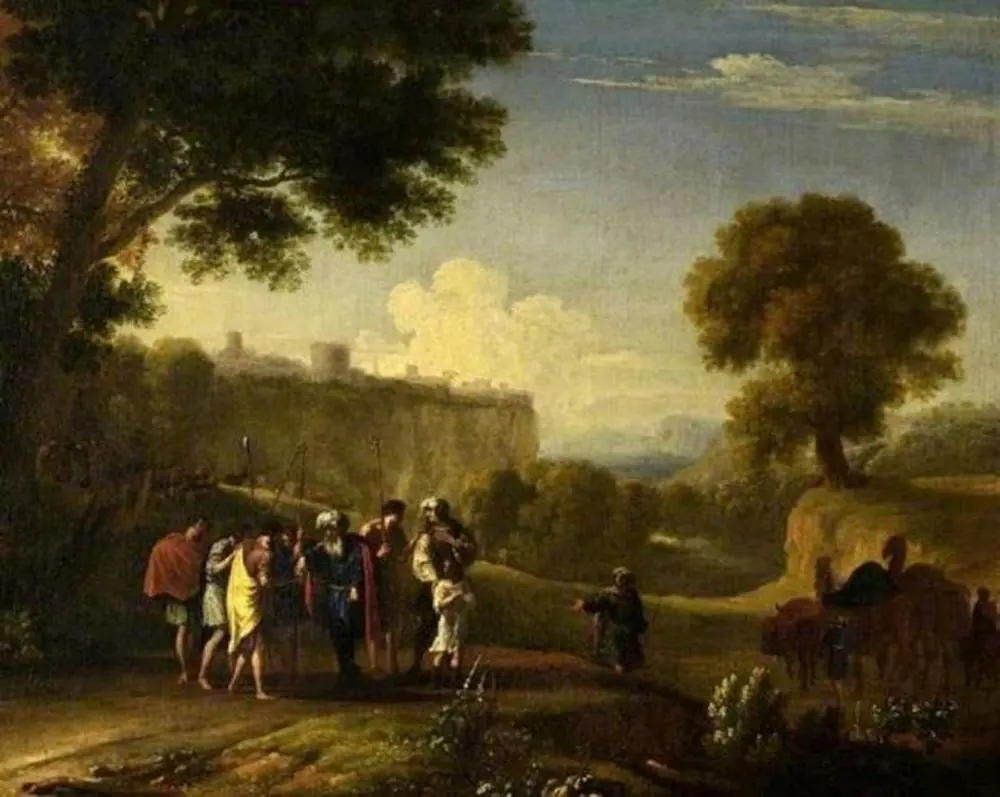 Landscape with the sale of Joseph
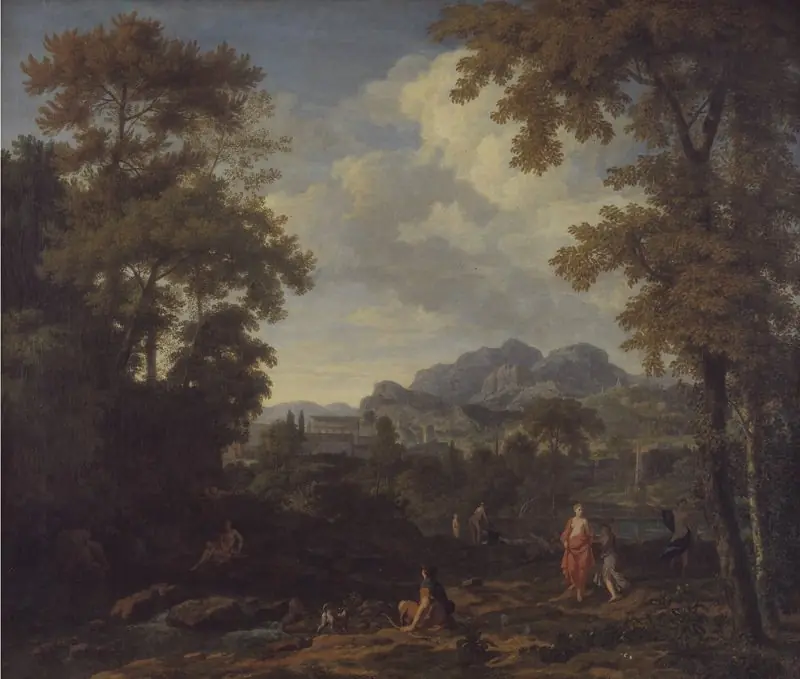 Classical Landscape with Diana (?) and her Nymphs
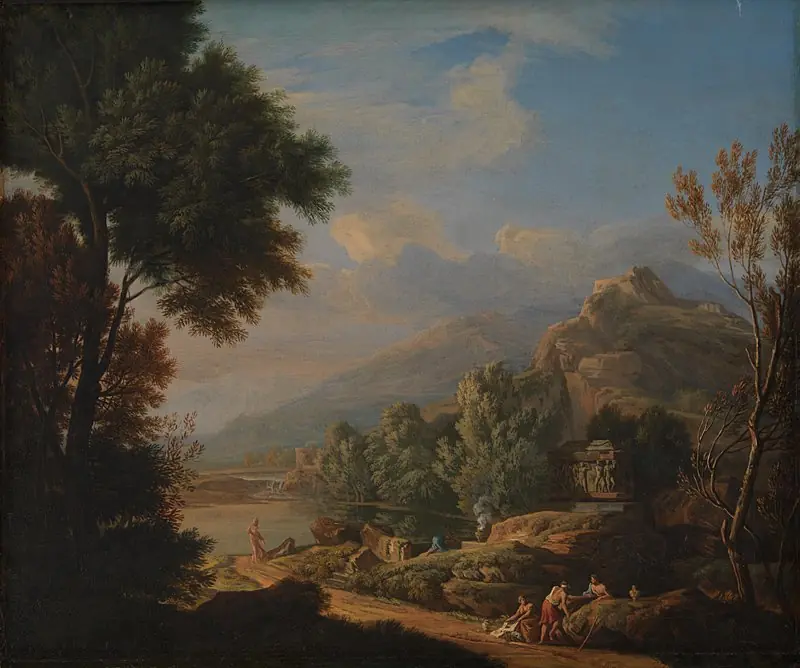 Arcadian Landscape
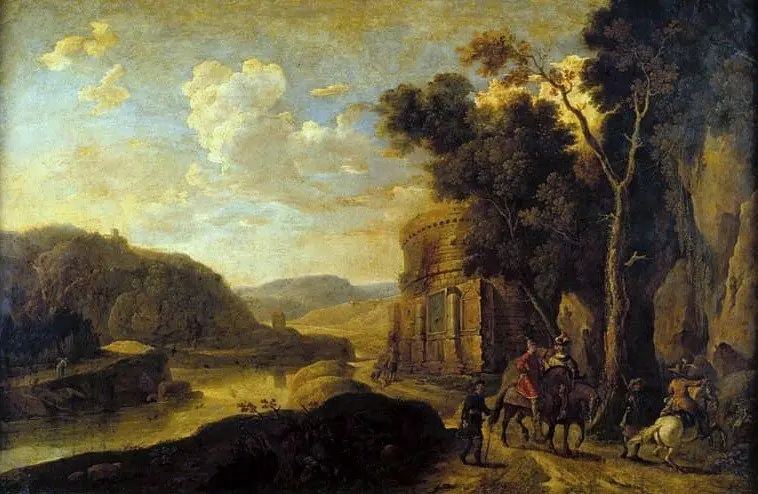 Return from the Hunt
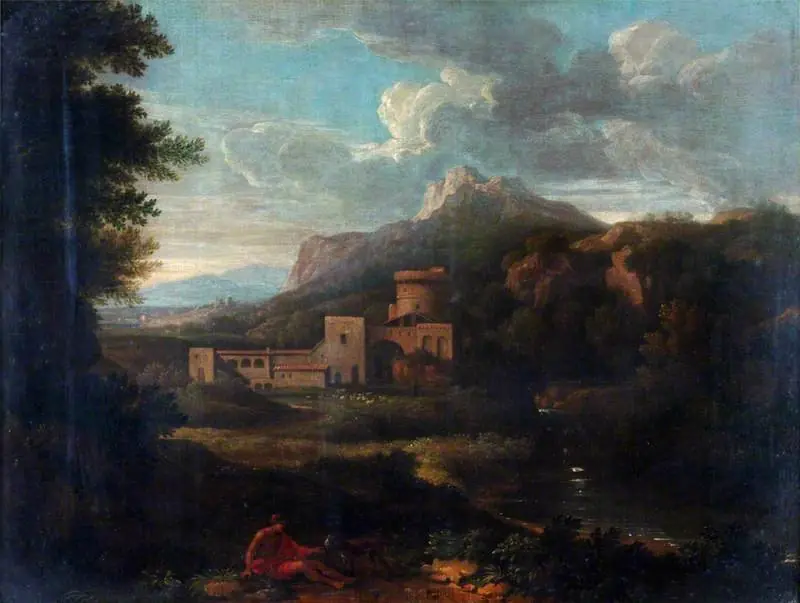 Landscape with a River and a Castle
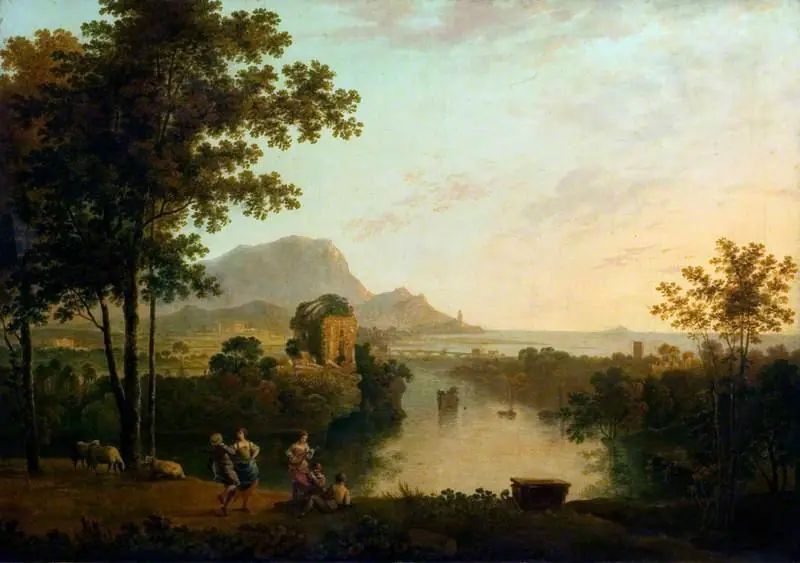 Landscape Composition: River Mouth with Peasants Dancing