Artwork
A Cliff at Pourville in the Morning
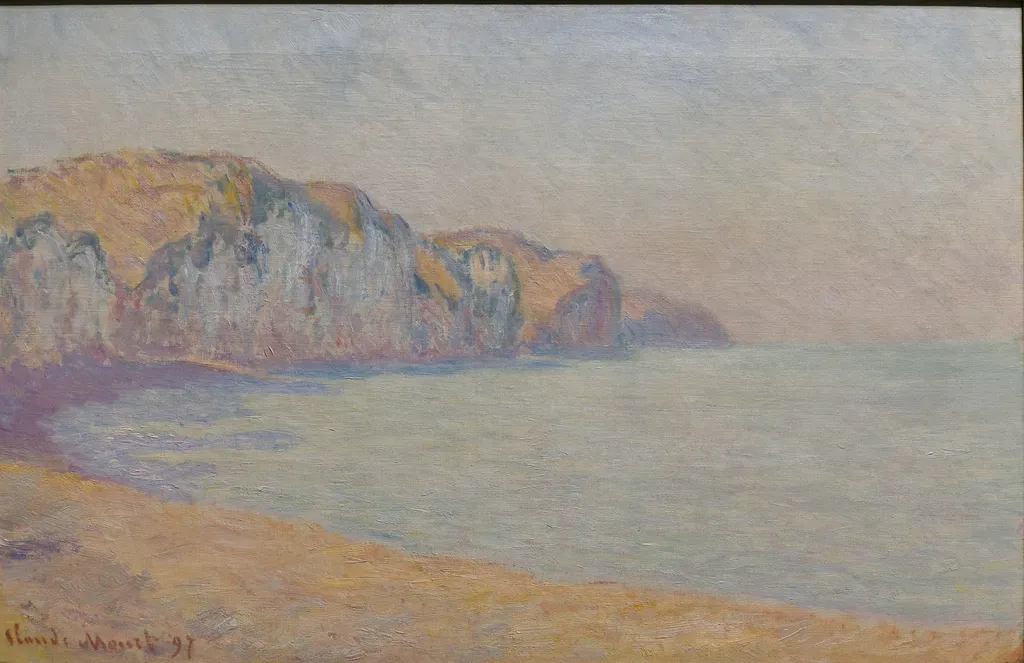
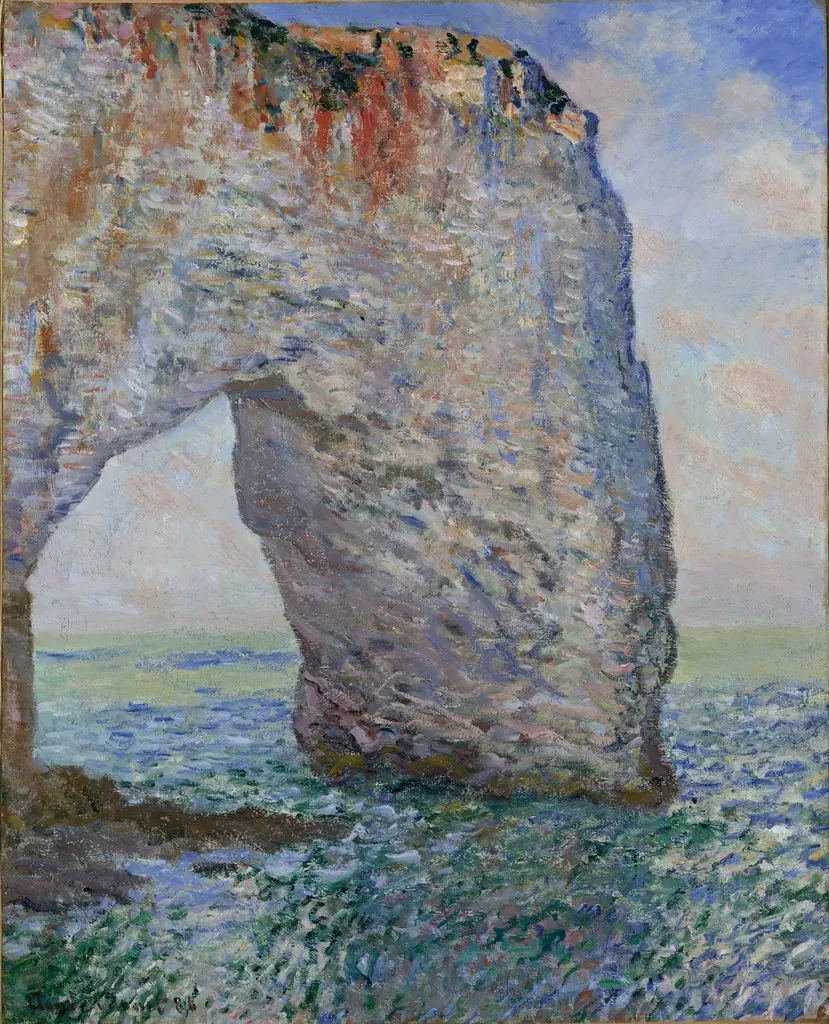
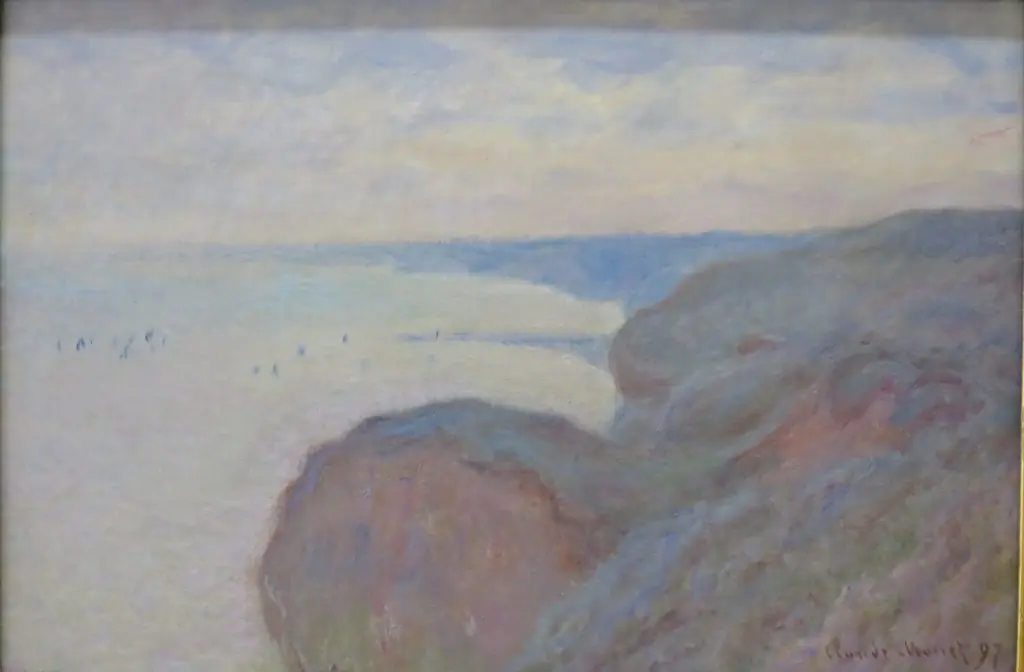
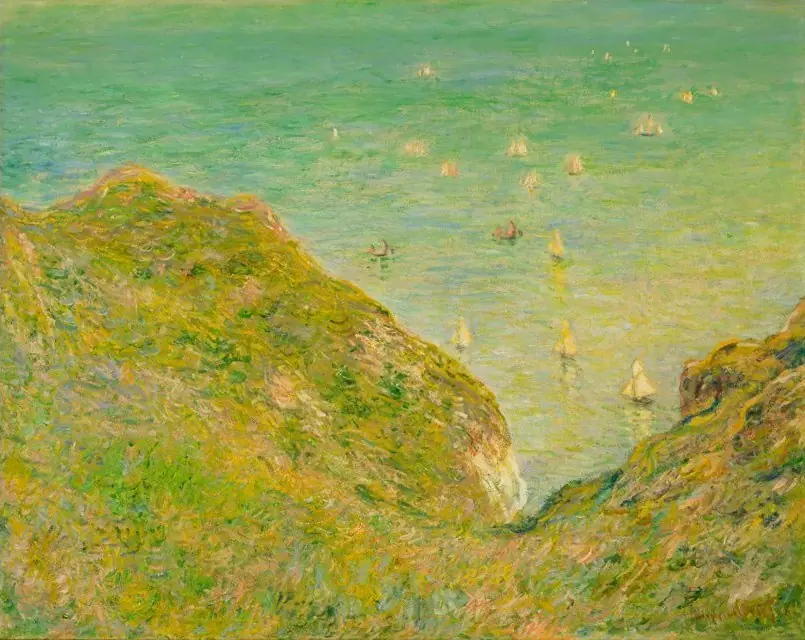
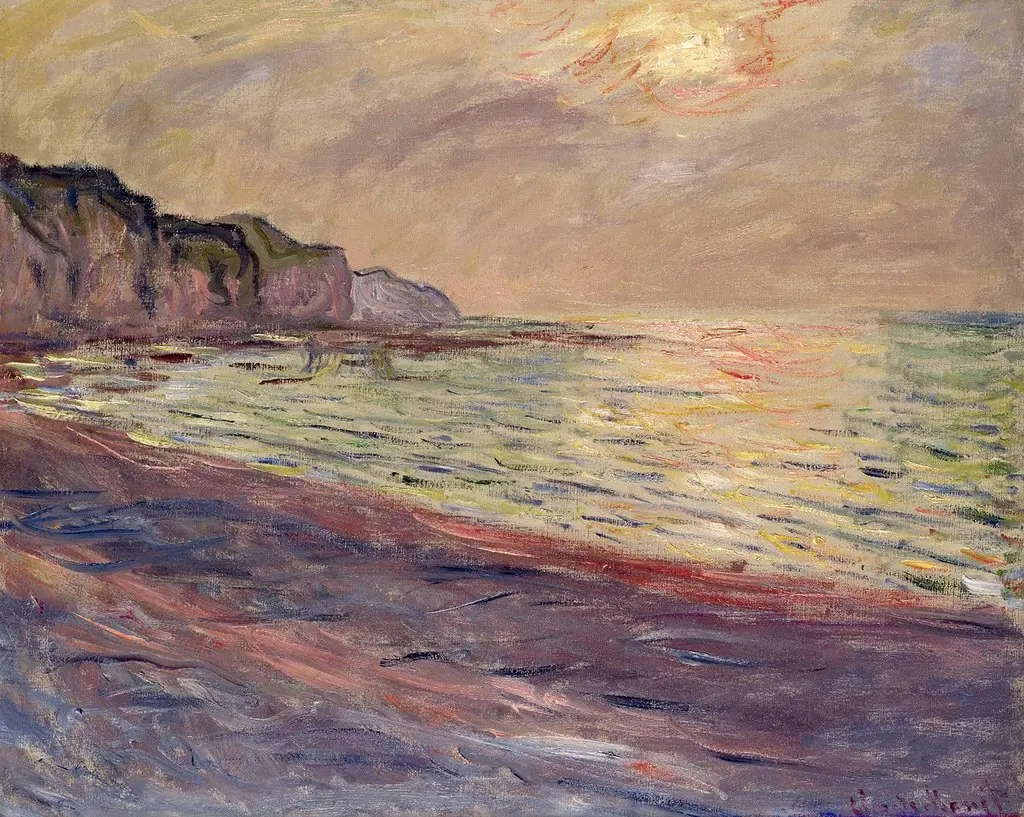
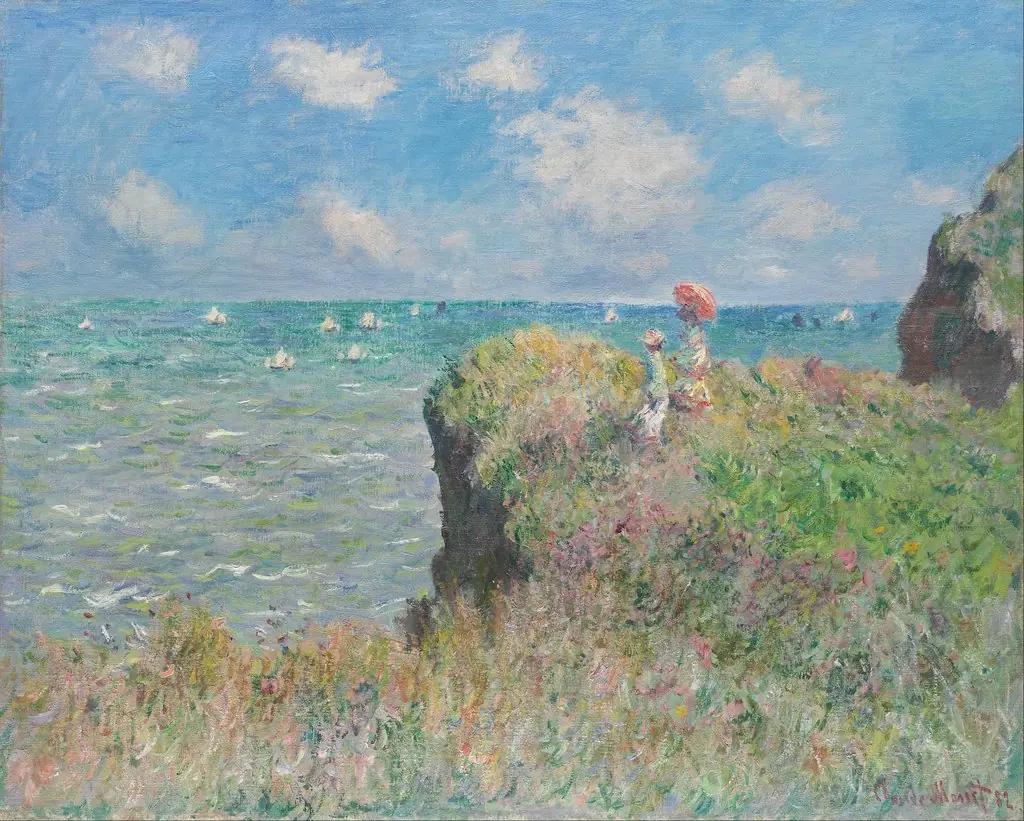
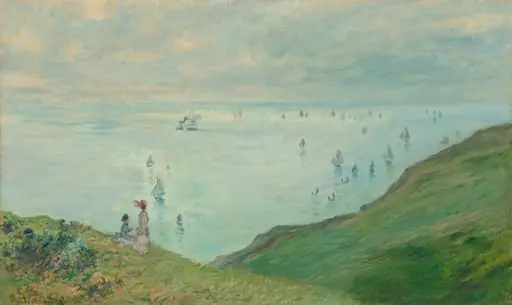
A Cliff at Pourville in the Morning is an oil painting by the Impressionist artist Claude Monet. It dates from 1899 and is held in the collection of the Montreal Museum of Fine Arts.
About this work
Overview
It is now part of the Montreal Museum of Fine Arts’ collection, where it remains one of the quieter, less frequently exhibited works from his later period.
Painted in 1899, A Cliff at Pourville in the Morning is an oil work by Claude Monet capturing a coastal landscape in Normandy. The piece belongs to a series Monet produced during his stays along the English Channel, focusing on shifting light and atmospheric conditions. It is now part of the Montreal Museum of Fine Arts’ collection, where it remains one of the quieter, less frequently exhibited works from his later period.
Subject & Meaning
The painting presents a quiet stretch of coastline at Pourville, with a high cliff rising behind a calm sea. There are no figures or signs of human activity, emphasizing solitude and the passage of time. The stillness of the water and the gradual slope of the cliff suggest a moment suspended between daybreak and morning’s full light, evoking contemplation rather than narrative.
Technique & Style
Monet applied thin, layered strokes of oil paint to capture the subtle transitions of light across the cliff face and sea surface. Colors are restrained—soft grays, pale blues, and muted greens—avoiding bold contrasts. The brushwork is deliberate yet fluid, allowing the texture of the rock and the movement of water to emerge through tonal variation rather than defined outlines.
History & Provenance
Monet painted this work during a visit to Pourville in the summer of 1899, a location he returned to several times between 1882 and 1900. The painting remained in his personal collection until his death in 1926. It entered the Montreal Museum of Fine Arts in 1934 through a bequest from a Canadian collector, having passed through private hands in Europe prior to its acquisition.
Context
This painting emerged during a phase when Monet increasingly focused on localized, intimate coastal views rather than grand vistas. He was experimenting with how light affected form over time, often returning to the same site at different hours. Pourville’s cliffs offered a stable structure against which he could study the changing qualities of morning light and sea mist.
Legacy
While less prominent than Monet’s water lilies or Rouen Cathedral series, A Cliff at Pourville in the Morning illustrates his sustained interest in natural rhythm and quiet observation. It reflects his mature approach to landscape—attentive to nuance, uninterested in spectacle—and contributes to understanding the breadth of his late-period work beyond the more famous subjects.
Artist & collection
Artist
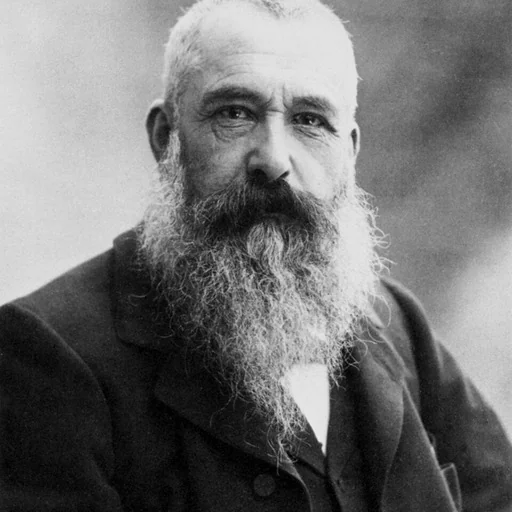
Oscar-Claude Monet was born in Paris on November 14, 1840, and raised from the age of five in Le Havre, where he began selling charcoal caricatures as a teenager.