Artwork
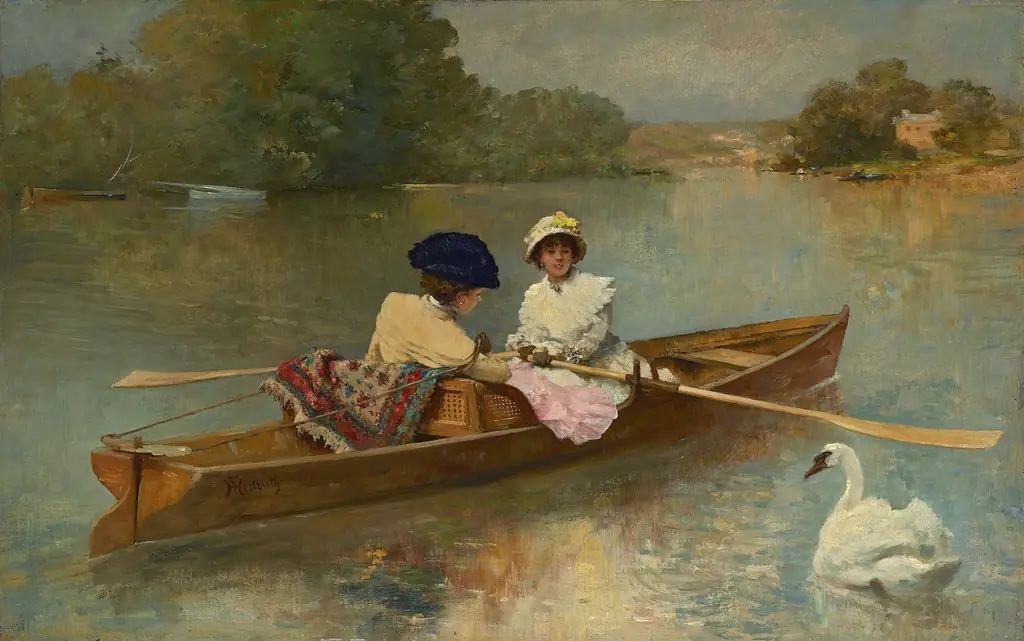
Boating on the River Epte
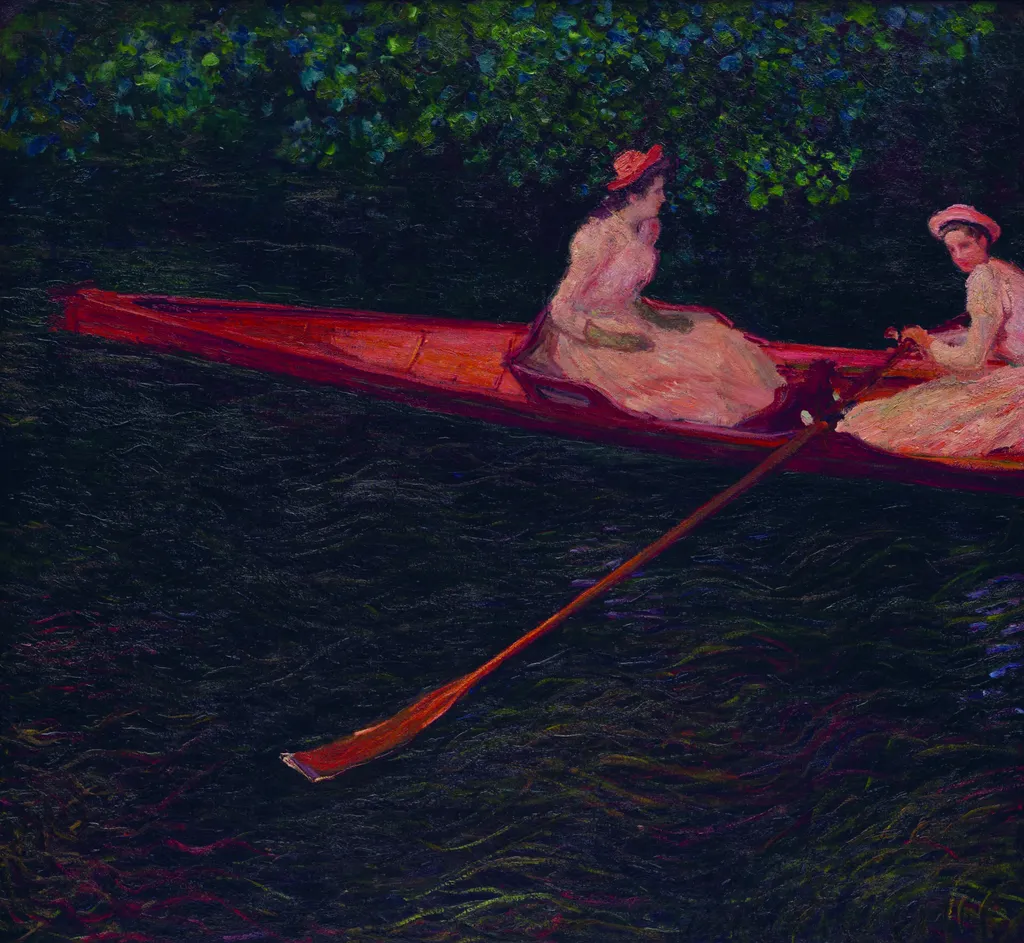
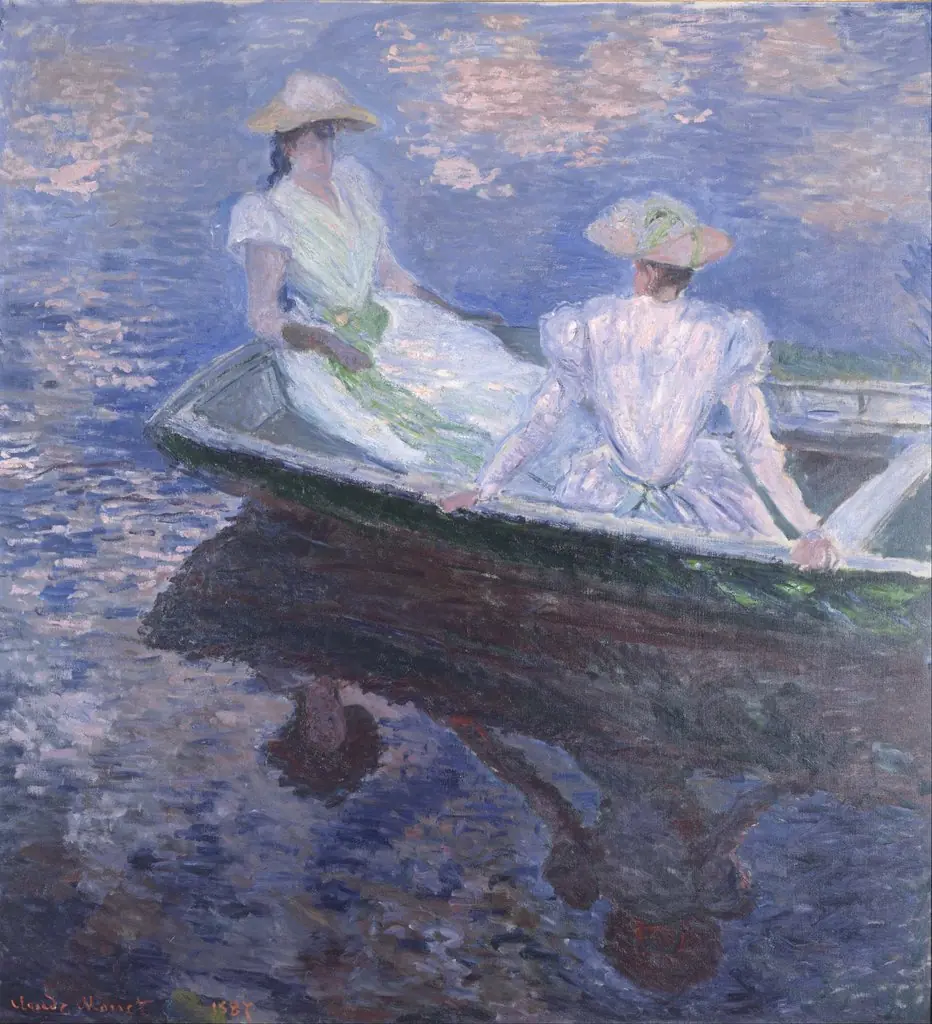
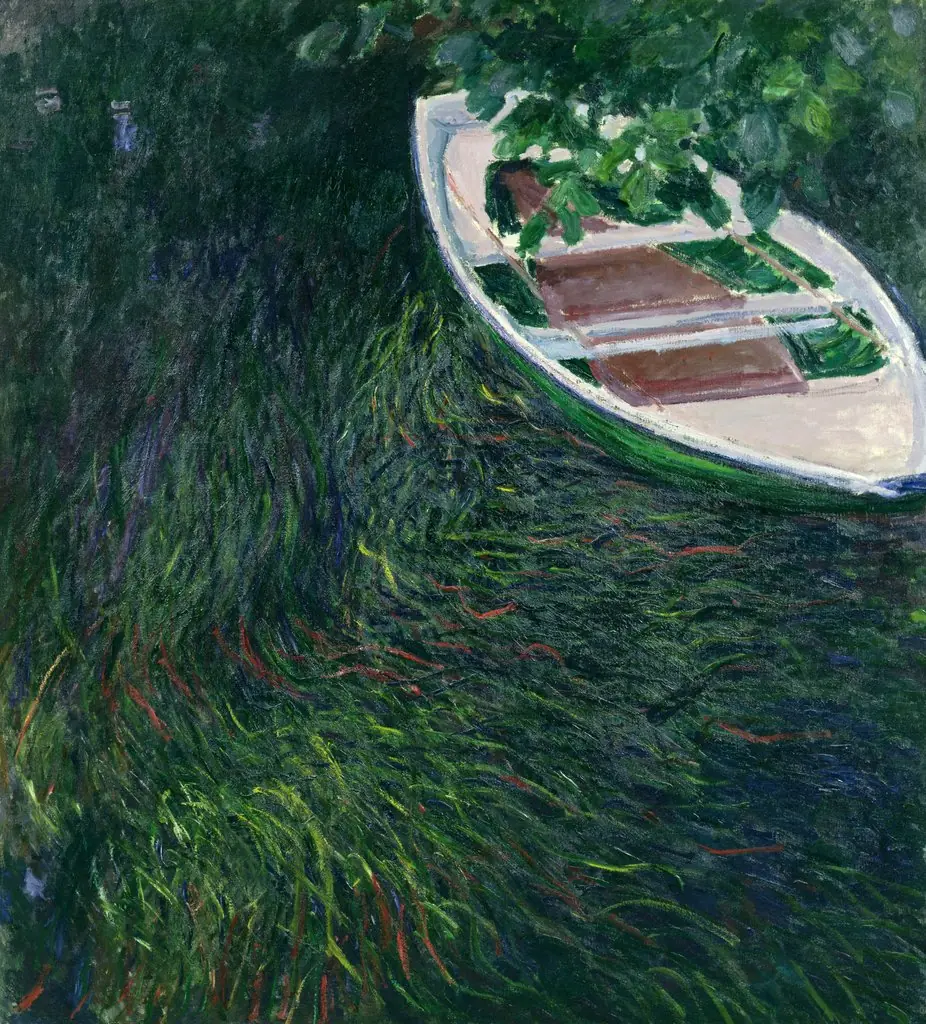
Boating on the River Epte is an oil painting by the Impressionist artist Claude Monet. It dates from 1896 and is held in the collection of the São Paulo Museum of Art.
About this work
Overview
It belongs to a small series of compositions Monet produced between 1887 and 1890, all centered on the waterways surrounding his property.
Painted in 1890, Boating on the River Epte is an oil work by Claude Monet capturing a quiet moment on the river near his home in Giverny. It belongs to a small series of compositions Monet produced between 1887 and 1890, all centered on the waterways surrounding his property. The painting is now held by the São Paulo Museum of Art and reflects Monet’s sustained focus on the interplay of light, water, and vegetation during this period.
Subject & Meaning
The painting depicts Suzanne and Blanche Hoschedé, stepdaughters of Monet’s future wife Alice, gently rowing a small boat. Their presence anchors the scene in domestic intimacy, though they are rendered not as individuals but as harmonious elements within the landscape. The work conveys no narrative beyond stillness and immersion in nature, aligning with Monet’s interest in transient visual impressions rather than storytelling.
Technique & Style
Monet applied loose, broken brushwork to suggest the movement of water and the rustle of reeds. The palette is subdued, dominated by greens, browns, and soft blues, with no sharp contrasts. The boat’s oar and the water’s surface are rendered with blurred edges, evoking motion and reflection. This technique, influenced by photographic blur and Japanese prints, prioritizes sensory perception over precise detail.
History & Provenance
Monet painted this work during a period of personal and artistic transition, as he prepared to marry Alice Hoschedé. He referenced the painting in a June 1890 letter to critic Geffroy, expressing frustration with capturing underwater vegetation. The piece was part of a group of related works, including La Barque Rose and En Barque, now dispersed across international collections. It entered the São Paulo Museum of Art’s holdings in the mid-20th century.
Context
The River Epte, bordering Monet’s garden, became a primary subject during these years, offering a controlled yet dynamic environment for his studies of water and light. Monet’s engagement with photography, particularly its framing and focus effects, and exposure to Japanese woodblock prints, such as Harunobu’s lotus scenes, subtly shaped his compositional choices, favoring asymmetry and cropped perspectives.
Legacy
This painting exemplifies Monet’s shift toward immersive, atmospheric landscapes where human figures serve as compositional anchors rather than focal points. It contributed to the broader Impressionist project of redefining subject matter through optical experience. While not widely exhibited, it remains a key example of his late 1880s water studies, influencing later approaches to naturalism in modern painting.
Own this work as a print
Artist & collection
Artist
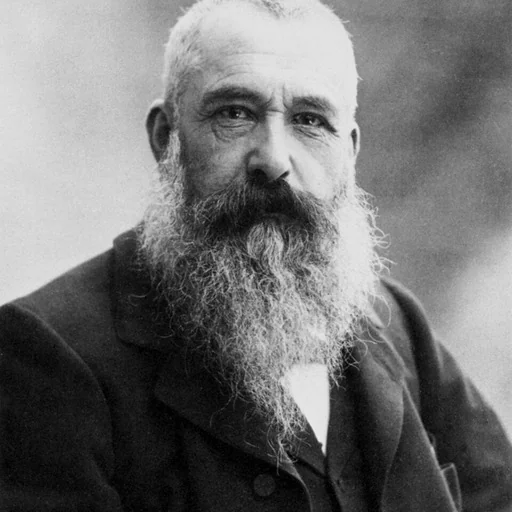
Oscar-Claude Monet was born in Paris on November 14, 1840, and raised from the age of five in Le Havre, where he began selling charcoal caricatures as a teenager.