Artwork
Boats in the Port of Honfleur
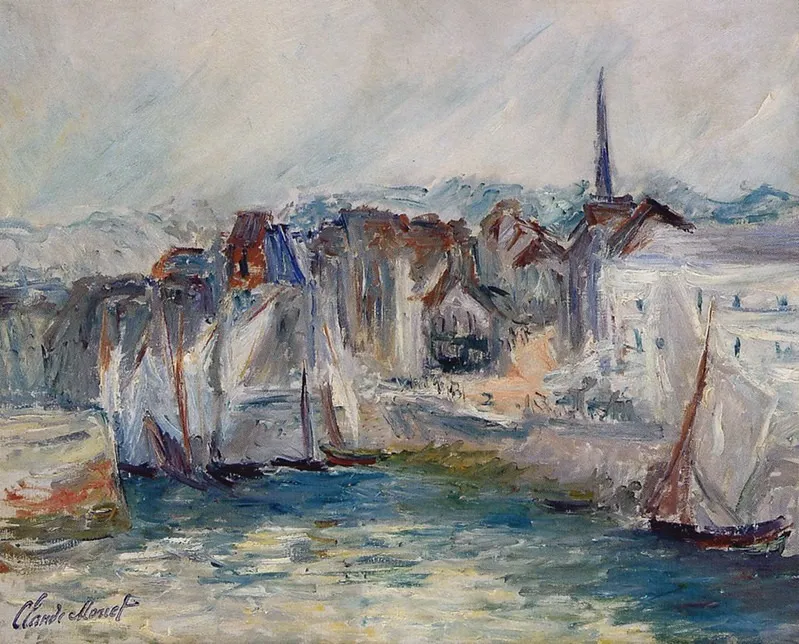
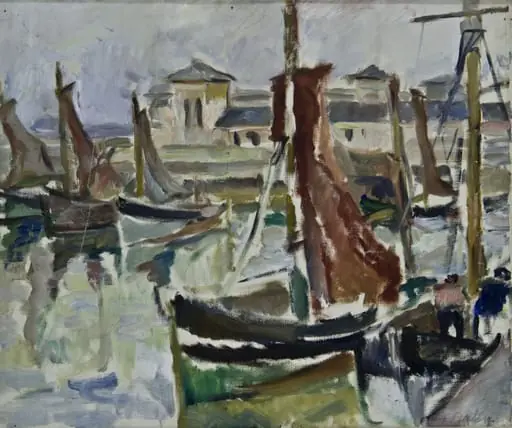
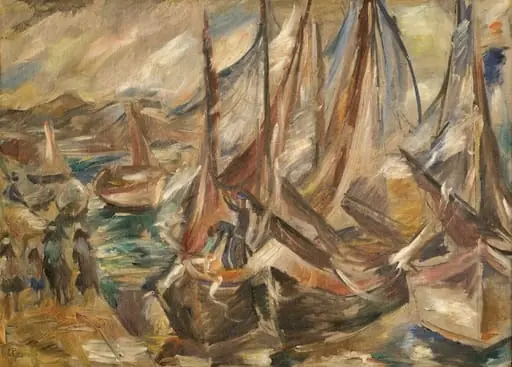
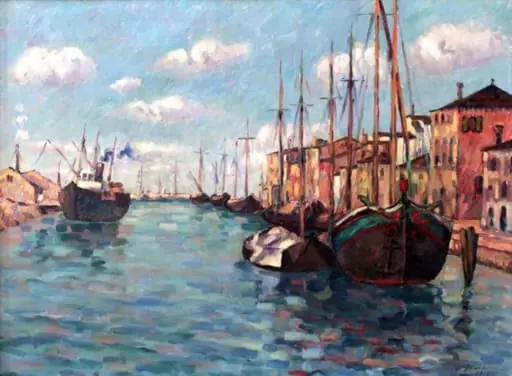
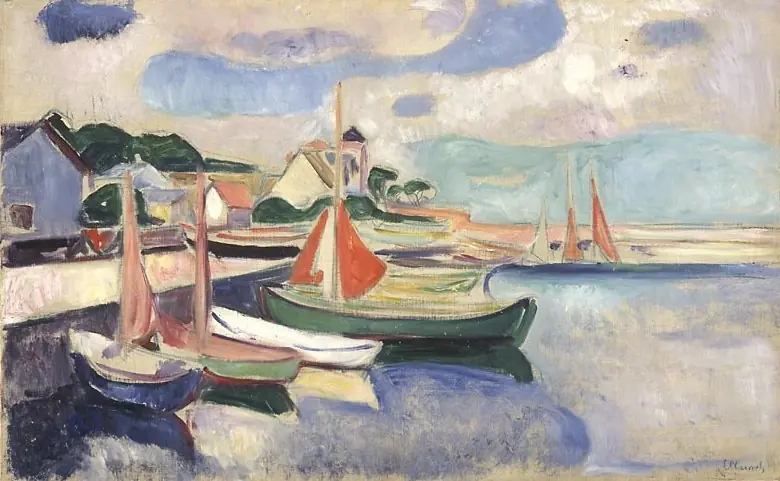
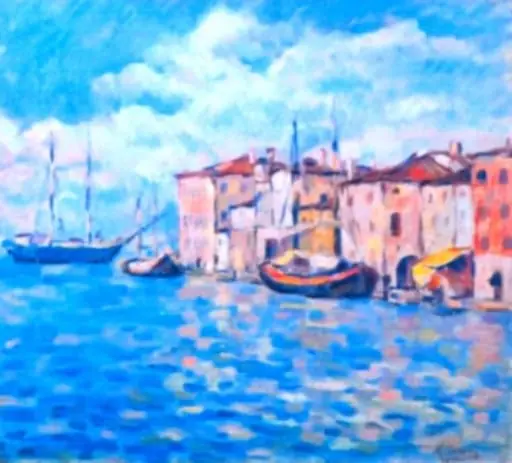
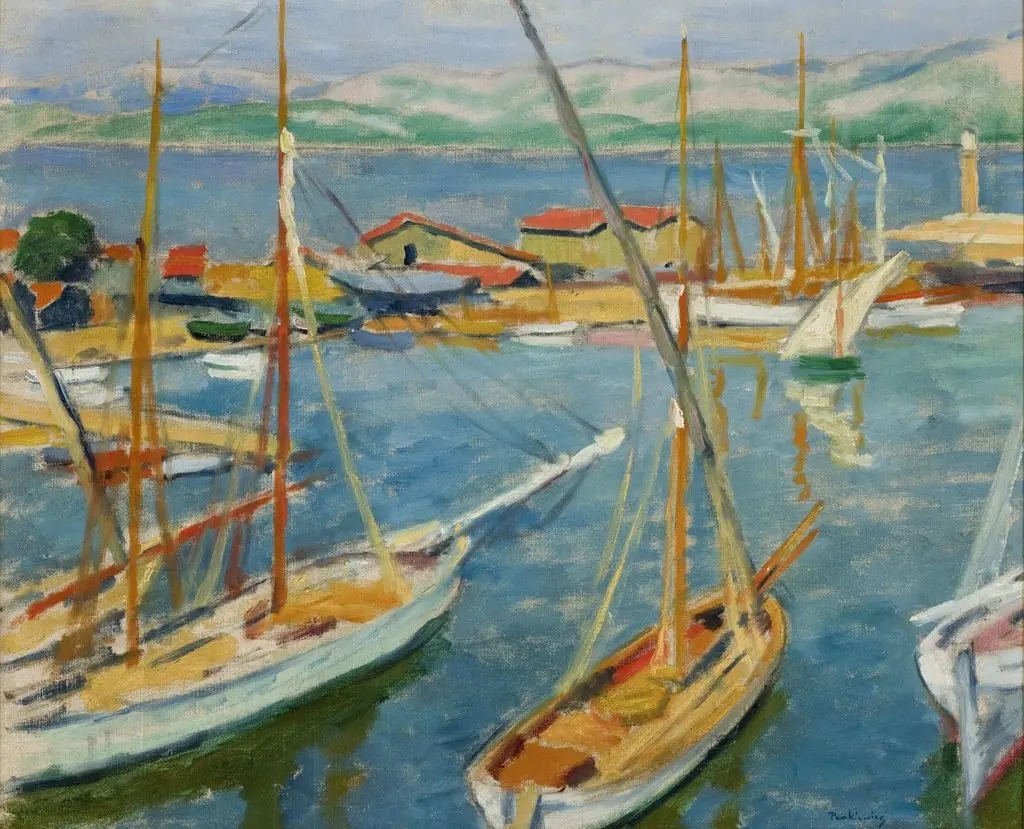
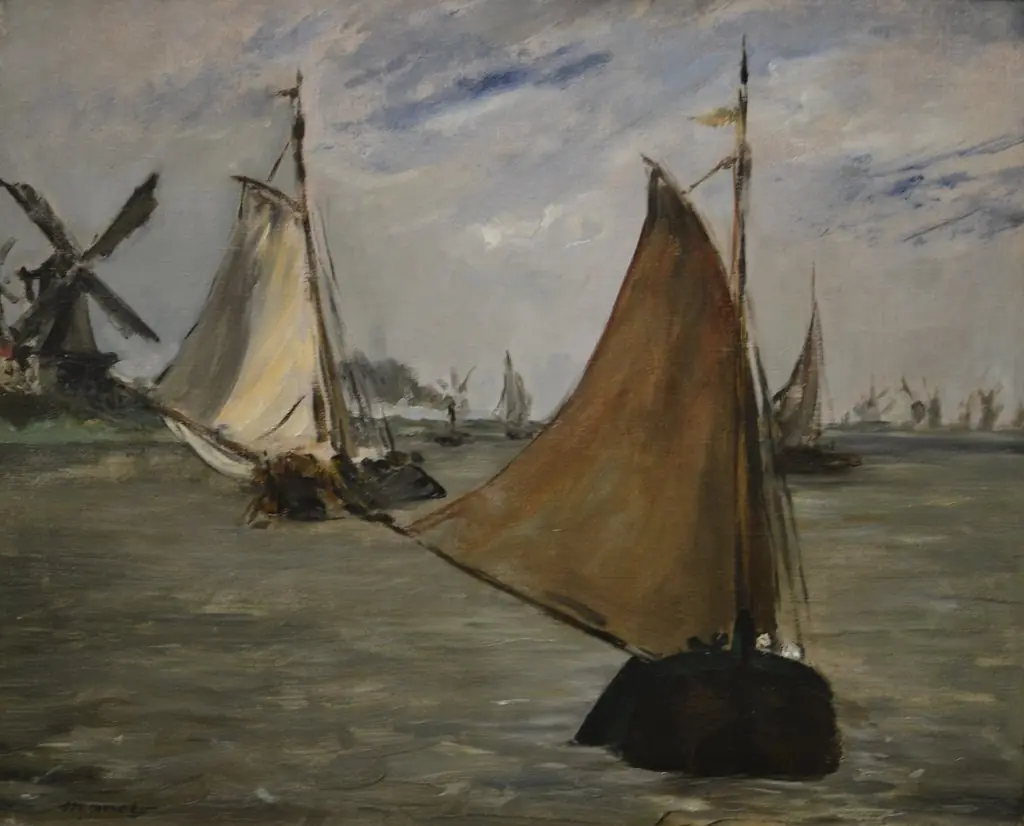
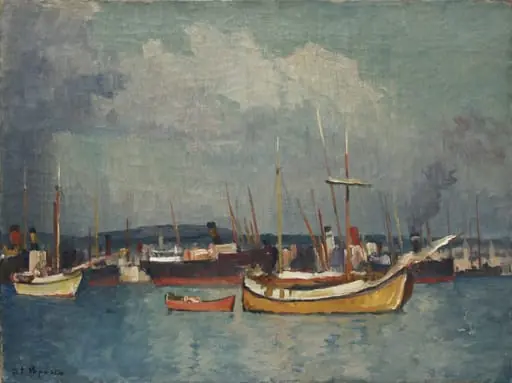
Boats in the Port of Honfleur is an oil painting by the Impressionist artist Claude Monet. It dates from 1917 and is held in the collection of the Musée Marmottan Monet.
About this work
Overview
Monet’s approach here reflects his later focus on atmospheric effects and the subtle interplay of light over water, even as his vision grew more abstract.
Painted in 1917, Boats in the Port of Honfleur is an oil work by Claude Monet depicting a quiet harbor scene. It belongs to the collection of the Musée Marmottan Monet in Paris. The composition centers on a cluster of vessels resting in calm water, framed by distant architecture. Monet’s approach here reflects his later focus on atmospheric effects and the subtle interplay of light over water, even as his vision grew more abstract.
Subject & Meaning
The painting captures a routine moment in a Norman port, emphasizing stillness and repetition rather than narrative. The boats, arranged in loose rows, suggest daily maritime life without dramatizing it. The church steeple and buildings in the background anchor the scene in place, reinforcing Honfleur’s identity as a working harbor. Monet’s choice to avoid human figures heightens the sense of quiet solitude, inviting contemplation over storytelling.
Technique & Style
Monet applied paint with loose, deliberate strokes that suggest form without defining it precisely. Colors are subdued—soft grays, muted blues, and earthy browns—with occasional reds and blues hinting at details like hulls or sails. The brushwork conveys movement in the water and air, while the lack of sharp outlines blurs boundaries between objects and their reflections. This technique reflects his mature style, prioritizing perception over detail.
History & Provenance
Created during Monet’s later years, the painting was likely made at his home in Giverny, where he continued to paint regional scenes despite declining eyesight. It remained in his personal collection until his death in 1926. His son Michel later donated it, along with many other works, to the Musée Marmottan Monet, where it has been held since the mid-20th century as part of a core group of the artist’s late works.
Context
By 1917, Monet had largely turned away from the bustling urban scenes of his earlier career, focusing instead on tranquil coastal and river landscapes. Honfleur, a port town he had painted decades earlier, held enduring appeal for its light and maritime character. This work belongs to a series of harbor views he produced in his seventies, influenced by his changing vision and deepening interest in tonal harmony over detail.
Legacy
Boats in the Port of Honfleur exemplifies Monet’s late-period exploration of perception and atmosphere. Though less celebrated than his water lilies, it reveals his sustained commitment to capturing fleeting conditions of light and surface. The painting contributes to understanding how his technique evolved under physical limitation, demonstrating that abstraction in his work was not a departure but a deepening of his lifelong inquiry into visual experience.
Artist & collection
Artist
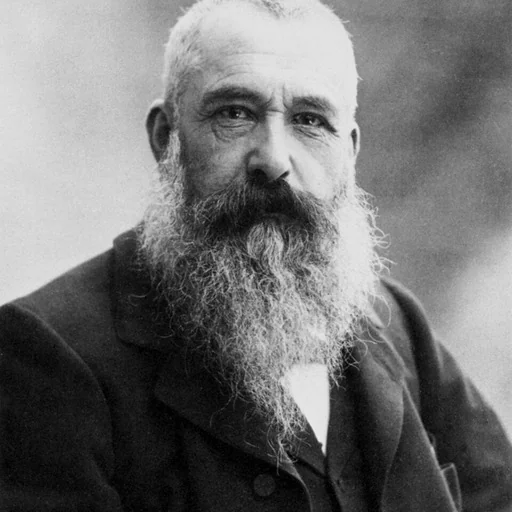
Oscar-Claude Monet was born in Paris on November 14, 1840, and raised from the age of five in Le Havre, where he began selling charcoal caricatures as a teenager.