Artwork
Portul Chioggia
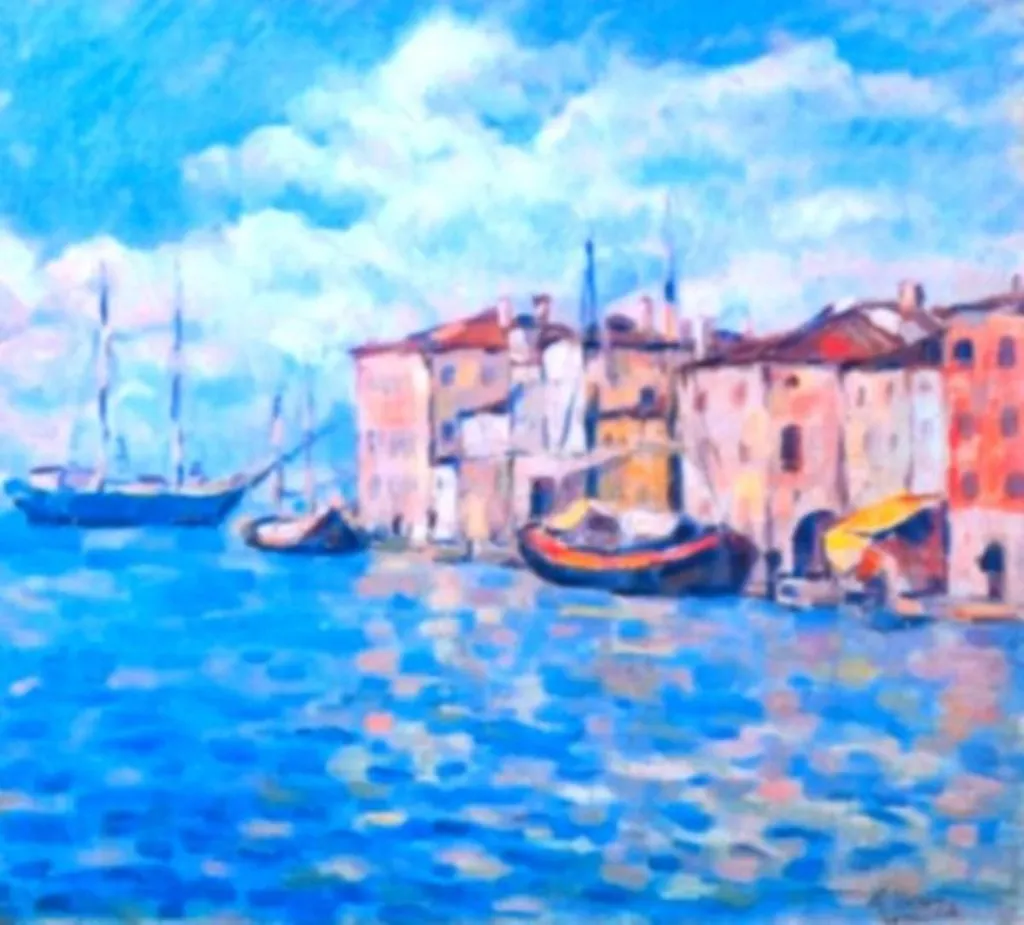
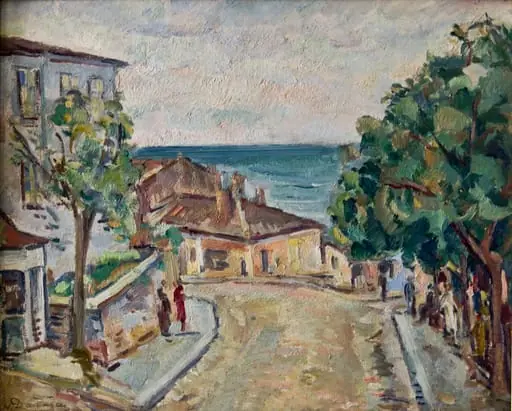
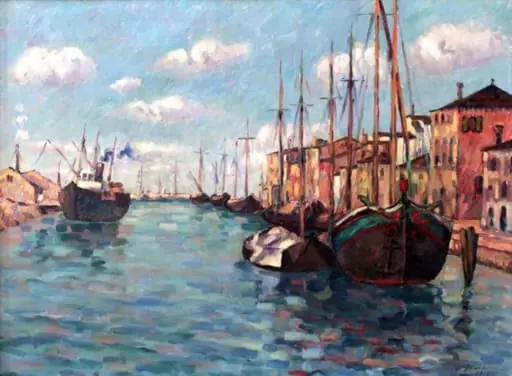
Portul Chioggia is an unspecified painting by the Byzantine icon painting artist Nicolae Dărăscu. It dates from 1911 and is held in the collection of the National Museum of Art of Romania.
About this work
Overview
Painted in 1911 by Romanian artist Nicolae Dărăscu, this work captures the quiet harbor of Chioggia, a coastal town in northern Italy. The composition focuses on the shoreline’s architectural line, with buildings receding gently toward the horizon. The scene avoids dramatic action, instead emphasizing stillness and the subtle interplay of light on water and stone.
Subject & Meaning
The painting presents a modest, everyday harbor—no vessels in motion, no human figures. Its quietude suggests a moment suspended between day and evening, where the rhythm of daily life has paused. The absence of narrative invites contemplation, framing the scene not as a tourist view but as a personal observation of place and atmosphere.
Technique & Style
Dărăscu employed loose, fluid brushwork to suggest form rather than define it. Colors are restrained—soft grays, pale blues, and muted ochres—broken only by faint warm highlights on walls and water. The reflections on the surface are implied, not meticulously rendered, enhancing the sense of atmospheric cohesion and quiet luminosity.
History & Provenance
Created during Dărăscu’s time in Italy, the painting reflects his exposure to Venetian light and landscape traditions. It was likely painted en plein air, consistent with his practice at the time. The work remained in private collections in Romania until the mid-20th century, after which it entered institutional holdings, though its exact early ownership remains undocumented.
Context
Dărăscu’s approach here aligns with post-Impressionist tendencies—emphasizing mood over detail—yet avoids the boldness of French contemporaries.
In 1911, Romanian artists were increasingly engaging with European modernism while retaining regional sensibilities. Dărăscu’s approach here aligns with post-Impressionist tendencies—emphasizing mood over detail—yet avoids the boldness of French contemporaries. His focus on provincial Italian scenes reflects a broader interest in quiet, non-urban environments among Eastern European painters of the era.
Legacy
Though not widely exhibited outside Romania, this painting exemplifies Dărăscu’s mature style: restrained, lyrical, and attentive to light’s emotional resonance. It influenced later Romanian landscape painters who sought to convey introspective atmosphere rather than picturesque spectacle, anchoring his reputation as a quiet innovator in national art.
Artist & collection
Artist
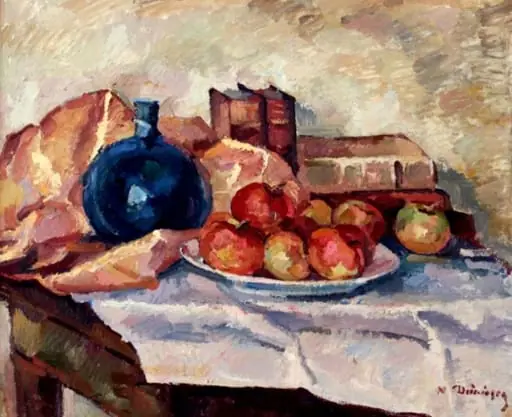
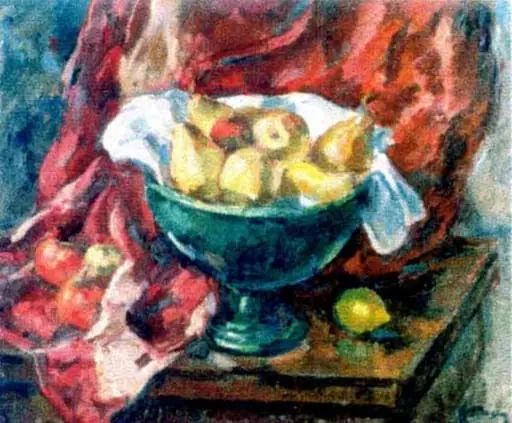
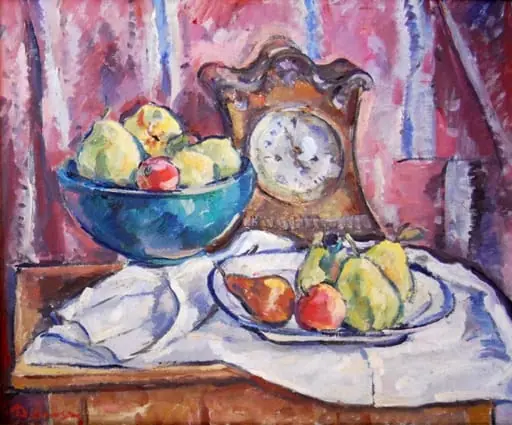
Romanian painter Nicolae Dărăscu built still lifes and cityscapes like Natură moartă and Palatul Ca'd'Oro, both calm arrangements of light and shadow.