Artwork
Water Lilies (Agapanthus)
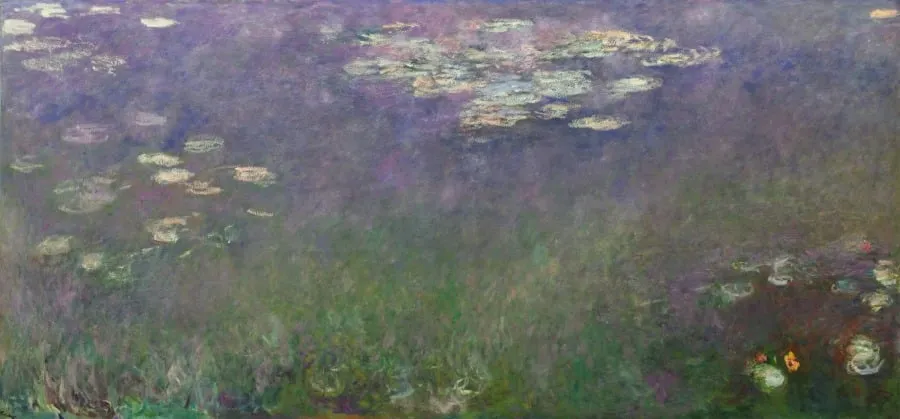
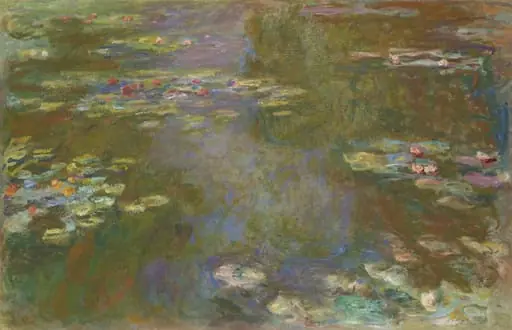
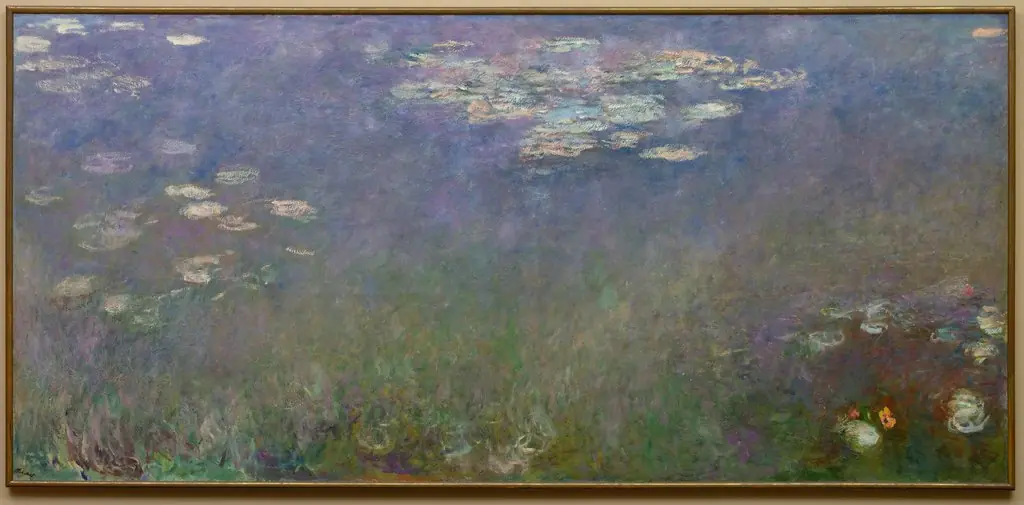
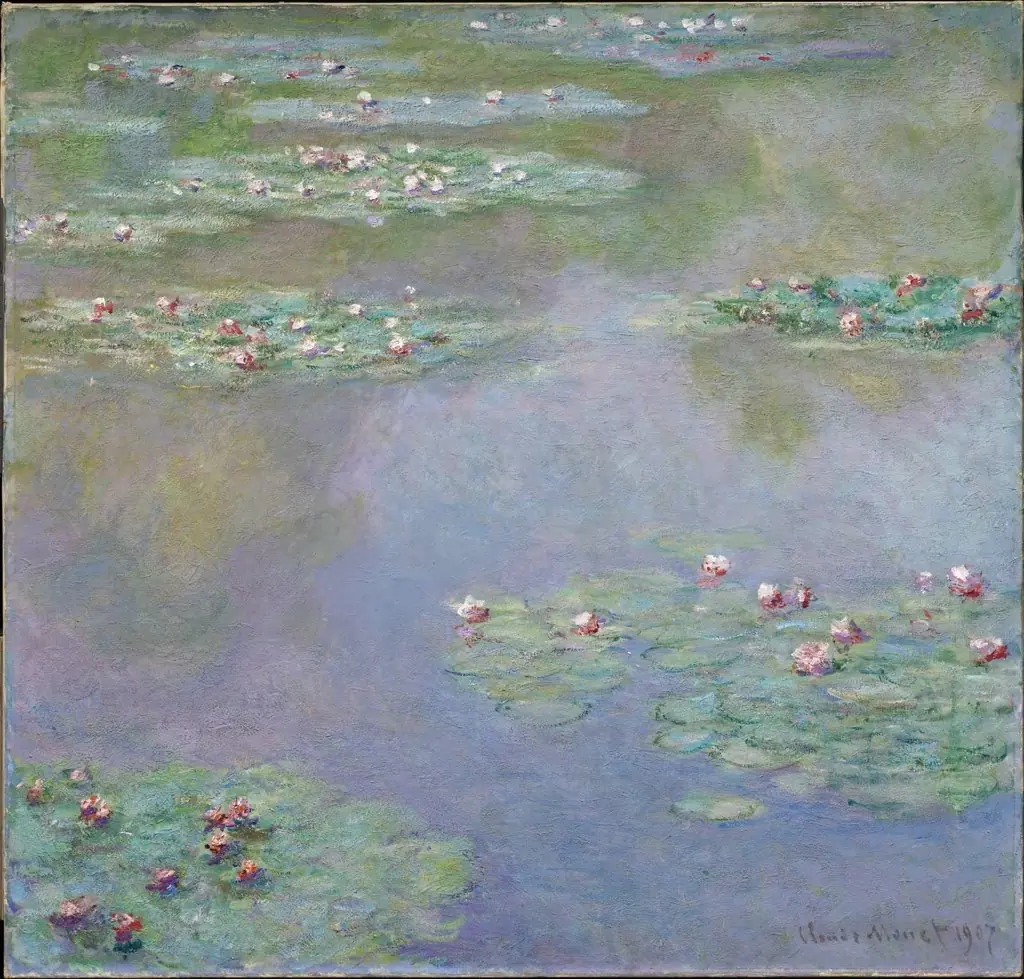
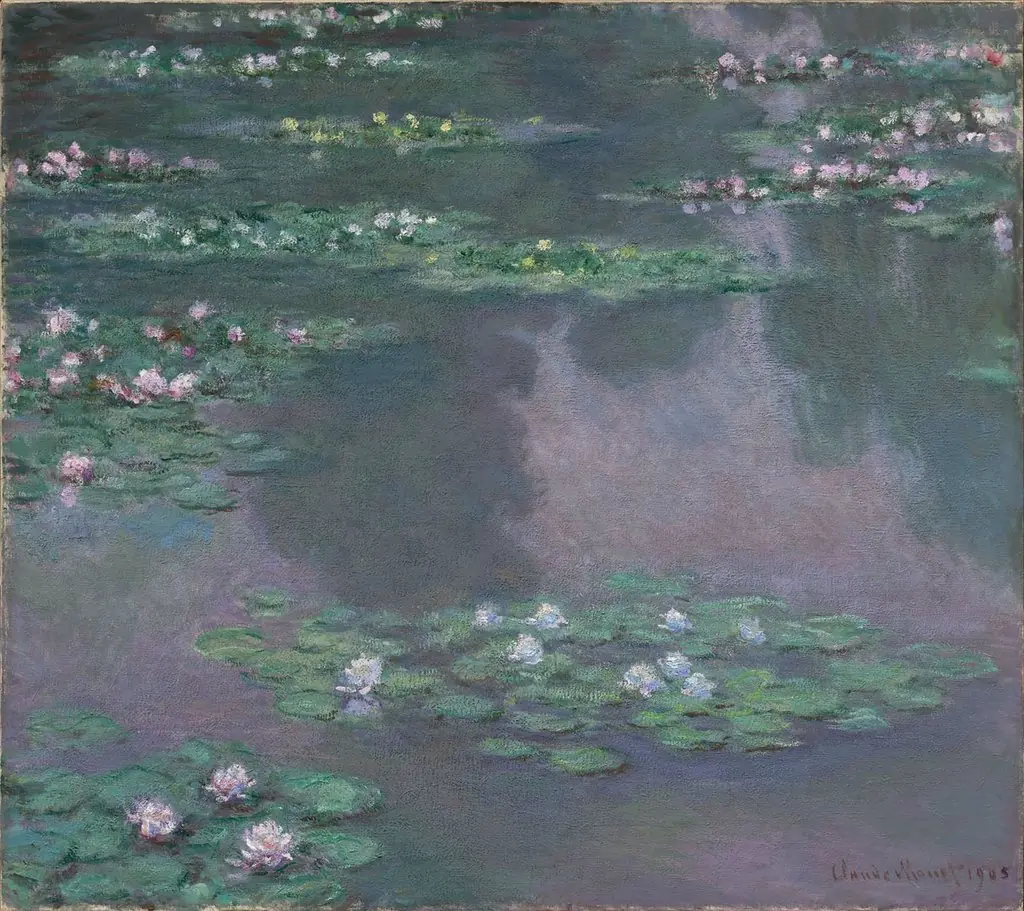
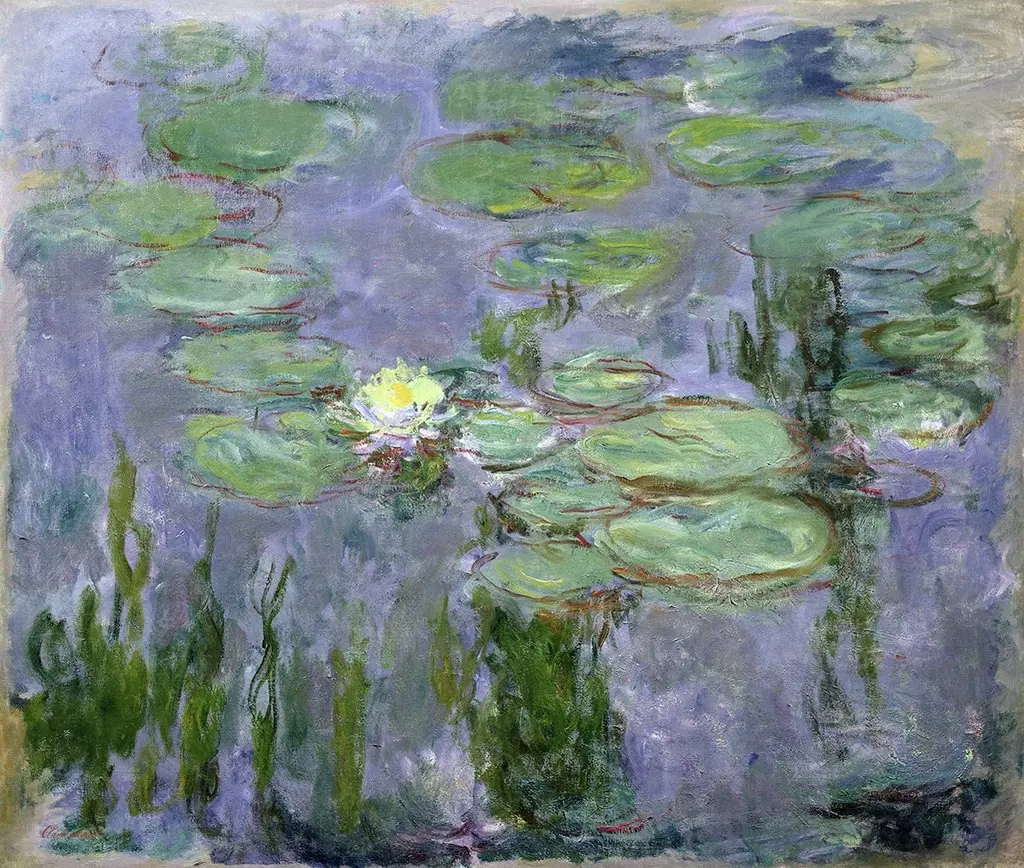
Water Lilies (Agapanthus) is an unspecified painting by the Impressionist artist Claude Monet. It dates from 1920 and is held in the collection of the Cleveland Museum of Art.
About this work
Overview
Claude Monet devoted the final three decades of his career to depicting the garden he created at his Giverny residence. This large‑scale canvas, titled *Water Lilies (Agapanthus)*, concentrates exclusively on the pond’s surface, presenting a field of lily pads illuminated by shifting sunlight.
Subject & Meaning
The composition eliminates any hint of horizon or surrounding bank, directing attention to the interplay of light and water. By isolating the reflective surface, Monet suggests an infinite space, inviting viewers to contemplate the transient qualities of illumination.
Technique & Style
Executed on a monumental horizontal panel, the work is built up with multiple, thick applications of paint. The textured brushwork captures the rippling effect of light on water, creating a sense of movement despite the stillness of the scene.
History & Provenance
Monet worked on his large water‑lily series over many years, refining each canvas through successive layers. *Water Lilies (Agapanthus)* entered the collection of the Cleveland Museum of Art, where it remains on display.
Context
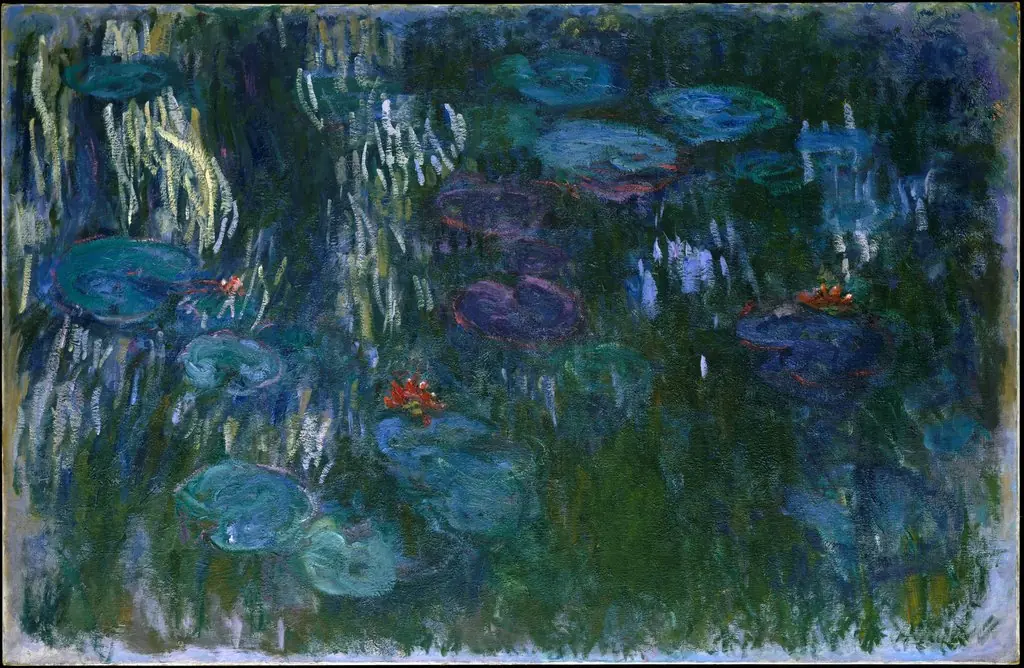
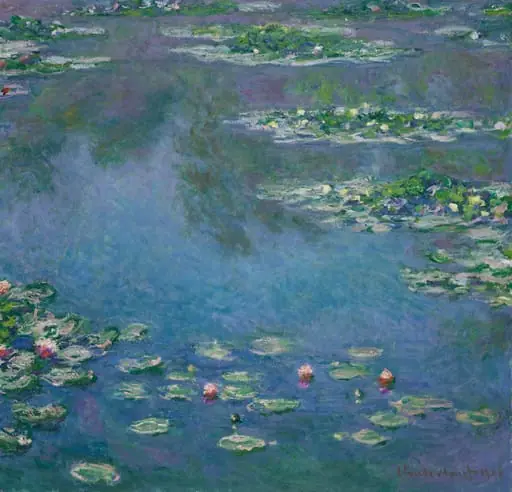
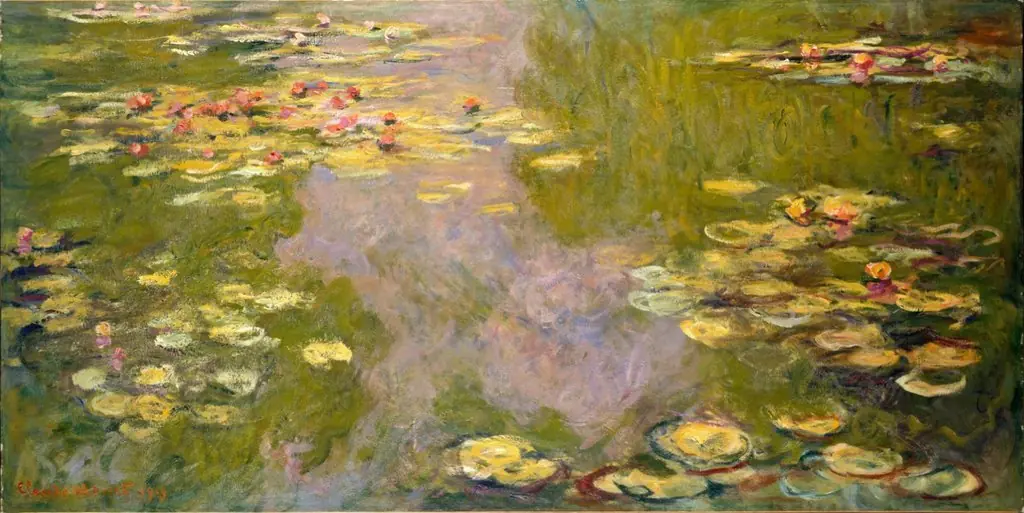
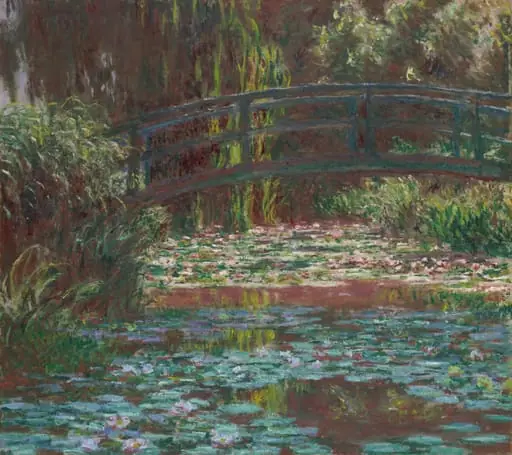
Part of a broader series that documents Monet’s private garden, the painting reflects his horticultural expertise and his preoccupation with capturing fleeting atmospheric conditions, a hallmark of his late Impressionist practice.
Artist & collection
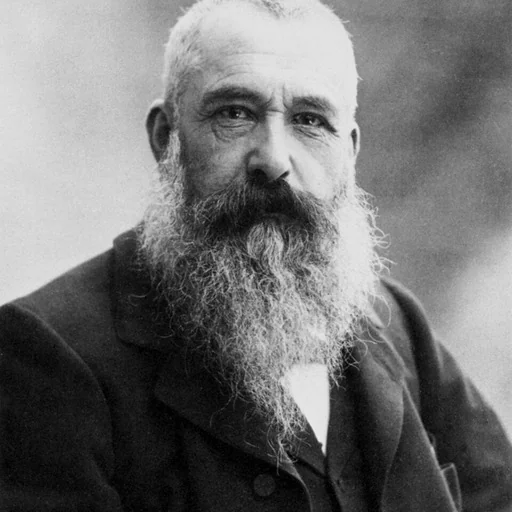
Artist
Oscar-Claude Monet was born in Paris on November 14, 1840, and raised from the age of five in Le Havre, where he began selling charcoal caricatures as a teenager.