Artwork
Branch of the Seine near Giverny (Mist)
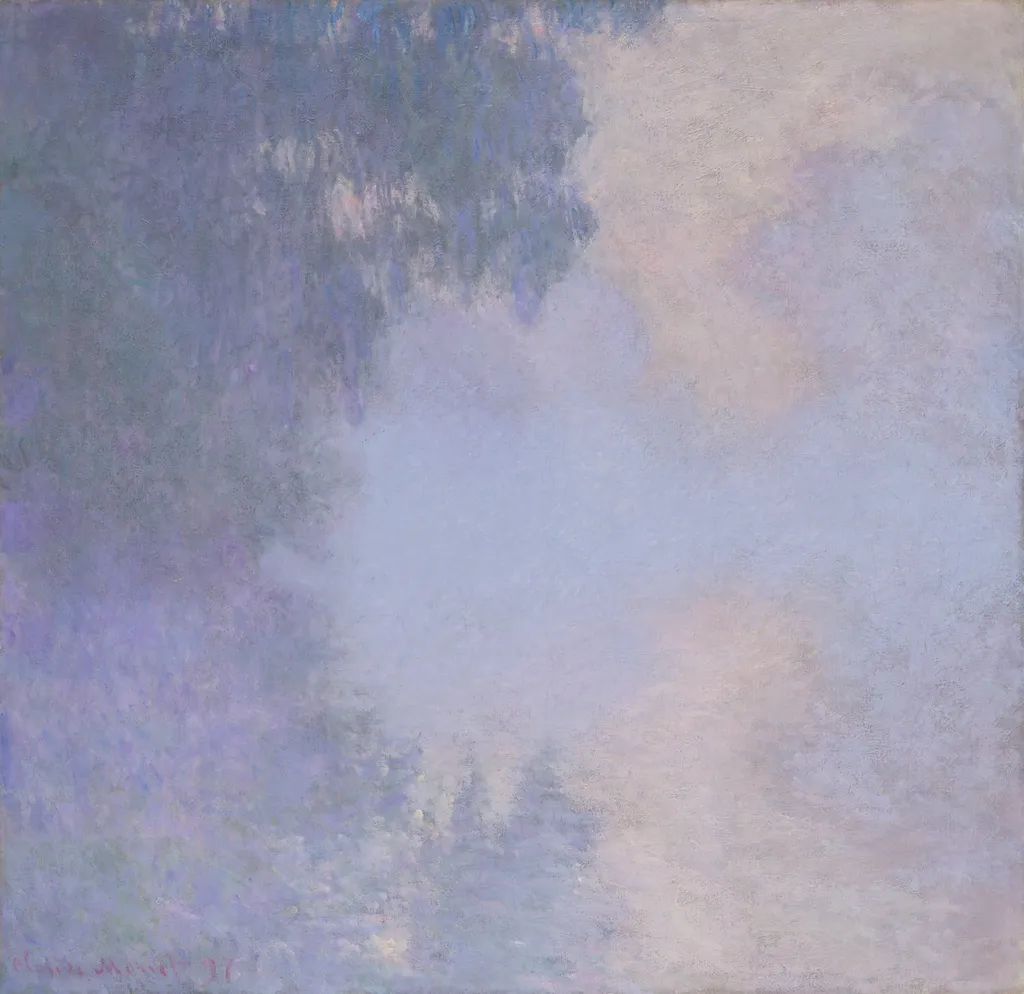
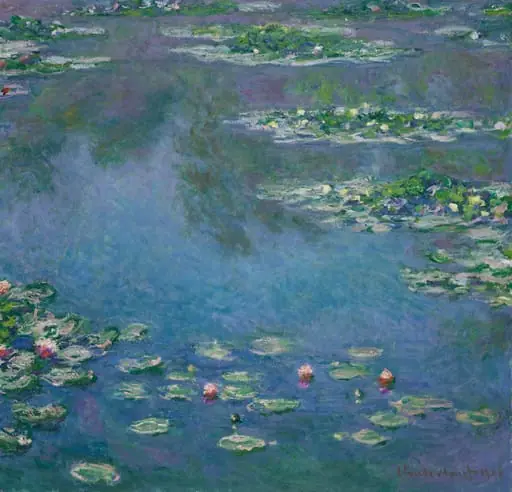
Branch of the Seine near Giverny (Mist) is an oil painting by the Impressionist artist Claude Monet. It dates from 1897 and is held in the collection of the Art Institute of Chicago. Painted in the early 1880s, this oil on canvas captures a quiet stretch of the Seine near Giverny under misty conditions.
About this work
Overview
The nearly square format, custom-made for this series, disrupts conventional landscape composition, enhancing the sense of immersion and ambiguity in the scene.
Painted in the early 1880s, this oil on canvas captures a quiet stretch of the Seine near Giverny under misty conditions. Monet worked on multiple canvases at once, returning before dawn to observe and respond to fleeting atmospheric changes. The nearly square format, custom-made for this series, disrupts conventional landscape composition, enhancing the sense of immersion and ambiguity in the scene.
Subject & Meaning
The painting depicts a tranquil riverside with trees, water, and diffuse sky, rendered without clear boundaries. The subject is not a specific landmark but the transient interplay of light, moisture, and reflection. Monet sought to convey the impermanence of natural conditions, emphasizing perception over detail. The blurred horizon and mirrored forms suggest a world in flux, where land and water merge under mist.
Technique & Style
Monet applied paint with loose, layered brushwork, allowing colors to blend optically rather than on the palette. He used glazing to soften edges and create atmospheric depth, particularly in the horizon, where strokes grow broader and more diffuse. The canvas’s unusual shape and the absence of a defined focal point encourage the eye to wander, mirroring the disorienting effect of mist on vision.
History & Provenance
This work belongs to a series of fourteen canvases Monet produced in rapid succession during a single season, each capturing the Seine at different times of day. He rowed to the same spot daily, adjusting his compositions as light and weather changed. The series reflects his commitment to direct observation and his rejection of studio-based idealization, marking a pivotal phase in his exploration of environmental conditions.
Context
Created during Monet’s mature period, this painting aligns with his growing focus on serial subjects and optical effects. It emerged alongside broader shifts in European art, where artists increasingly prioritized sensory experience over narrative or topographical accuracy. The work responds to contemporary scientific interest in light and perception, while resisting academic conventions of clarity and structure.
Legacy
The painting exemplifies Monet’s influence on modern approaches to landscape, shifting emphasis from representation to perception. Its emphasis on transient conditions and technical experimentation paved the way for later movements that valued subjective experience over objective detail. Though unassuming in subject, it remains a key example of how paint can evoke atmosphere rather than merely depict it.
Own this work as a print
Artist & collection
Artist
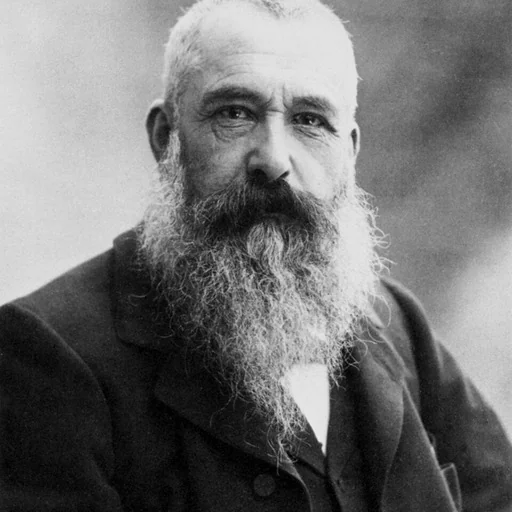
Oscar-Claude Monet was born in Paris on November 14, 1840, and raised from the age of five in Le Havre, where he began selling charcoal caricatures as a teenager.