Artwork
Poplars on the Epte
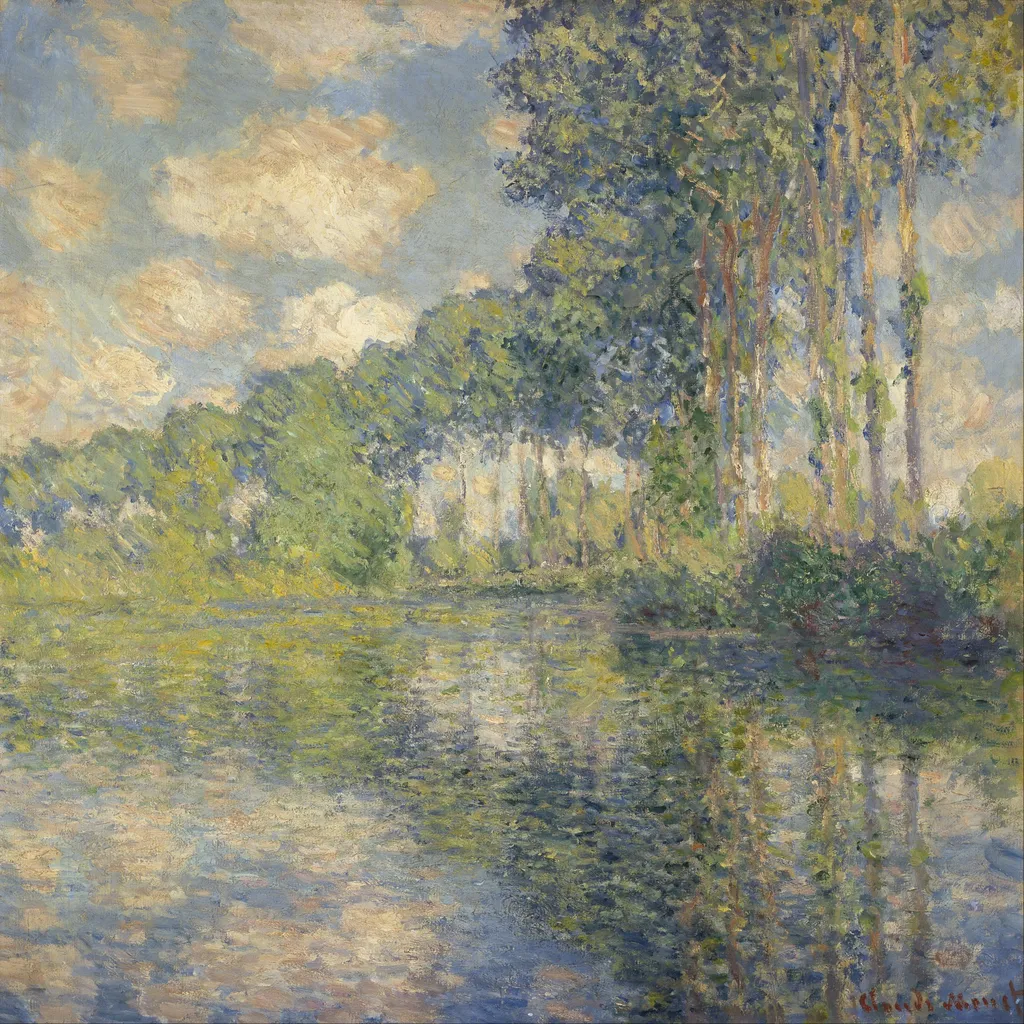
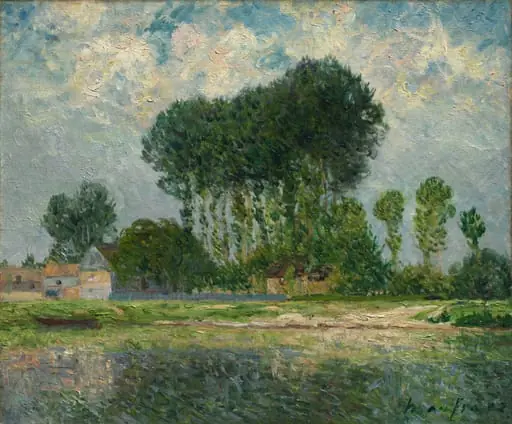
Poplars on the Epte is an oil painting by the Impressionist artist Claude Monet. It dates from 1896 and is held in the collection of the National Galleries Scotland.
About this work
Overview
Painted in 1896, Poplars on the Epte is an oil landscape by Claude Monet that captures a row of slender poplar trees rising from the banks of the Epte River. The work belongs to a series Monet produced during that year, focusing on the same group of trees under varying light and seasonal conditions. It is now part of the collection at the Scottish National Gallery in Edinburgh.
Subject & Meaning
The painting depicts a line of tall poplars partially submerged in still water, their trunks and reflections forming vertical rhythms that anchor the composition. The trees, stripped of leaves in late autumn, suggest transience and quiet decay. Monet’s focus on this ordinary riverside scene elevates it into a meditation on nature’s subtle transformations, free from narrative or symbolism.
Technique & Style
The loose, rapid handling conveys atmospheric conditions without detail, characteristic of Impressionist practice and a focus on transient visual impressions.
Monet applied thin, broken brushstrokes in muted greens, grays, and browns, with faint touches of ochre and pale orange to suggest light filtering through bare branches. The water’s surface mirrors the sky and trees with soft, blurred edges, enhancing spatial depth. The loose, rapid handling conveys atmospheric conditions without detail, characteristic of Impressionist practice and a focus on transient visual impressions.
History & Provenance
Monet painted this work during a period when he was systematically exploring the same subject under changing light and weather. The poplars were planted along the Epte River near his home in Giverny, and he produced over twenty versions of them in 1891. This particular painting entered the Scottish National Gallery’s collection in 1927, acquired from a private British collector.
Context
In the 1890s, Monet increasingly turned to serial studies—repeating subjects like haystacks, cathedrals, and poplars—to examine how light and atmosphere altered perception. Poplars on the Epte reflects this method, emerging alongside broader European interest in naturalism and the scientific observation of color. The series also coincided with industrialization’s encroachment on rural landscapes, lending the trees a quiet symbolic weight.
Legacy
The Poplars series reinforced Monet’s reputation for capturing ephemeral natural phenomena through disciplined observation. While not widely exhibited during his lifetime, these works later became touchstones for modern landscape painting, influencing artists who prioritized sensory experience over idealized form. The Scottish National Gallery’s holding remains a key example of his late Impressionist phase.
Own this work as a print
Artist & collection
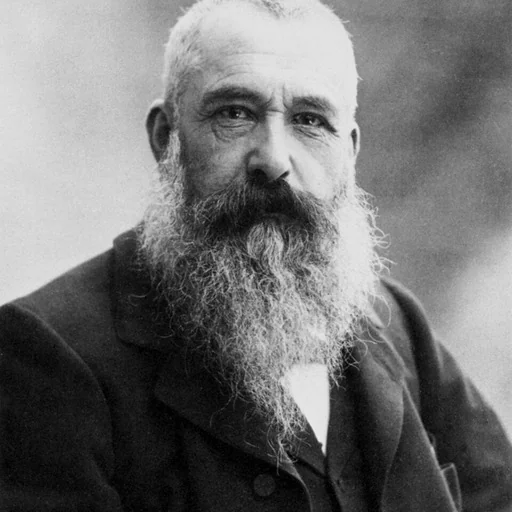
Artist
Oscar-Claude Monet was born in Paris on November 14, 1840, and raised from the age of five in Le Havre, where he began selling charcoal caricatures as a teenager.