Artwork
Port of Le Havre
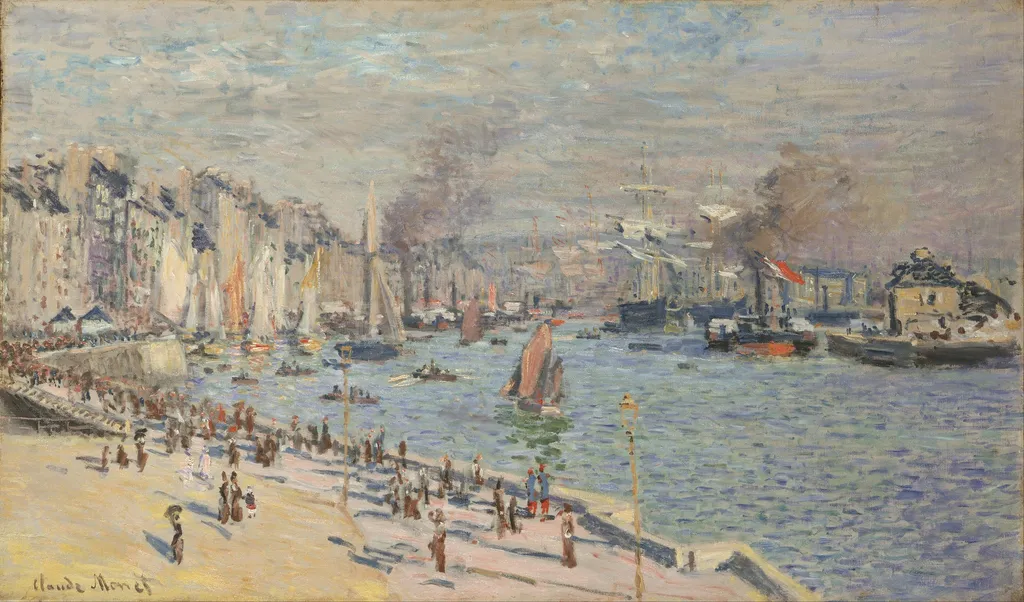
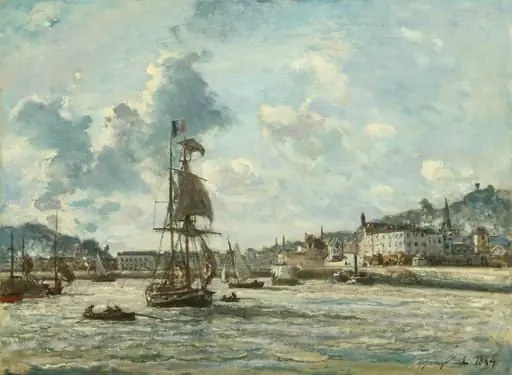
Port of Le Havre is an oil painting by the Impressionist artist Claude Monet. It dates from 1874 and is held in the collection of the Philadelphia Museum of Art.
About this work
Overview
Painted in 1874, Port of Le Havre is an oil on canvas work by Claude Monet that captures the activity of a northern French harbor. It resides in the Philadelphia Museum of Art and exemplifies Monet’s early engagement with Impressionist principles, emphasizing transient light and everyday scenes over idealized composition.
Subject & Meaning
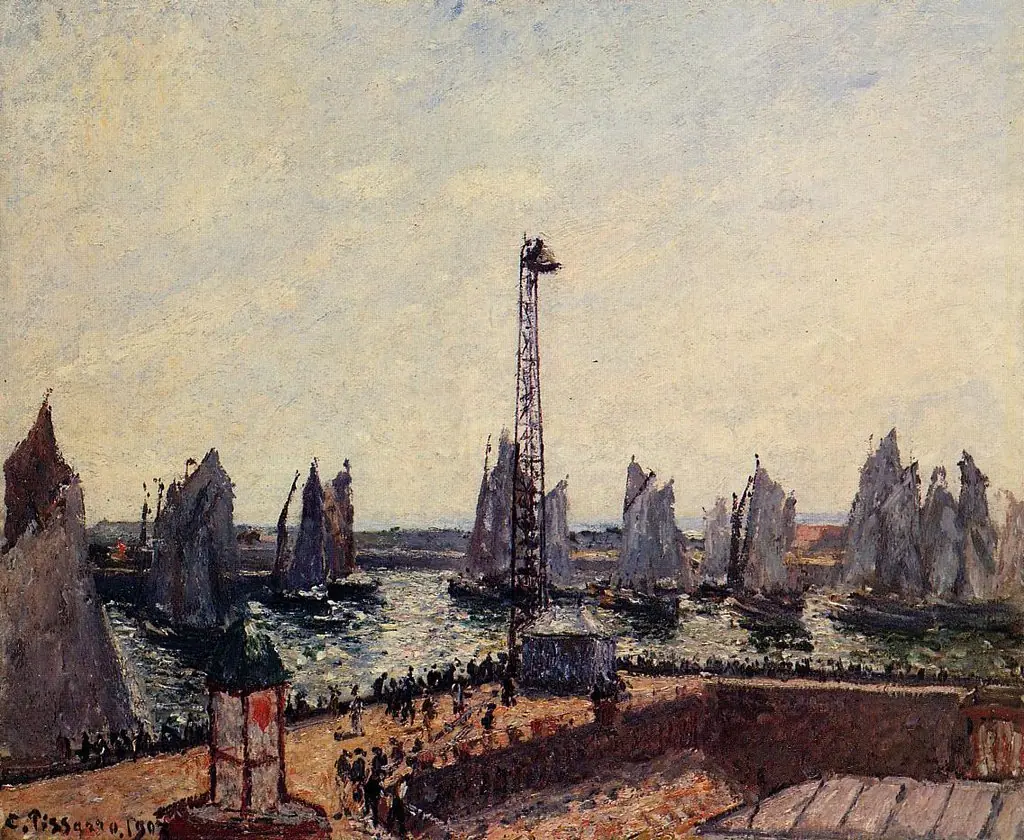
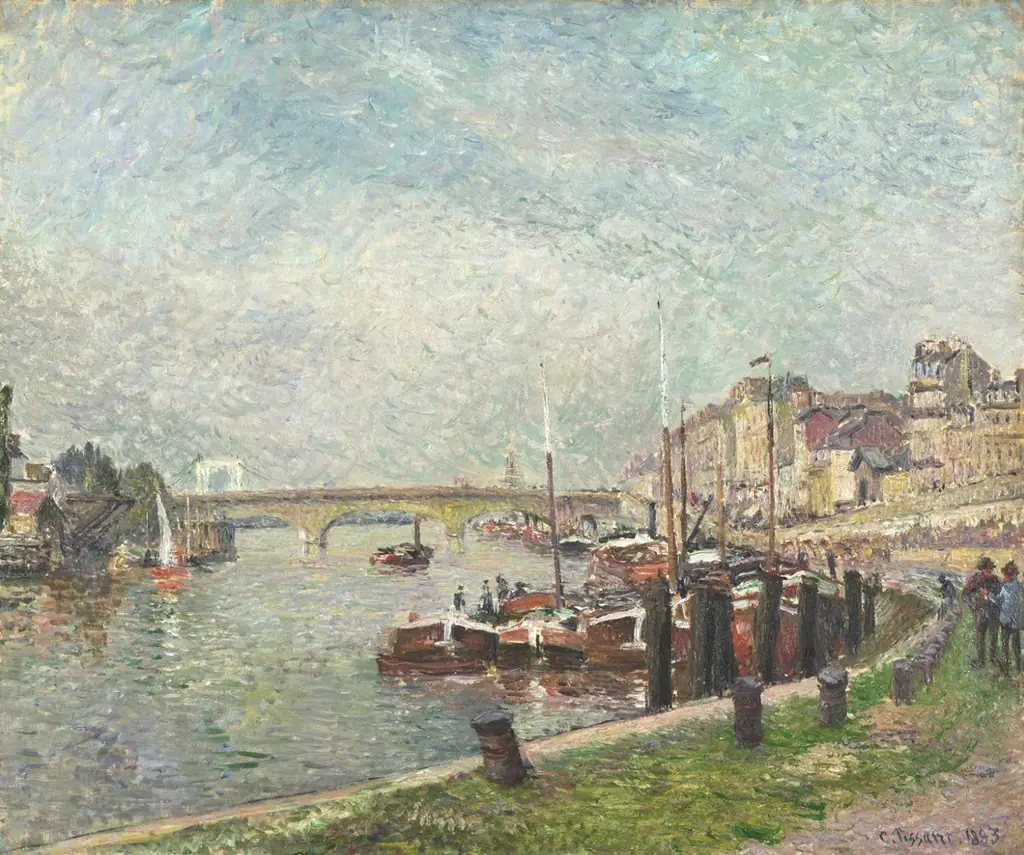
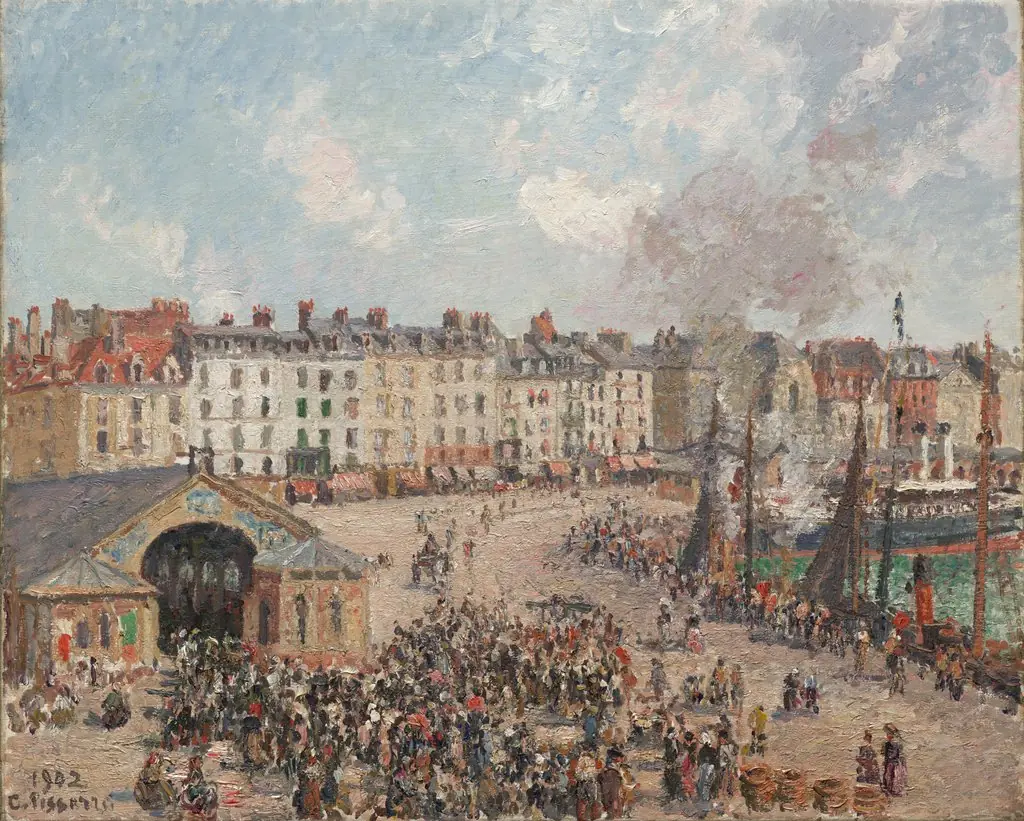
The painting portrays a working harbor teeming with vessels of varying scale, from small fishing boats to larger merchant ships. Figures move along the quayside, and the architecture of the port frames the scene. Rather than celebrating grandeur, Monet focuses on the rhythm of daily labor and the interplay of human activity with the natural environment.
Technique & Style
Monet applied paint with rapid, broken brushwork to convey shifting light and atmospheric conditions. Colors are layered without heavy blending—blues and greens for water, muted grays and browns for structures—creating a sense of immediacy. The absence of sharp outlines and the emphasis on optical effects align with Impressionist goals, though chiaroscuro is not a defining feature here.
History & Provenance
Completed in 1874, the painting was likely exhibited in the first Impressionist show that year. It entered the Philadelphia Museum of Art’s collection in the early 20th century, acquired through donations or purchases that expanded the museum’s holdings of French modern art during a period of growing interest in Impressionism.
Context
In 1874, Monet was part of a group of artists rejecting academic conventions, seeking to depict modern life through direct observation. Le Havre, a major commercial port, offered dynamic subject matter: changing tides, industrial activity, and the effects of weather on light. This work reflects a broader shift toward painting en plein air and capturing fleeting moments.
Legacy
Port of Le Havre contributes to the foundation of Impressionism’s visual language, demonstrating how ordinary scenes could be rendered with emotional resonance through color and brushwork. It influenced later artists interested in light, movement, and the modern landscape, helping to redefine the boundaries of acceptable subject matter in painting.
Own this work as a print
Artist & collection
Artist
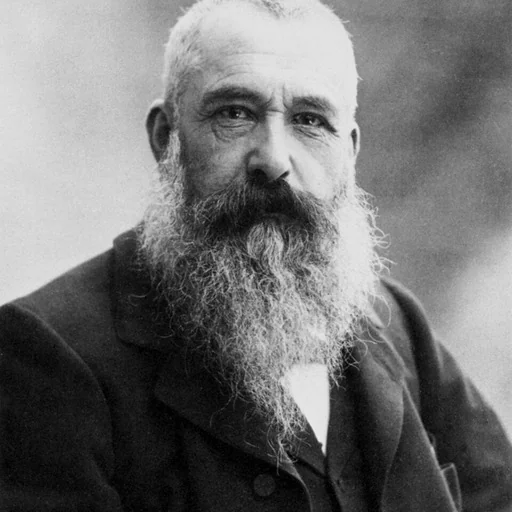
Oscar-Claude Monet was born in Paris on November 14, 1840, and raised from the age of five in Le Havre, where he began selling charcoal caricatures as a teenager.