Artwork
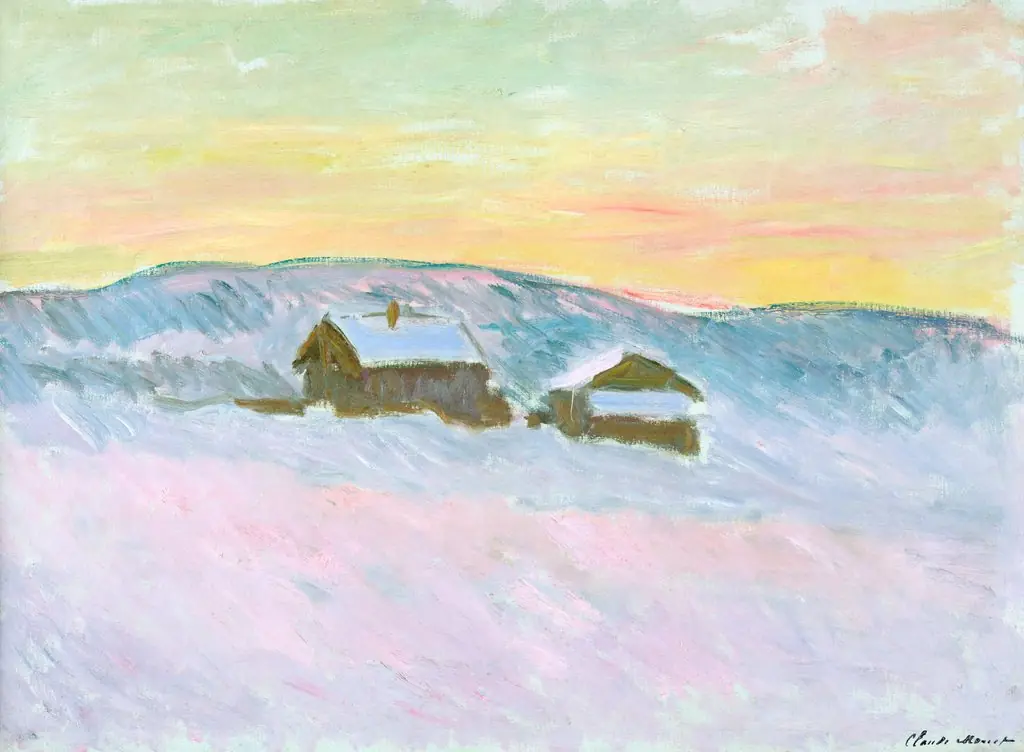
Norvège, les maisons rouges à Björnegaard
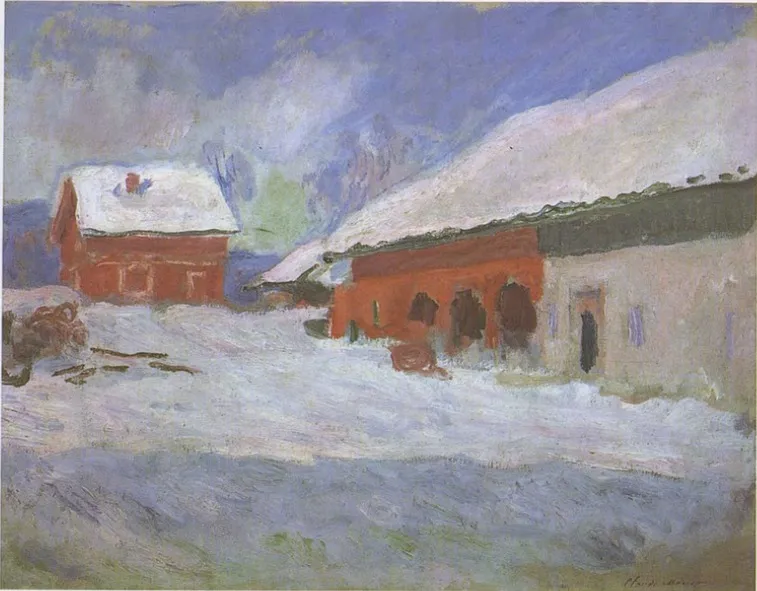
Norvège, les maisons rouges à Björnegaard is an oil painting by the Impressionist artist Claude Monet. It dates from 1898 and is held in the collection of the Musée Marmottan Monet.
About this work
Overview
Norvège, les maisons rouges à Björnegaard is an 1898 oil painting by Claude Monet, currently housed at the Musée Marmottan Monet.
Subject & Meaning
The painting captures a serene winter scene in Norway, featuring two distinct buildings—a red one with a white roof on the left, and a white one with a dark roof on the right—set against a blue, clouded sky. Foreground elements include a snow patch and indistinct, dark forms suggestive of vegetation.
Technique & Style
Executed in Monet's characteristic Impressionist style, the work emphasizes light's play on snow, visible through expressive, soft brushstrokes. The muted color palette predominantly features blues, whites, and the titular red, conveying a sense of calm.
History & Provenance
Created in 1898, the painting's history prior to its current residence at the Musée Marmottan Monet is not detailed here. It is part of the museum's Monet collection.
Context
This piece reflects Monet's interest in capturing northern European landscapes, differing from his more famous works set in France. The Norwegian setting offers a unique backdrop for his Impressionist exploration of light and color.
Legacy
While not among Monet's most widely recognized works, Norvège, les maisons rouges à Björnegaard remains a notable example of his Impressionist technique applied to a less common, snowy Nordic landscape.
Artist & collection
Artist
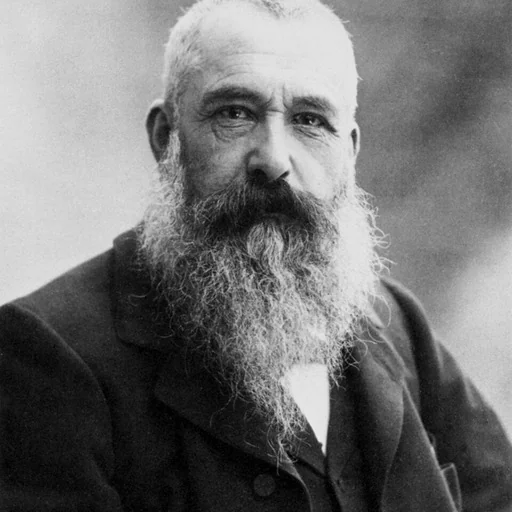
Oscar-Claude Monet was born in Paris on November 14, 1840, and raised from the age of five in Le Havre, where he began selling charcoal caricatures as a teenager.