Artwork
Rapids on the Petite Creuse at Fresselines
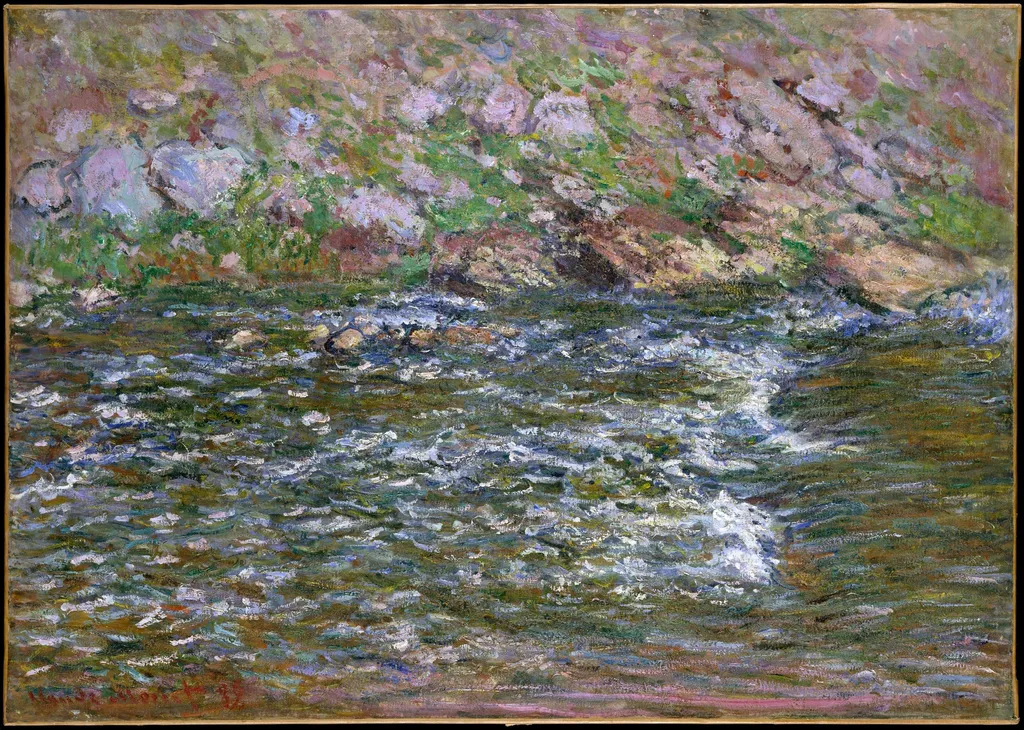
Rapids on the Petite Creuse at Fresselines is an oil painting by the Impressionist artist Claude Monet. It dates from 1895 and is held in the collection of the Metropolitan Museum of Art.
About this work
Overview
The composition centers on the churning water, rendered with thick, impasto brushstrokes that capture the chaotic motion and frothing whitecaps of the rapids.
Painted in 1895, Rapids on the Petite Creuse at Fresselines depicts the turbulent confluence of the Creuse and Petite Creuse rivers in the village of Fresselines, a location where Claude Monet spent the summer of that year. The composition centers on the churning water, rendered with thick, impasto brushstrokes that capture the chaotic motion and frothing whitecaps of the rapids. Monet employed a palette of earthy browns, deep greens, and cool grays to convey the river's force, contrasting these with the vibrant, multicolored foliage of the riverbanks, where pinks, purples, and bright greens suggest the intensity of the surrounding vegetation. Executed during a period when Monet was increasingly focused on capturing the fleeting effects of light and atmosphere, the work exemplifies his mature Impressionist style. Rather than a static view, the painting conveys the sensory experience of the landscape, emphasizing the dynamic interplay between the rushing water and the lush, overgrown banks. This series of works from Fresselines marks a significant moment in Monet's career, demonstrating his ability to translate the raw energy of nature into a structured yet vibrant visual language.
Subject & Meaning
The painting presents a dramatic view of the Petite Creuse river, where the water appears turbulent and rapidly flowing. Monet renders the choppy surface with a blend of brown, green, and gray tones, suggesting the river's depth and speed. Above the churning water, a dense array of trees and bushes forms a vibrant, almost chaotic mass of pinks, greens, and purples. This composition emphasizes the raw, untamed character of the natural landscape.
Technique & Style
Monet employed a distinctive technique in this work, characterized by exceptionally thick and textured brushstrokes, a method known as impasto. The paint is visibly layered on the canvas, creating a tactile surface that enhances the sensation of movement and vitality. This application of paint allows the viewer to perceive the dynamic energy of the rushing water and the dense foliage, immersing them in the immediate experience of the natural environment.
Artist & collection
Artist
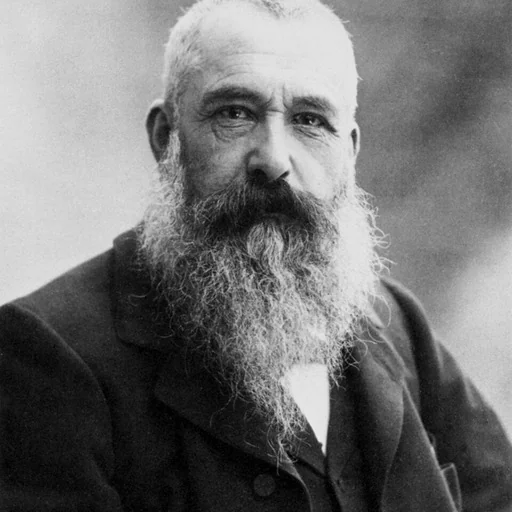
Oscar-Claude Monet was born in Paris on November 14, 1840, and raised from the age of five in Le Havre, where he began selling charcoal caricatures as a teenager.