Artwork
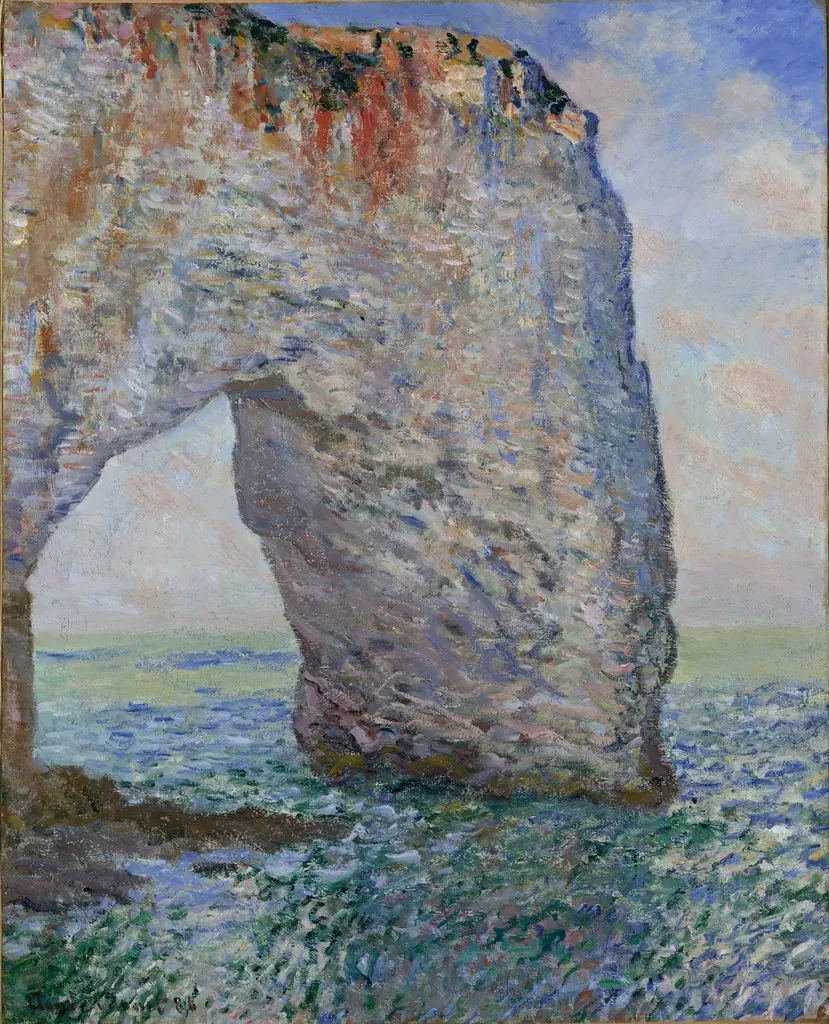
The Cliffs at Étretat
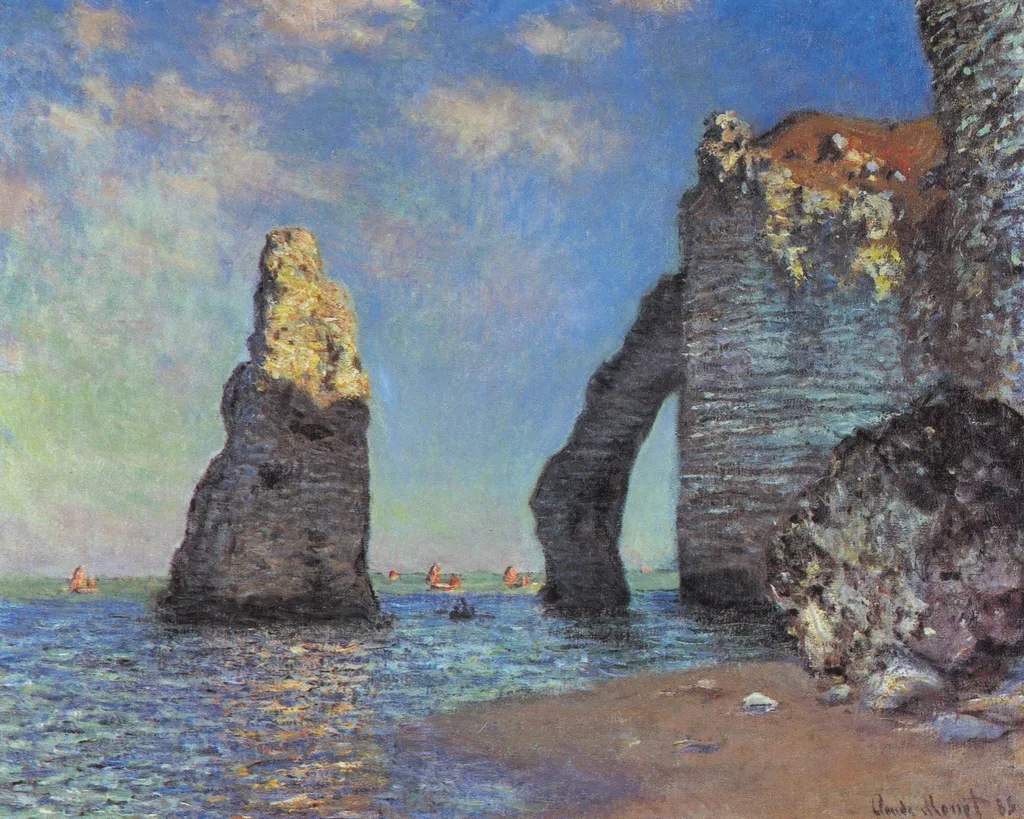
The Cliffs at Étretat is an oil painting by the Impressionist artist Claude Monet. It dates from 1893 and is held in the collection of the Clark Art Institute.
About this work
This approach highlights Monet’s shift toward a sustained observation of light and atmosphere, a key step in his artistic development.
Claude Monet painted The Cliffs at Étretat in 1885 using oil paint. It is one of a series of about fifty works that focus on the chalk cliffs of the Normandy seaside town.
The paintings show the same limestone cliffs and sea arches at different times of day and in changing weather. This approach highlights Monet’s shift toward a sustained observation of light and atmosphere, a key step in his artistic development.
museum: Clark Art Institute
Overview
Claude Monet created a series of roughly fifty oil paintings in 1885 that focus on the chalk cliffs and sea arches of Étretat, a coastal town in Normandy. Each canvas captures the same geological formation under different lighting and weather conditions, offering a systematic study of the site’s visual changes.
Subject & Meaning
The works portray the stark white limestone cliffs rising from the Atlantic, punctuated by natural arches that frame the sea. By presenting the landscape at varied times of day, Monet emphasizes the fleeting effects of light and atmosphere, inviting viewers to consider how perception shifts with natural phenomena.
Technique & Style
Executed in oil on canvas, the paintings employ loose brushwork and a palette attuned to subtle tonal shifts. Monet’s handling of color and texture conveys the translucency of the cliffs and the movement of water and sky, reflecting his move toward a more sustained, observational approach to light.
History & Provenance
The Étretat series was produced during Monet’s mid‑career, a period of intense focus on serial depictions of a single motif. Several of the canvases entered public collections in the early 20th century; one notable example resides at the Clark Art Institute, acquired through donation in the 1970s.
Context
Monet’s interest in Étretat aligns with his broader exploration of coastal subjects, following earlier series such as the Rouen Cathedral and the Haystacks. The Normandy cliffs offered a dramatic, natural laboratory for examining atmospheric effects, positioning the series as a bridge between early Impressionist experiments and his later, more systematic investigations of light.
Own this work as a print
Artist & collection
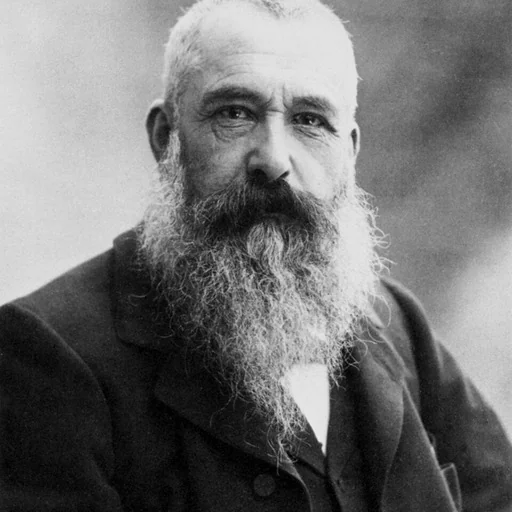
Artist
Oscar-Claude Monet was born in Paris on November 14, 1840, and raised from the age of five in Le Havre, where he began selling charcoal caricatures as a teenager.