Artwork
Water Lily Pond
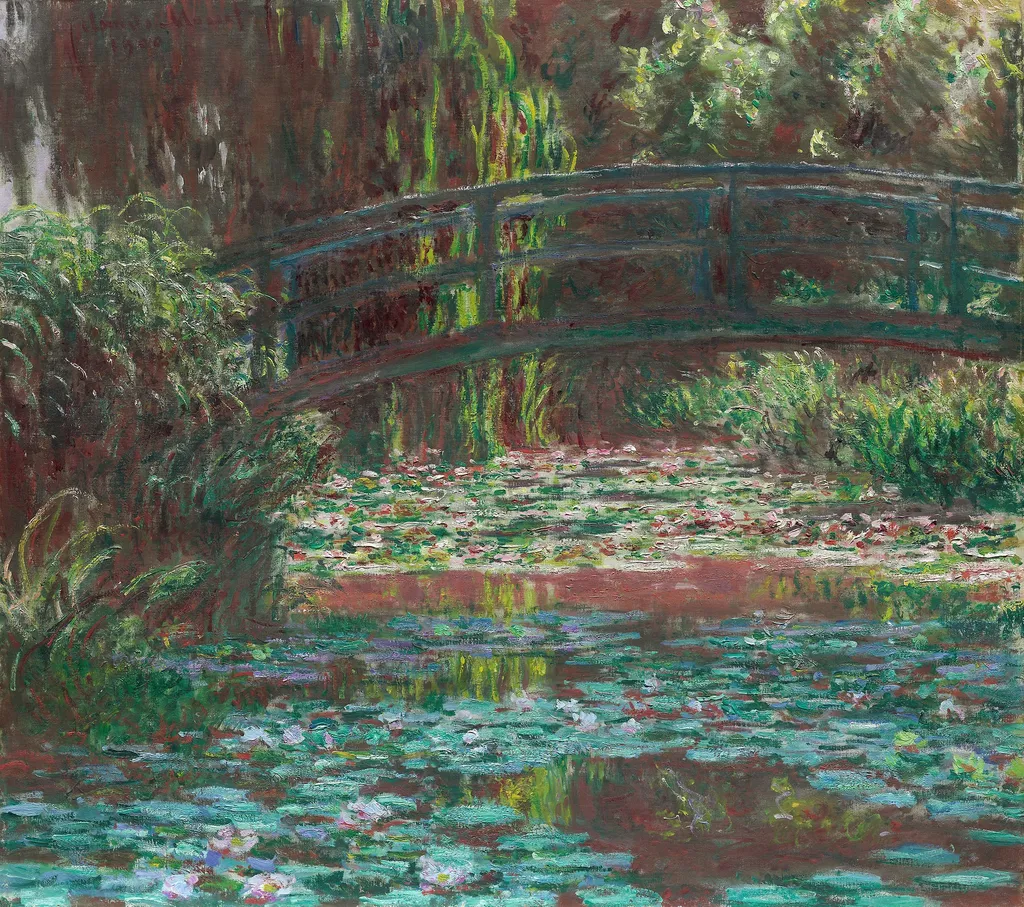
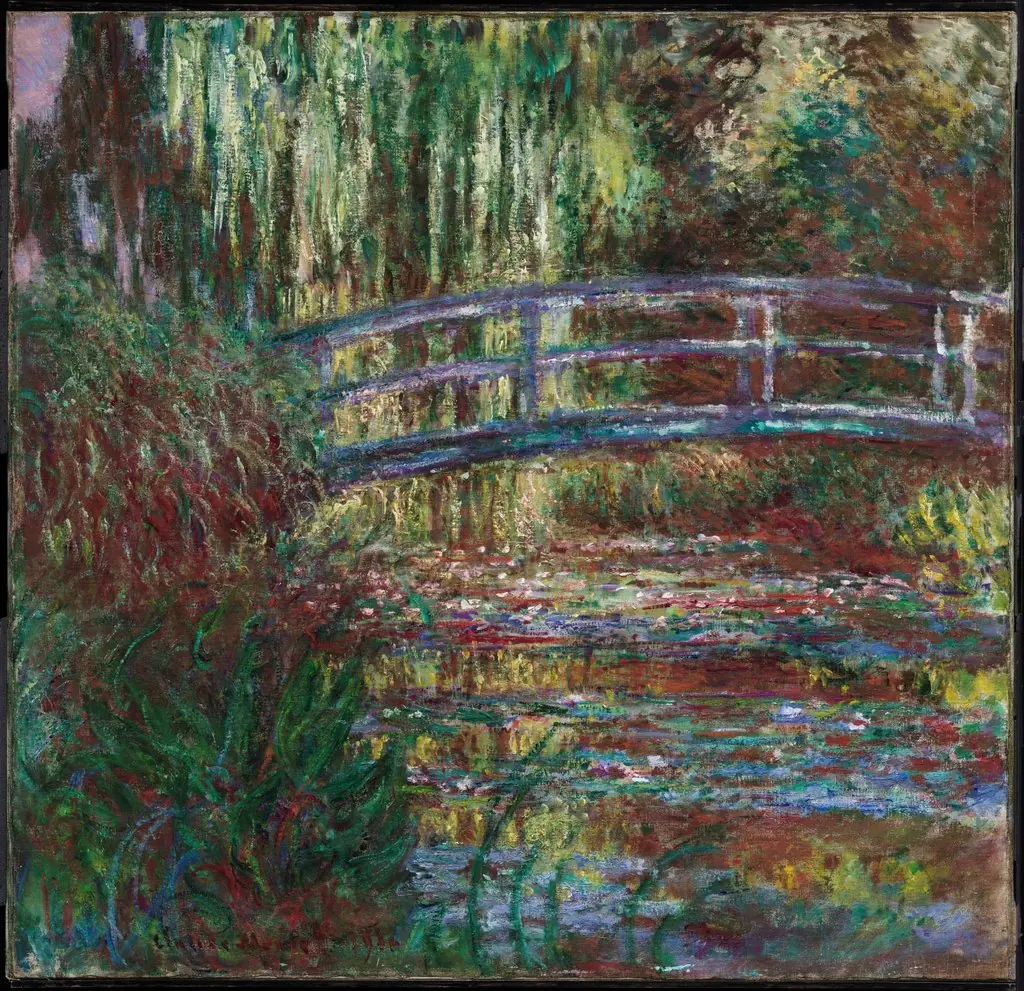
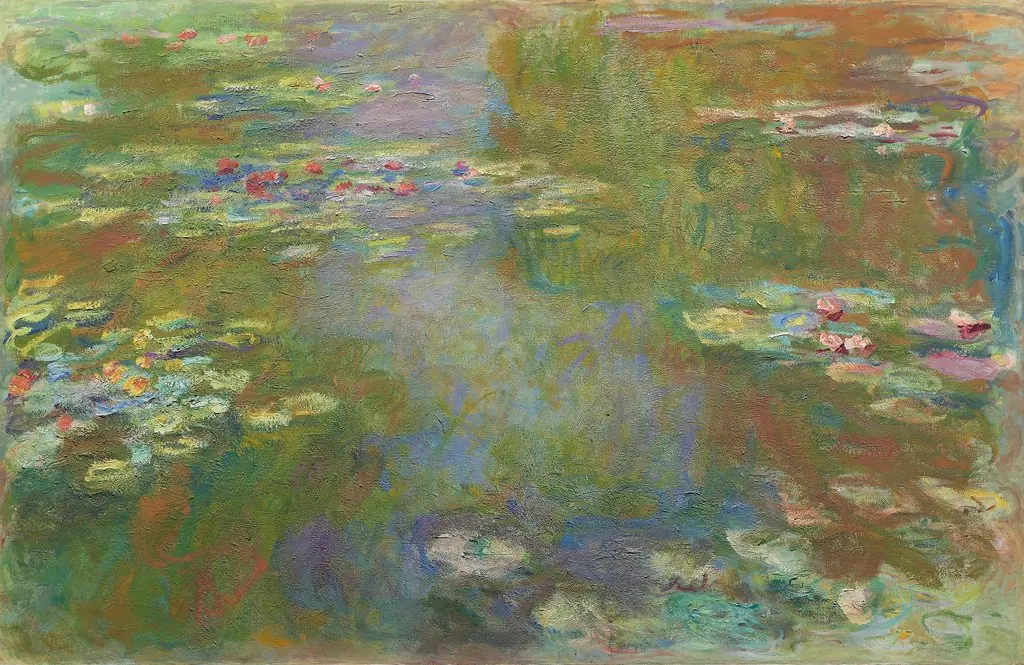
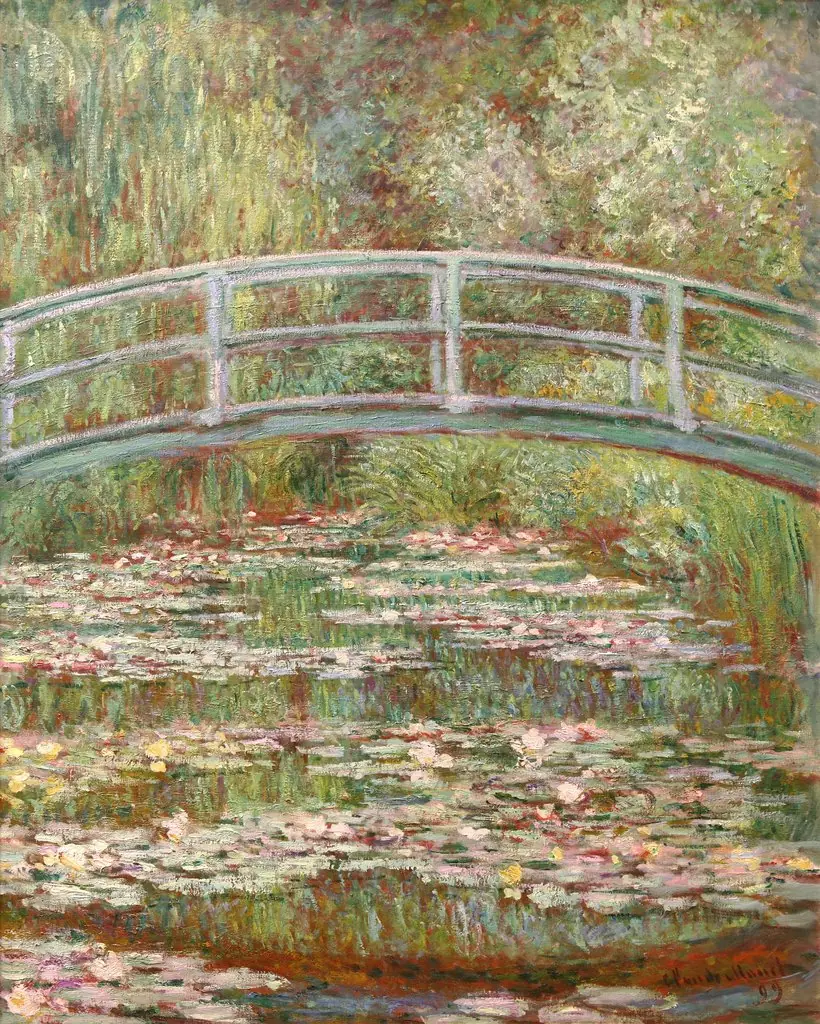
Water Lily Pond is an oil painting by the Impressionist artist Claude Monet. It dates from 1900 and is held in the collection of the Art Institute of Chicago.
About this work
Overview
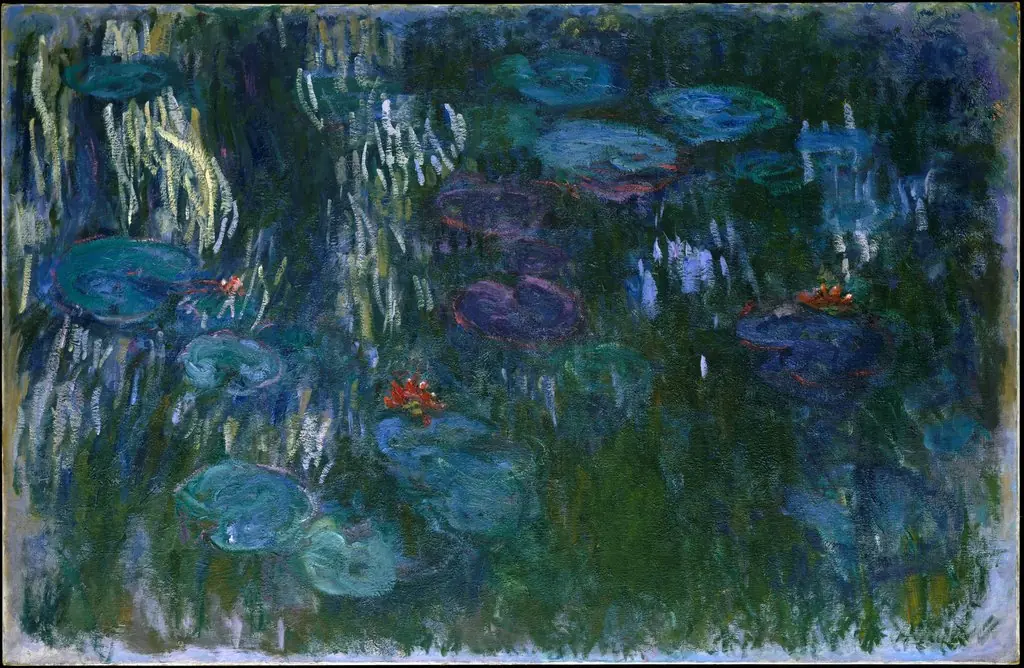
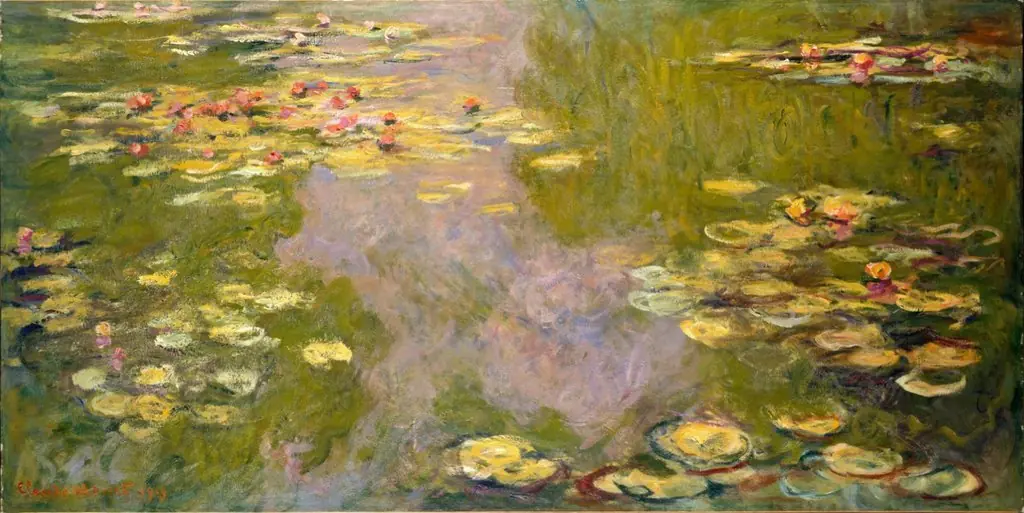
Painted in 1900, Water Lily Pond is an oil on canvas work by Claude Monet, currently in the collection of the Art Institute of Chicago. The piece captures a quiet corner of the artist’s garden in Giverny, focusing on a wooden footbridge arched over a pond. Its modest scale belies the immersive quality of the scene, inviting close observation of surface reflections and subtle color shifts.
Subject & Meaning
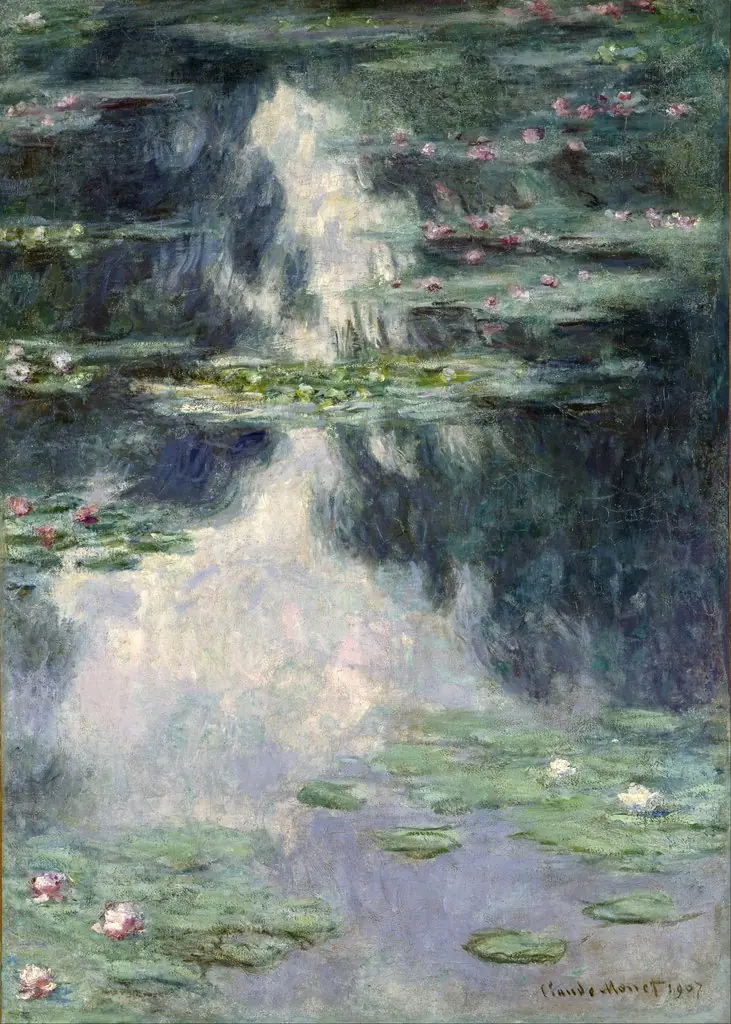
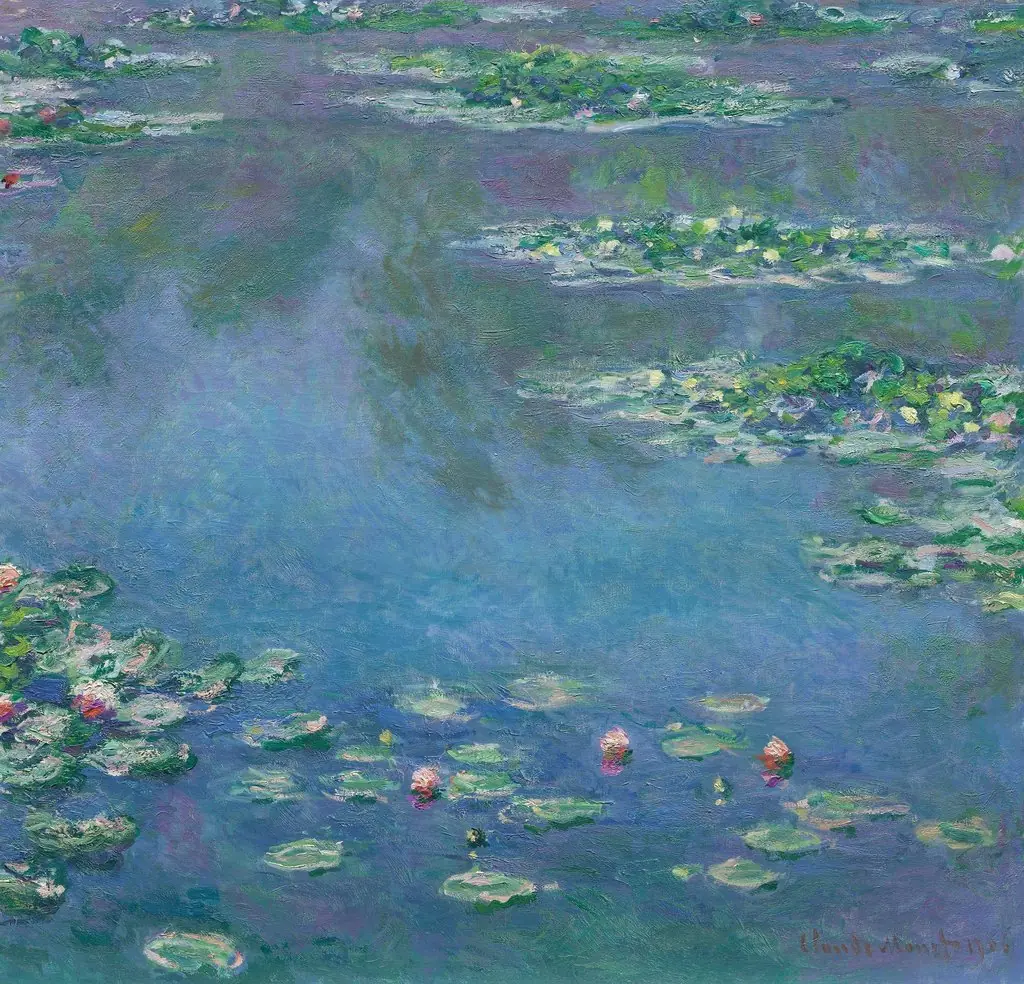
The painting presents a tranquil aquatic environment dominated by floating water lilies and dense vegetation.
The painting presents a tranquil aquatic environment dominated by floating water lilies and dense vegetation. The bridge, barely defined, serves as a structural anchor without disrupting the fluidity of the composition. There is no human presence, and the absence of horizon or sky emphasizes the pond as a self-contained world, reflecting Monet’s interest in nature as a site of quiet contemplation and sensory immersion.
Technique & Style
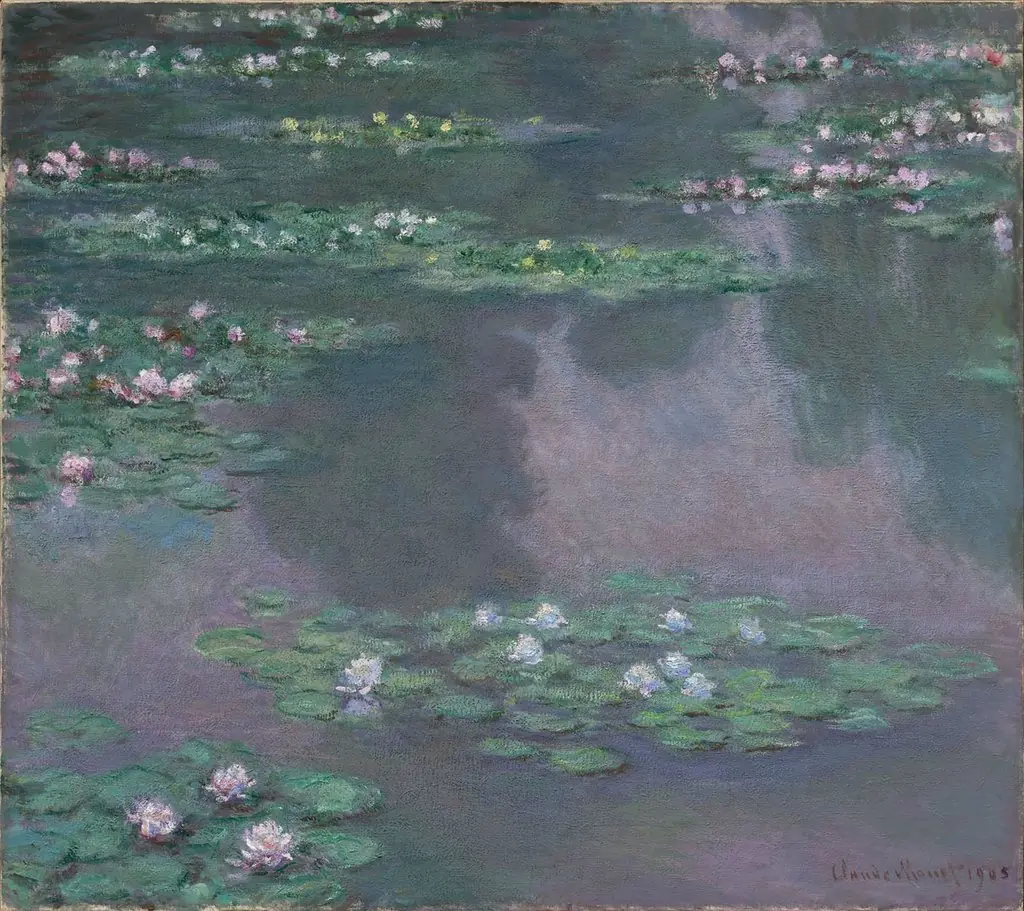
Monet applied oil paint in loose, layered strokes, allowing colors to blend optically rather than on the palette. The surface is textured yet soft, with delicate transitions between greens, pinks, and blues that mimic the play of light on water. Brushwork avoids sharp outlines, dissolving forms into atmospheric patches of pigment, characteristic of his late Impressionist approach focused on perception over definition.
History & Provenance
Created during Monet’s sustained focus on his water garden, this painting belongs to a series produced between 1899 and 1901. It entered the Art Institute of Chicago’s collection in 1922 through a bequest from a private donor. Unlike some of his larger panels, this work remained in private hands until its acquisition, preserving its intimate scale and personal character.
Context
Monet painted this during a period when he increasingly turned inward, using his garden as both subject and studio. The water lily series emerged from his desire to capture changing light and seasonal shifts without narrative or figure. These works reflect a broader shift in late 19th-century art toward abstraction through color and atmosphere, anticipating modernist tendencies in painting.
Legacy
Water Lily Pond exemplifies Monet’s evolution toward immersive, non-representational landscapes. Its emphasis on surface, reflection, and tonal harmony influenced later artists exploring abstraction and perception. Though not as monumental as his later murals, this smaller work remains a key example of how intimate observation could yield profound visual experiments in light and color.
Own this work as a print
Artist & collection
Artist
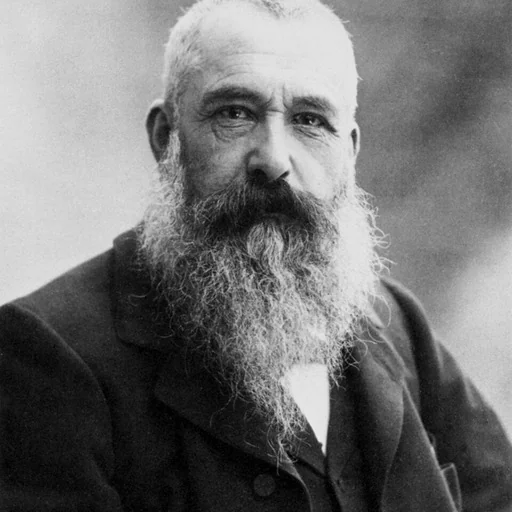
Oscar-Claude Monet was born in Paris on November 14, 1840, and raised from the age of five in Le Havre, where he began selling charcoal caricatures as a teenager.