Artwork
Weeping Willow
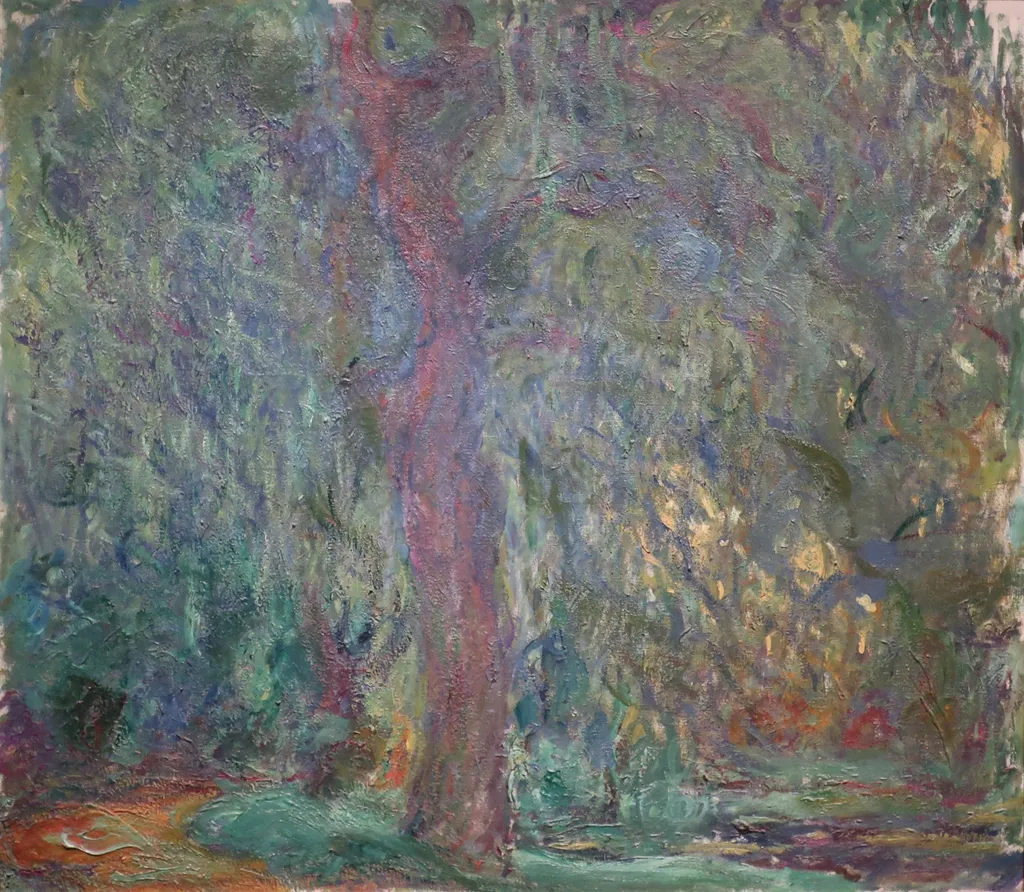
Weeping Willow is an oil painting by the Impressionist artist Claude Monet. It dates from 1918 and is held in the collection of the Musée Marmottan Monet.
About this work
Overview
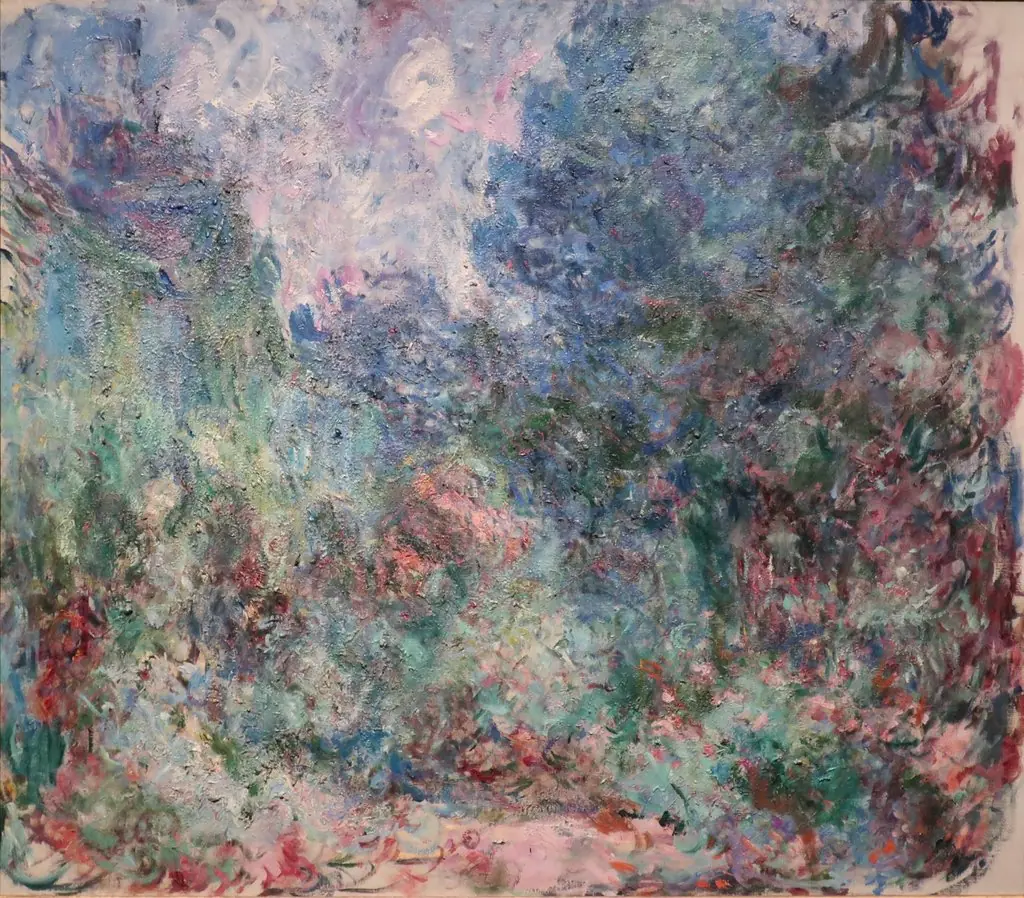
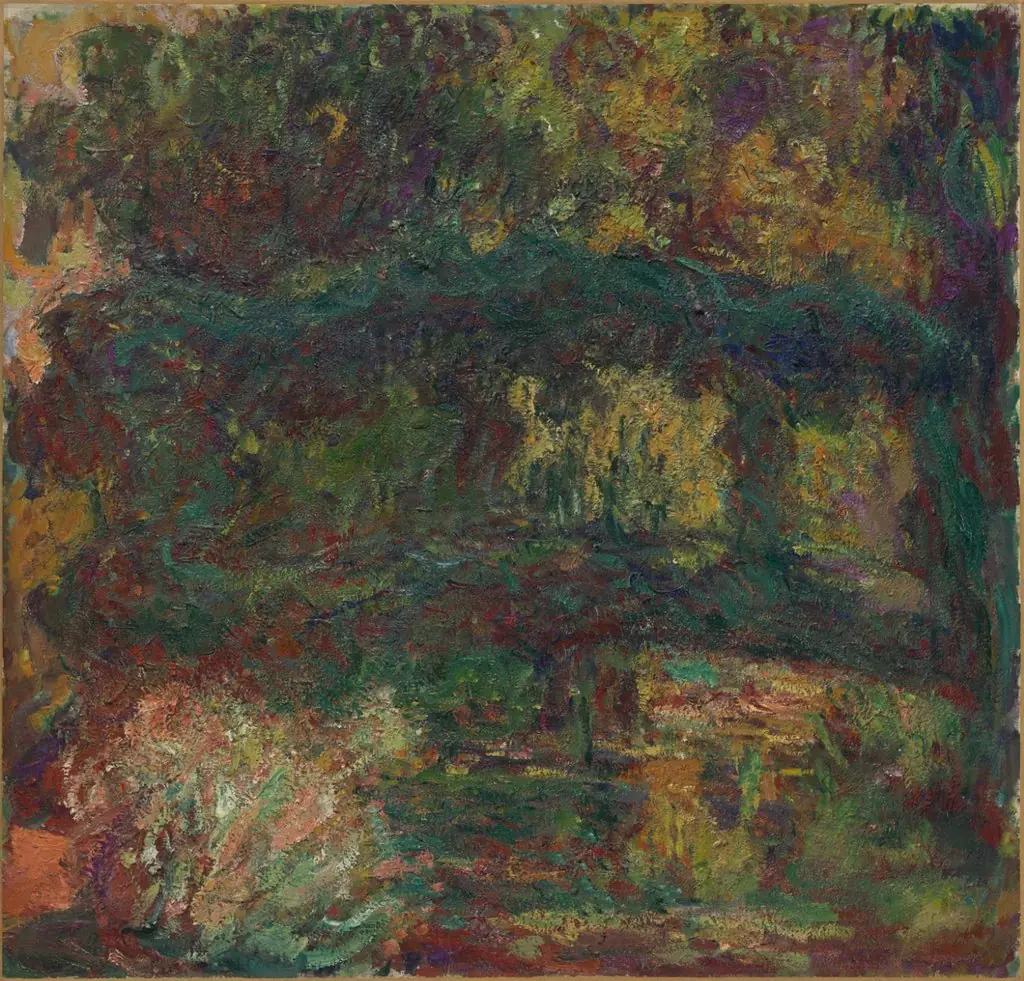
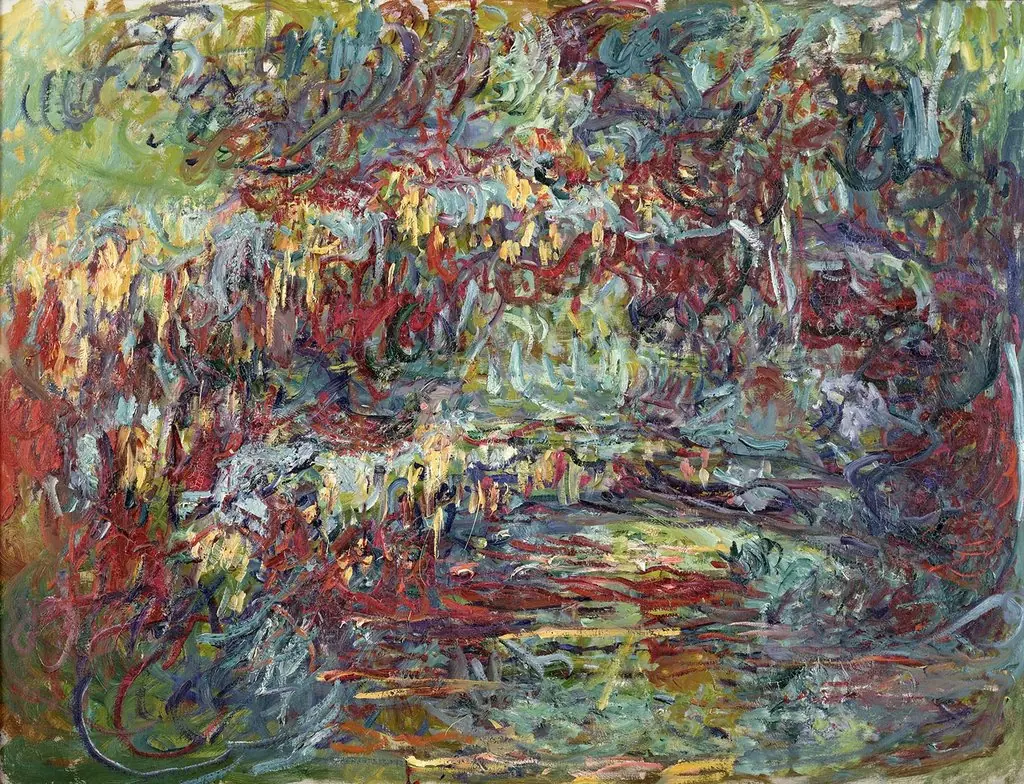
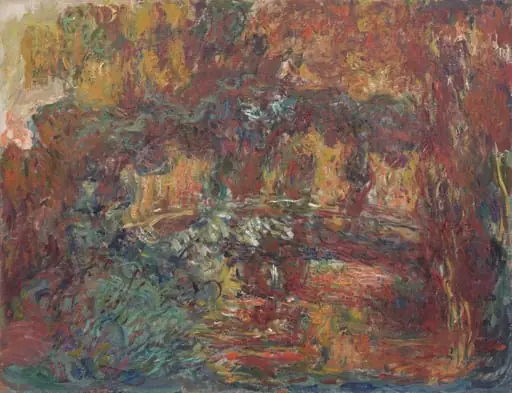
Claude Monet’s 1918 oil on canvas titled *Weeping Willow* presents a solitary willow tree rendered with his characteristic impressionist sensibility. The composition centers on the drooping branches, set against a muted landscape of greens, blues and subtle purples that suggest a tranquil, slightly overcast atmosphere. The work is part of the collection at the Musée Marmottan Monet in Paris.
Subject & Meaning
The painting portrays a *Salix babylonica*, commonly known as the weeping willow, its pendulous limbs and delicate foliage rendered in a way that emphasizes the tree’s graceful decline. The subdued palette and soft focus evoke a contemplative mood, inviting viewers to experience the quiet stillness of a natural scene rather than a narrative episode.
Technique & Style
Monet employs loose, expressive brushwork that creates a feathery texture across the canvas, allowing the paint’s surface to remain visibly tactile.
Monet employs loose, expressive brushwork that creates a feathery texture across the canvas, allowing the paint’s surface to remain visibly tactile. The color scheme is restrained, dominated by muted greens and cool blues, with occasional hints of purple in shadowed areas. This approach generates depth, as the foliage appears to recede into the background while maintaining a sense of atmospheric cohesion.
History & Provenance
Created in the final year of Monet’s life, *Weeping Willow* reflects his continued exploration of landscape subjects in his later period. The painting entered the Musée Marmottan Monet’s holdings, where it remains on display as part of the museum’s extensive representation of Monet’s late oeuvre, offering insight into his evolving treatment of light and form.
Own this work as a print
Artist & collection
Artist
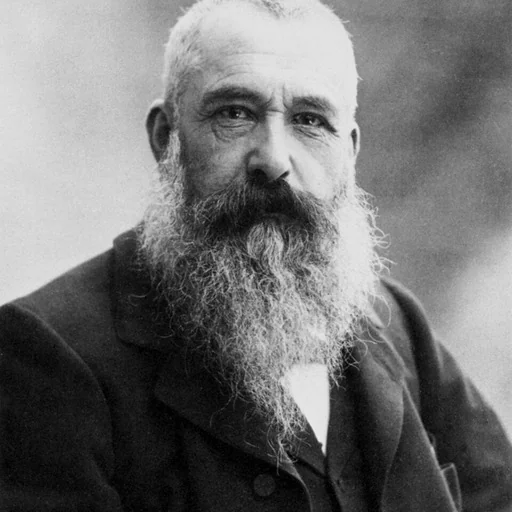
Oscar-Claude Monet was born in Paris on November 14, 1840, and raised from the age of five in Le Havre, where he began selling charcoal caricatures as a teenager.