Artwork
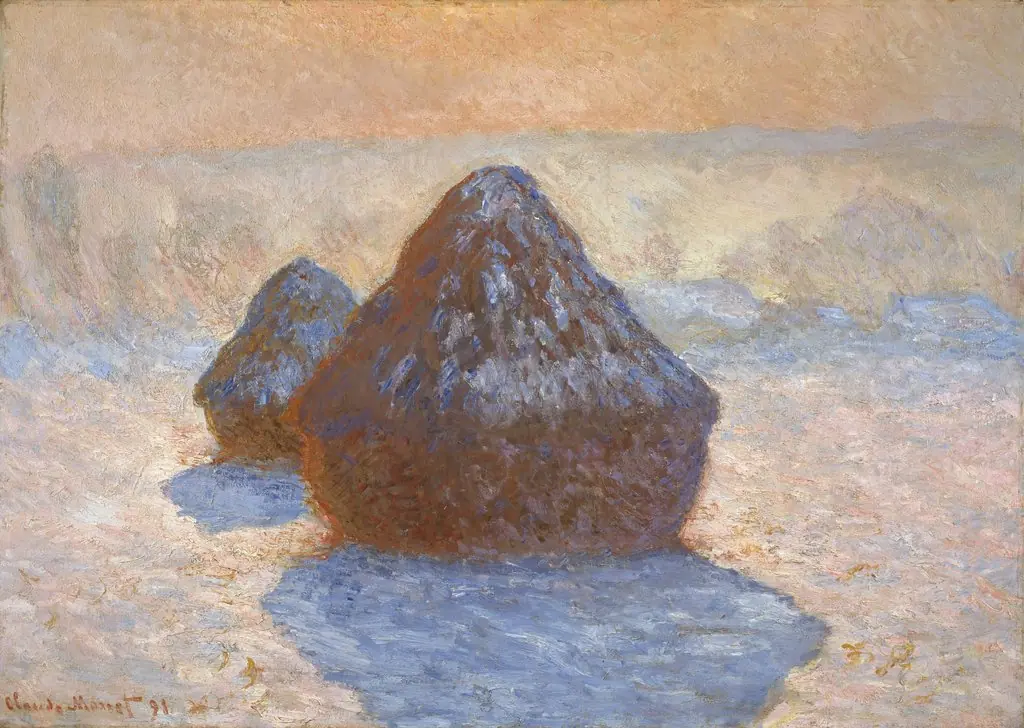
Wheatstacks, Snow Effect, Morning (Meules, Effet de Neige, Le Matin)
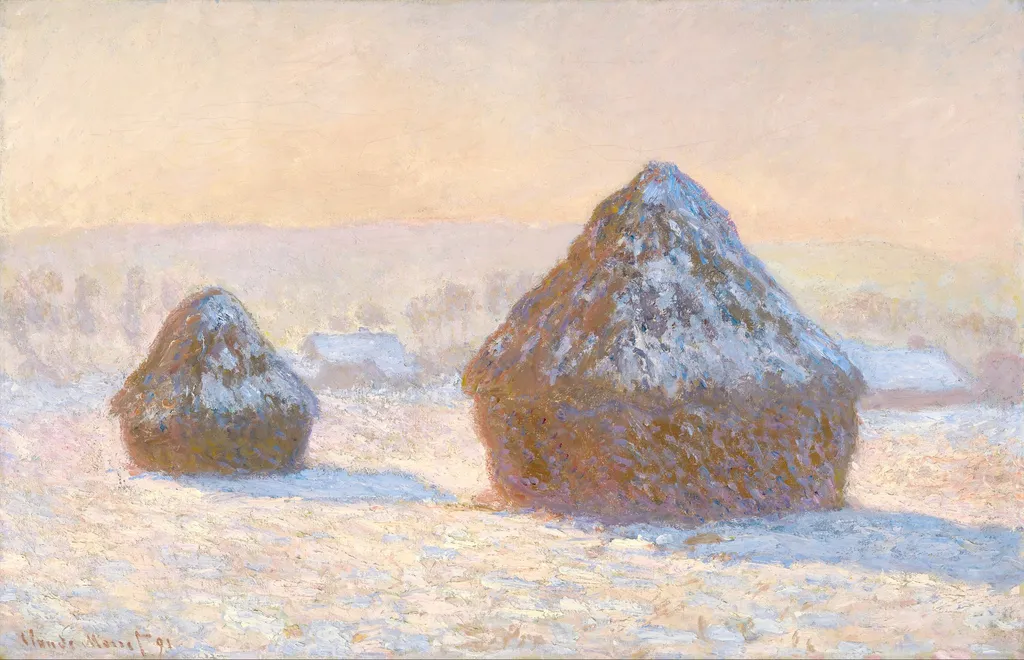
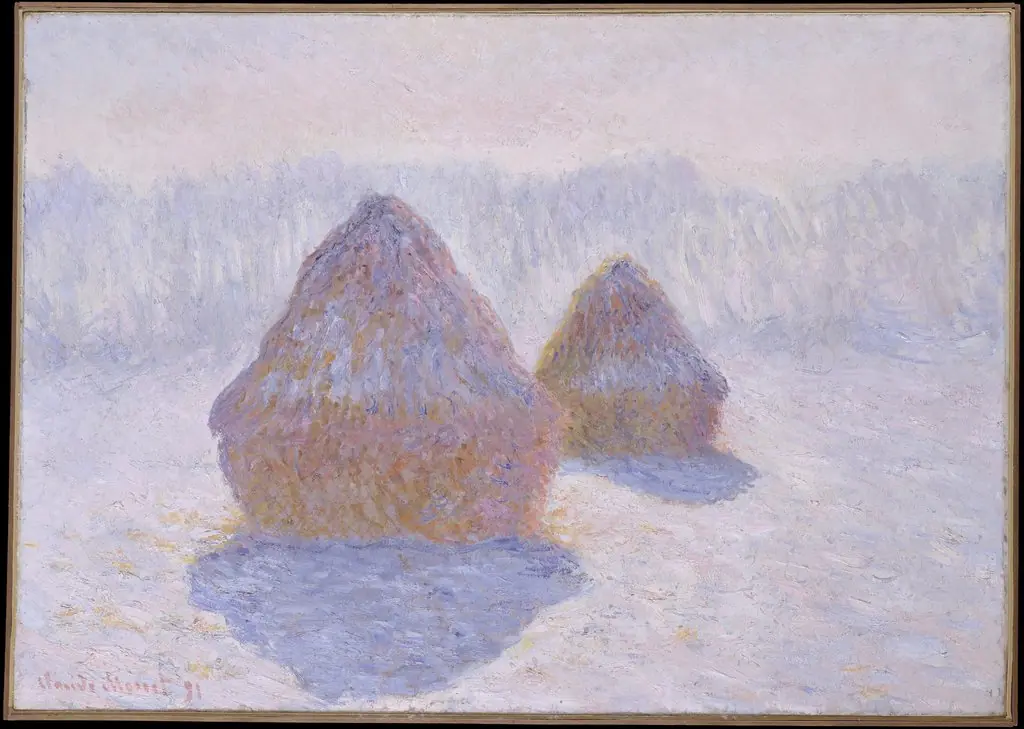
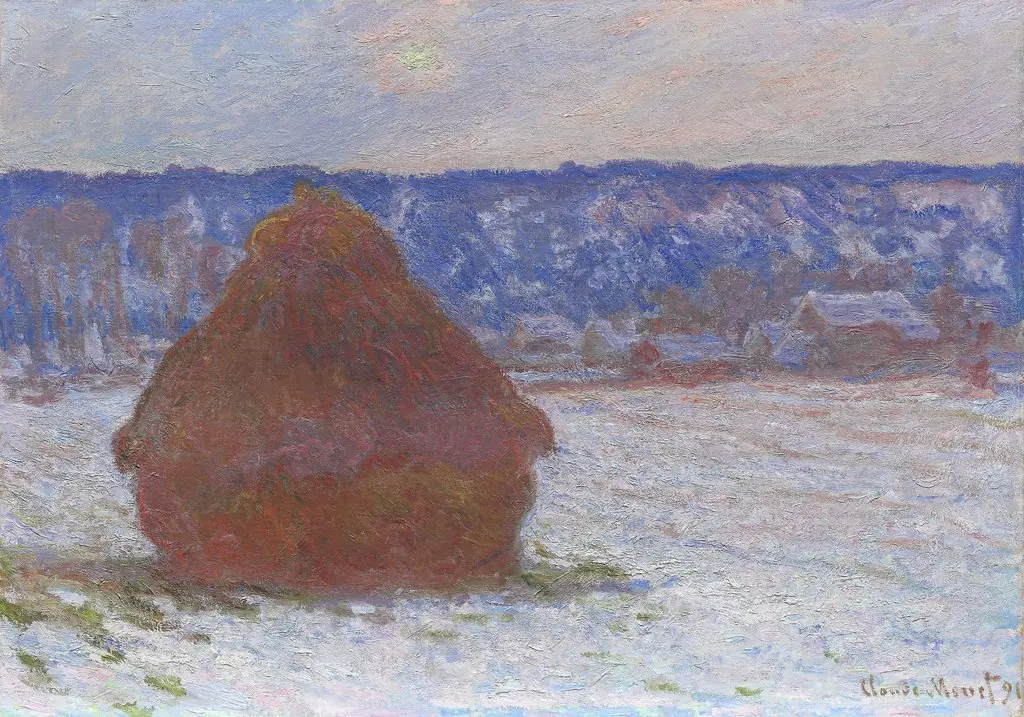
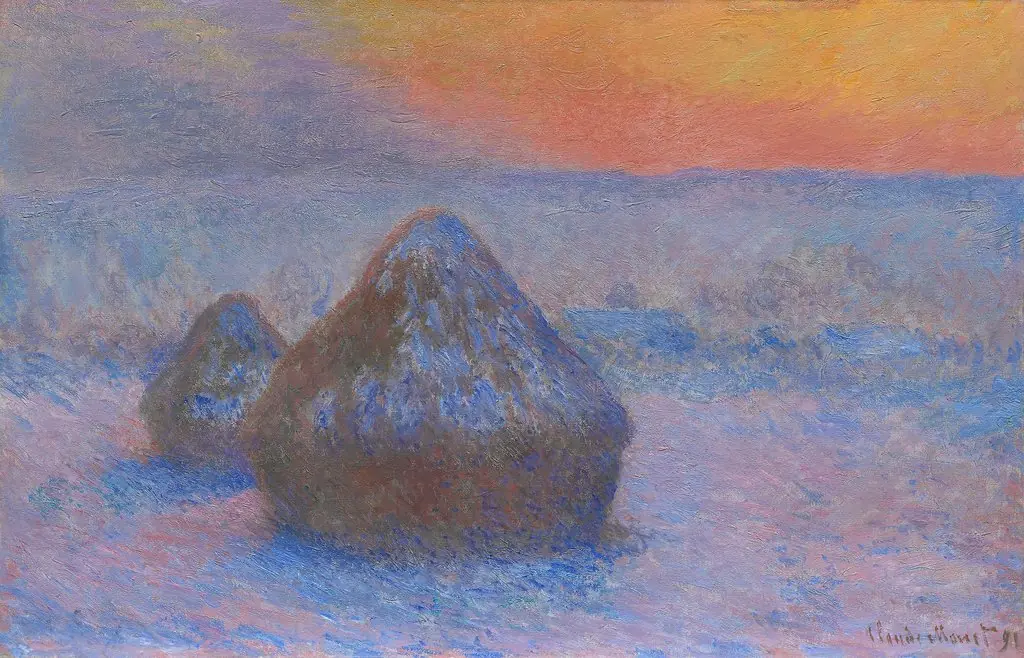
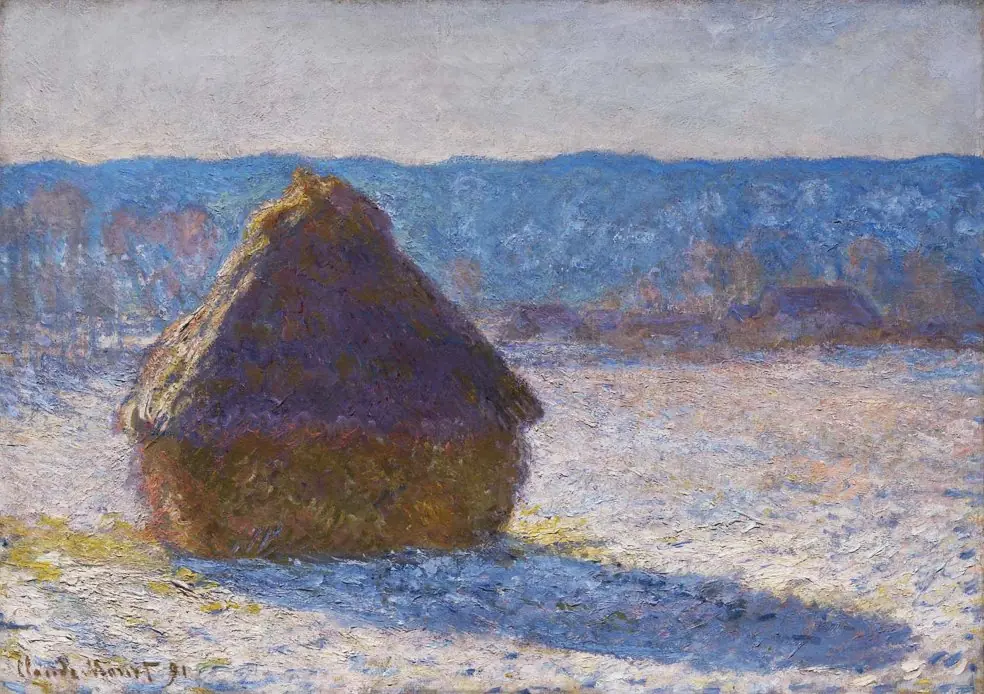
Wheatstacks, Snow Effect, Morning (Meules, Effet de Neige, Le Matin) is an oil painting by the Impressionist artist Claude Monet. It dates from 1896 and is held in the collection of the J. Paul Getty Museum.
About this work
Overview
Painted in 1896, Wheatstacks, Snow Effect, Morning is one of a series of works by Claude Monet that examine the same subject under varying seasonal and atmospheric conditions. Executed in oil on canvas, it captures a quiet winter morning in the French countryside near Giverny, where Monet lived. The painting is part of the permanent collection at the J. Paul Getty Museum in Los Angeles.
Subject & Meaning
The snow-laden stacks suggest both abundance and stillness, emphasizing the passage of time and the rhythms of the seasons.
Two large haystacks dominate the composition, their forms softened by a light dusting of snow. Positioned asymmetrically, the larger stack on the right appears closer, creating a sense of depth. The scene reflects Monet’s interest in rural labor and the quiet endurance of agricultural life. The snow-laden stacks suggest both abundance and stillness, emphasizing the passage of time and the rhythms of the seasons.
Technique & Style
Monet applied thin, layered brushstrokes to render the texture of snow and the rough surfaces of the haystacks. Subtle shifts in hue—pale yellows, soft oranges, and muted blues—convey the early morning light without defining forms through outline. Shadows cast by the stacks are rendered in cool tones, enhancing the illusion of depth and the crispness of the winter air. The brushwork remains loose yet deliberate, characteristic of his Impressionist approach.
History & Provenance
This painting was completed during Monet’s prolific series of haystacks, painted between 1890 and 1891, though this particular version was executed in 1896 as a later variation. It passed through private collections before being acquired by the J. Paul Getty Museum in 1988. Its inclusion in the museum’s collection reflects its significance within Monet’s exploration of light and seasonal change.
Context
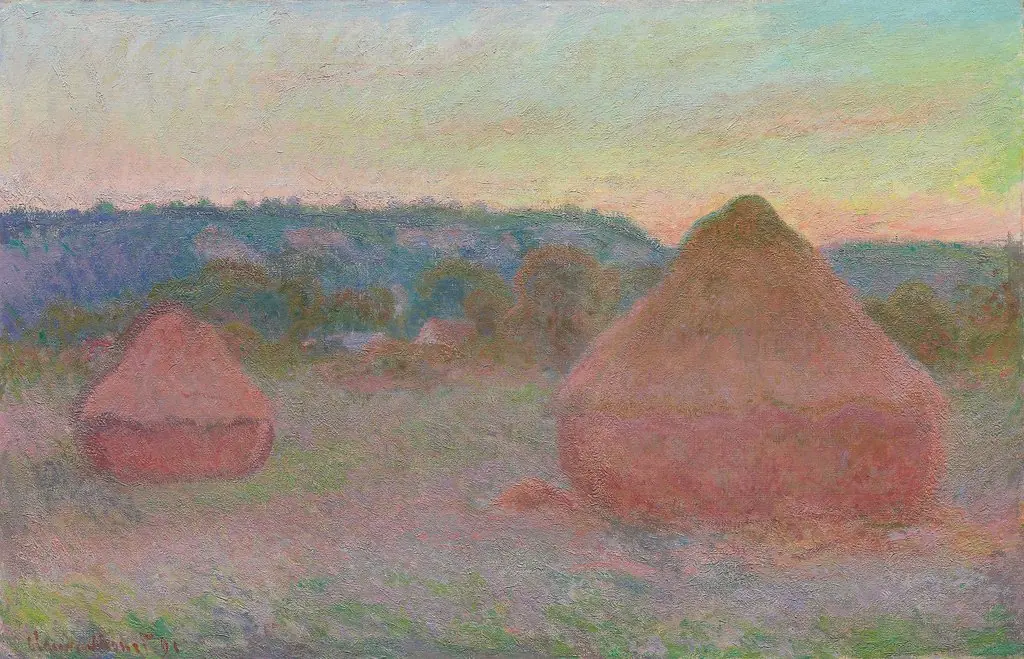
Monet painted multiple versions of haystacks under different weather and lighting conditions, seeking to capture transient effects of nature. This work belongs to a broader movement in late 19th-century French art that prioritized direct observation over idealized composition. The series was influenced by contemporary scientific interest in optics and perception, as well as a growing appreciation for everyday rural subjects.
Legacy
The Wheatstacks series helped redefine landscape painting by emphasizing perception over narrative. Monet’s focus on atmospheric conditions influenced later generations of artists exploring color and light. While not widely exhibited in his lifetime, these works are now recognized as pivotal in the evolution of modern painting, demonstrating how a single subject could reveal infinite visual variation.
Own this work as a print
Artist & collection
Artist
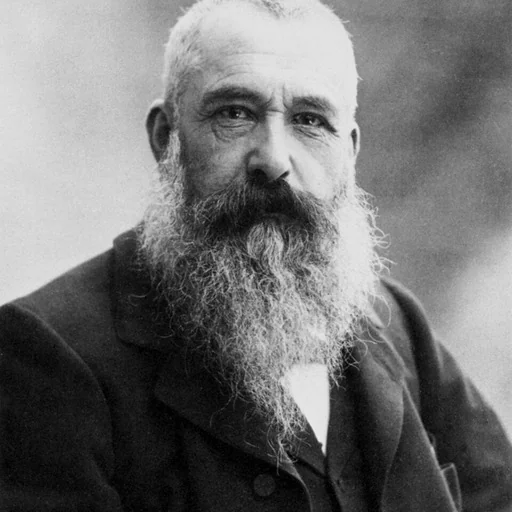
Oscar-Claude Monet was born in Paris on November 14, 1840, and raised from the age of five in Le Havre, where he began selling charcoal caricatures as a teenager.