Artwork
Stack of Wheat (Snow Effect, Overcast Day)
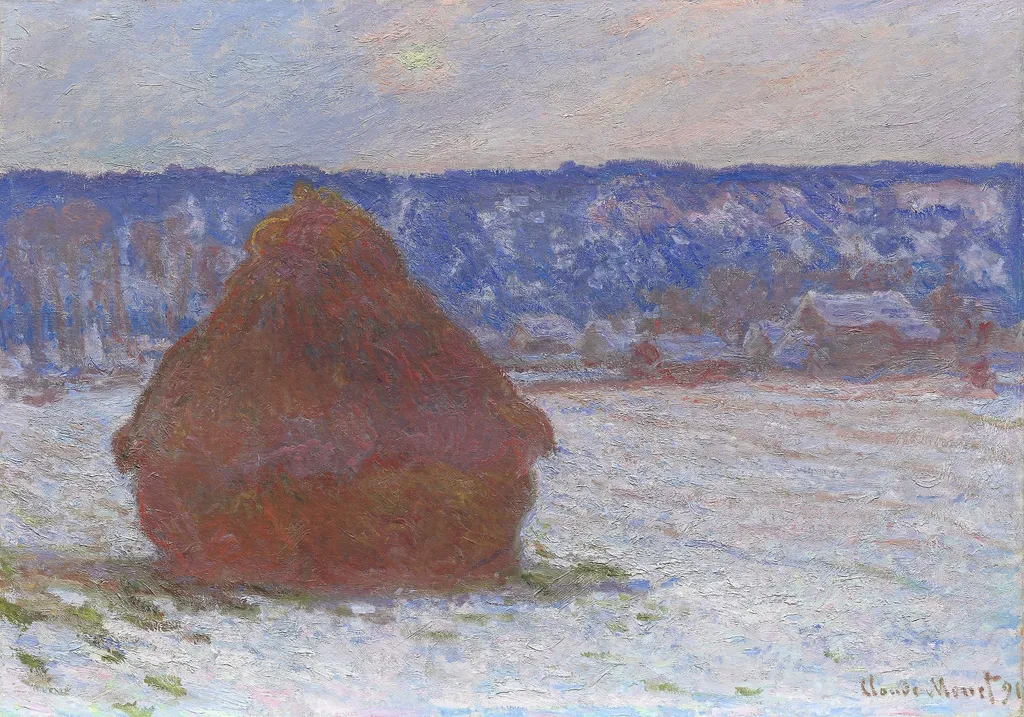
Stack of Wheat (Snow Effect, Overcast Day) is an oil painting by the Impressionist artist Claude Monet. It dates from 1896 and is held in the collection of the Art Institute of Chicago.
About this work
Overview
Painted in 1896, this oil work by Claude Monet captures a winter landscape featuring a solitary stack of wheat surrounded by snow.
Painted in 1896, this oil work by Claude Monet captures a winter landscape featuring a solitary stack of wheat surrounded by snow. It belongs to a series of studies Monet made of the same subject under varying atmospheric conditions. The painting is part of the permanent collection at the Art Institute of Chicago, where it continues to be examined for its nuanced handling of seasonal light and texture.
Subject & Meaning
The subject is a rural haystack, a common feature of the French countryside, rendered in the quiet stillness of a snow-covered day. Monet’s focus on this humble structure reflects his interest in the ordinary transformed by natural conditions. The absence of human figures and the muted tones suggest contemplation rather than narrative, emphasizing the quiet endurance of agricultural life through the seasons.
Technique & Style
Monet applied oil paint with loose, deliberate brushwork that builds form through layered strokes rather than defined outlines. The snow is not rendered as pure white but as a complex interplay of blues, grays, and pale yellows, responding to the overcast sky. The wheat stack’s earthy tones contrast subtly with the cool background, demonstrating his commitment to observing and recording subtle shifts in color and light.
History & Provenance
This painting was completed during Monet’s extended series of haystack studies, produced between 1890 and 1891 near his home in Giverny. Though painted in 1896, it likely draws from earlier sketches and memory. It entered the Art Institute of Chicago’s collection in 1922, acquired from a private European collection, and has remained a key example of his late Impressionist practice.
Context
Monet painted multiple versions of the same haystacks to study how light and weather altered perception. This work emerged during a period when he increasingly focused on serial subjects, rejecting idealized landscapes in favor of transient effects. The overcast day and snowfall reflect his dedication to capturing atmosphere over detail, aligning with broader late 19th-century shifts in artistic priorities toward sensory experience.
Legacy
The painting contributes to a body of work that redefined how artists approached natural phenomena. By isolating a single form under changing conditions, Monet influenced later movements that prioritized perception over representation. Its quiet intensity continues to inform discussions on color theory, seasonal change, and the emotional resonance of everyday landscapes in modern art.
Own this work as a print
Artist & collection
Artist
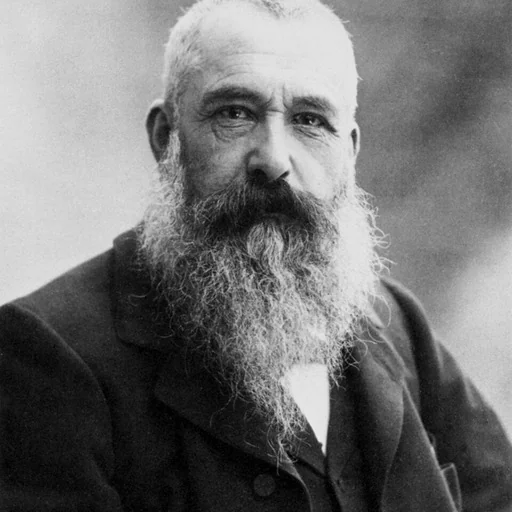
Oscar-Claude Monet was born in Paris on November 14, 1840, and raised from the age of five in Le Havre, where he began selling charcoal caricatures as a teenager.


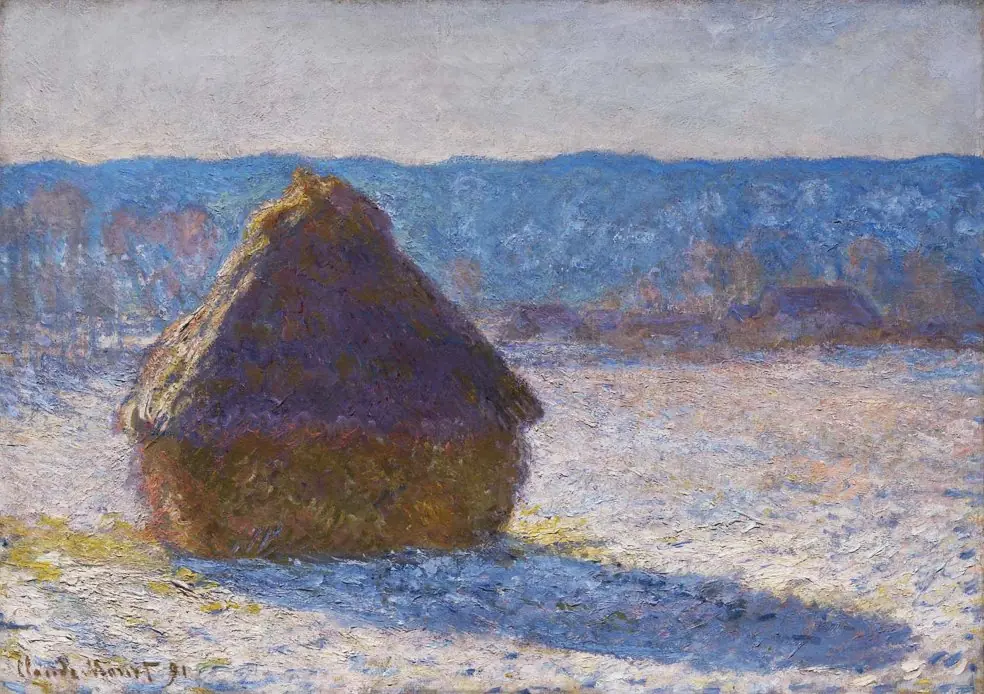 Grainstack (Snow Effect)
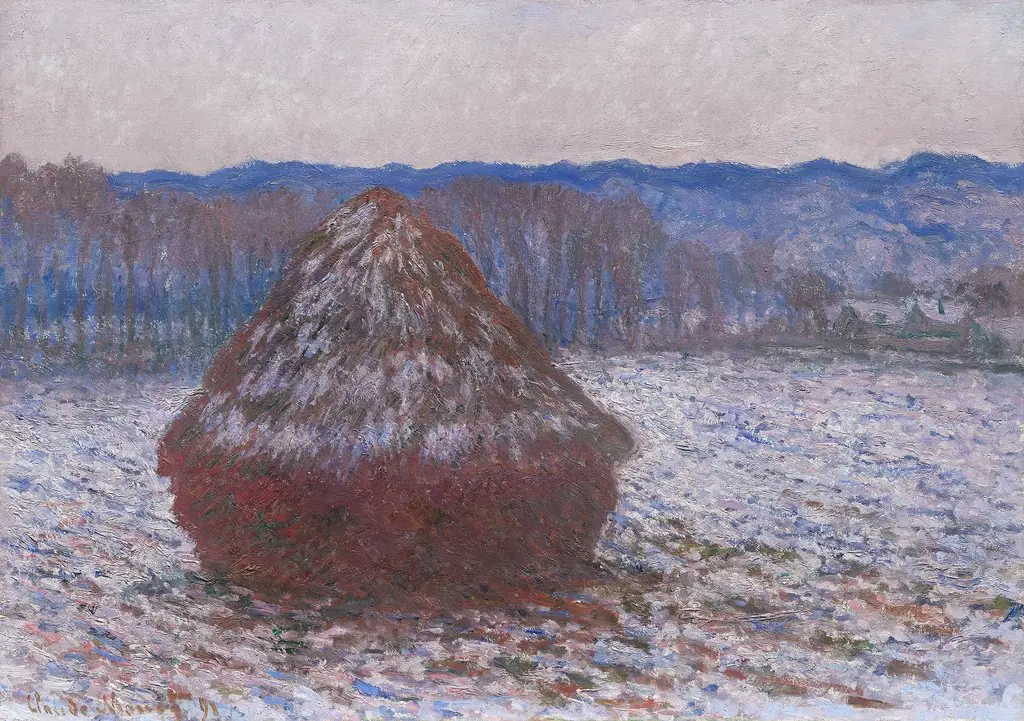 Stack of Wheat
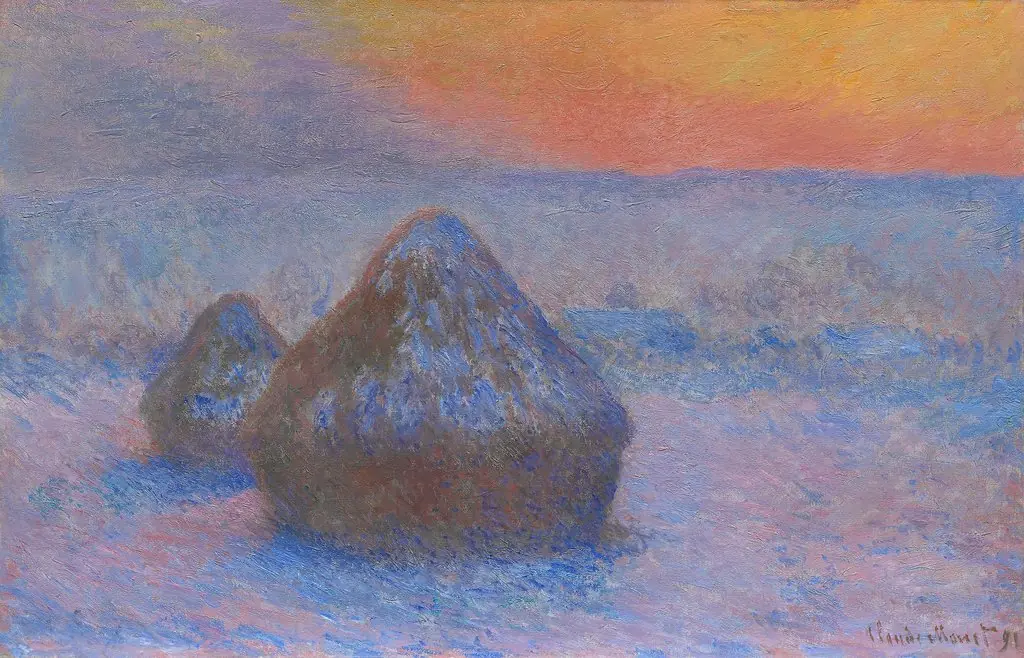 Stacks of Wheat (Sunset, Snow Effect)
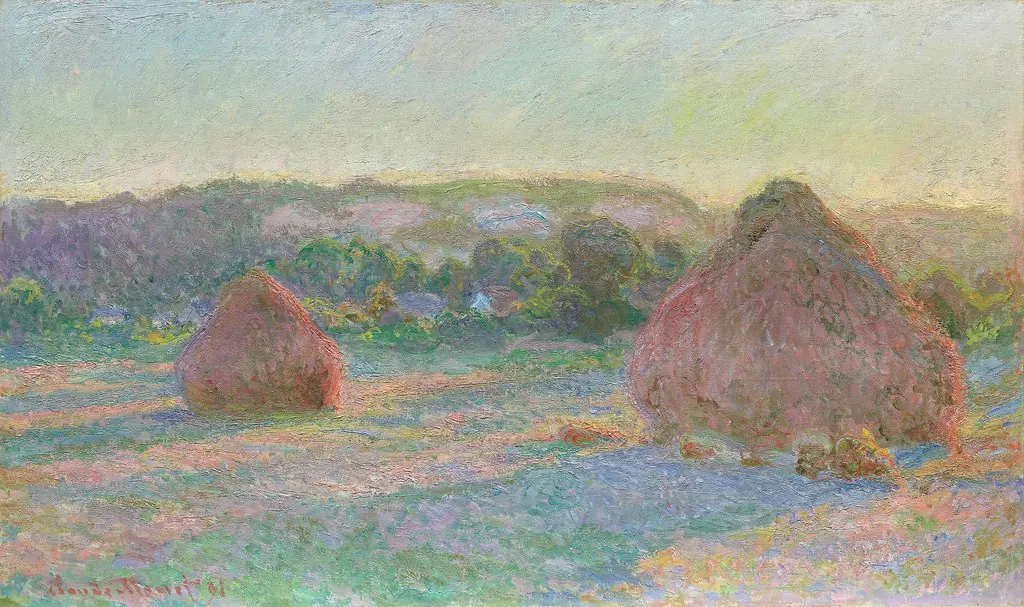 Stacks of Wheat (End of Summer)
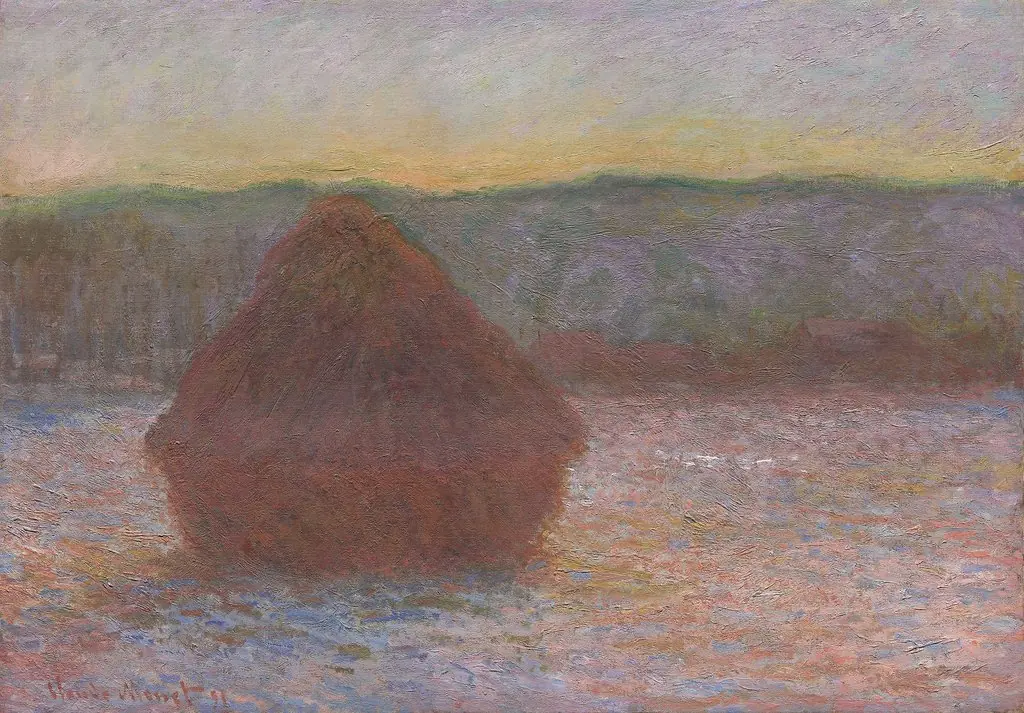 Stack of Wheat (Thaw, Sunset)
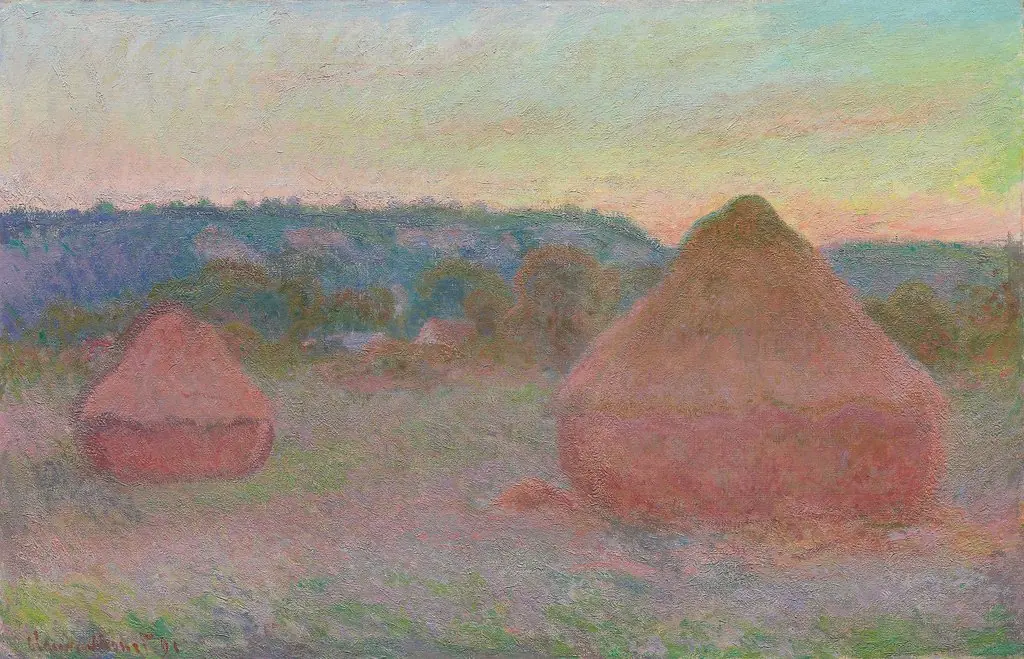 Stacks of Wheat (End of Day, Autumn)
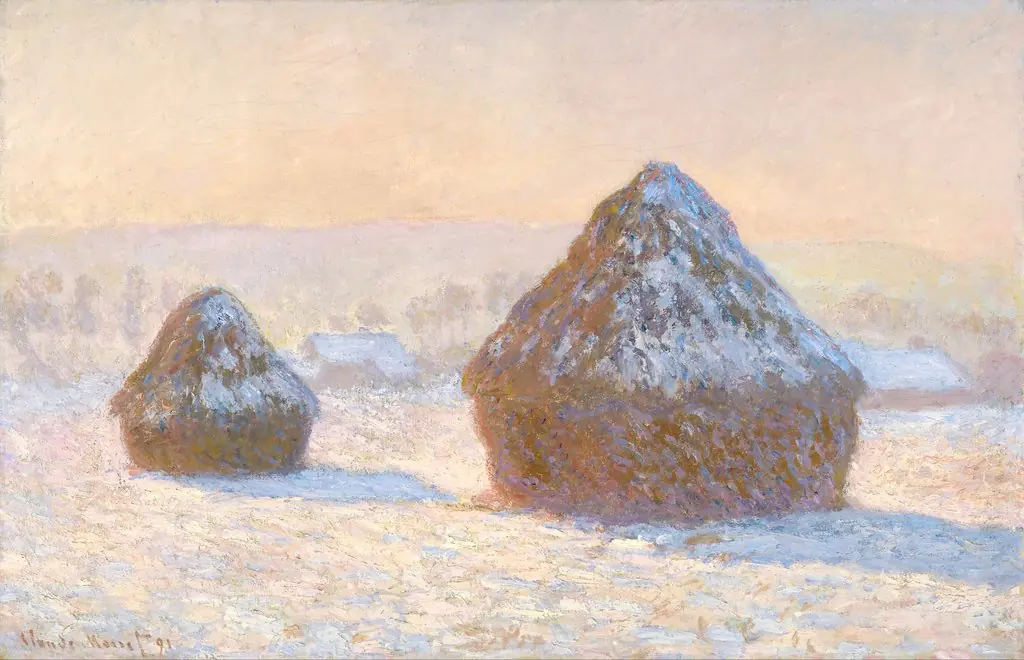 Wheatstacks, Snow Effect, Morning (Meules, Effet de Neige, Le Matin)
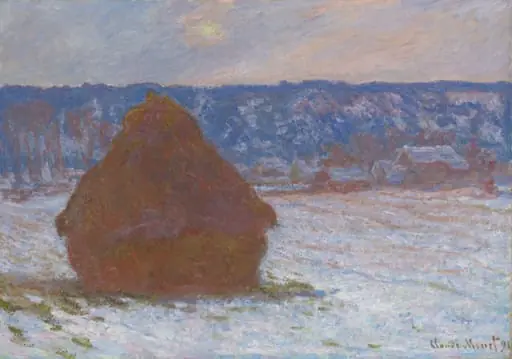 Stack of Wheat (Snow Effect, Overcast Day)
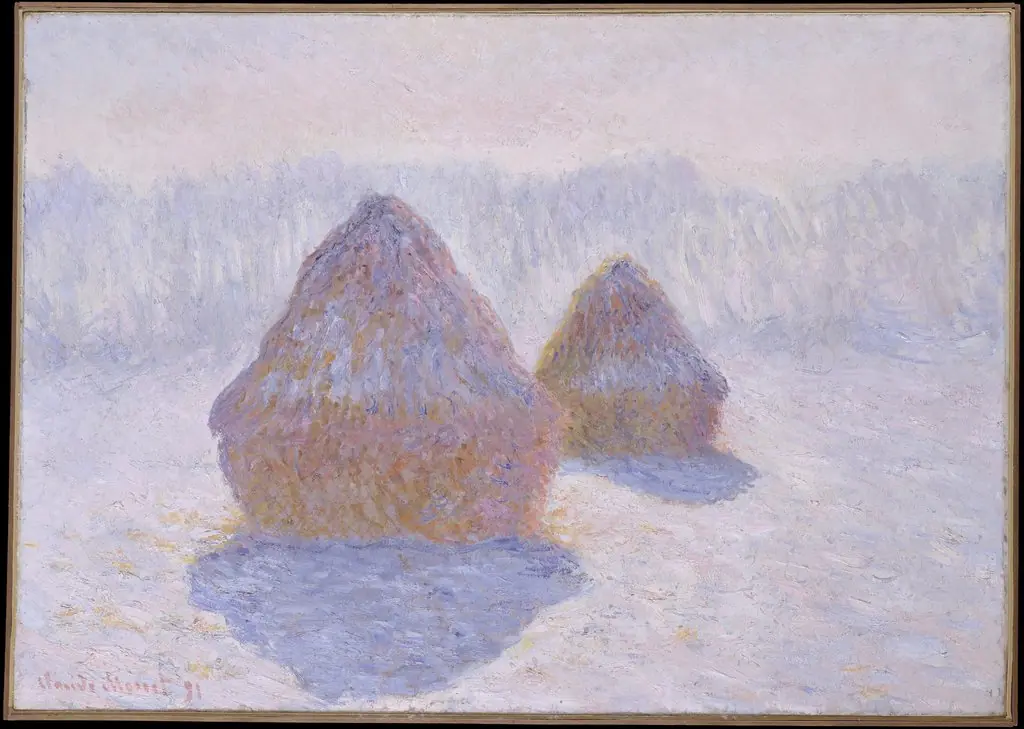 Haystacks (Effect of Snow and Sun)
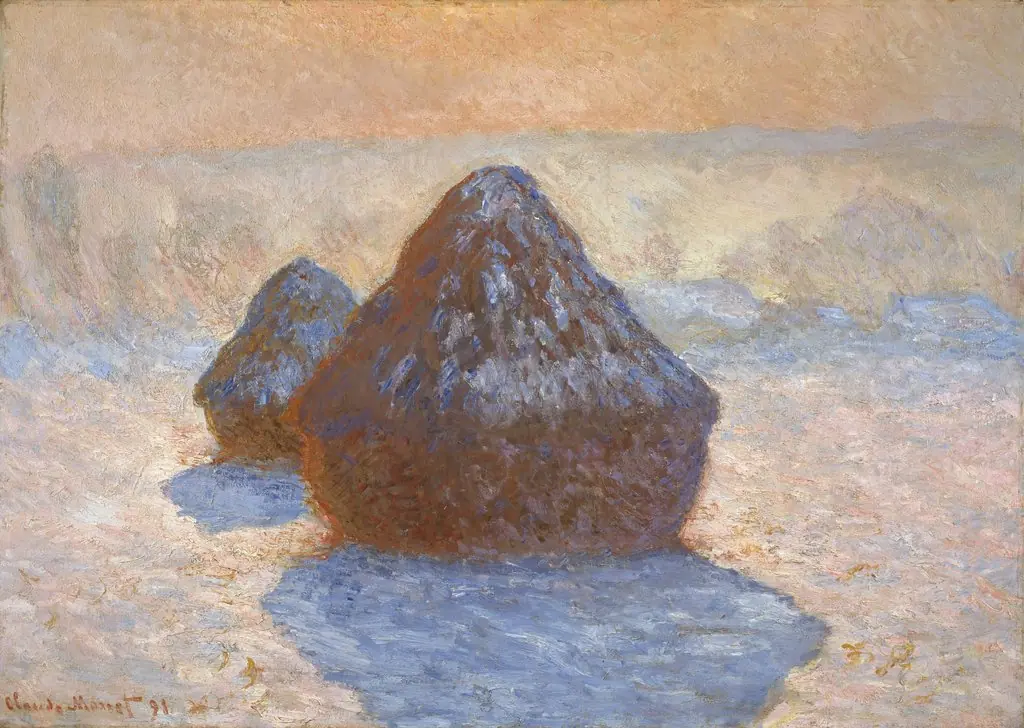 Haystacks: Snow Effect