Artwork
Yellow irises
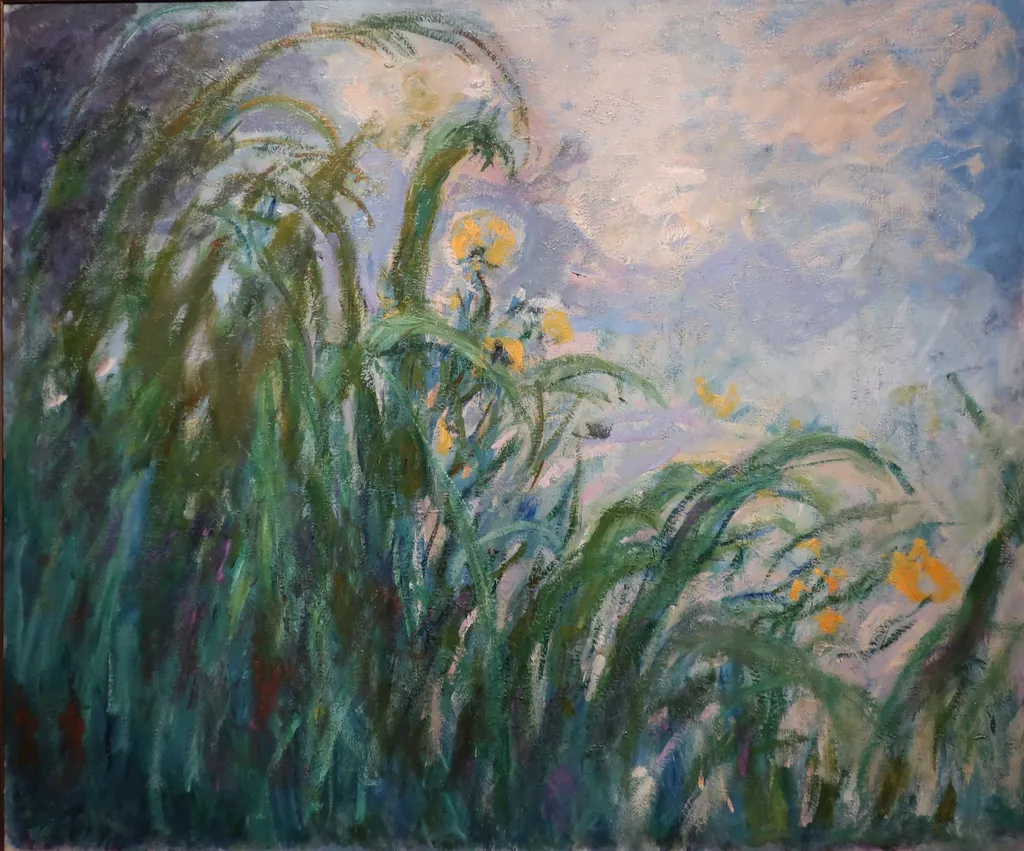
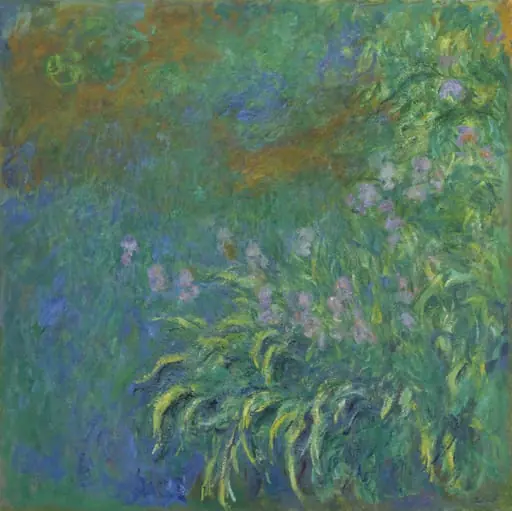
Yellow irises is an oil painting by the Impressionist artist Claude Monet. It dates from 1924 and is held in the collection of the Musée Marmottan Monet.
About this work
Overview
The painting reflects Monet’s late style, where observation of nature became increasingly abstracted through cumulative brush applications.
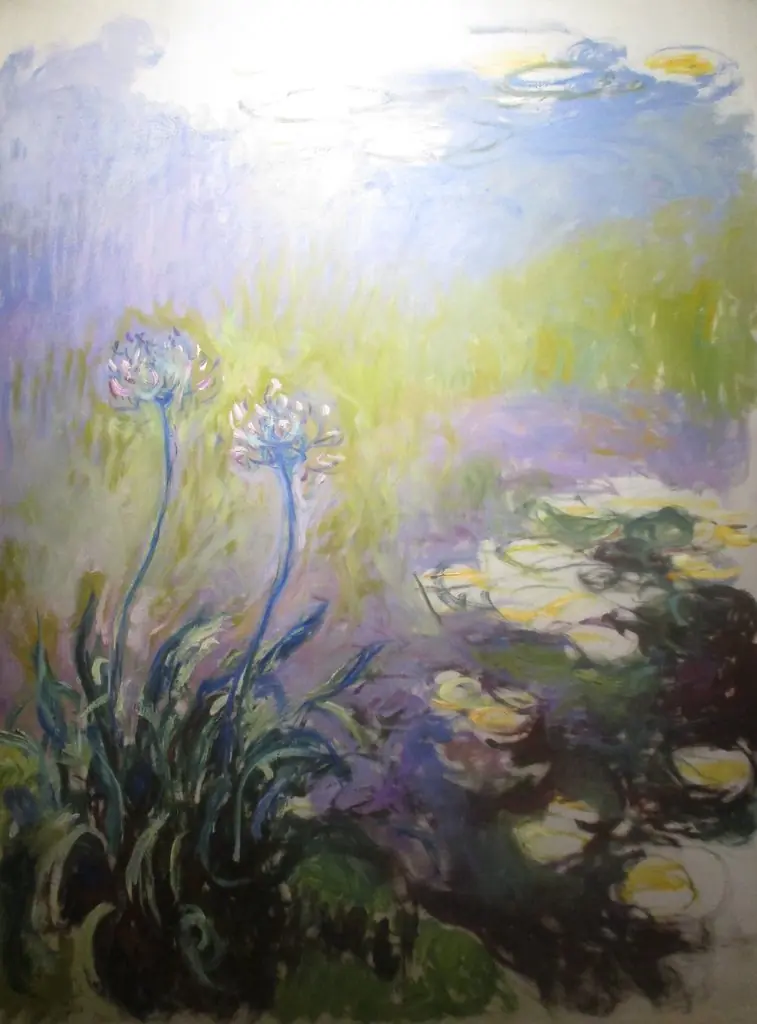
Painted in 1924, Yellow Irises is an oil on canvas work by Claude Monet, part of the collection at the Musée Marmottan Monet in Paris. It depicts a garden scene dominated by tall grasses and clusters of yellow blooms, rendered with loose, textured brushwork. The composition avoids sharp outlines, instead relying on color and light to define form. The painting reflects Monet’s late style, where observation of nature became increasingly abstracted through cumulative brush applications.
Subject & Meaning
The painting captures a quiet moment in Monet’s garden at Giverny, focusing on irises among tall, swaying grasses under a pale sky. Rather than idealizing the scene, Monet presents it as a sensory impression—flowers emerge not as isolated specimens but as part of a living, breathing environment. The subtle contrast between the bright yellow petals and the muted greens and blues suggests a fleeting, intimate encounter with nature, consistent with his lifelong interest in transient light and atmosphere.
Technique & Style
Monet applied oil paint in layered, broken strokes, allowing the canvas texture to show through and creating a tactile surface. Colors are blended optically rather than on the palette, with thin washes of blue and white suggesting sky, and dabs of yellow and ochre defining the flowers. The brushwork is energetic yet deliberate, conveying movement in the grass and the weight of petals. There is no clear horizon; the composition feels immersive, as if the viewer stands within the garden.
History & Provenance
Created during Monet’s final years, Yellow Irises was painted at his home in Giverny, where he devoted himself to gardening and painting. It remained in his possession until his death in 1926, after which it passed to his son Michel. The painting entered the Musée Marmottan Monet’s collection through Michel’s bequest in 1966, where it is now preserved alongside other late works from the artist’s personal archive.
Context
This work belongs to Monet’s late period, when his vision was affected by cataracts and his brushwork grew more expansive. He painted numerous variations of his garden, often returning to the same subjects across seasons and times of day. Yellow Irises reflects his shift away from detailed representation toward emotional resonance through color and texture, aligning with broader trends in early 20th-century art that prioritized perception over realism.
Legacy
Yellow Irises stands as a testament to Monet’s enduring focus on the natural world in his final years. It exemplifies how his technique evolved into a language of pure sensation, influencing later generations of abstract and expressionist painters. Though not widely exhibited, its presence in the Marmottan collection ensures its role as a quiet but significant marker of his artistic maturity and devotion to observation.
Artist & collection
Artist
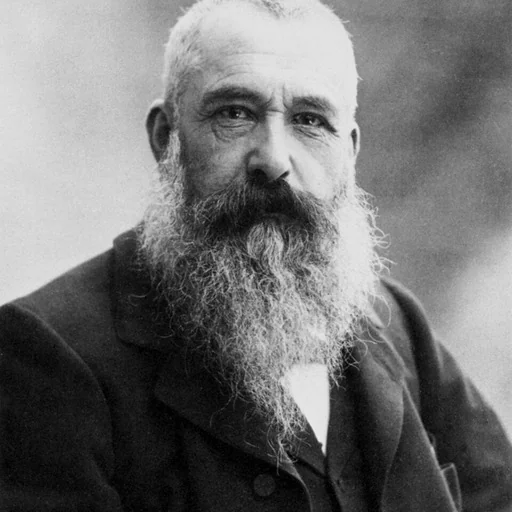
Oscar-Claude Monet was born in Paris on November 14, 1840, and raised from the age of five in Le Havre, where he began selling charcoal caricatures as a teenager.