Artwork
The Bookworm's Table
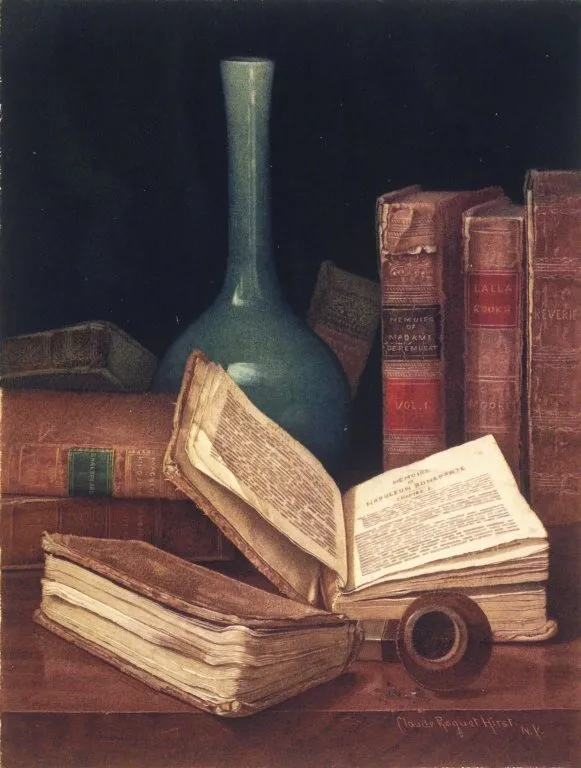
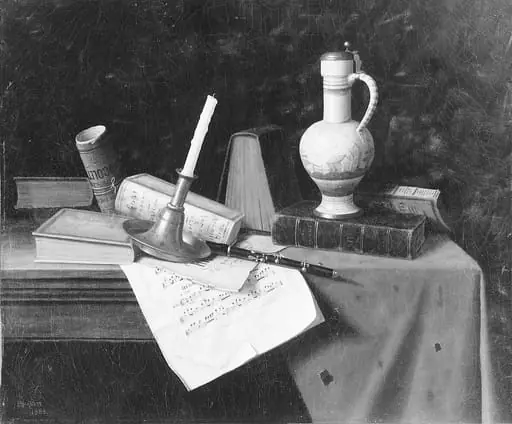
The Bookworm's Table is an unspecified painting by the Post-Impressionist artist Claude Raguet Hirst. It dates from 1896 and is held in the collection of the Brooklyn Museum.
About this work
Overview
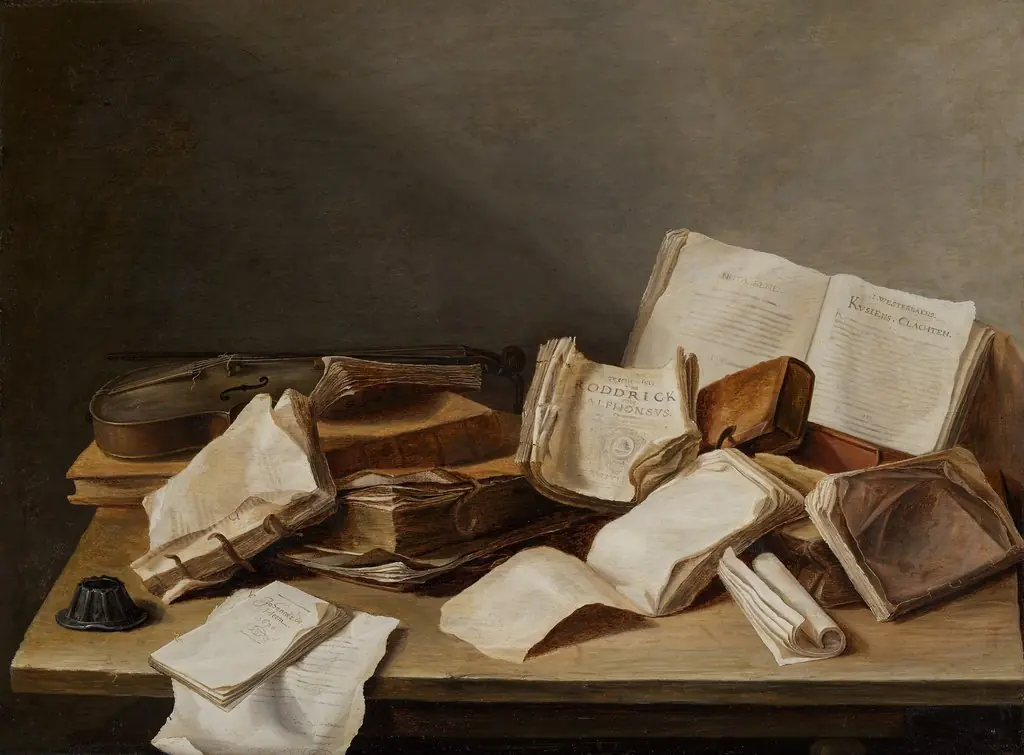
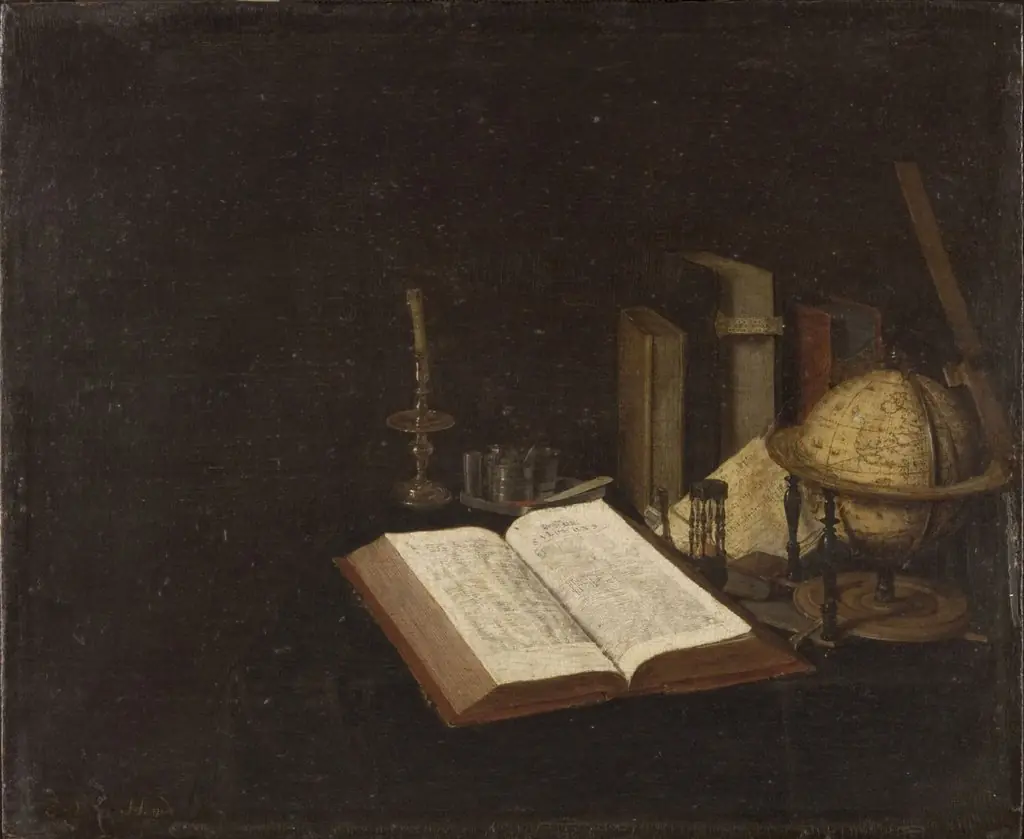
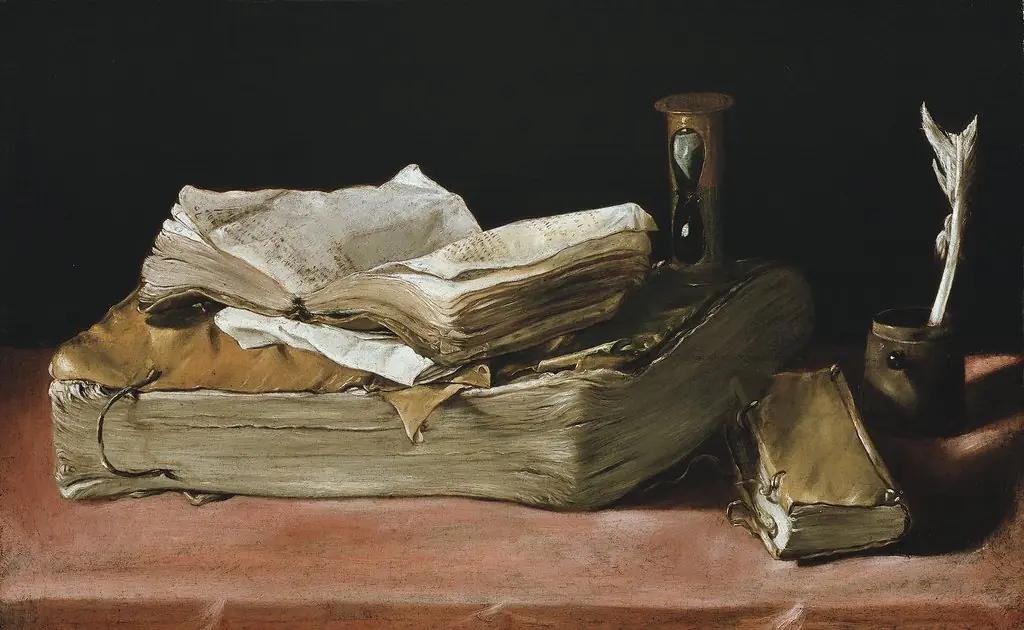
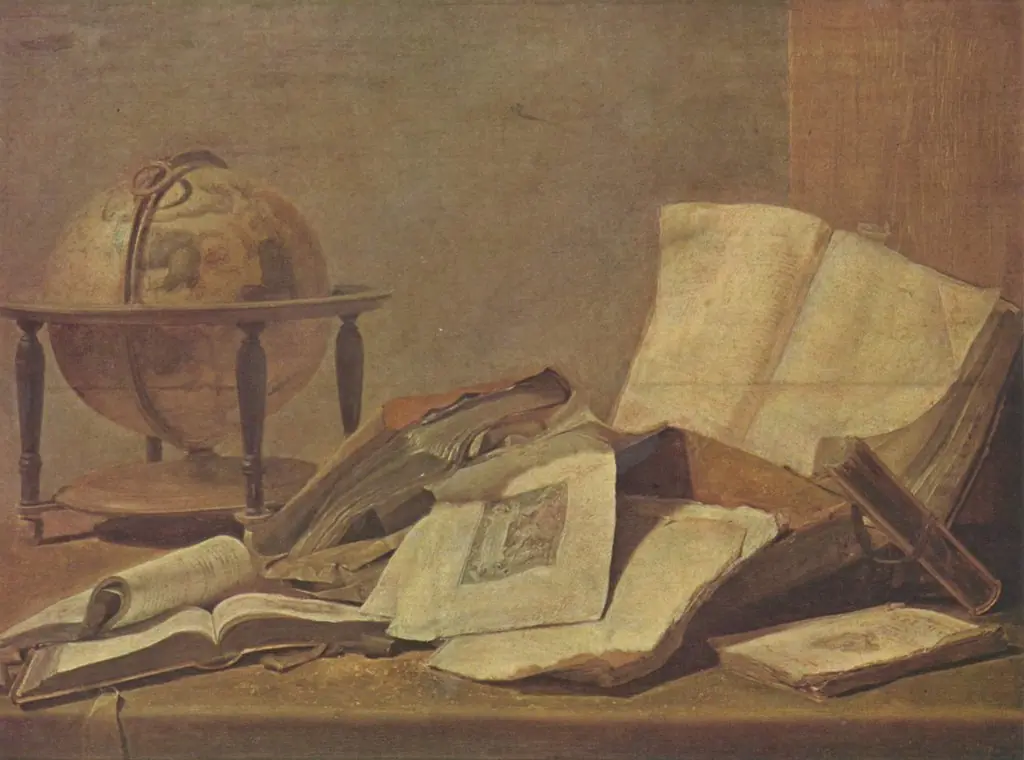
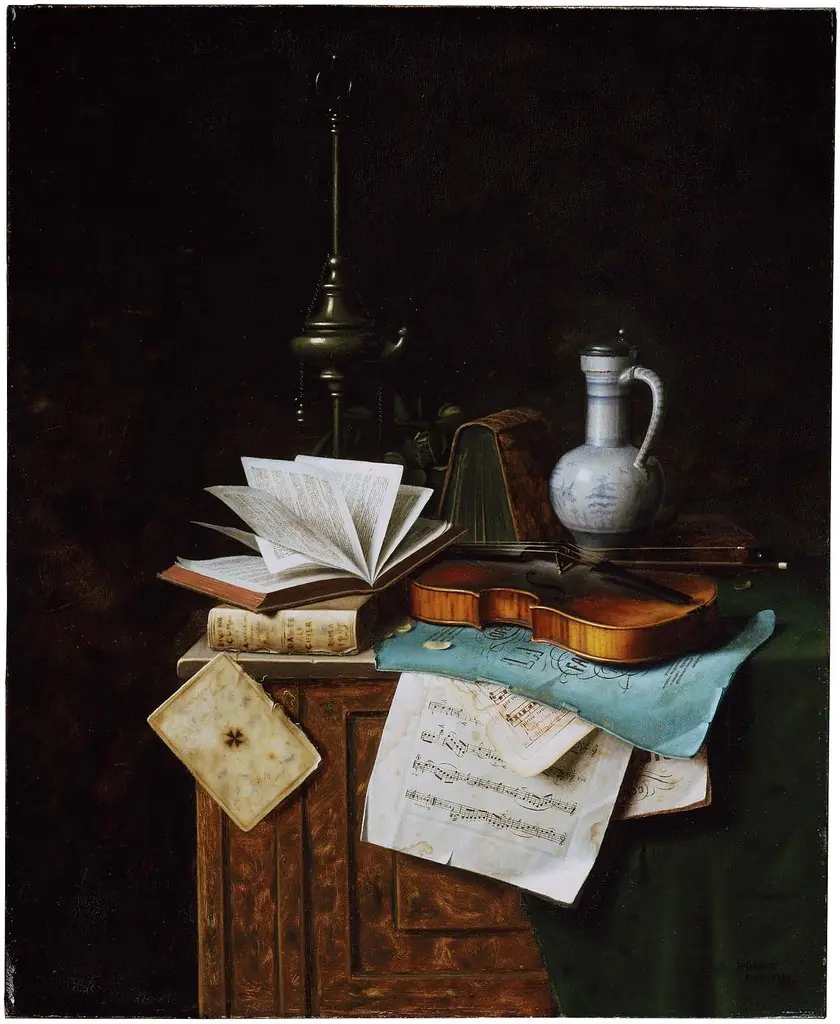
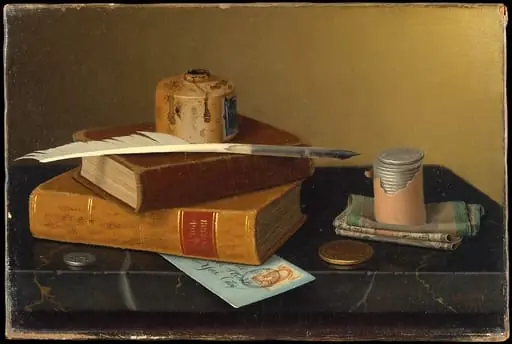
The Bookworm's Table, a still-life painting by Claude Raguet Hirst, dates to 1896. Characterized by meticulous trompe-l'œil technique, it presents a realistically rendered arrangement of everyday objects on a wooden table, inviting the viewer into a serene, intimate space.
Subject & Meaning
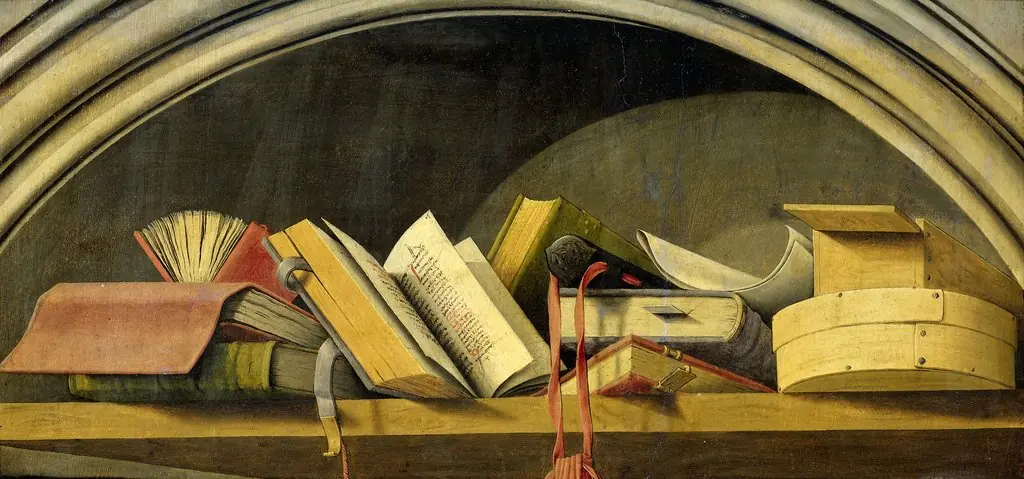
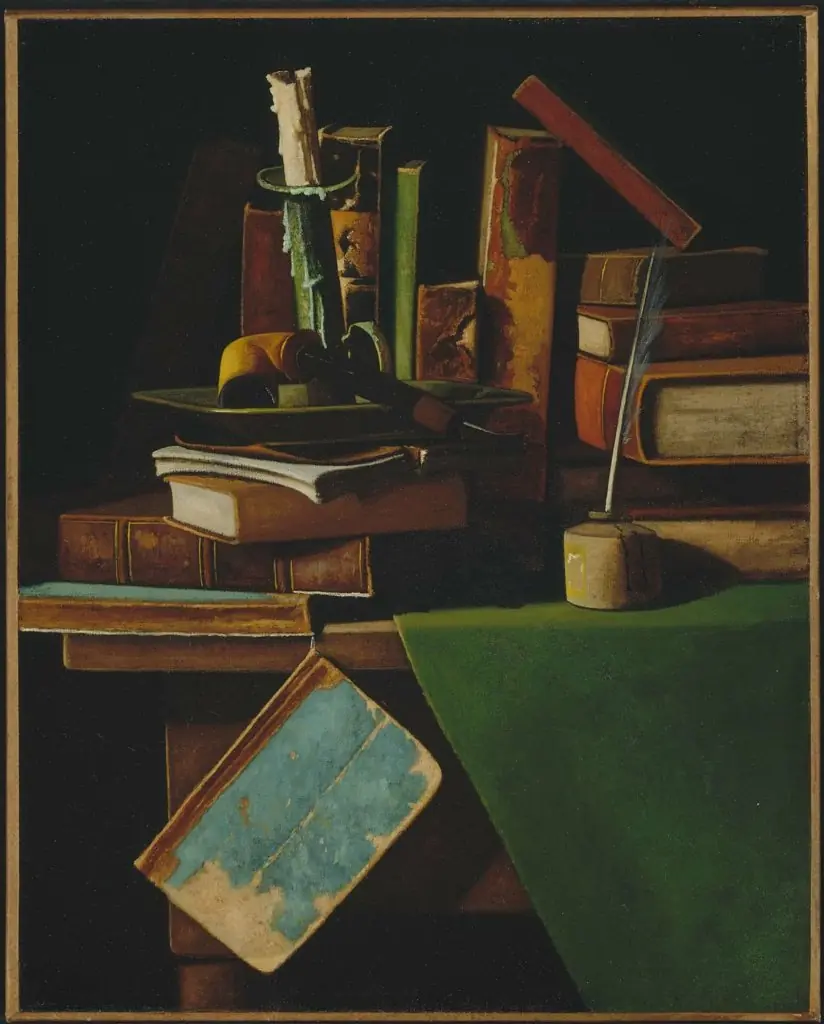
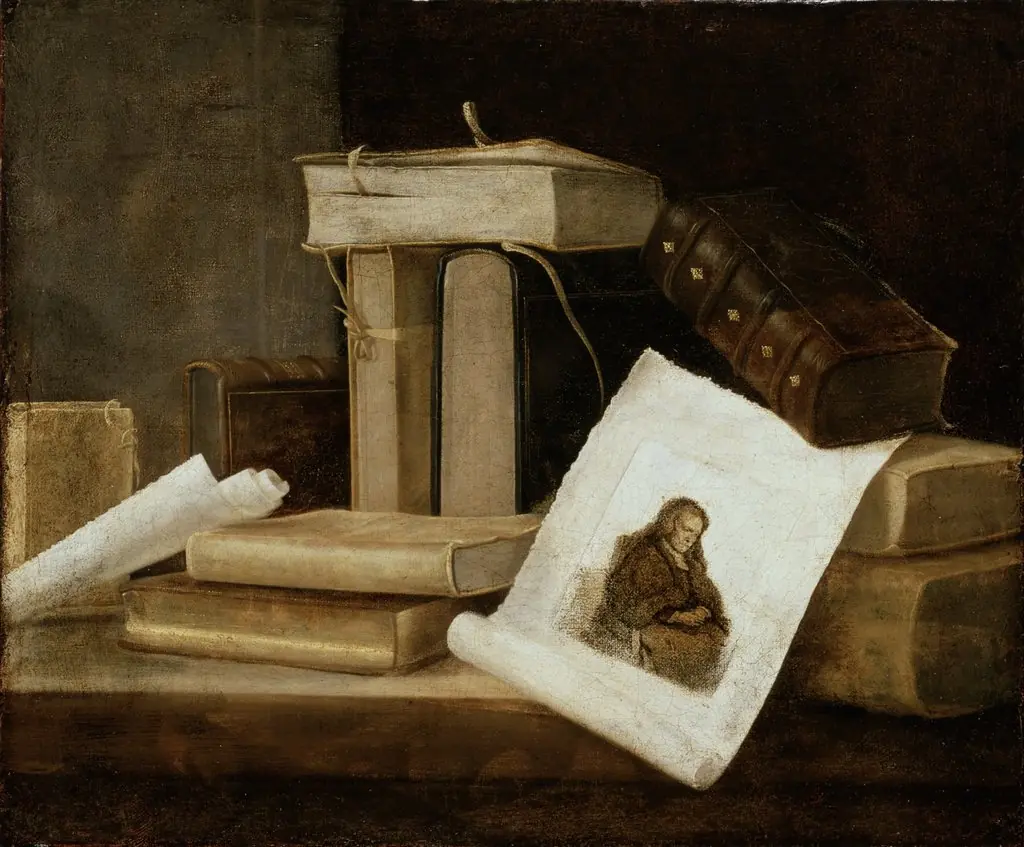
The painting's subject is a casually arranged assortment of books, papers, a muted green vase, and an indistinct small container. This composition conveys a sense of quiet contemplation, suggesting a private moment of study or personal reflection.
Technique & Style
Hirst employs chiaroscuro, juxtaposing strong light and dark contrasts to create a three-dimensional illusion. The palette is subdued, emphasizing earth tones (browns, beiges, greens) to enhance the overall sense of calm and realism.
History & Provenance
Created during the post-impressionist period, The Bookworm's Table is notable for its artist, one of the few women recognized at the time for her trompe-l'œil skill. The work is part of the Brooklyn Museum's collection.
Context
Reflecting Hirst's contribution to the trompe-l'œil tradition, the painting stands out as a feminine perspective within a predominantly male-dominated artistic movement of its time.
Legacy
While specific lasting impacts on the art world are not widely documented, The Bookworm's Table remains a testament to Hirst's technical prowess and her place in the history of American still-life painting.
Artist & collection
Artist
Claude Raguet Hirst (born Claudine, 1855–1942) was an American painter of still lifes. She was the only woman of her era to gain acclaim using the trompe-l'œil ("fool the eye") technique.