Artwork
Untitled
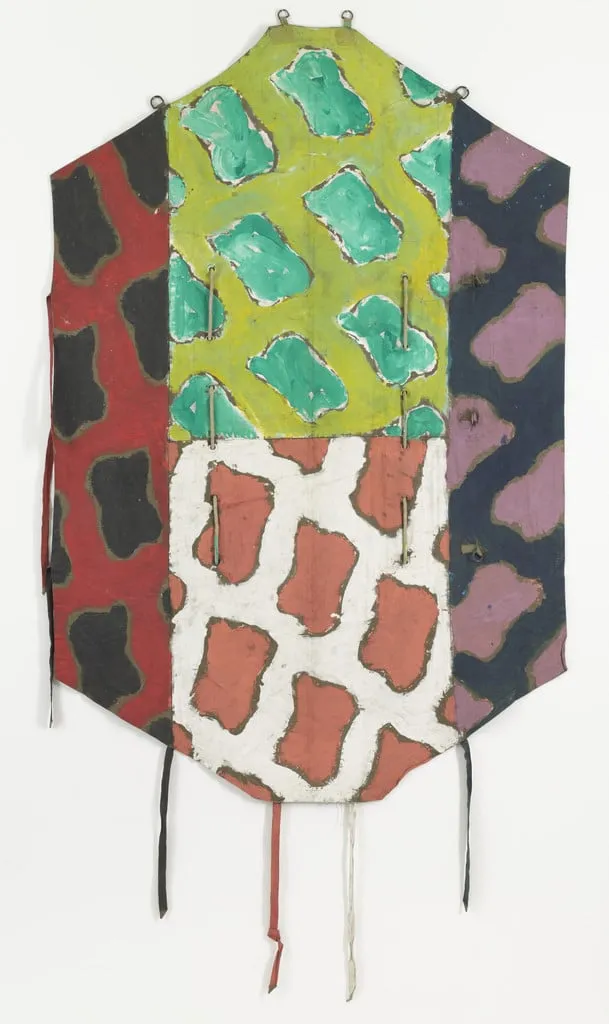
Untitled is a paint painting by the Contemporary Abstract artist Claude Viallat. It dates from 1979 and is held in the collection of the Museum of Modern Art.
About this work
Overview
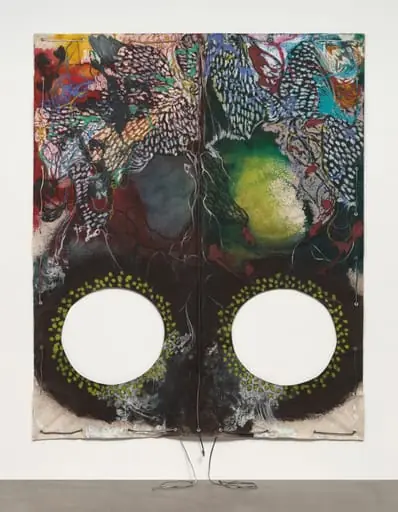
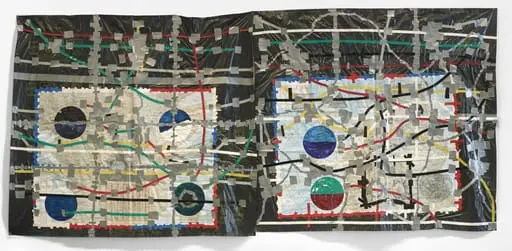
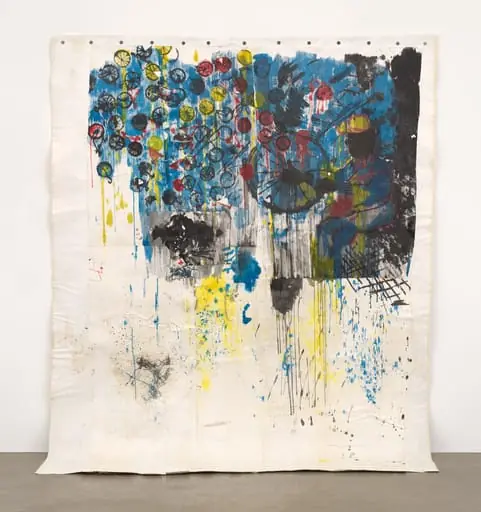
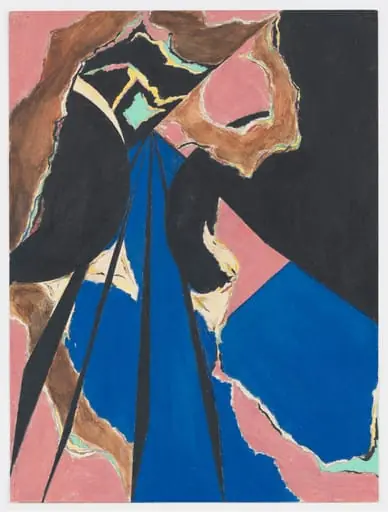
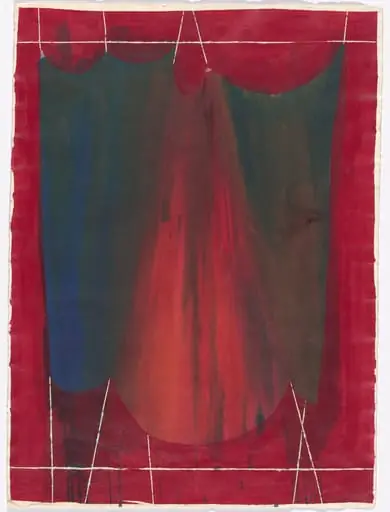
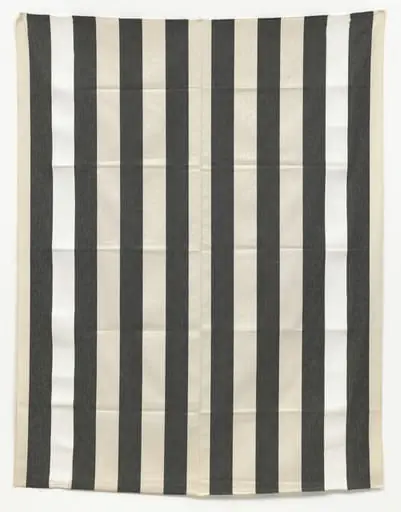
Created in 1979, this work by Claude Viallat uses a repurposed military tent flap as its support, painted with synthetic polymer paint.
Created in 1979, this work by Claude Viallat uses a repurposed military tent flap as its support, painted with synthetic polymer paint. Attached hardware—buckles, ropes, and dyed straps—remains intact, blurring the line between object and image. The composition is non-representational, emphasizing materiality over narrative. Its scale and construction reflect Viallat’s interest in everyday industrial surfaces as carriers of artistic gesture.
Subject & Meaning
The work resists symbolic interpretation, focusing instead on the physical presence of paint and support. Colors—red, black, yellow, green, pink, and blue—are applied without compositional hierarchy, suggesting chance and repetition rather than intentional imagery. The inclusion of utilitarian elements like ropes and buckles reinforces its origins as functional gear, transforming the mundane into a site of artistic inquiry without imposing external meaning.
Technique & Style
Viallat applied thick, uneven layers of synthetic polymer paint using broad, gestural strokes, creating a tactile surface that reads as both deliberate and improvised. The paint pools and drips irregularly, emphasizing texture over refinement. The use of a flexible, non-traditional support challenges conventional painting norms. The raw edges and unaltered hardware preserve the object’s original utility, grounding the work in material reality.
History & Provenance
The piece entered The Museum of Modern Art’s collection as part of a broader recognition of Viallat’s contributions to the Supports/Surfaces movement. Made in 1979, it reflects the artist’s ongoing exploration of industrial materials and serial production. Its acquisition underscores the institution’s engagement with post-1960s French avant-garde practices that prioritized process and material over illusionistic representation.
Context
Viallat was associated with the Supports/Surfaces group, which questioned the autonomy of the painted image by focusing on the physical components of art-making. This work aligns with their rejection of traditional easel painting in favor of found or industrial supports. The use of military tent fabric connects to broader postwar concerns with utility, disposability, and the legacy of conflict in everyday objects.
Legacy
This work exemplifies Viallat’s sustained investigation into the limits of painting through repetition and material substitution. Its inclusion in major collections has contributed to the reassessment of postwar French art beyond abstractionist traditions. By preserving the object’s original function, it invites ongoing dialogue about what constitutes a painting and how context reshapes perception.
Artist & collection