Artwork
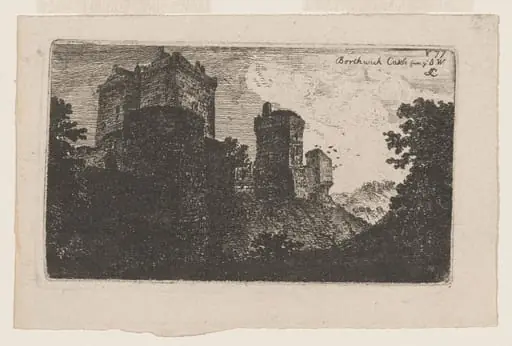
Borthwick Castle
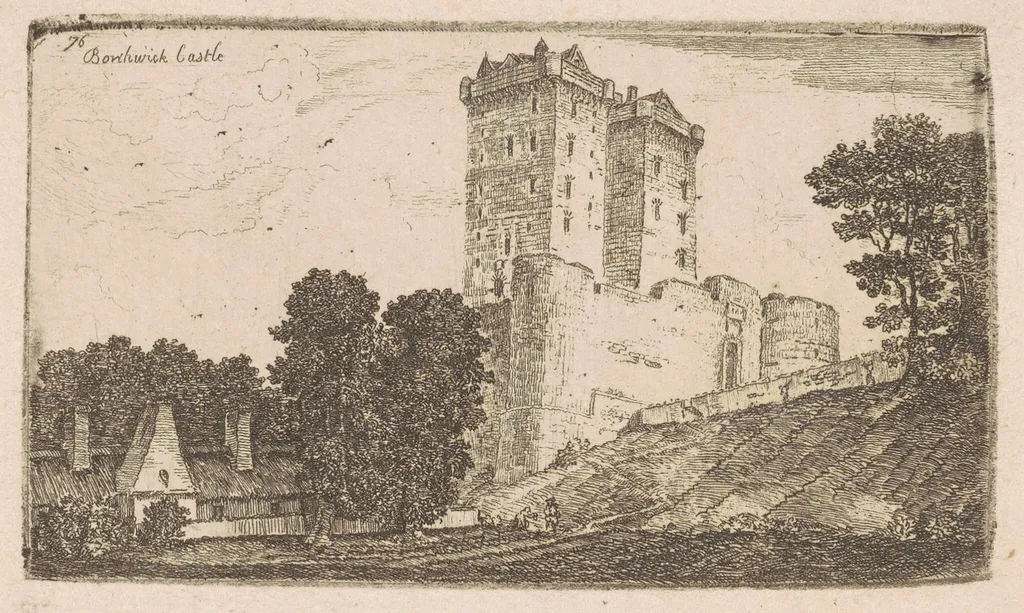
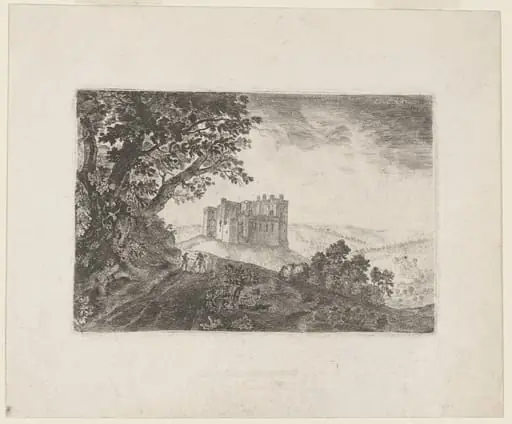
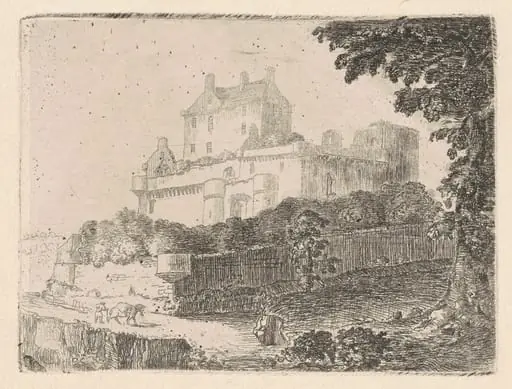
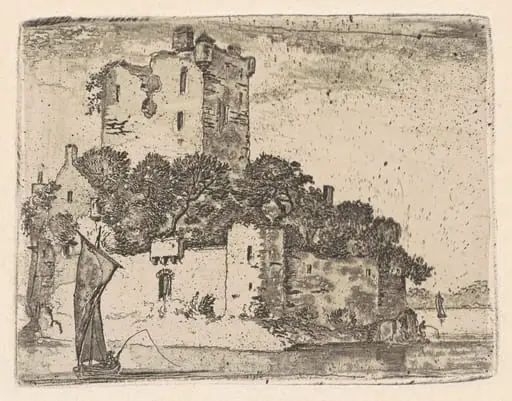
Borthwick Castle is an ink print by the Romanticist artist of Eldin, John Clerk. It is held in the collection of the National Gallery of Art.
About this work
Overview
John Eldin’s etching of Borthwick Castle, produced around 1776, presents a solitary fortress perched on a craggy hill. The composition emphasizes the height and stark silhouette of the towered structure against a cloud‑filled sky, while diminutive figures on a winding path below reinforce the castle’s imposing scale.
Subject & Meaning
The image captures Borthwick Castle, a medieval stronghold in Scotland, as a symbol of rugged authority and isolation. By placing tiny travelers on the foreground path, the print suggests a journey through a remote landscape, highlighting the castle’s dominance over its surrounding terrain.
Technique & Style
Executed in etching on laid paper, the work incorporates aquatint to achieve a soft, smoky tonal quality reminiscent of watercolor washes. This method allows subtle gradations of light and shadow, giving the stone walls a textured, atmospheric presence that contrasts with the crisp line work of the architectural details.
History & Provenance
The print was created by John Eldin, an amateur artist who also served as a ship’s captain. He rendered the scene from memory after an on‑site visit to the actual castle. As one of the earliest printed depictions of Borthwick Castle, it entered the market shortly after its completion and has since been held in several private collections.
Context
Eldin’s work belongs to a late‑18th‑century tradition of travel‑inspired prints that catered to a growing public interest in picturesque ruins and remote locales. The use of aquatint reflects contemporary experiments with tonal effects, aligning the piece with broader developments in British printmaking of the period.
Artist & collection