Artwork
Town Gate
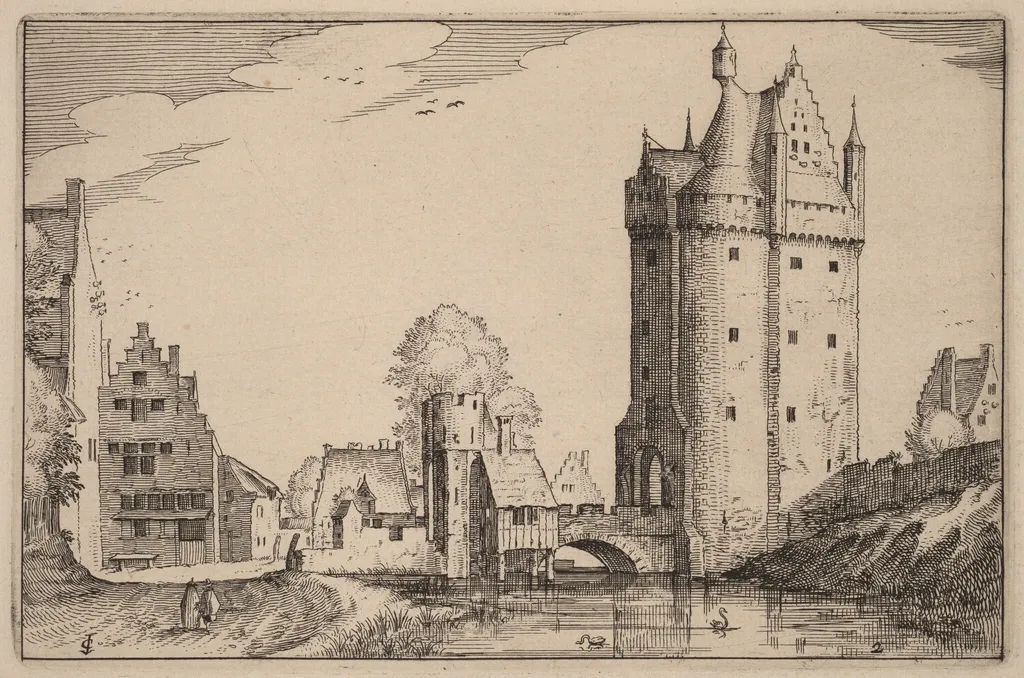
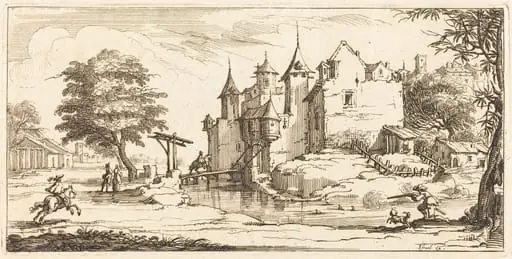
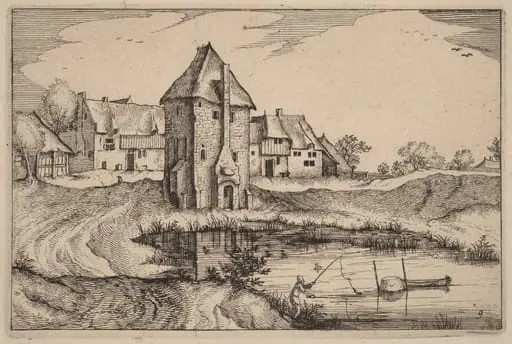
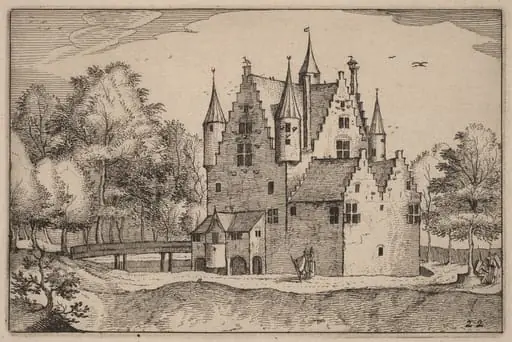
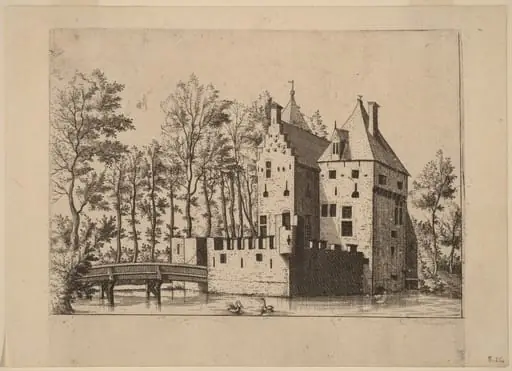
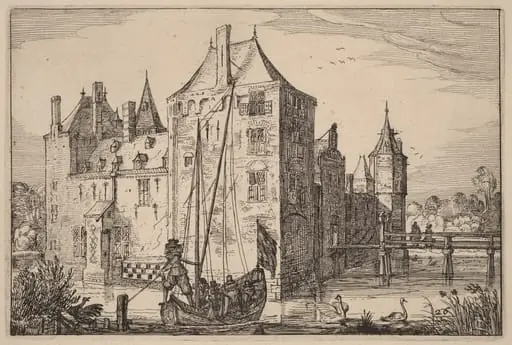
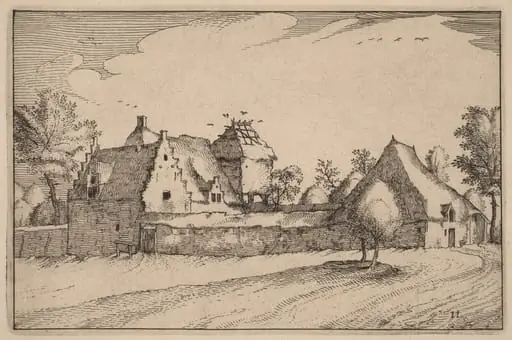
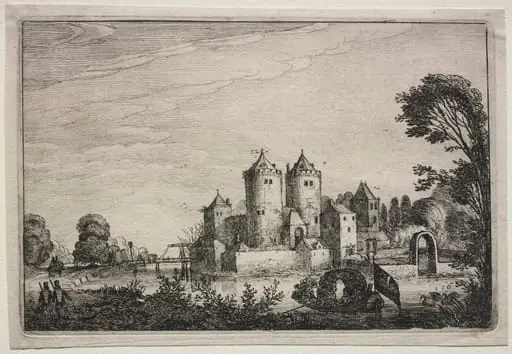
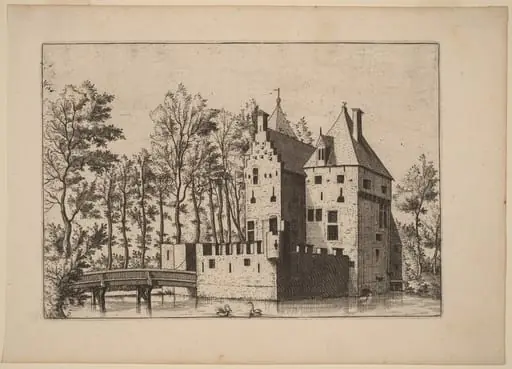
Town Gate is an ink print by the Baroque artist Claes Jansz Visscher. It dates from 1612 and is held in the collection of the National Gallery of Art.
About this work
Overview
The composition centers on a massive, castle‑like gate on the right side of the picture, with a narrow street flanked by modest dwellings that recede behind it.
Claes Janszoon Visscher’s 1612 etching titled *Town Gate* presents a fortified urban entrance rendered in monochrome. The composition centers on a massive, castle‑like gate on the right side of the picture, with a narrow street flanked by modest dwellings that recede behind it. A river flows across the foreground, crossed by a low arching bridge, while two diminutive figures traverse the banks. The sky is suggested only by a few linear cloud marks.
Subject & Meaning
The print captures a typical early‑seventeenth‑century fortified town portal, emphasizing the defensive architecture that regulated trade and travel. By situating the gate within a bustling streetscape, Visscher highlights the interplay between municipal security and everyday urban life, underscoring the gate’s role as both a barrier and a point of connection for the surrounding community.
Technique & Style
Executed through etching, Visscher incised the image onto a copper plate, allowing ink to fill the fine lines before transfer to paper. The work is distinguished by its intricate linear network, which delineates individual bricks, window panes, and foliage with remarkable precision. This meticulous approach reflects the period’s broader interest in topographical accuracy and the artist’s skill in rendering complex architectural detail within a single print.
History & Provenance
Created in 1612, the print emerges from Visscher’s prolific output as a draughtsman, mapmaker, and publisher in Amsterdam. His family’s mapmaking enterprise, founded in the early 1600s, continued for several generations, disseminating works that combined cartographic information with decorative cityscapes. *Town Gate* exemplifies the commercial and artistic activities of Vissburg’s workshop, which supplied both geographic and ornamental prints to a growing market for visual documentation.
Context
During the Dutch Golden Age, there was a heightened demand for detailed representations of cities, fortifications, and landscapes, driven by both commercial interests and civic pride. Visscher’s etching aligns with this trend, offering a visual record that would have appealed to patrons interested in the architecture of municipal defense and the aesthetic qualities of urban planning.
Artist & collection

Artist
Claes Janszoon Visscher (1587 – 19 June 1652) was a Dutch Golden Age draughtsman, engraver, mapmaker, and publisher.