Artwork
South Side Beverley Minster
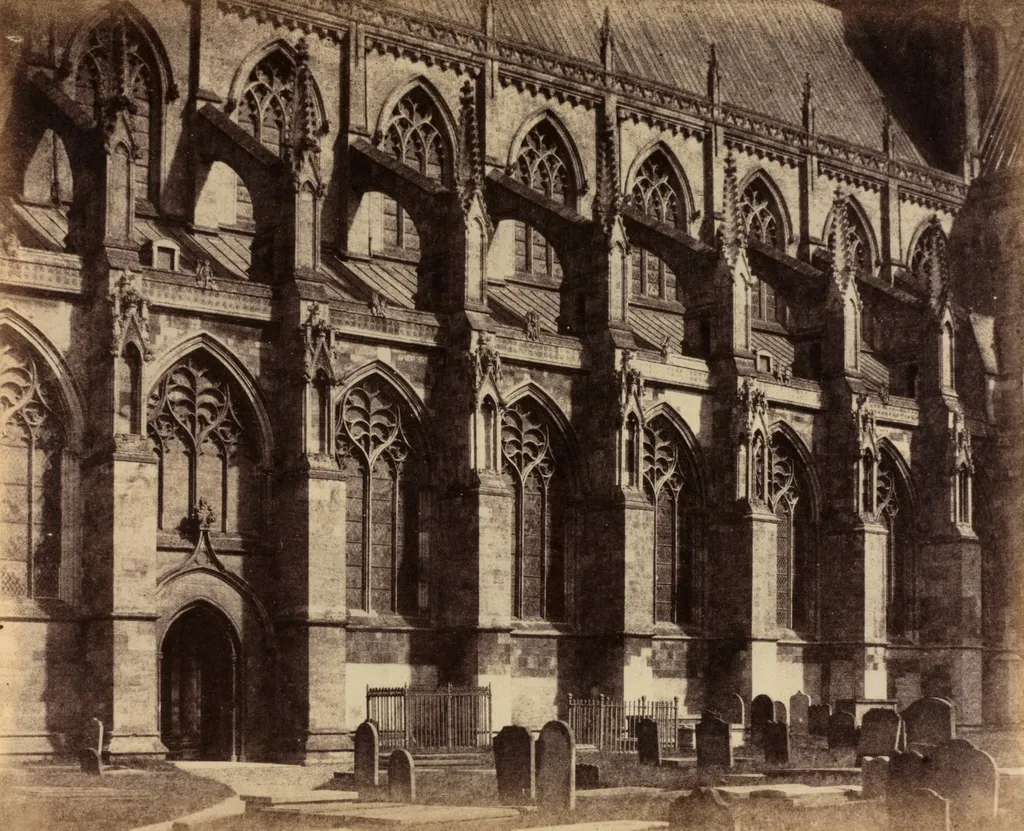
South Side Beverley Minster is a photography by the Impressionist artist Col. Alfred Capel-Cure. It dates from 1860 and is held in the collection of the Cleveland Museum of Art.
About this work
The building has rows of windows with diamond-shaped glass and carvings above them.
This photo shows a tall, gray stone church with pointed arches and small windows. The building has rows of windows with diamond-shaped glass and carvings above them. In front, there’s a fence and a few wooden benches.
The photo was taken in 1860, showing how churches looked back then. The artist used a simple style to capture the details of the stonework.
Look up Realism to see how this style focused on everyday scenes and buildings.
Overview
South Side Beverley Minster is a photographic work by Colonel Alfred Capel-Cure, dated to 1860, and part of the collection at The Cleveland Museum of Art. The image depicts a traditional English church, characterized by its tall, gray stone structure, pointed arches, and small windows.
Subject & Meaning
The subject is Beverley Minster, a historic church in England, captured in a straightforward manner. The photograph conveys a sense of architectural detail and everyday religious architecture of the time, reflecting the artist's interest in documenting existing structures.
Technique & Style
The photograph exemplifies a simple, realistic approach, focusing on accurately capturing the stonework, architectural features, and surrounding elements like fences and benches. This aligns with Realist tendencies, emphasizing factual representation over embellishment.
History & Provenance
Created in 1860 by Colonel Alfred Capel-Cure, the photograph is now housed at The Cleveland Museum of Art, providing a historical snapshot of the church's appearance during the mid-19th century.
Context
Taken in 1860, the photograph offers insight into the state of religious architecture in England at the time. It also reflects the growing interest in photographic documentation of historical and everyday subjects, characteristic of the Realist movement's influence.
Artist & collection

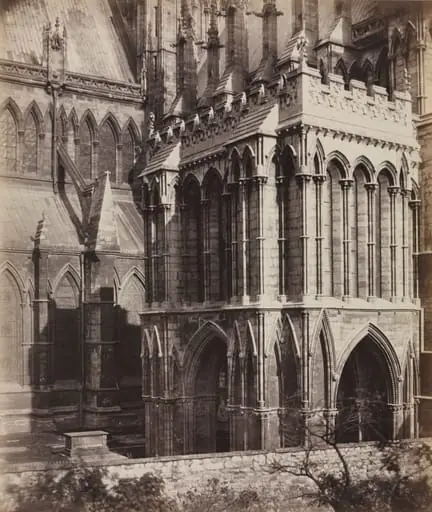 Lincoln Cathedral: The Galilee Porch
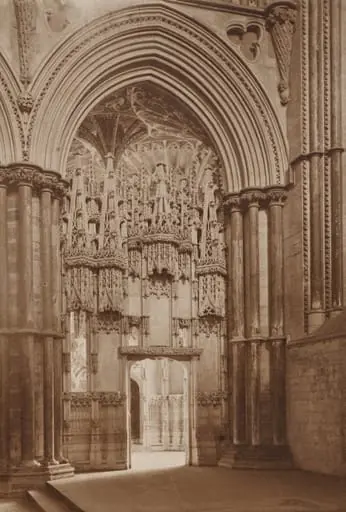 Bishop Alcock's Chapel from Reho-Choir, Ely Cathedral
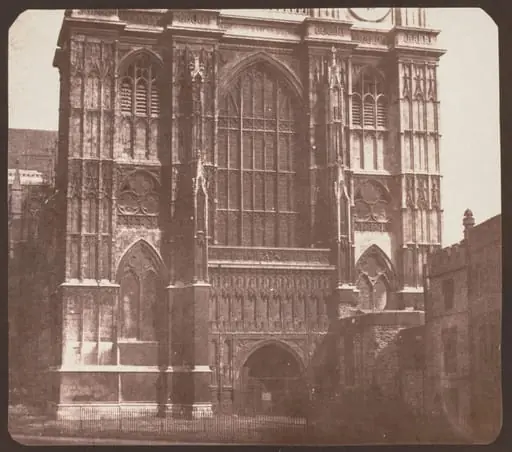 Westminster Abbey
 Interior of Edmund's Chapel, Westminster Abbey
 Ancient Door, Magdalen College, Oxford
 Architecture of the Middle Ages: Rouen Cathedral, North Entrance
 Canterbury
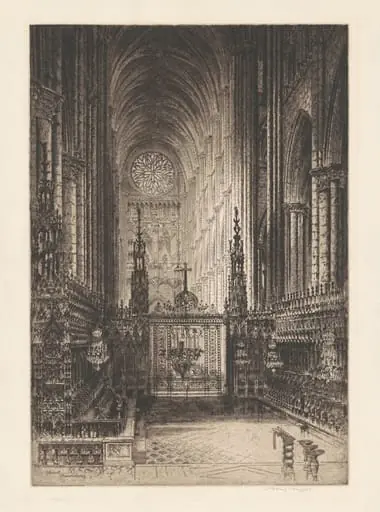 Interior of Amiens Cathedral
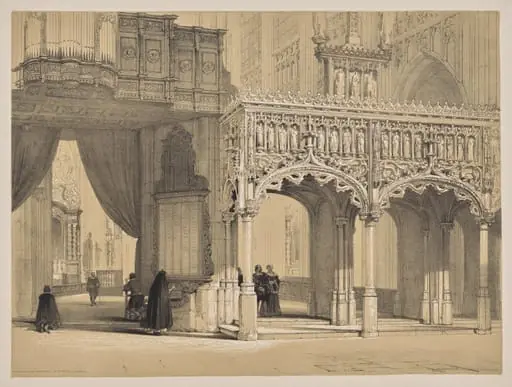 Sketches in Belgium and Germany, First Series, Screen in the Cathedral of St. Peter, Louvain
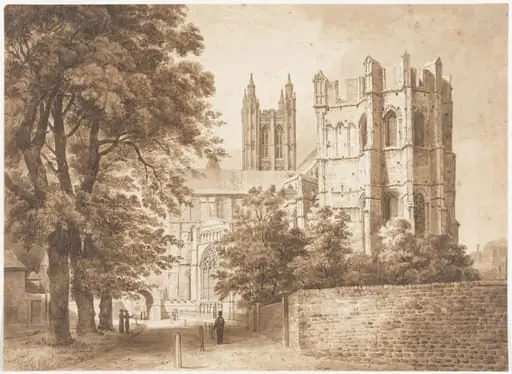 Canterbury Cathedral from the south east
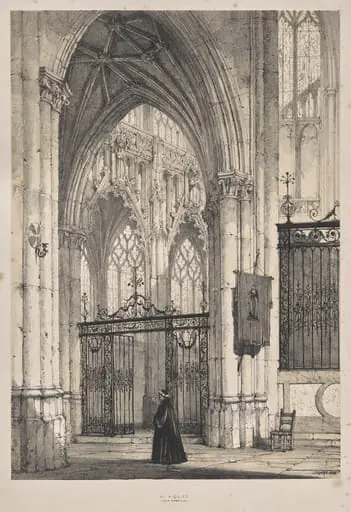 Architecture of the Middle Ages: Church of St. Riquier, near Abbeville
 Rheims Cathedral, South Transept