Artwork
Architecture of the Middle Ages: Rouen Cathedral, North Entrance
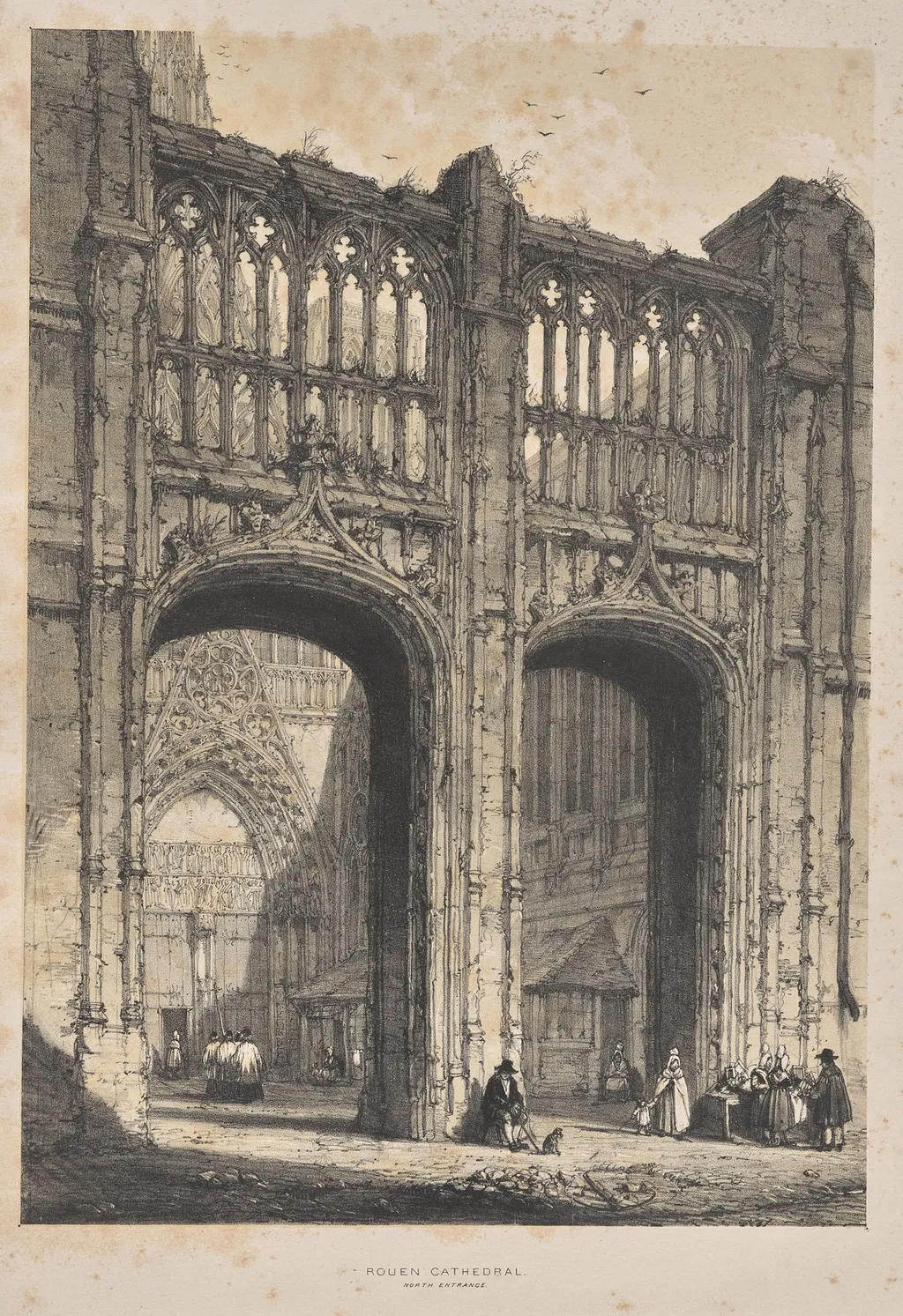
Architecture of the Middle Ages: Rouen Cathedral, North Entrance is a print by the Romanticist artist Joseph Nash. It dates from 1838 and is held in the collection of the Cleveland Museum of Art.
About this work
Overview
Created in 1838 by British artist Joseph Nash, this print is a detailed watercolor and lithograph depicting the north entrance of Rouen Cathedral.
Created in 1838 by British artist Joseph Nash, this print is a detailed watercolor and lithograph depicting the north entrance of Rouen Cathedral. It belongs to a larger project documenting medieval architecture, reflecting Nash’s dedication to preserving the visual record of historic buildings before industrialization altered their appearance. The work combines topographical accuracy with atmospheric rendering, characteristic of early 19th-century antiquarian illustration.
Subject & Meaning
The image focuses on the cathedral’s north portal, a Gothic structure marked by centuries of weathering and partial decay. Statues lining the upper tiers and the worn stone surfaces suggest the passage of time. The inclusion of small human figures and a dog grounds the monument in daily life, subtly emphasizing its enduring presence amid ordinary activity. The scene evokes quiet reverence rather than grandeur, inviting contemplation of historical continuity.
Technique & Style
Nash employed fine-line lithography and delicate watercolor washes to capture the texture of aged stone. Shading is used to accentuate cracks, recessed carvings, and the play of light across uneven surfaces. The composition directs attention upward, following the arches toward the statues, while the foreground’s muted tones contrast with the brighter stone, enhancing the sense of depth and material weight without romantic embellishment.
History & Provenance
This print was produced as part of Nash’s broader series on medieval architecture, later compiled into *Mansions of England in the Olden Time*. Though focused on English buildings, he extended his work to continental sites like Rouen Cathedral, responding to growing interest in Gothic heritage. The image was likely printed for collectors and scholars, serving as both documentation and a cultural artifact of antiquarian study in the 1830s.
Context
In the 1830s, European artists and antiquarians increasingly turned to medieval ruins as subjects of study and aesthetic reflection. Nash’s work aligned with a broader movement that valued historical preservation, spurred by industrialization’s threat to old structures. His approach differed from overtly emotional Romantic depictions, favoring measured observation over dramatic interpretation, yet still conveyed the quiet melancholy of time’s effect on stone.
Legacy
Nash’s prints of Rouen Cathedral and other medieval sites contributed to the visual archive of architectural history, influencing later preservation efforts. His precise renderings remain valuable references for scholars studying Gothic construction and surface deterioration. Though not widely exhibited today, his work helped establish a precedent for documentary art that prioritized fidelity over embellishment in recording heritage.
Artist & collection
Artist
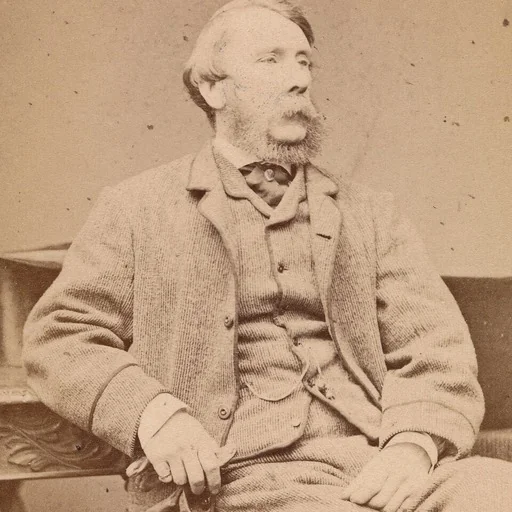
Joseph Nash (17 December 1809 – 19 December 1878) was an English watercolour painter and lithographer, specialising in historical buildings. His major work was the 4-volume Mansions of England in the Olden Time, published from 1839–49.

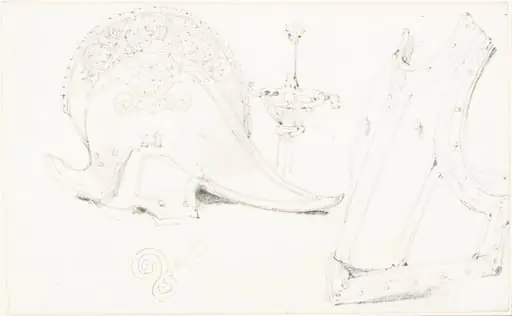 Study of a Helmet, Breastplate, and Rapier
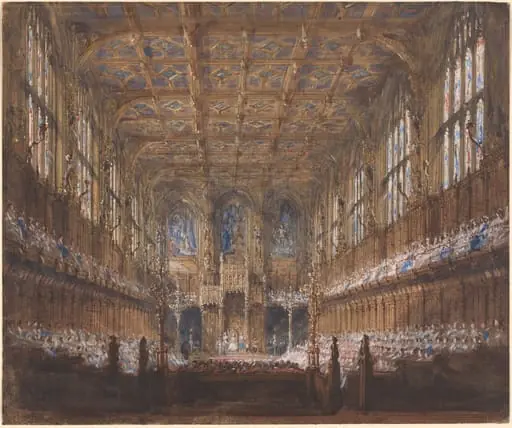 The State Opening of Parliament in the Rebuilt House of Lords
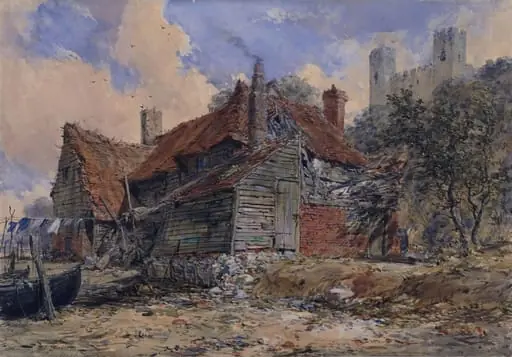 Rochester
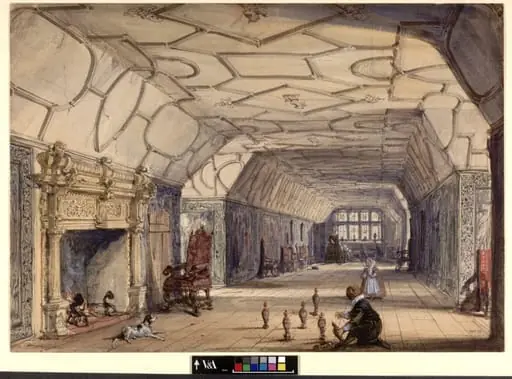 The gallery at Knole House, near Sevenoaks
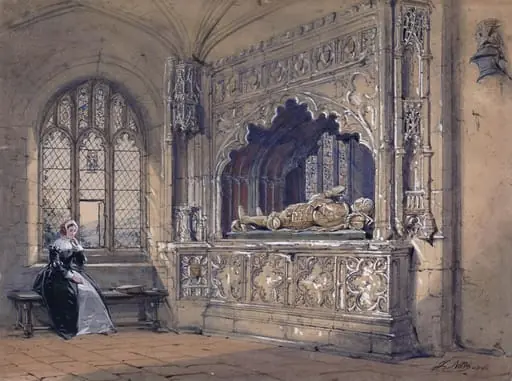 The supposed tomb of Thomas Fiennes, in Herstmonceux Church, Sussex, looking south-east from the North Chapel
 Speke Hall, Lancashire
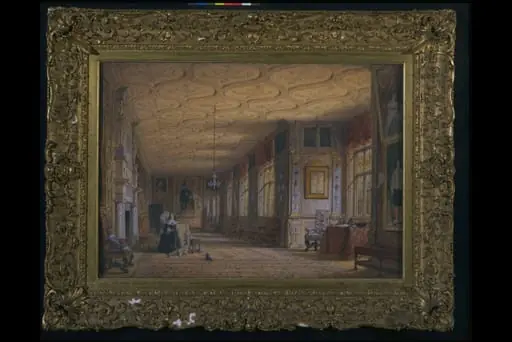 The Cartoon Gallery at Knole
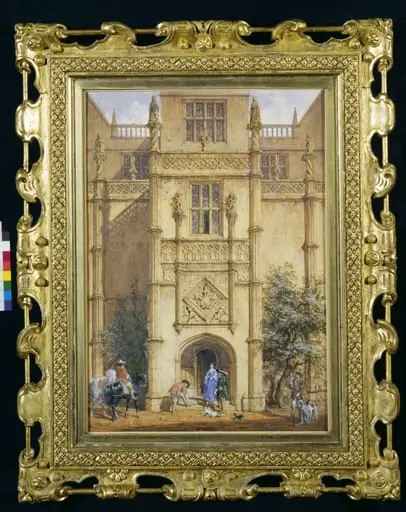 The Porch at Montacute House, Somerset
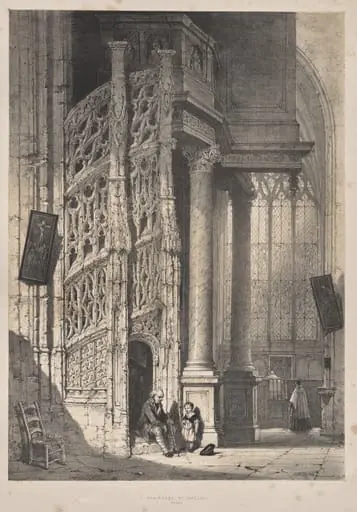 Architecture of the Middle Ages: Staircase, St. Maclou, Rouen
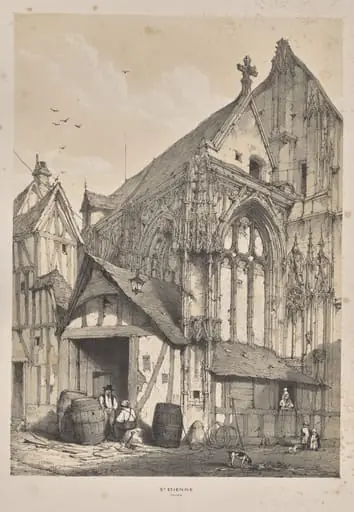 Architecture of the Middle Ages: St. Etienne, Rouen
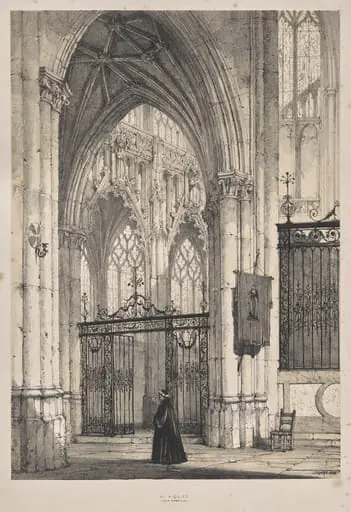 Architecture of the Middle Ages: Church of St. Riquier, near Abbeville
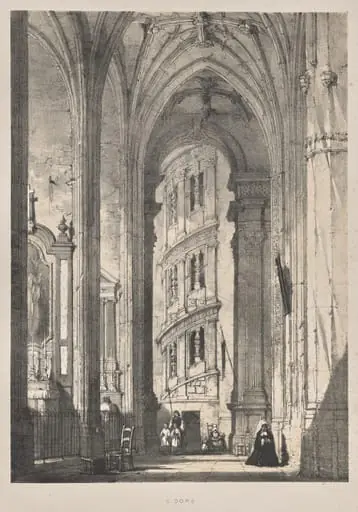 Architecture of the Middle Ages: Church of St. Gisors, Interior
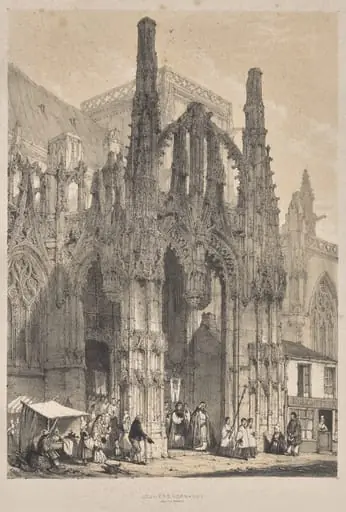 Architecture of the Middle Ages: Louviers, Normandy, South Porch
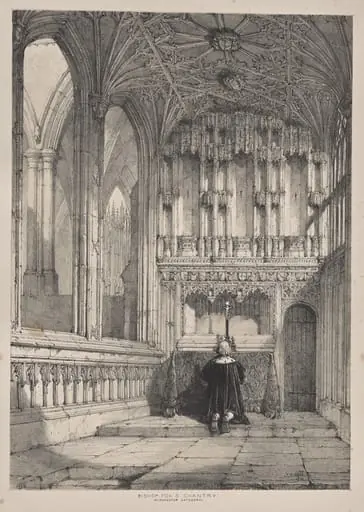 Architecture of the Middle Ages: Bishop Fox's Chantry, Winchester Cathedral
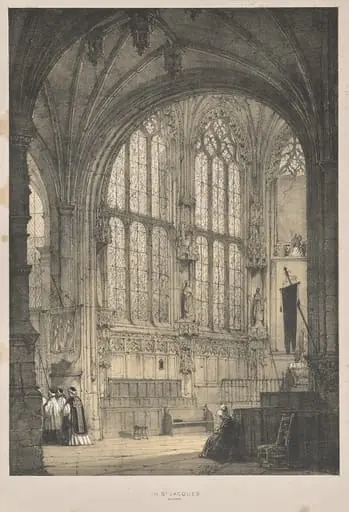 Architecture of the Middle Ages: In St. Jacques, Dieppe, East End, Interior
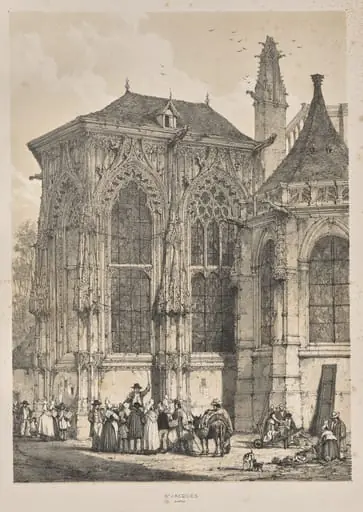 Architecture of the Middle Ages: St. Jacques, Dieppe, East End, Exterior
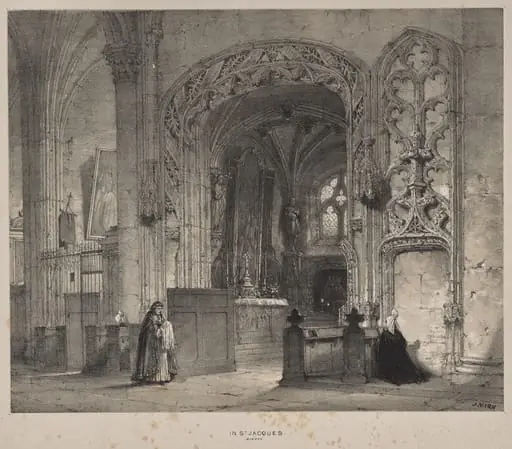 Architecture of the Middle Ages: Chapel in St. Jacques, Dieppe
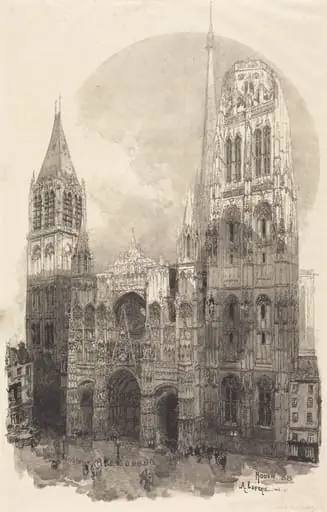 Rouen Cathedral (La Cathedral de Rouen)