Artwork
Peacock and Goose
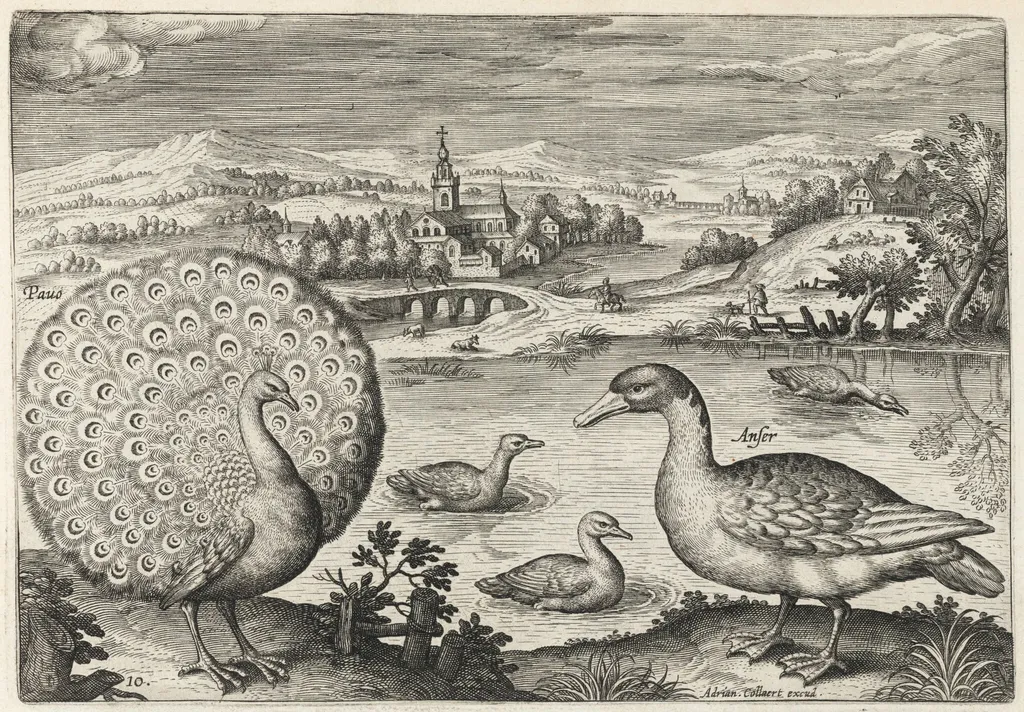
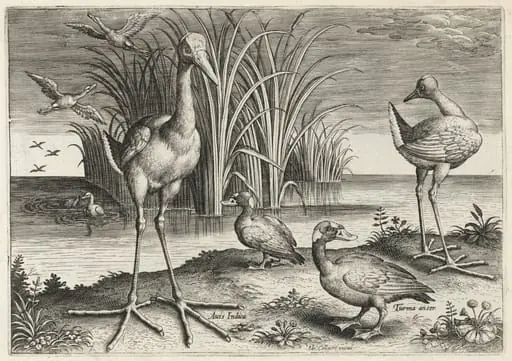
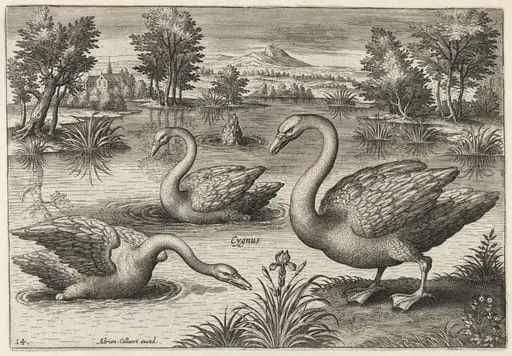
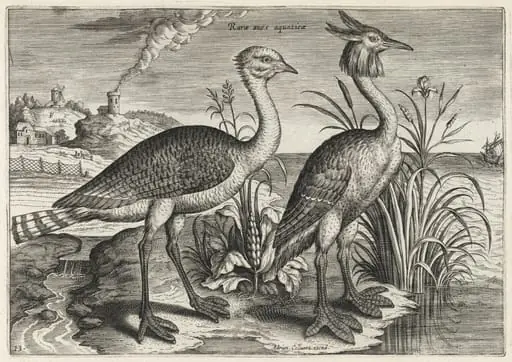
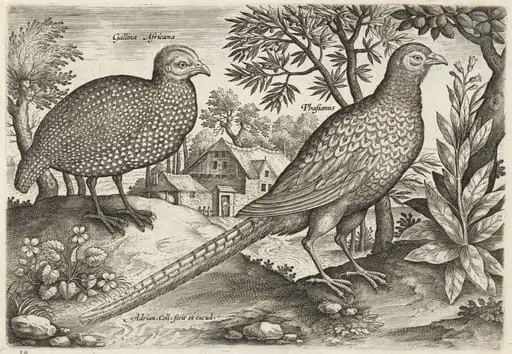
Peacock and Goose is an ink print by the Renaissance artist Adriaen Collaert. It dates from 1600 and is held in the collection of the National Gallery of Art.
About this work
Overview
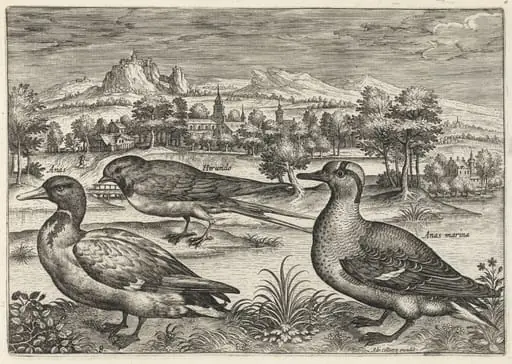
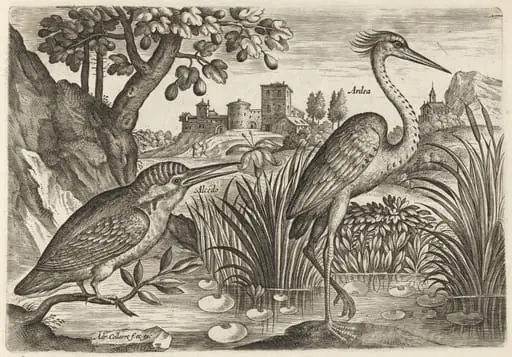
Adriaen Collaert’s engraving titled *Peacock and Goose* dates from around 1600. Executed on laid paper, the print presents a quiet natural scene in which a peacock and a goose occupy the foreground, set against a modest landscape that includes a river, a bridge, and a distant building. The composition conveys a calm, pastoral atmosphere typical of early‑17th‑century Northern European printmaking.
Subject & Meaning
The central figures are a peacock, displayed with its plumage fanned out on the left, and a goose, positioned on the right with its beak open as if about to call. Their juxtaposition of a flamboyant bird with a more modest waterfowl may suggest a contrast between display and utility, a theme often explored in Renaissance allegory, though the work remains primarily decorative.
Technique & Style
The overall style reflects the detailed naturalism and careful draftsmanship characteristic of late Renaissance prints from the Low Countries.
Collaert employs fine, cross‑hatching lines to render textures of feather, water, and foliage, achieving a realistic surface quality within the limits of the engraving medium. The use of laid paper, with its characteristic ribbed texture, enhances the tonal depth. The overall style reflects the detailed naturalism and careful draftsmanship characteristic of late Renaissance prints from the Low Countries.
History & Provenance
The print is attributed to Collaert, a prolific Flemish engraver active in Antwerp at the turn of the 17th century. While specific ownership records are scarce, the work appears in several early modern print collections, indicating its circulation among connoisseurs of animal subjects and decorative prints during the period.
Artist & collection