Artwork
A windmill at Stoke, near Ipswich
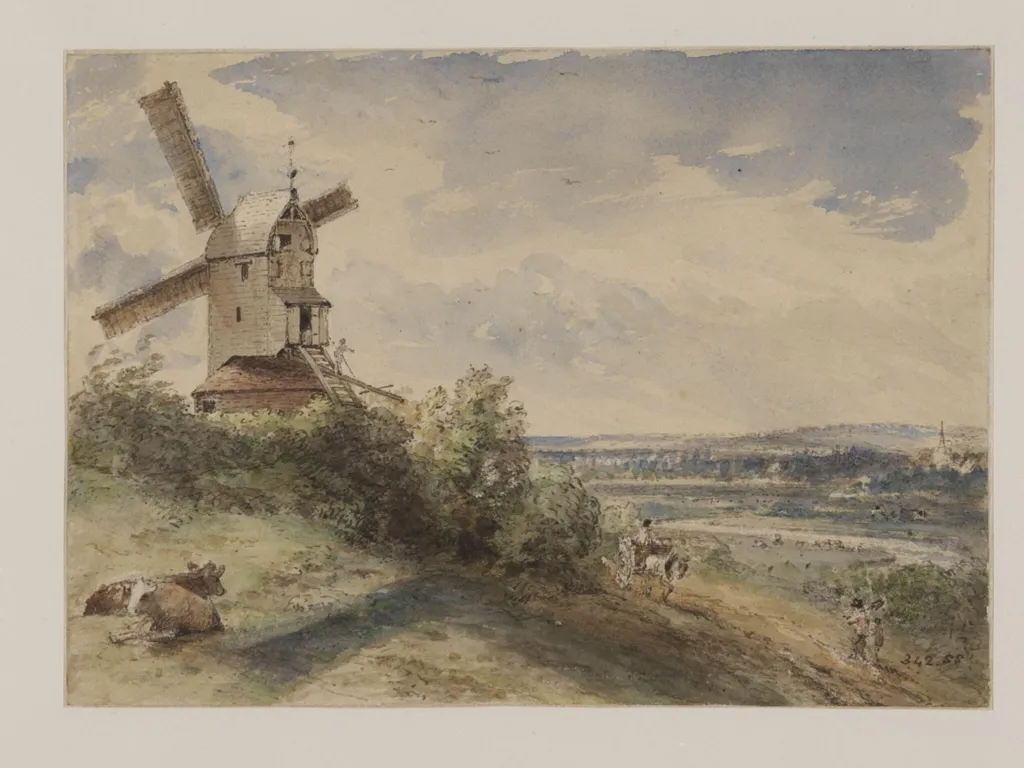
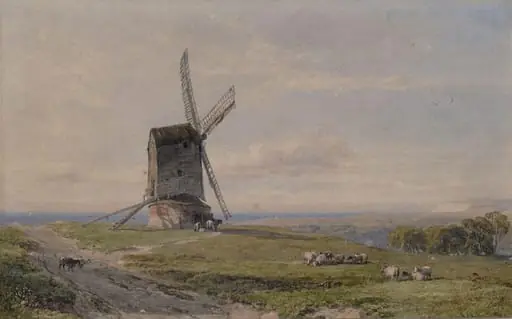
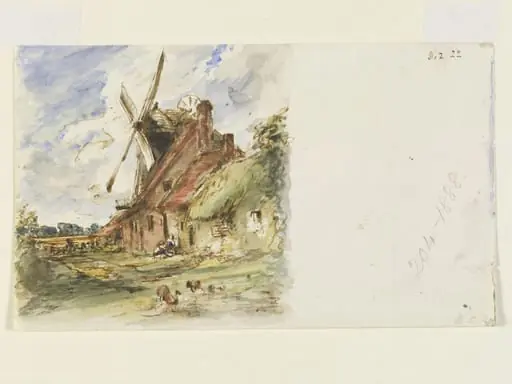
A windmill at Stoke, near Ipswich is a watercolor work on paper by the Romanticist artist John Constable. It dates from 1814 and is held in the collection of the Victoria and Albert Museum.
About this work
Overview
Painted in 1814, this watercolour by John Constable captures a windmill near Stoke, Suffolk, during a period when he was deeply immersed in the local countryside. Executed in delicate pen and watercolour, the work is one of several landscapes he produced while traveling through Suffolk, reflecting his commitment to observing and recording the rural environment with quiet precision.
Subject & Meaning
The composition centers on a solitary windmill perched on a gentle rise, its wooden sails catching the breeze. Below, a cow rests in the foreground and a lone rider moves along a dirt track, suggesting quiet daily life. The scene holds no dramatic narrative, instead conveying a sense of stillness and continuity, characteristic of Constable’s reverence for ordinary rural existence.
Technique & Style
Constable employed transparent watercolour with soft, layered brushwork to build subtle tonal variations. The sky, a blend of pale blue and grey, is rendered with loose washes that suggest shifting cloud cover. Delicate pen lines define structural elements like the mill and path, while the muted palette and gentle textures reinforce a mood of calm observation rather than theatrical effect.
History & Provenance
Created during Constable’s extended stay in Suffolk in 1814, the work emerged from his routine sketching trips to villages like Stoke and Feering. It was made not for public exhibition but as a personal record of the landscape. The piece remained in private hands for much of its history, later entering institutional collections as interest in his early works grew.
Context
In the early 1810s, Constable turned away from urban artistic conventions to focus on the Suffolk countryside, a shift that aligned with broader Romantic interests in nature and local identity. His watercolours from this period, including this one, were part of a quiet revolution in landscape art—prioritizing direct observation over idealized composition.
Legacy
Though not widely known during his lifetime, this watercolour exemplifies Constable’s foundational approach to landscape: attentive to light, atmosphere, and the rhythms of rural life. Later generations recognized these works as crucial to the evolution of British landscape painting, influencing artists who valued authenticity over grandeur.
Artist & collection
Artist
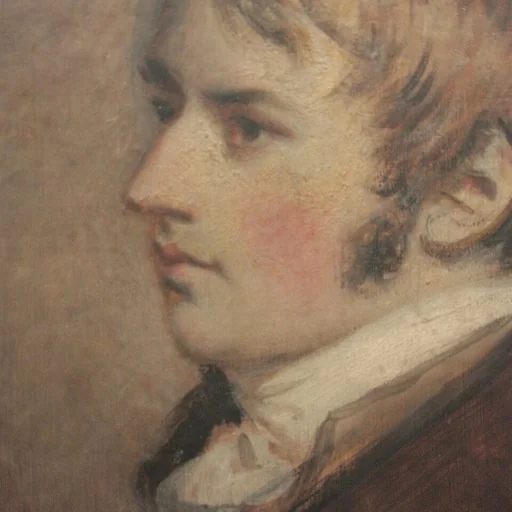
John Constable (; 11 June 1776 – 31 March 1837) was an English landscape painter in the Romantic tradition.