Artwork
A Windmill on the Downs near Brighton
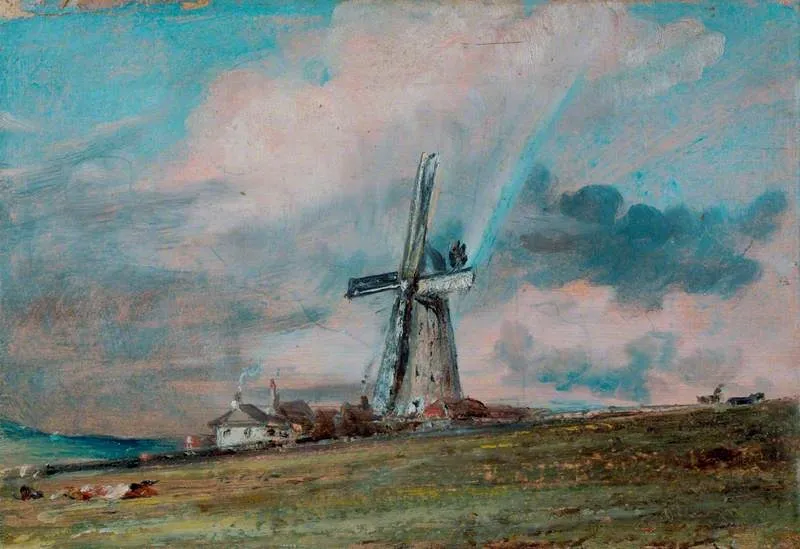
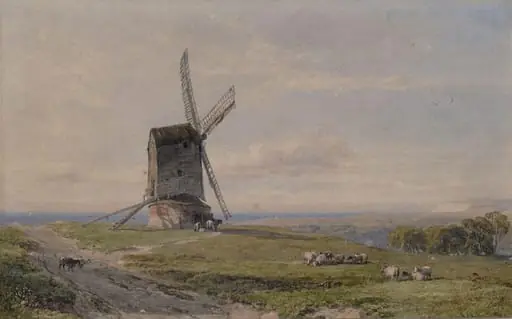
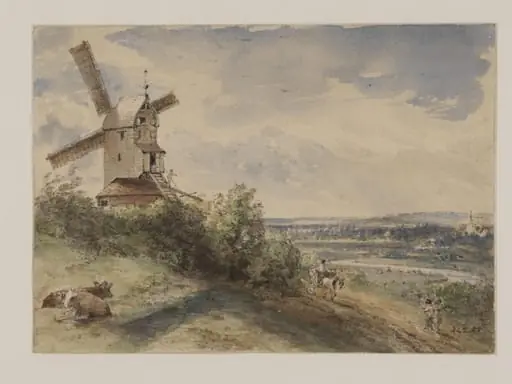
A Windmill on the Downs near Brighton is an unspecified painting by John Constable. It dates from 1824 and is held in the collection of the Victoria and Albert Museum.
About this work
Overview
It is part of the Victoria and Albert Museum’s collection, where it remains a quiet example of his landscape studies outside his more famous Suffolk subjects.
Painted in 1824 by John Constable, this work captures a windmill situated on the rolling chalk hills near Brighton. The scene is rendered with careful attention to atmospheric conditions and topography, reflecting Constable’s deep engagement with the English countryside. It is part of the Victoria and Albert Museum’s collection, where it remains a quiet example of his landscape studies outside his more famous Suffolk subjects.
Subject & Meaning
The windmill, a functional structure embedded in the landscape, symbolizes rural industry and human adaptation to the land. Its placement atop the hill emphasizes its visibility and centrality within the scene. The surrounding buildings and sparse trees suggest a modest, working countryside, not idealized but observed with honesty. The painting conveys no overt narrative, instead inviting contemplation of everyday rural life.
Technique & Style
Constable employed loose, textured brushwork to render the sky and clouds, capturing their movement and light. The windmill’s wooden structure is defined with restrained detail, allowing the surrounding environment to dominate. Warm earth tones in the buildings contrast with the cool, shifting blues and greys of the atmosphere. His method prioritizes naturalism over polish, emphasizing transient weather and the weight of air.
History & Provenance
The painting was completed during a period when Constable was exploring locations beyond his native Suffolk, including the South Coast. It entered the Victoria and Albert Museum’s collection in the 19th century, likely through acquisition or donation. Its preservation reflects early institutional interest in Constable’s lesser-known works, offering insight into his broader observational practice.
Context
In the 1820s, Brighton was growing as a seaside resort, yet its hinterland retained rural character. Constable’s depiction avoids urbanization, focusing instead on the enduring presence of agricultural structures. This work aligns with his broader project of documenting the English landscape amid industrial change, valuing quiet continuity over dramatic transformation.
Legacy
Though less celebrated than his Suffolk scenes, this painting contributes to understanding Constable’s consistent commitment to observing nature with fidelity. It exemplifies his belief that landscape painting could convey truth through careful attention to light, weather, and topography. Its presence in a major museum underscores its role in the evolution of British landscape art.
Artist & collection
Artist
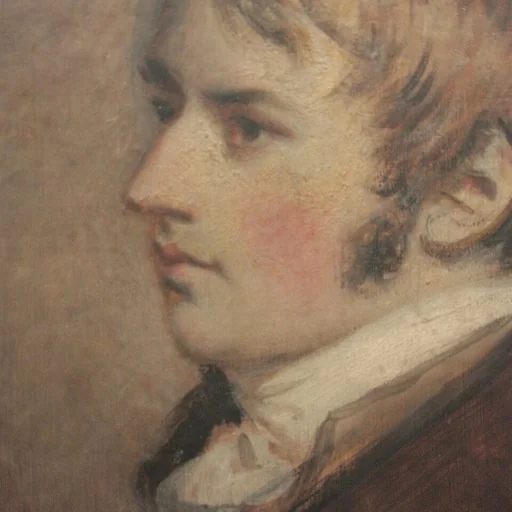
John Constable (; 11 June 1776 – 31 March 1837) was an English landscape painter in the Romantic tradition.