Artwork
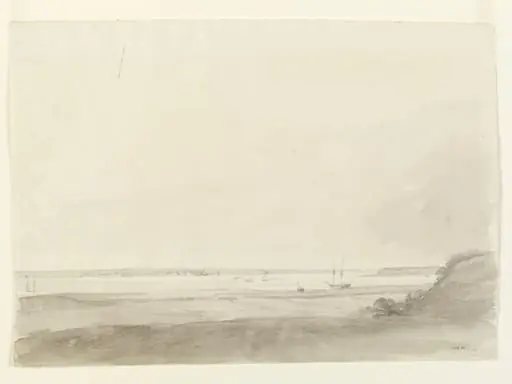
Coast scene near Osmington, with Portland Island in the distance
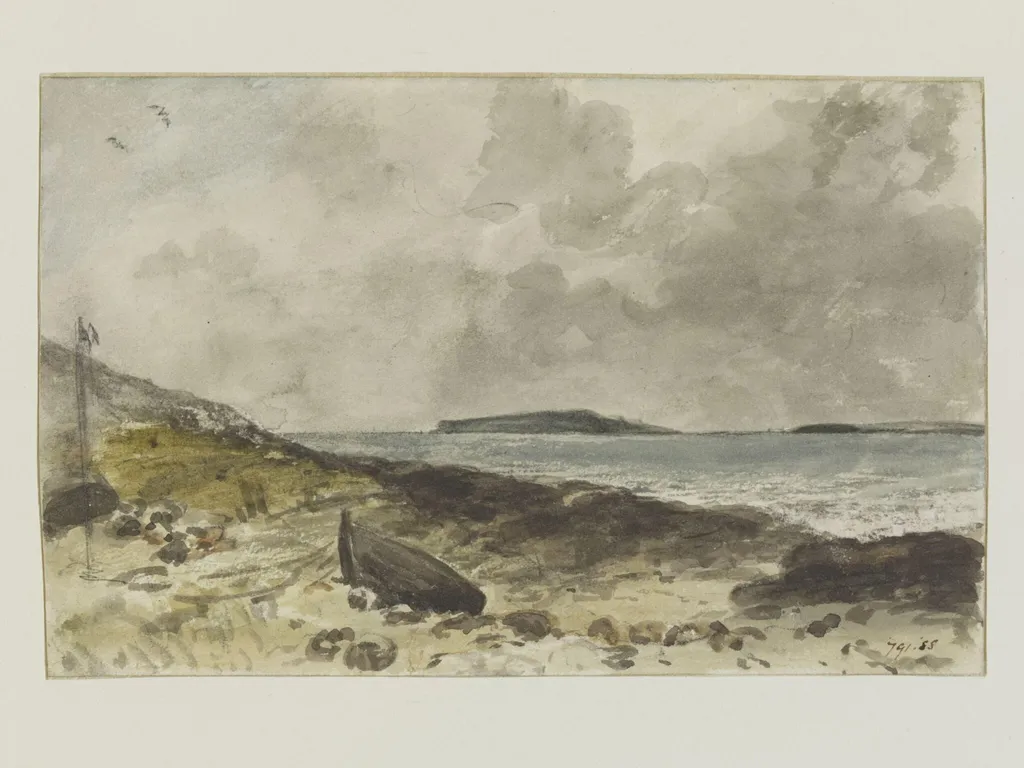
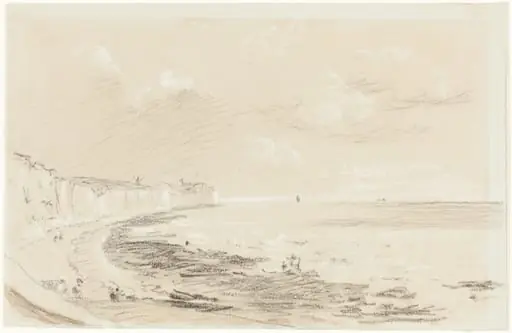
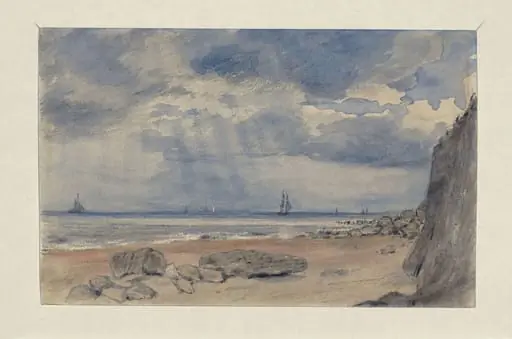
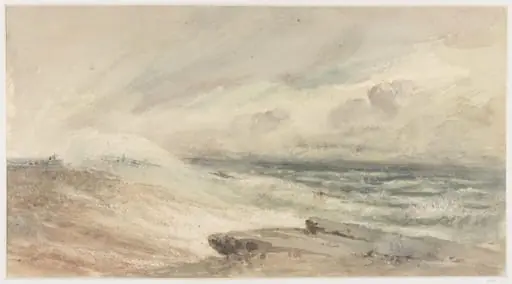
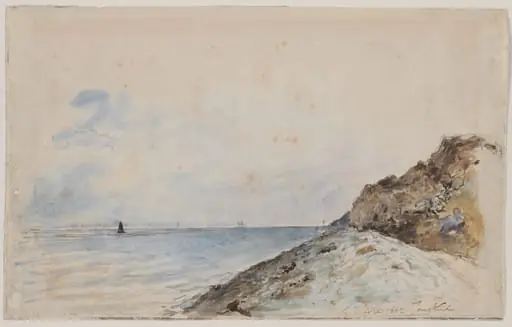
Coast scene near Osmington, with Portland Island in the distance is a watercolor work on paper by the Romanticist artist John Constable. It dates from 1816 and is held in the collection of the Victoria and Albert Museum.
About this work
Overview
Created in 1816, this watercolour by John Constable captures a quiet coastal view near Osmington in Dorset, with Portland Island visible on the horizon.
Created in 1816, this watercolour by John Constable captures a quiet coastal view near Osmington in Dorset, with Portland Island visible on the horizon. Executed in pencil and watercolour, the work reflects a moment of personal change for the artist, occurring shortly after his marriage and the death of his father. Its intimate scale and spontaneous brushwork suggest it was made on-site, likely during a honeymoon trip.
Subject & Meaning
The scene presents a beached boat on a stony shore, a solitary flagpole, and a distant island under a brooding sky. No human figures are present, emphasizing solitude and the quiet rhythm of nature. The stillness of the water contrasts with the tension in the clouds, suggesting a mood of reflection rather than drama. The composition invites contemplation, aligning with Romantic sensibilities that valued nature as a vessel for inner emotion.
Technique & Style
Constable employed loose, rapid watercolour strokes to convey light and atmospheric shifts. The sky is rendered with layered washes that suggest gathering clouds, while the sea and shore use minimal detail to imply texture and movement. Pencil outlines ground the forms without overdefining them, preserving the sketch-like immediacy. This approach prioritizes sensory impression over polished finish, characteristic of his outdoor studies.
History & Provenance
The work dates from a pivotal year in Constable’s life: his father’s death in May, his marriage in October, and a subsequent visit to Dorset. Likely painted during this honeymoon period, the piece was not intended for public exhibition but as a personal record. It remained within the artist’s circle until later acquisition by a public collection, preserving its intimate character.
Context
In 1816, Constable was shifting from the rigid conventions of academic landscape painting toward a more direct engagement with nature. His time in Suffolk and Dorset coincided with broader Romantic trends that valued emotional response to the natural world. Unlike grand historical landscapes, this work focuses on an ordinary coastal moment, reflecting a growing interest in the everyday sublime.
Legacy
Though modest in scale, this watercolour exemplifies Constable’s evolving practice of observing nature with honesty and sensitivity. It anticipates his later large-scale oil paintings by capturing transient effects of light and weather. Its preservation offers insight into his working methods and the quiet, personal side of an artist who would later redefine British landscape art.
Artist & collection
Artist
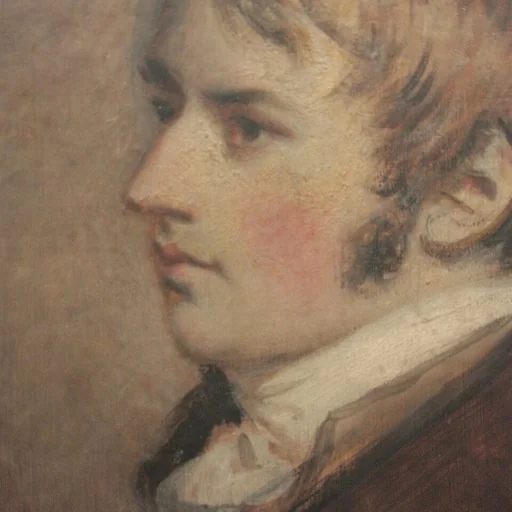
John Constable (; 11 June 1776 – 31 March 1837) was an English landscape painter in the Romantic tradition.