Artwork
Le Havre
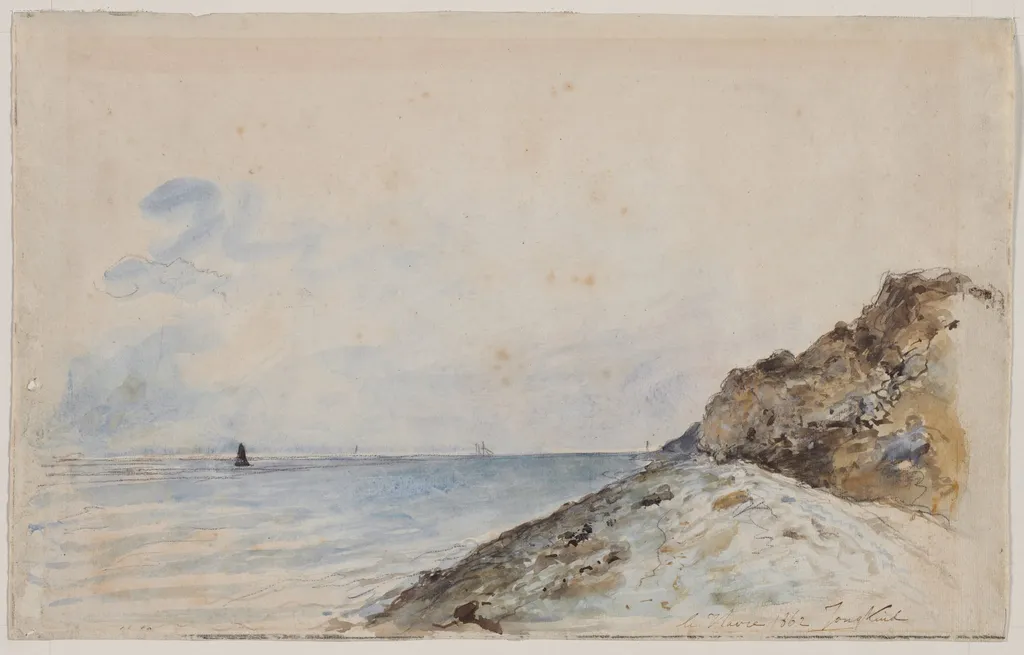
Le Havre is a drawing by the Impressionist artist Johan Jongkind. It dates from 1862 and is held in the collection of the Cleveland Museum of Art.
About this work
Overview
Created in 1862, *Le Havre* is a drawing by Dutch marine artist Johan Barthold Jongtype. Executed in a fluid, sketch‑like manner, the work records a stretch of coastline with a sheer cliff, gentle surf and a solitary boat on the horizon beneath a lightly clouded sky. The piece belongs to the collection of the Cleveland Museum of Art.
Subject & Meaning
The composition presents a quiet seascape, emphasizing the meeting point of land and water. The steep cliff on the right anchors the scene, while the calm sea and distant vessel suggest a tranquil, everyday moment along the French port of Le Havre. The muted palette underscores the natural atmosphere rather than dramatizing the view.
Technique & Style
Jongtype employed rapid, loosely applied brushstrokes that convey the fleeting quality of light and surface texture. Earthy ochres and subdued blues dominate, allowing tonal harmony to suggest depth without detailed rendering. The approach anticipates Impressionist concerns with atmosphere and immediacy, yet retains a realist observation of the coastal environment.
History & Provenance
After its completion, the drawing entered the holdings of the Cleveland Museum of Art, where it remains on view. As an early work by an artist later recognized as a forerunner of Impressionism, it illustrates Jongtype’s transitional role between Dutch landscape traditions and the emerging modernist sensibility of the mid‑19th century.
Artist & collection
Artist
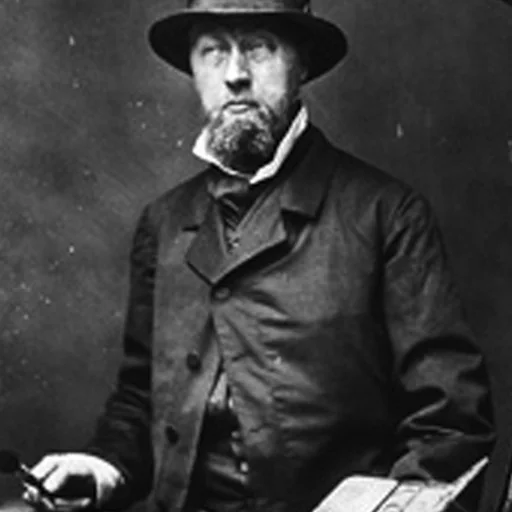
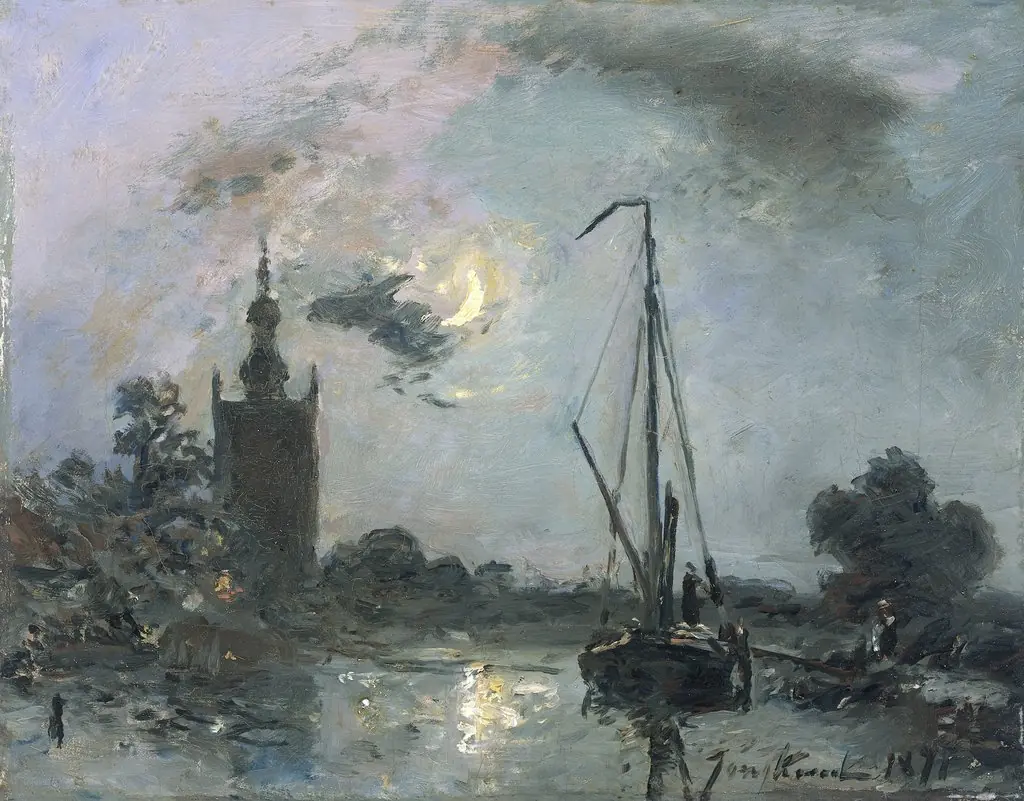
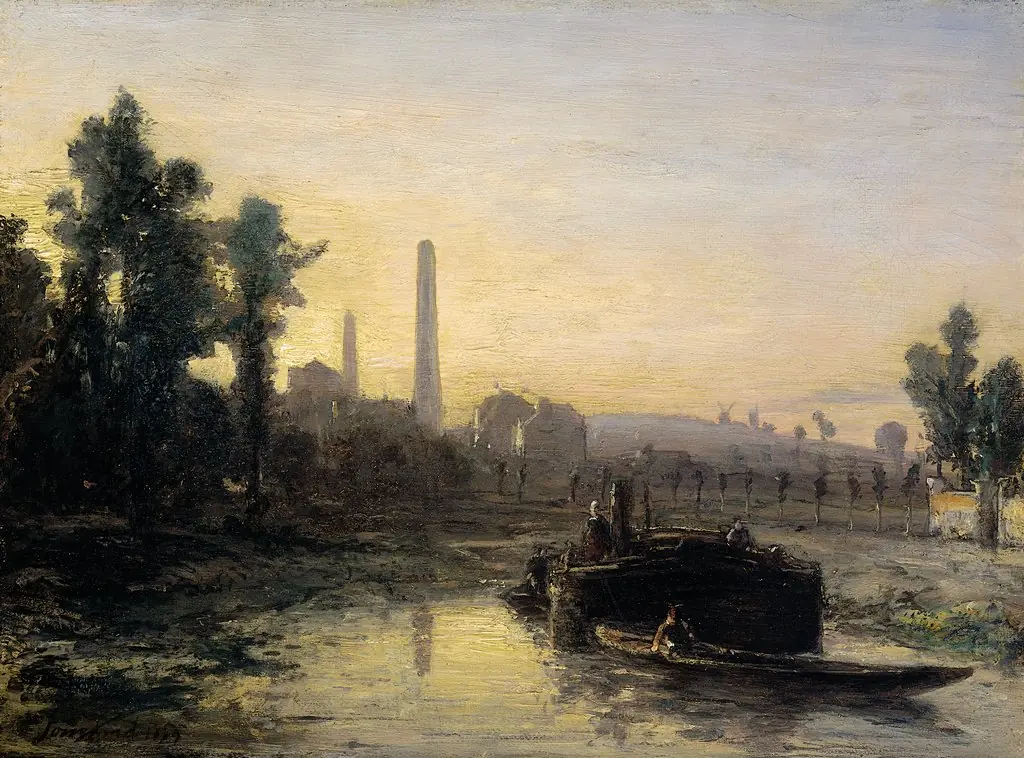
Johan Barthold Jongkind (Dutch pronunciation: ; 3 June 1819 – 9 February 1891) was a Dutch painter and printmaker. He painted marine landscapes in a free manner and is regarded as a forerunner of impressionism.

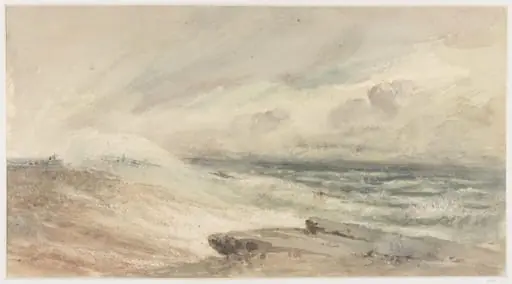 Sea from the Coast
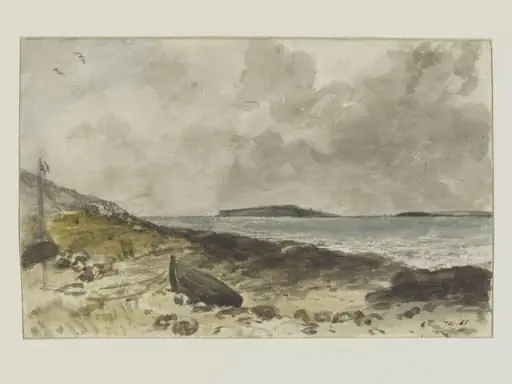 Coast scene near Osmington, with Portland Island in the distance
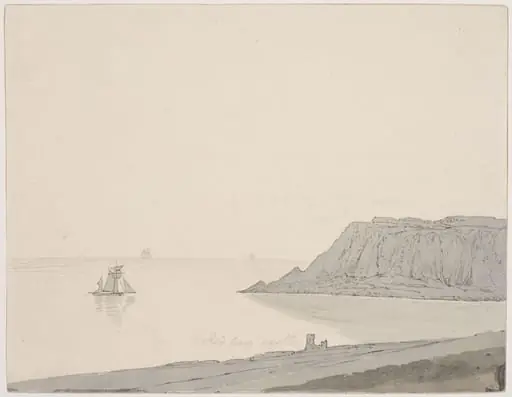 Red Bay Castle. Unfinished.
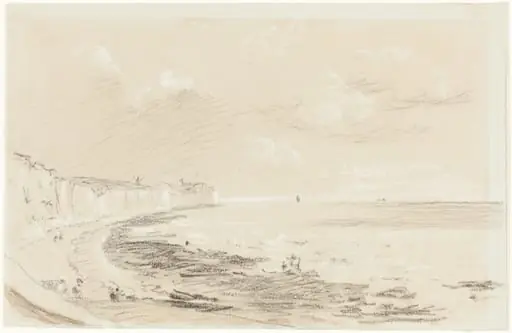 Scene on the South Coast of England
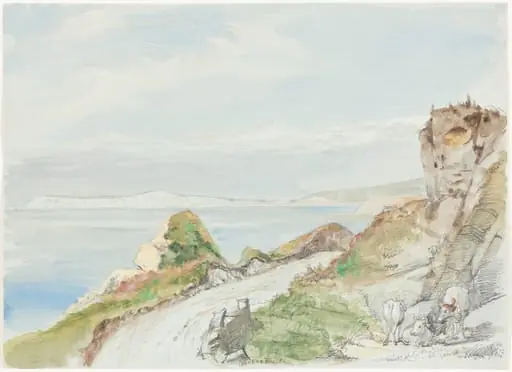 Freshwater Bay, Isle of Wight
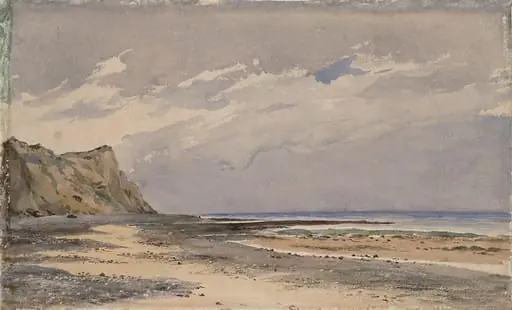 Shore Scene, Sheringham, Norfolk
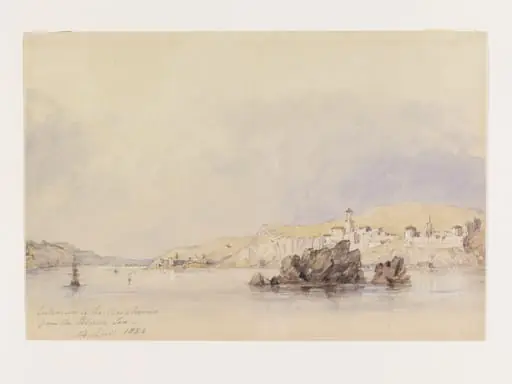 Entrance to the Bosphorus from the Black Sea
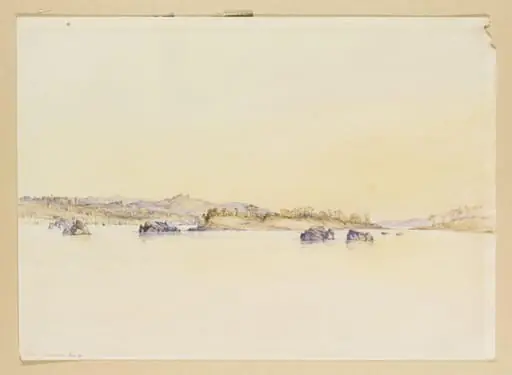 Asouan and Elephantine
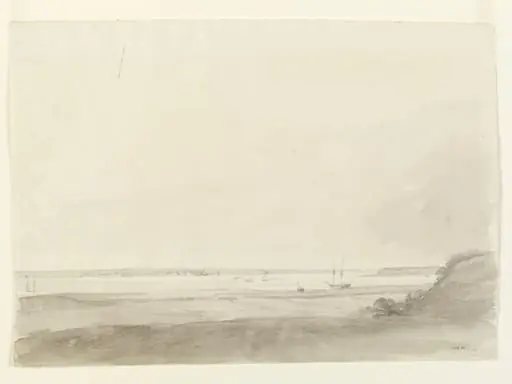 View from the shore over the Thames or the Medway
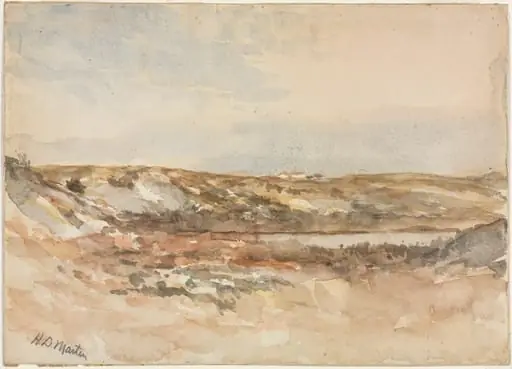 Near Newport
 Carmel
 The Coast at Concarneau