Artwork
A Great Oak Tree
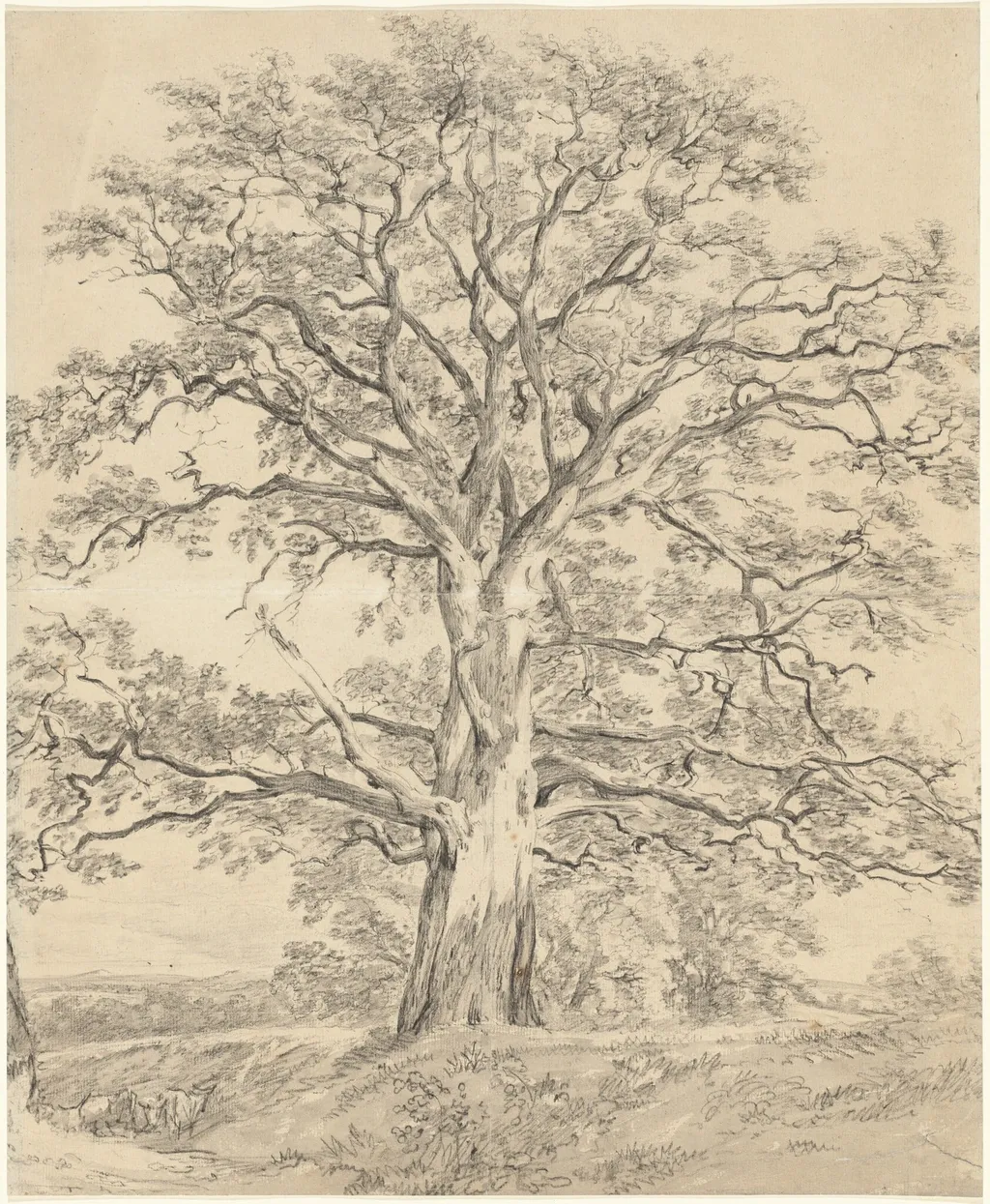
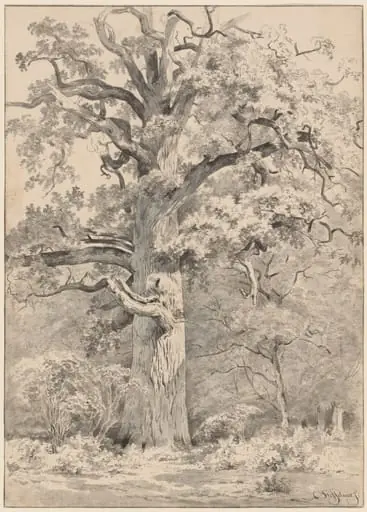
A Great Oak Tree is a chalk drawing by the Romanticist artist John Constable. It dates from 1801 and is held in the collection of the National Gallery of Art.
About this work
This is a sketch of a huge oak tree. Its thick trunk splits into gnarled branches. The leaves look soft, like cotton. Dark chalk traces the edges, then gray wash fills the trunk and ground.
John Constable did this in 1801. He sat outside for hours. This isn’t a finished painting. It’s a quick study of light and bark.
Look up Constable, John next.
Overview
Created around 1801, this drawing by John Constable captures a solitary oak tree in the Suffolk countryside using black chalk and gray wash on laid paper. Mounted on a backing, the work is a preparatory study rather than a finished piece. Constable executed it outdoors, observing the tree over extended periods, focusing on its form and the play of light rather than detailed finish.
Subject & Meaning
Its presence suggests endurance and quiet dignity, qualities Constable associated with the rural landscapes of his youth.
The subject is a massive, ancient oak, its trunk deeply fissured and branching into twisted limbs. Its presence suggests endurance and quiet dignity, qualities Constable associated with the rural landscapes of his youth. The tree is not idealized but rendered with intimate attention, reflecting his emotional bond to the natural world of Dedham Vale and its symbolic resonance in his artistic vision.
Technique & Style
Constable employed black chalk to define the tree’s contours and bark texture, then layered gray wash to suggest volume and shadow across the trunk and ground. The foliage is rendered with soft, stippled washes, evoking a hazy, airy canopy. The technique prioritizes immediacy and atmospheric effect over precision, characteristic of his plein air studies and his focus on transient natural conditions.
History & Provenance
The drawing dates from Constable’s early career, shortly after his move to London but while he still returned frequently to Suffolk. It was likely made during one of his sketching trips to the countryside near his family home. The paper, laid down for preservation, indicates it was valued early on, though it remained a working study rather than a public exhibition piece.
Context
In the early 1800s, English landscape art was shifting from idealized compositions toward direct observation of nature. Constable’s focus on ordinary rural scenes, rendered with emotional honesty, aligned with emerging Romantic sensibilities. This drawing exemplifies his rejection of academic conventions in favor of personal, sensory engagement with the land he knew intimately.
Legacy
Though not widely known during his lifetime, Constable’s sketches like this one later became foundational to understanding his artistic process. They influenced later generations of landscape artists who valued direct observation and emotional authenticity over polished finish. This drawing stands as a quiet testament to his lifelong dedication to capturing the essence of the English countryside.
Own this work as a print
Artist & collection
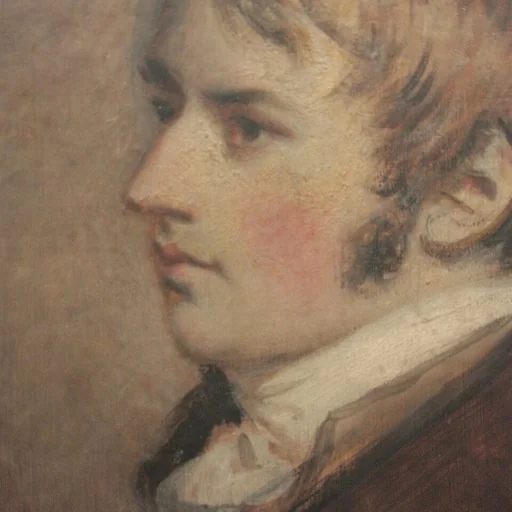
Artist
John Constable (; 11 June 1776 – 31 March 1837) was an English landscape painter in the Romantic tradition.