Artwork
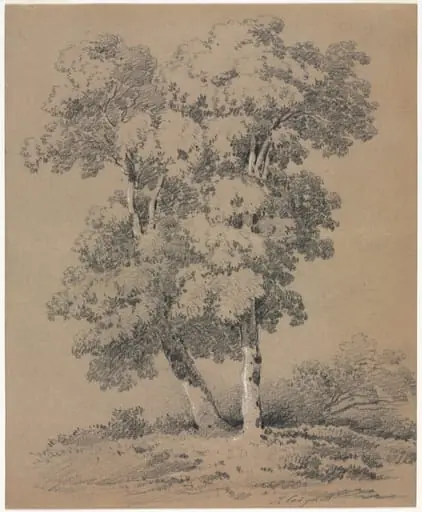
Two Intertwined Oak Trees
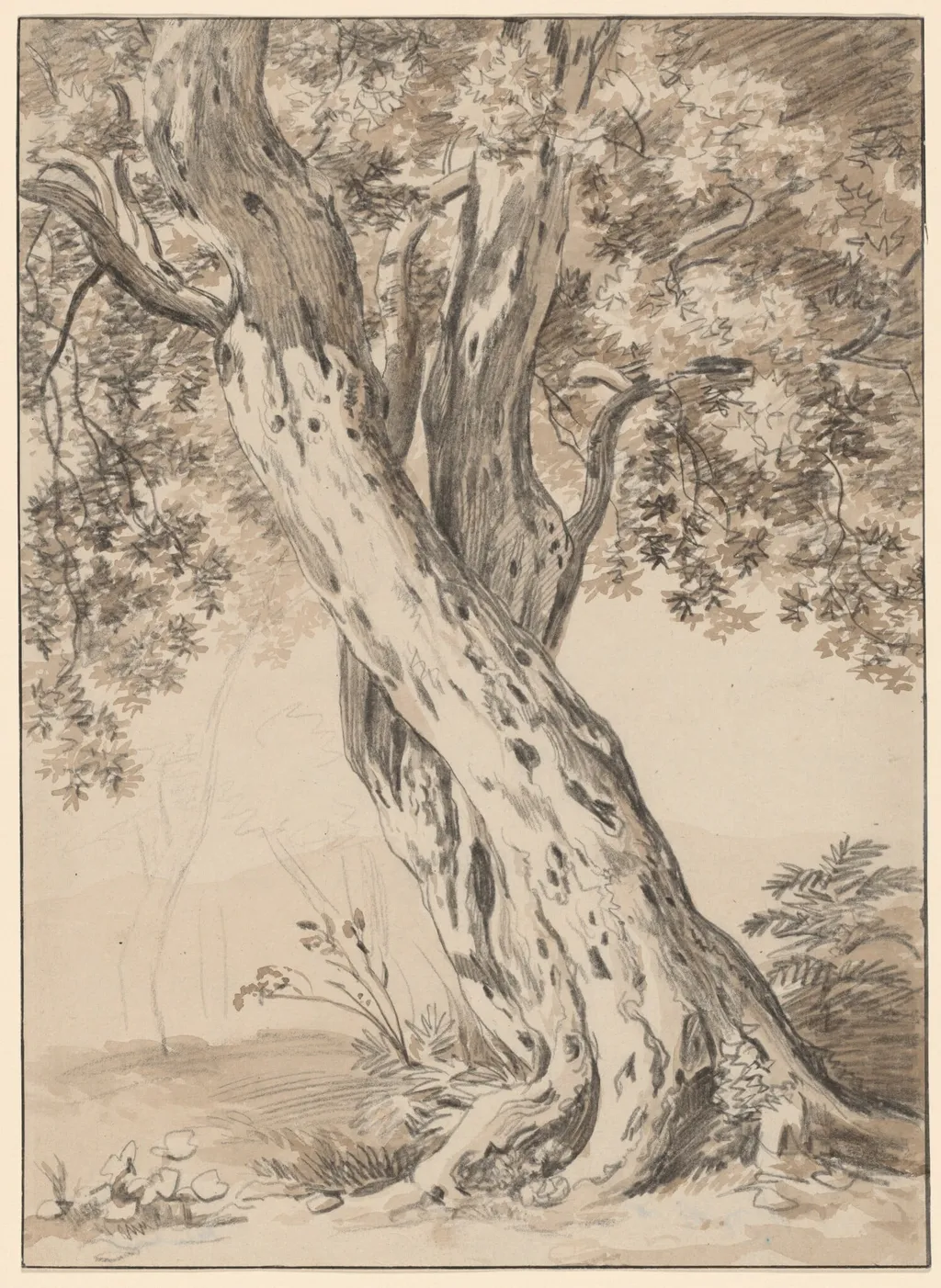
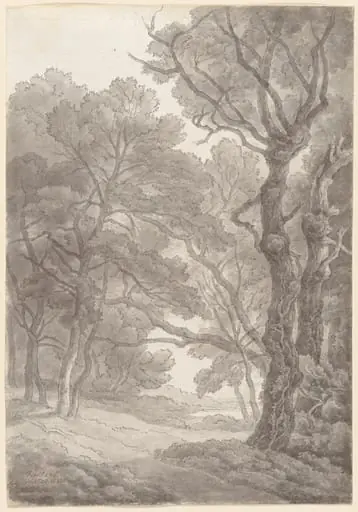
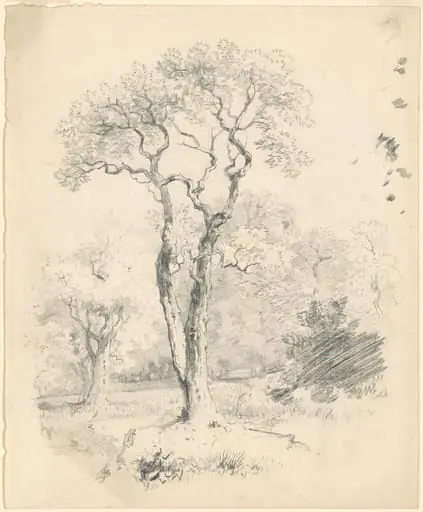
Two Intertwined Oak Trees is a chalk drawing by the Romanticist artist Johann Christian Reinhart. It dates from 1800 and is held in the collection of the National Gallery of Art.
About this work
Overview
Two Intertwined Oak Trees is a drawing created by Johann Christian Reinhart around 1800, utilizing black chalk and brown wash on laid paper. This work exemplifies the German romantic classical landscape style, which Reinhart helped establish.
Subject & Meaning
The drawing portrays two oak trees with intertwined branches and thick, entwined trunks. This depiction symbolizes a strong, harmonious bond between natural elements, reflecting the movement's emphasis on idealized natural scenes.
Technique & Style
Reinhart employed black chalk for detailed renderings and brown wash to achieve expressive textures, characteristic of the period's landscape drawing techniques. The combined media capture the rough, organic quality of the trees.
History & Provenance
Created circa 1800 by Johann Christian Reinhart, a key figure in German romantic classical landscape painting. Specific provenance details are not provided.
Context
This work aligns with the German romantic classical landscape movement, co-founded by Reinhart and Joseph Anton Koch, emphasizing idealized natural beauty and harmony.
Legacy
As a representative of its style, Two Intertwined Oak Trees contributes to the understanding and appreciation of early 19th-century German romantic classical landscape art.
Own this work as a print
Artist & collection

Artist
Johann Christian Reinhart was a German painter and engraver. He was one of the founders, along with Joseph Anton Koch, of German romantic classical landscape painting.

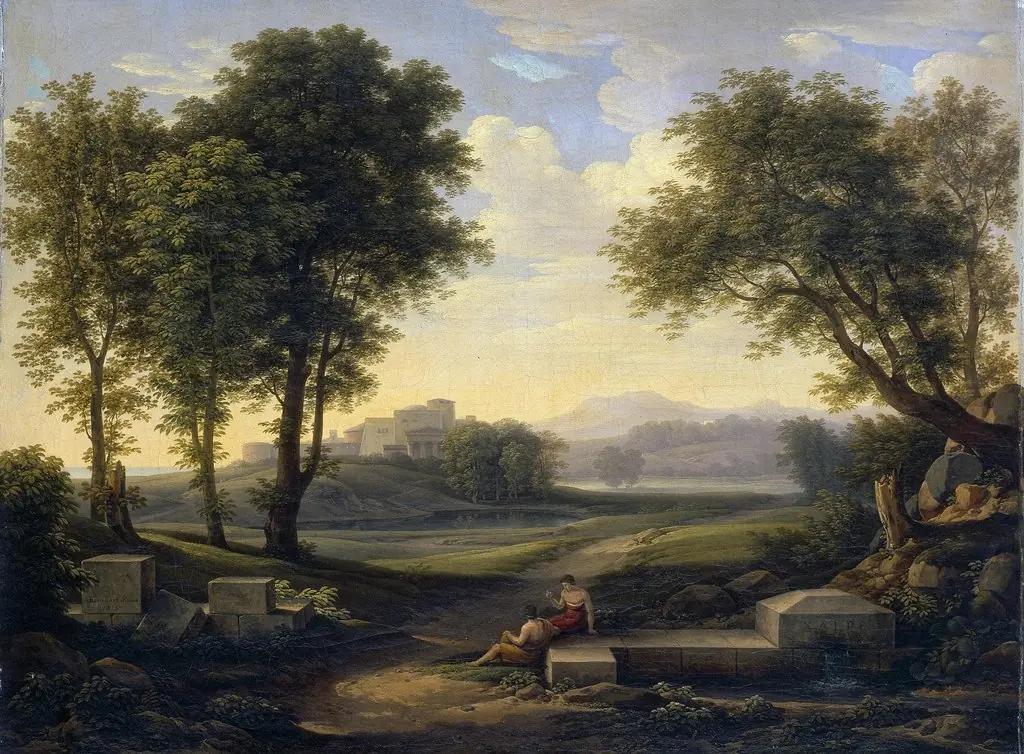 Ideal Landscape
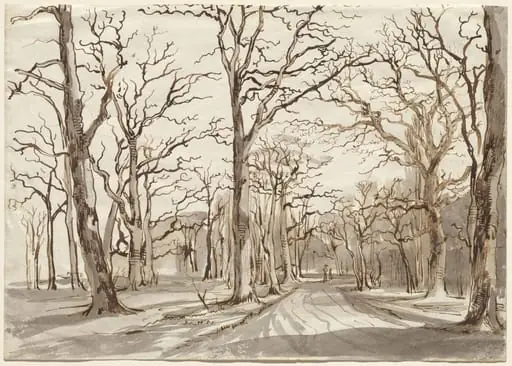 A Woodland Path in Rosenthal in Winter
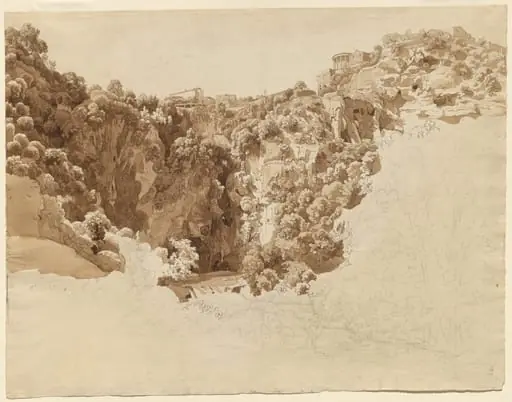 Tivoli and the Temple of the Sibyl above the Aniene Gorge
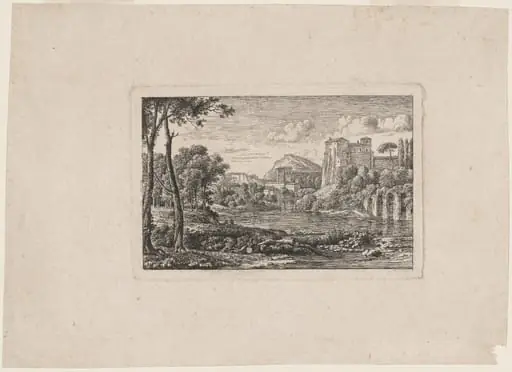 River Landscape in the Roman Campagna
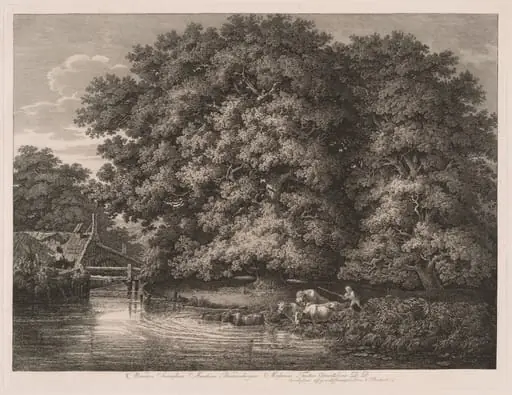 The Mill at the Great Oaks
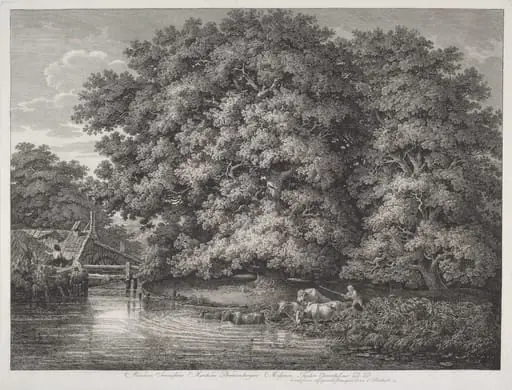 The Mill at the Great Oaks
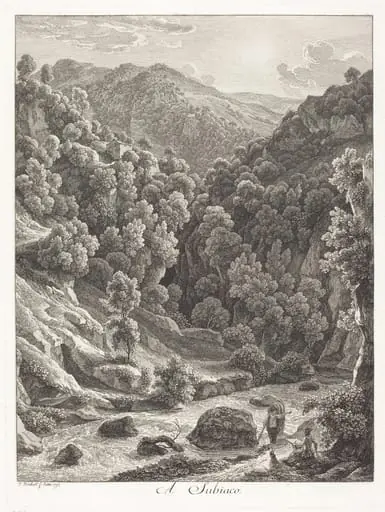 A Subiaco (Near Subiaco)
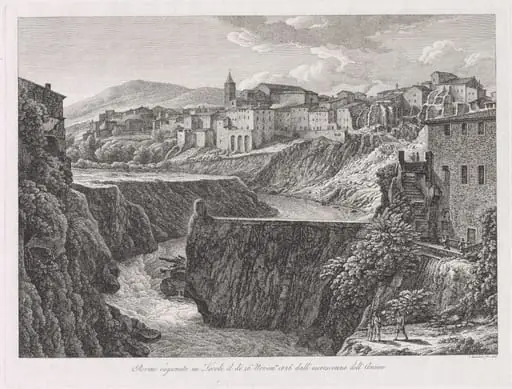 Rovine cagionate in Tivoli, dall'escrescenza dell'Aniene (Tivoli Damaged by the Flood of the River Aniene)