Artwork
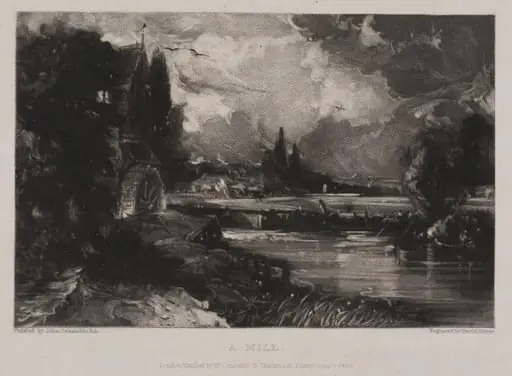
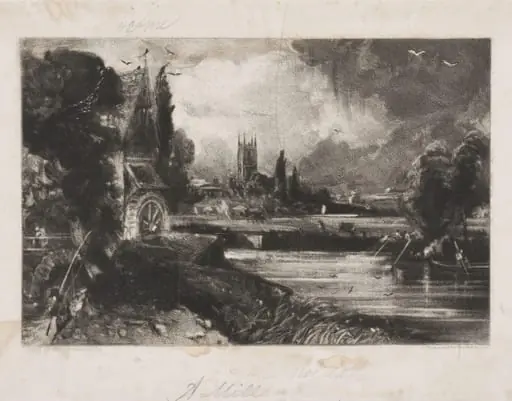
A MILL
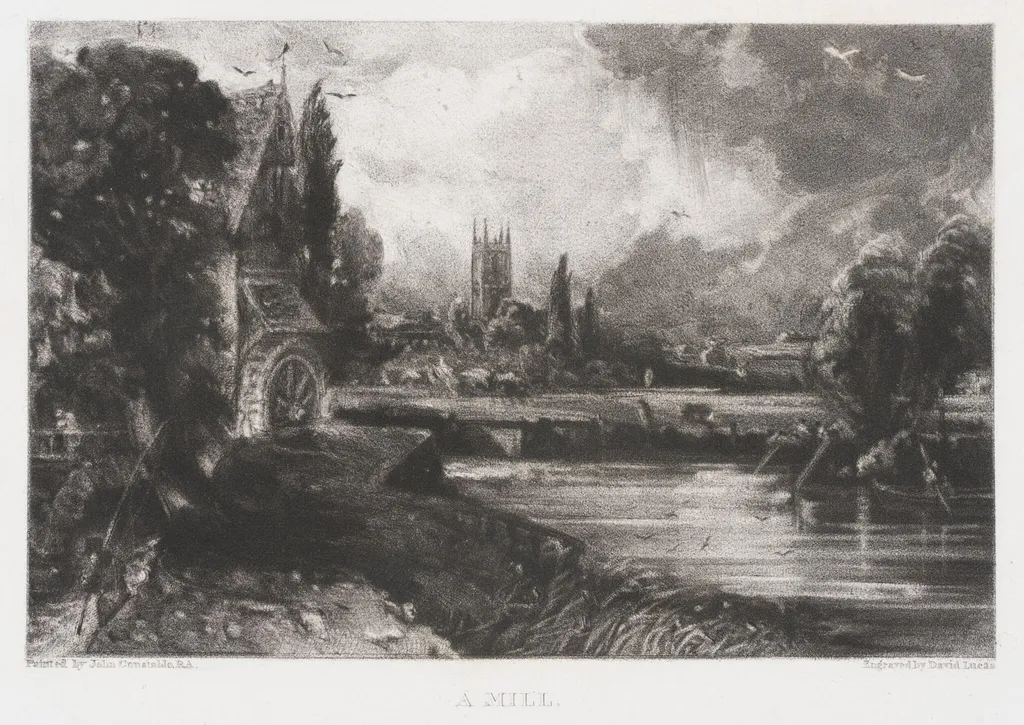
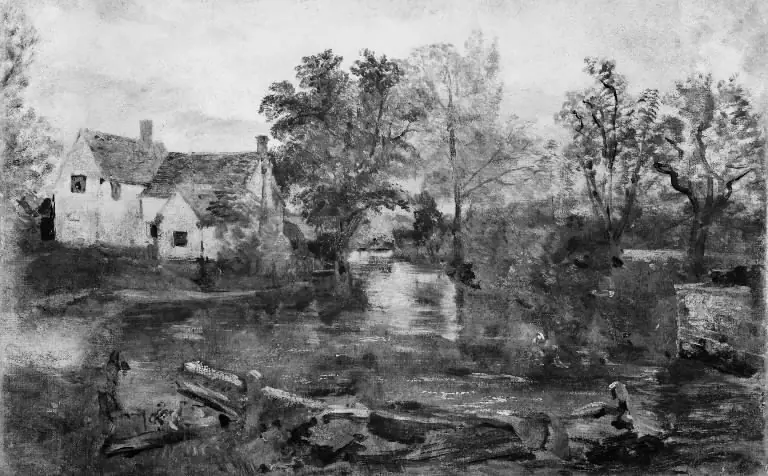
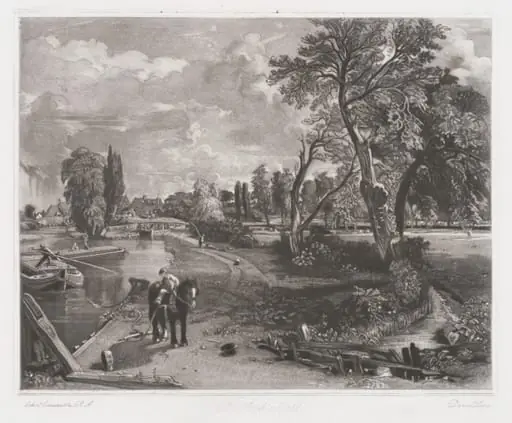
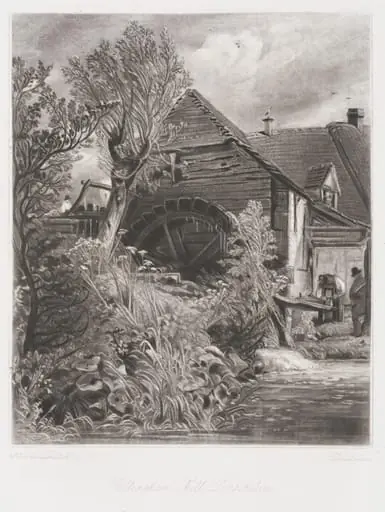
A MILL is a print by the Impressionist artist John Constable. It is held in the collection of the Victoria and Albert Museum.
About this work
Overview
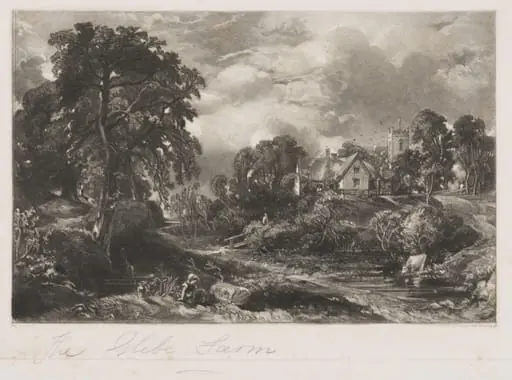
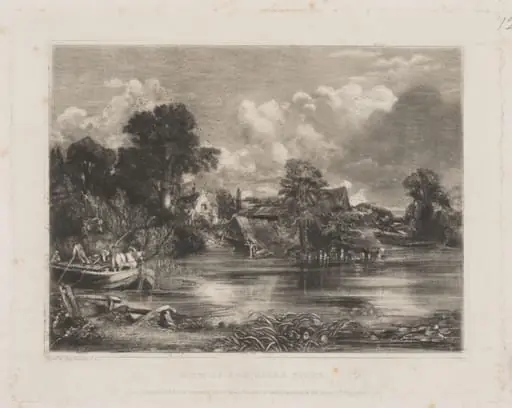
A Mill is one of twenty-two mezzotints published in John Constable’s series English Landscape, issued between 1830 and 1832.
A Mill is one of twenty-two mezzotints published in John Constable’s series English Landscape, issued between 1830 and 1832. Supervised by Constable himself, the project was a deliberate effort to translate his landscape vision into print form. David Lucas, a skilled but then obscure engraver, executed the plates under Constable’s close direction, transforming oil sketches and paintings into tonal prints that captured the subtleties of light and atmosphere.
Subject & Meaning
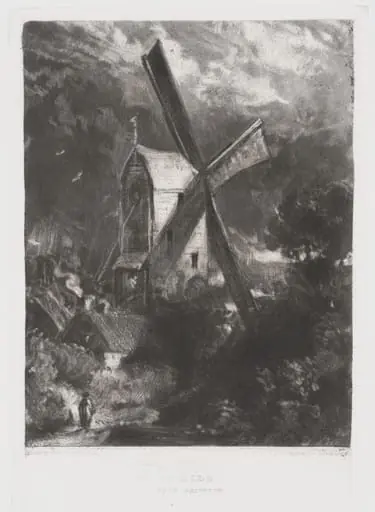
The print depicts a rural mill on a riverbank, a scene drawn from Constable’s native Suffolk. It reflects his lifelong focus on ordinary English countryside, imbued with personal memory and quiet reverence. Rather than idealizing nature, Constable emphasized its transient effects—clouds shifting, water glinting, shadows moving—to convey a sense of lived experience and natural order, aligning with his belief in light and tone as the true language of landscape.
Technique & Style
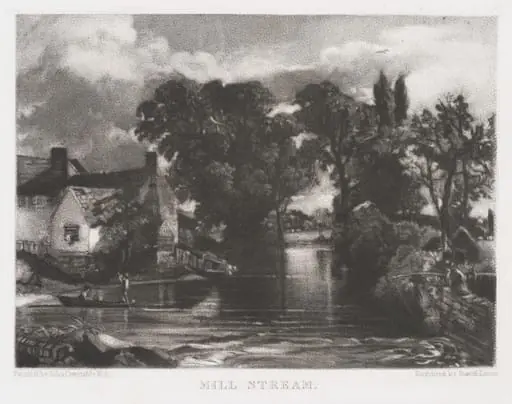
Mezzotint, a labor-intensive intaglio process, allowed for rich gradations of tone, ideal for rendering atmospheric depth. Lucas adapted the technique to mimic Constable’s brushwork, using roughened plates to create velvety blacks and delicate mid-tones. The result is a print that feels painterly, with soft transitions between light and dark, avoiding sharp lines in favor of a hazy, luminous quality that echoes Constable’s oil sketches.
History & Provenance
The series was published in six installments between 1830 and 1832, with a revised edition in 1833. Constable oversaw every stage, often reworking Lucas’s proofs. After his death in 1837, Lucas continued to print and even added new plates using original copper plates. Some impressions were made decades later, but those produced under Constable’s supervision are considered the most authentic, reflecting his exacting standards.
Context
At a time when landscape painting was undervalued in Britain, Constable turned to print to reach a broader audience and assert the artistic legitimacy of his work. Drawing from Claude and Turner, he sought to position English scenery as worthy of serious artistic attention. English Landscape was both a personal manifesto and a challenge to prevailing tastes, emphasizing observation over convention and the emotional weight of everyday nature.
Legacy
Though commercially unsuccessful in its time, English Landscape became a foundational reference for later landscape artists and printmakers. Constable’s collaboration with Lucas demonstrated the potential of mezzotint as a medium for artistic expression beyond reproduction. The series is now recognized as a pivotal moment in British art, where printmaking became a vehicle for conveying a painter’s deepest philosophical convictions about nature.
Artist & collection
Artist
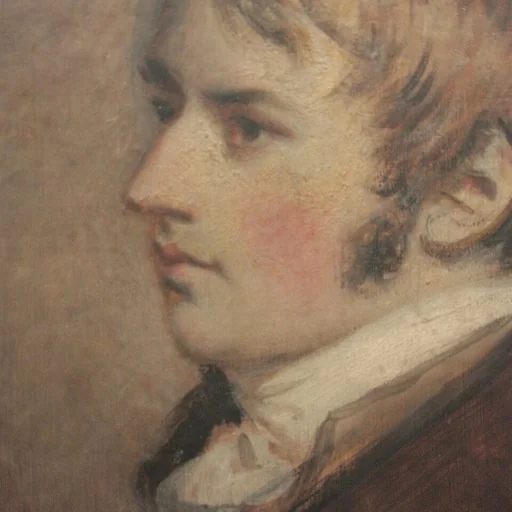
John Constable (; 11 June 1776 – 31 March 1837) was an English landscape painter in the Romantic tradition.