Artwork
A sandbank with trees beyond
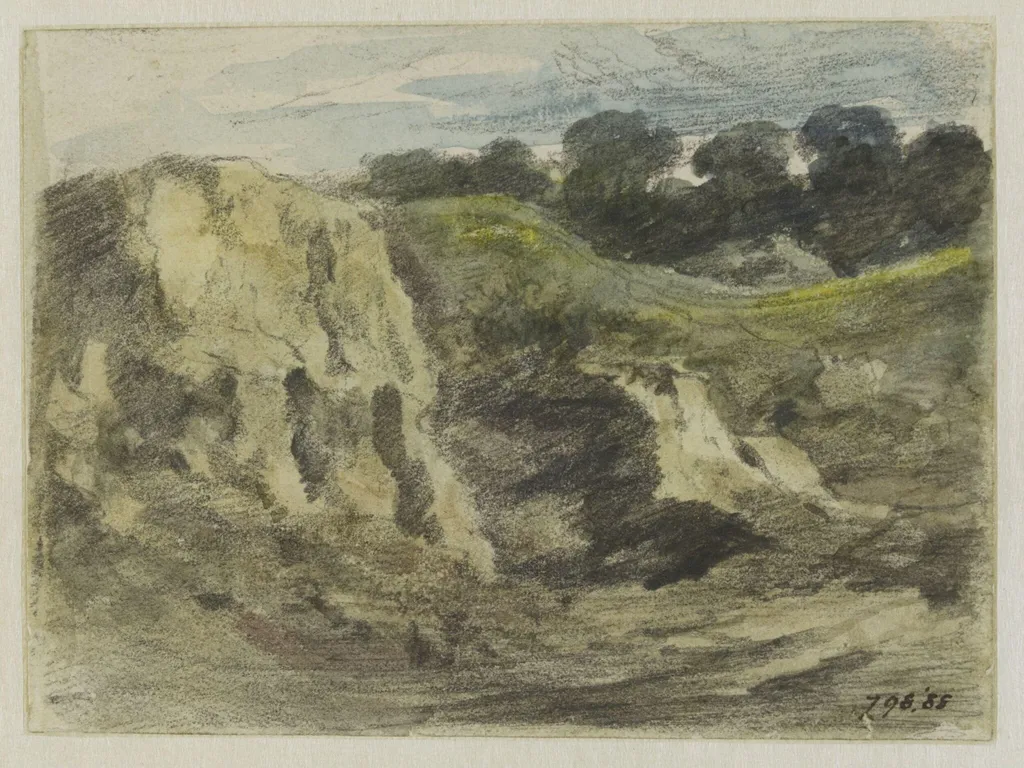
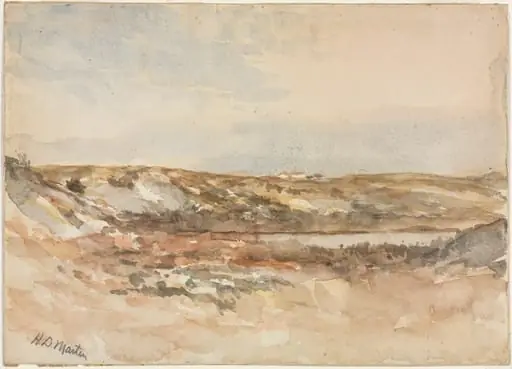
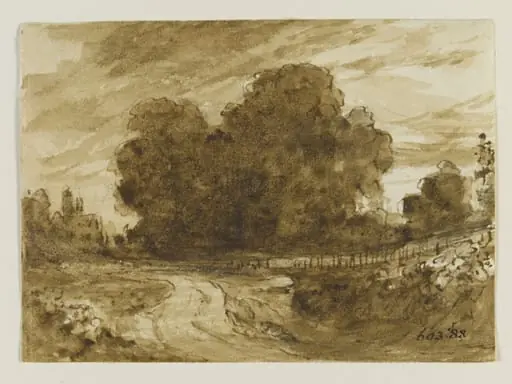
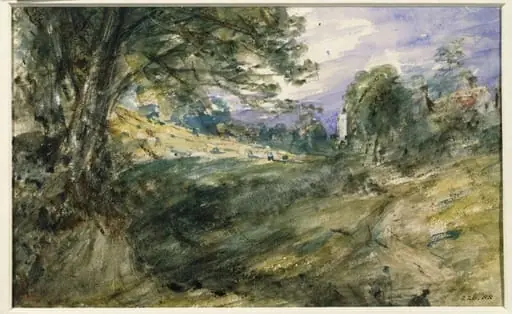
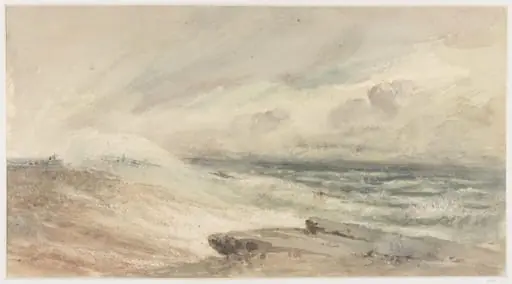
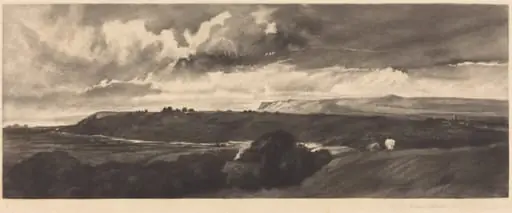
A sandbank with trees beyond is a watercolor work on paper by the Romanticist artist John Constable. It dates from 1821 and is held in the collection of the Victoria and Albert Museum.
About this work
Overview
Executed in pencil and watercolour, it belongs to a series of observational studies made during a year of personal transitions.
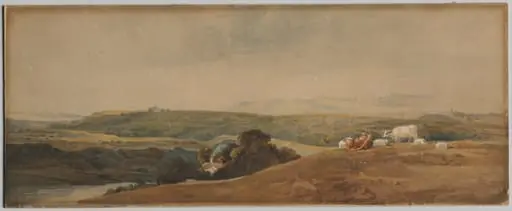
This 1821 watercolour by John Constable captures a modest coastal scene: a low sandbank with scattered vegetation, receding toward a line of trees under a pale, overcast sky. Executed in pencil and watercolour, it belongs to a series of observational studies made during a year of personal transitions. The work’s modest scale and informal finish reflect Constable’s practice of recording nature directly, away from the studio.
Subject & Meaning
The scene presents an unidealized stretch of shoreline, neither picturesque nor dramatic. The sandbank, worn by tides, and the distant trees suggest a quiet, transient moment in the natural world. There is no human presence in the main image, though the reverse bears a separate sketch of figures and a cart—hinting at the everyday life that surrounded Constable’s observations, grounding the landscape in lived experience.
Technique & Style
Constable employed loose, rapid brushwork and diluted washes to convey texture without detail. The sand and grass are suggested through uneven strokes; the trees appear as dense, shadowed masses rather than defined forms. Muted tones of green, brown, and gray dominate, with subtle highlights of yellow-green indicating where light breaks through the clouds. The technique prioritizes atmosphere over precision, aligning with his commitment to capturing transient effects.
History & Provenance
Created in 1821, the work emerged during a period when Constable was actively sketching across southern England, often near his family’s homes. The reverse side, bearing a pencil study of a cart and horses, suggests it was part of a working notebook—used for quick notations and compositional experiments. Its survival as a single sheet, rather than bound, indicates it was likely kept as a personal record rather than a finished piece.
Context
In 1821, Constable was navigating both professional ambition and personal loss, including the illness of his wife. His landscape studies from this time reflect a shift toward intimate, unembellished views—less concerned with public exhibition than with understanding light, terrain, and seasonal change. This watercolour fits within a broader movement among British artists to value direct observation over idealized composition.
Legacy
Though not exhibited in his lifetime, such works became foundational to later understandings of Constable’s artistic process. They reveal his dedication to recording nature’s subtleties, influencing generations of landscape painters who valued spontaneity and truth to observed reality over academic convention. Today, they are studied as key examples of how sketching functioned as both practice and personal reflection.
Own this work as a print
Artist & collection
Artist
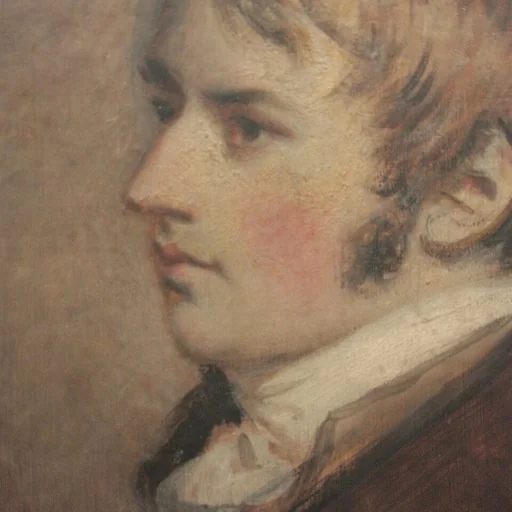
John Constable (; 11 June 1776 – 31 March 1837) was an English landscape painter in the Romantic tradition.