Artwork
Sketch for <i>The Valley Farm</i>
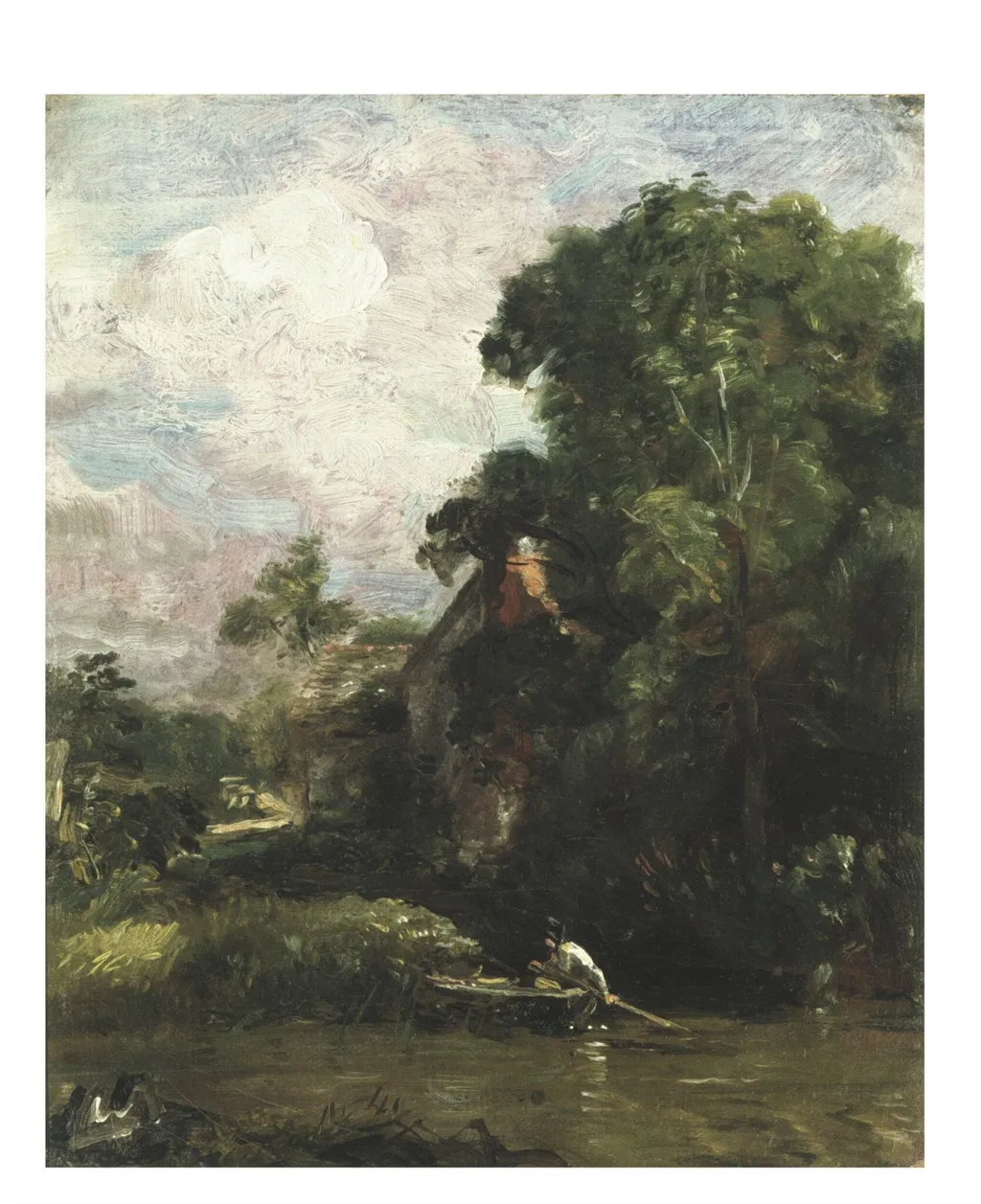
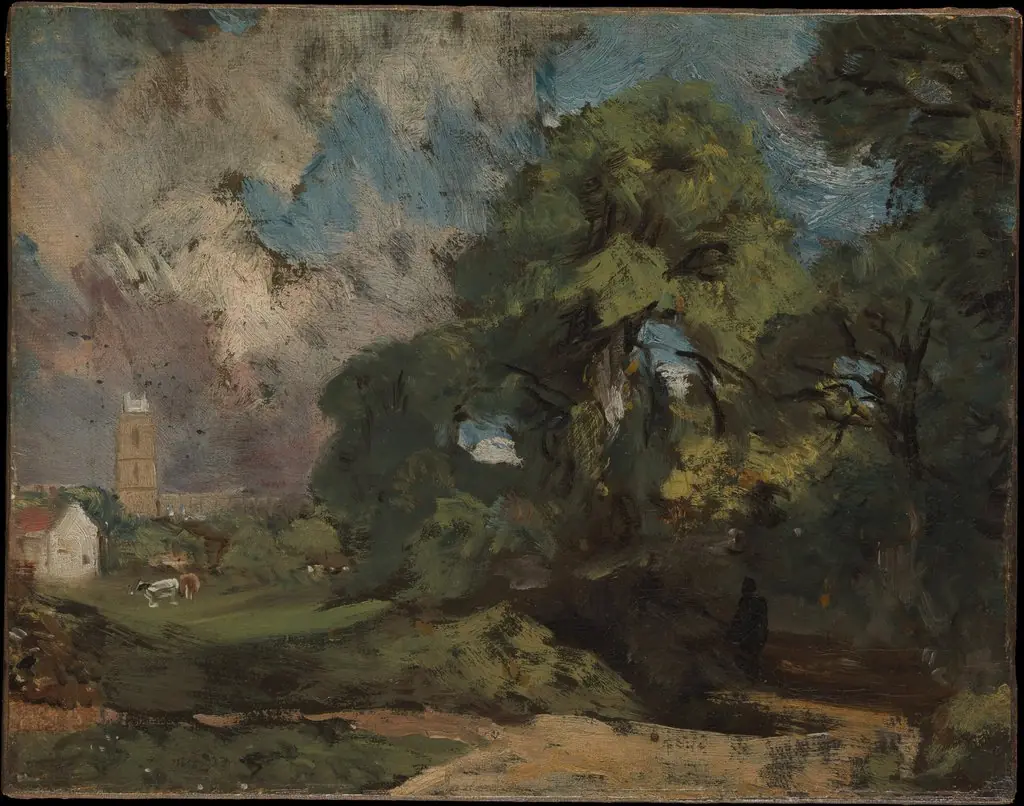
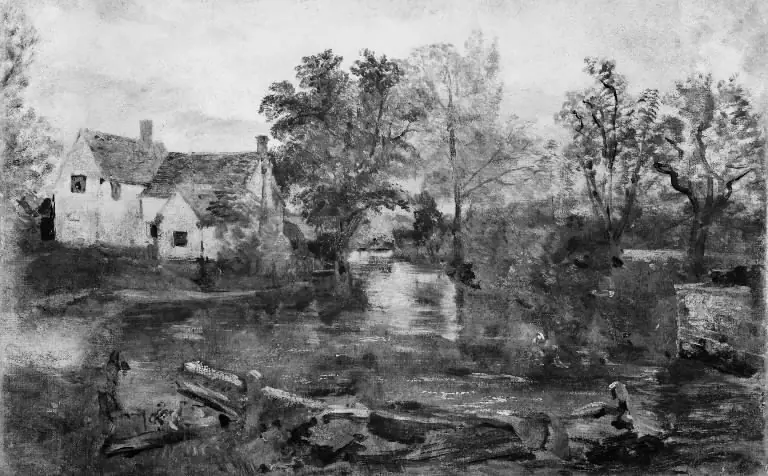
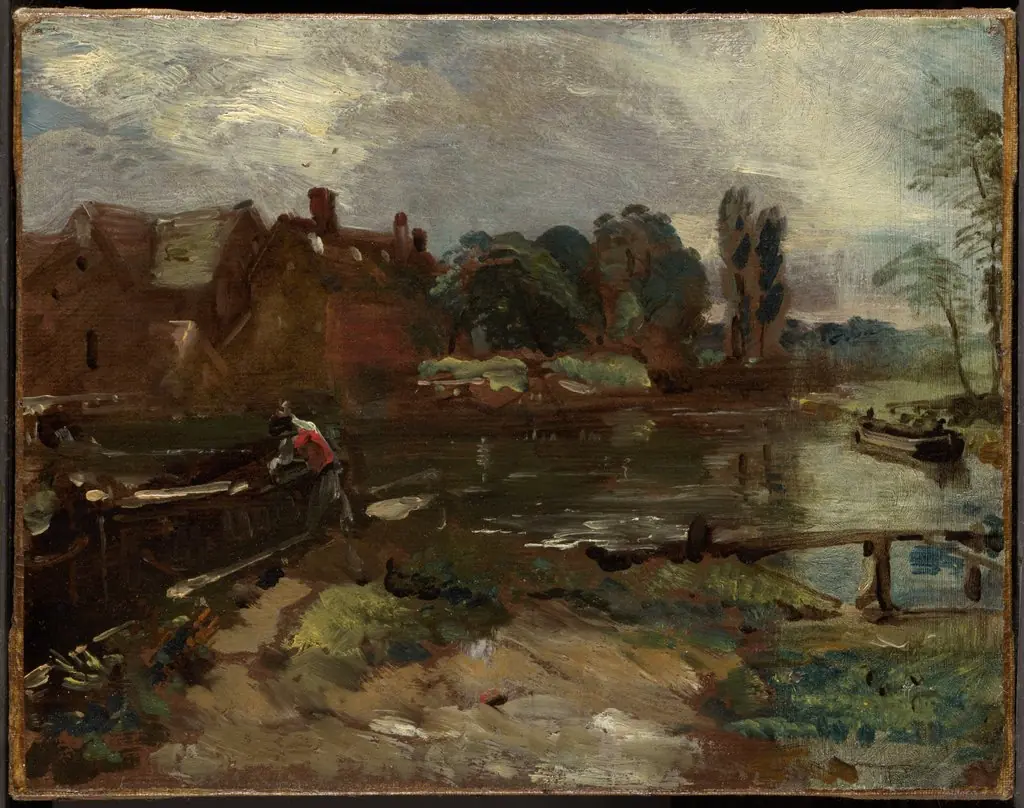
Sketch for <i>The Valley Farm</i> is an oil painting by the Romanticist artist John Constable. It dates from 1814 and is held in the collection of the Victoria and Albert Museum.
About this work
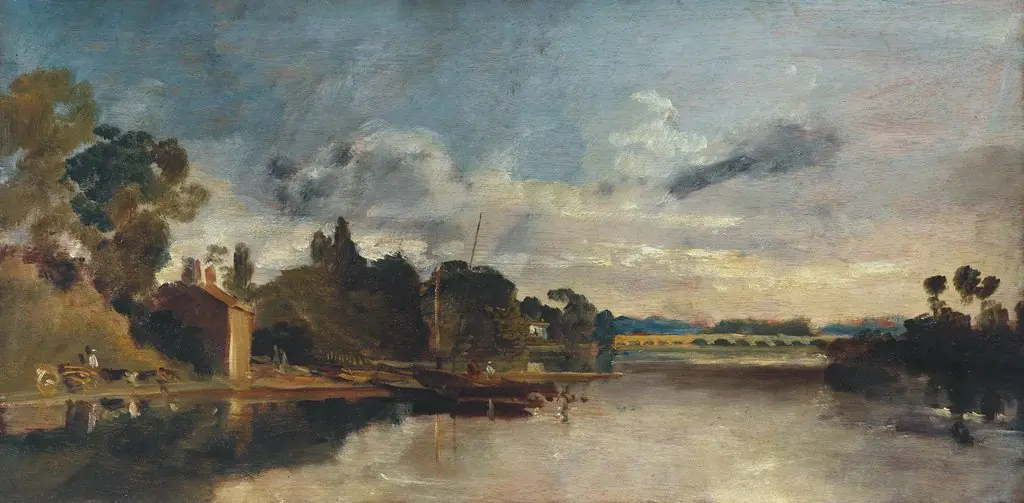
This oil sketch by Constable is a quick study for a later painting. It shows a quiet farm scene near a river, with a house in the background.
We know the house belongs to Willy Lott, a tenant who lived there for decades. Constable painted this first around 1814, then revisited it years later for another version.
If you like this, look up the Victoria and Albert Museum.
Overview
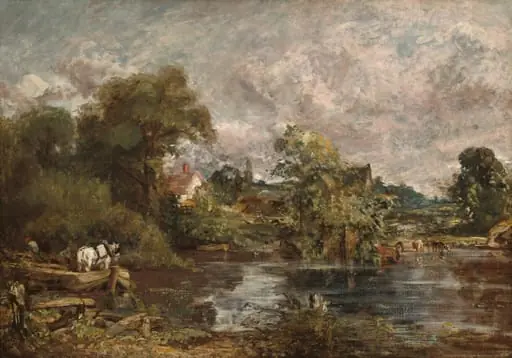
This oil sketch by John Constable serves as an early study for his later painting The Valley Farm. Though initially linked to The Ferry of 1814, evidence suggests it was reworked or repainted around 1835, when Constable returned to the same landscape. The work captures a quiet rural scene with a farmhouse, river, and surrounding fields, reflecting his enduring interest in the Suffolk countryside.
Subject & Meaning
The scene centers on Willy Lott’s cottage, a real dwelling occupied by the tenant farmer for more than eighty years. Its presence anchors the composition in lived experience rather than idealized pastoralism. Constable’s focus on this modest structure signals his commitment to depicting ordinary rural life, grounding his art in the tangible and enduring rather than the picturesque or romantic.
Technique & Style
Executed in loose, energetic brushwork, the sketch reveals Constable’s direct engagement with nature. He employed rapid strokes to suggest light, atmosphere, and texture, prioritizing observational truth over polished finish. The palette is restrained, dominated by earth tones and soft greens, reinforcing the quiet realism of the scene and his method of working from life.
History & Provenance
The sketch likely originated around 1814, contemporaneous with The Ferry, but was later revised or reimagined in the 1830s as Constable prepared for The Valley Farm. Its survival as a working study offers insight into his creative process. It remained in private hands until entering public collection, where it now serves as a key document of his evolving relationship with the Suffolk landscape.
Context
During the 1830s, Constable revisited familiar subjects with renewed intensity, responding to both personal nostalgia and changing rural England. The persistence of Willy Lott’s cottage—unchanged for generations—offered a stable anchor amid industrial and agricultural transformation. This sketch reflects a broader cultural interest in the vanishing rural way of life.
Legacy
As a working study, this oil sketch illuminates Constable’s method of revisiting and refining his subjects over decades. It stands as a testament to his belief in the significance of ordinary places. Today, it is valued not for its finish, but for its honesty—offering a direct window into the artist’s contemplative engagement with the land he painted.
Own this work as a print
Artist & collection
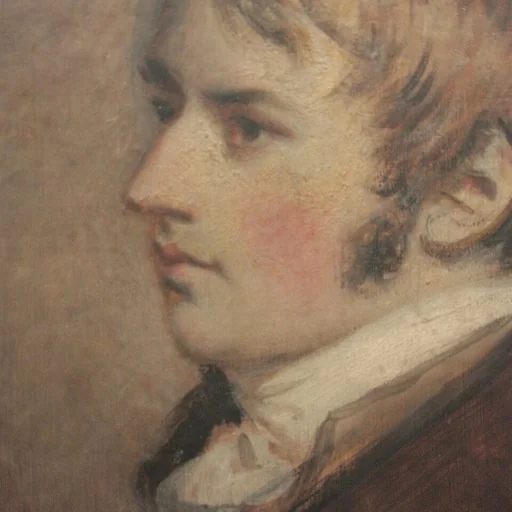
Artist
John Constable (; 11 June 1776 – 31 March 1837) was an English landscape painter in the Romantic tradition.