Artwork
Trees in West End Fields, Hampstead
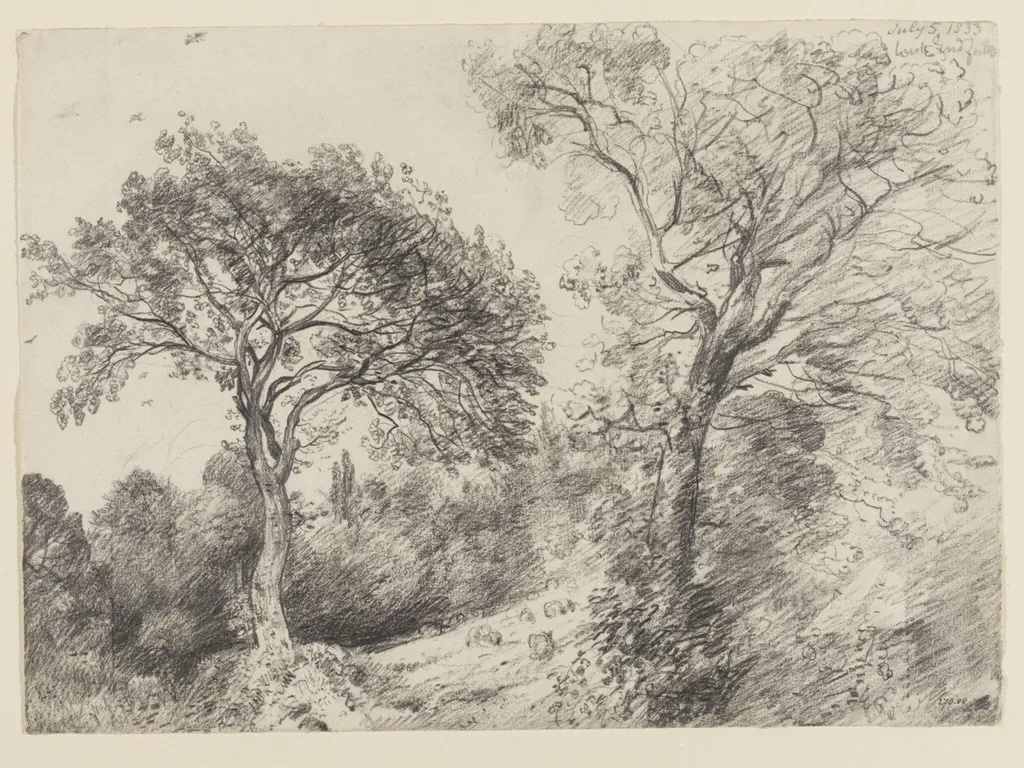
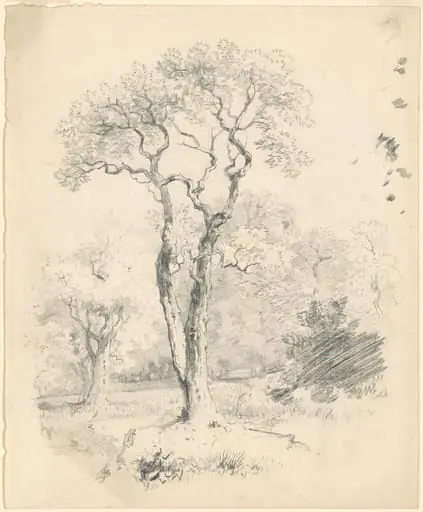
Trees in West End Fields, Hampstead is a drawing by the Romanticist artist John Constable. It dates from 5 and is held in the collection of the Victoria and Albert Museum.
About this work
Overview
Executed with controlled yet expressive linework, it records the artist’s close observation of trees in natural light.
Created in 1833, this pencil drawing by John Constable captures a quiet rural scene in Hampstead’s West End Fields. Executed with controlled yet expressive linework, it records the artist’s close observation of trees in natural light. The work belongs to a period when Constable was deeply immersed in sketching the English landscape, often outdoors, refining his understanding of form and atmosphere through direct study.
Subject & Meaning
Two dominant trees occupy the composition—one broad and upright, the other leaning with gnarled limbs—surrounded by sparse undergrowth and distant shrubs. The arrangement suggests a moment of stillness, emphasizing the trees’ individual character rather than any symbolic narrative. Birds are implied above the canopy, adding subtle life without disrupting the quietude. The scene reflects Constable’s interest in nature’s quiet persistence, not its grandeur.
Technique & Style
Constable used varied pencil strokes to model volume and texture: dense cross-hatching defines shadowed areas, while lighter, looser lines suggest foliage and distant forms. The contrast between tight, deliberate contours and fluid, gestural marks creates a sense of depth and movement. Shadows are suggested through tonal gradation rather than solid fills, enhancing the drawing’s atmospheric realism and tactile quality.
History & Provenance
Made in the same year Constable presented several works at the Royal Academy and delivered his first public lecture in Hampstead, this drawing is part of a larger body of studies from his later years. It likely served as a preparatory observation, not a finished piece, and remained in his personal collection until after his death. Its survival offers insight into his private working methods beyond exhibited paintings.
Context
In the early 1830s, Constable increasingly turned to sketches and drawings as primary means of recording nature, often working directly from the landscape around Hampstead. This period marked a shift from large-scale exhibition pieces to intimate, observational studies. His focus on trees and light aligned with broader Romantic interests in nature’s transient effects, though his approach remained grounded in empirical observation rather than idealization.
Legacy
This drawing exemplifies Constable’s commitment to truthful representation through direct study. Its emphasis on texture, light, and organic form influenced later landscape artists who valued sketching as a discipline. Though not widely exhibited in his lifetime, such works became foundational to understanding his artistic process and the evolution of British landscape drawing in the 19th century.
Artist & collection
Artist
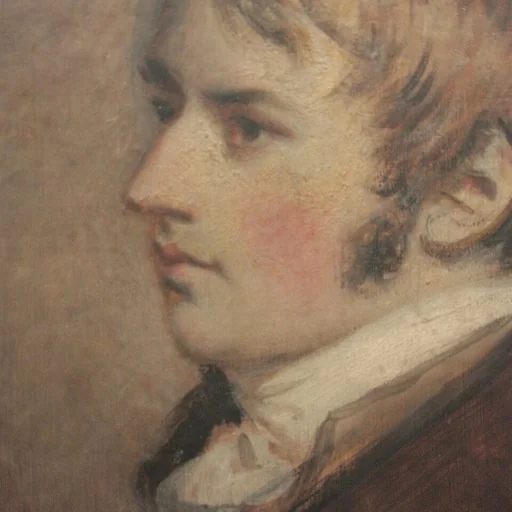
John Constable (; 11 June 1776 – 31 March 1837) was an English landscape painter in the Romantic tradition.

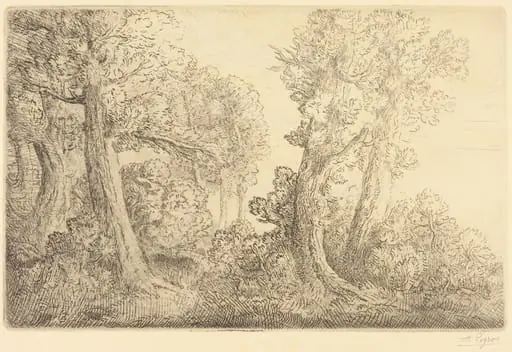 Near the Woods, Veronne (Pres du bois, Veronne)
 A Glade of Trees
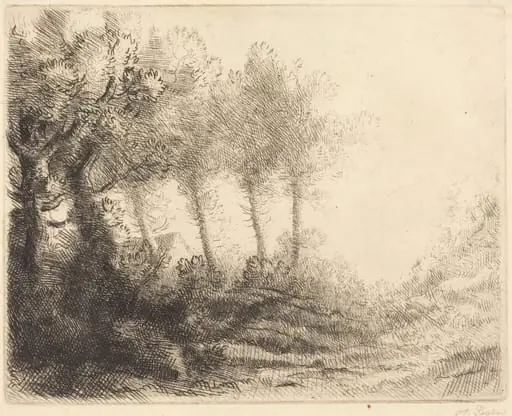 Landscape (Paysage)
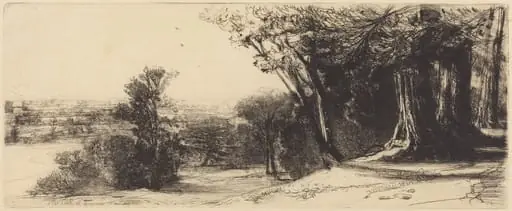 Early Morning - Richmond
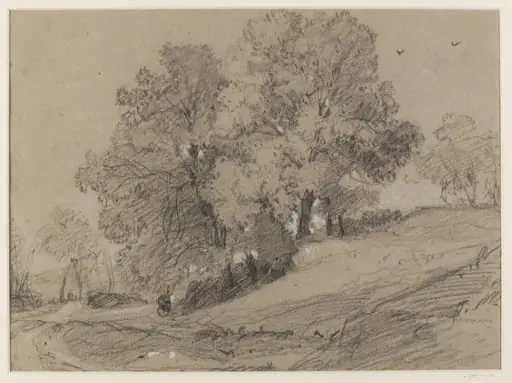 Untitled
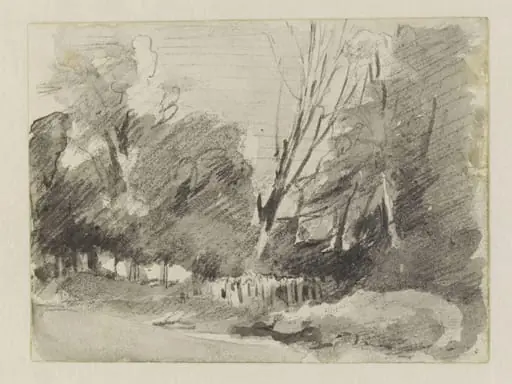 Two sketches on one sheet: a countryman walking, and a group of people beside two donkeys.
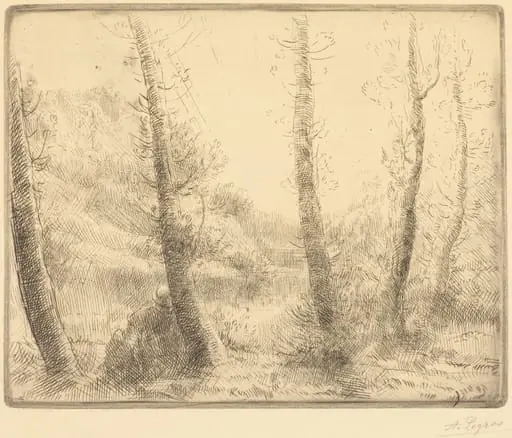 Small Lake (Le petit lac)
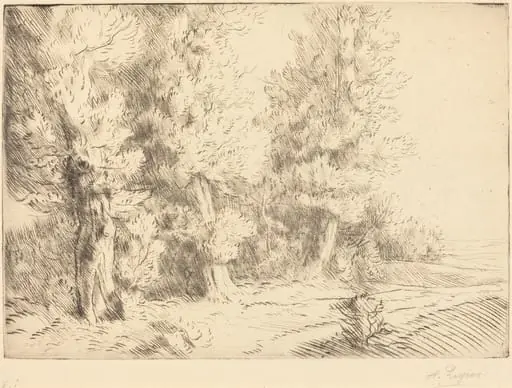 In the Forest of Fontainebleau (Dans la foret de Fontainebleau)
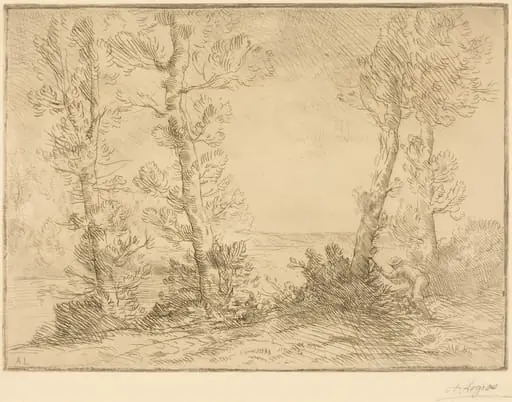 Salmon Fisher (Le pecheur du saumon)
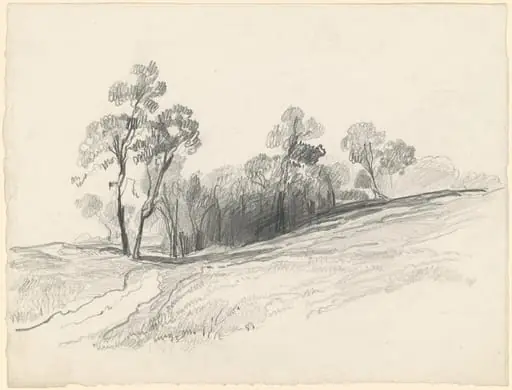 Landscape
 A country road with elm trees
 Deer Park