Artwork
Two sketches on one sheet: a countryman walking, and a group of people beside two donkeys.
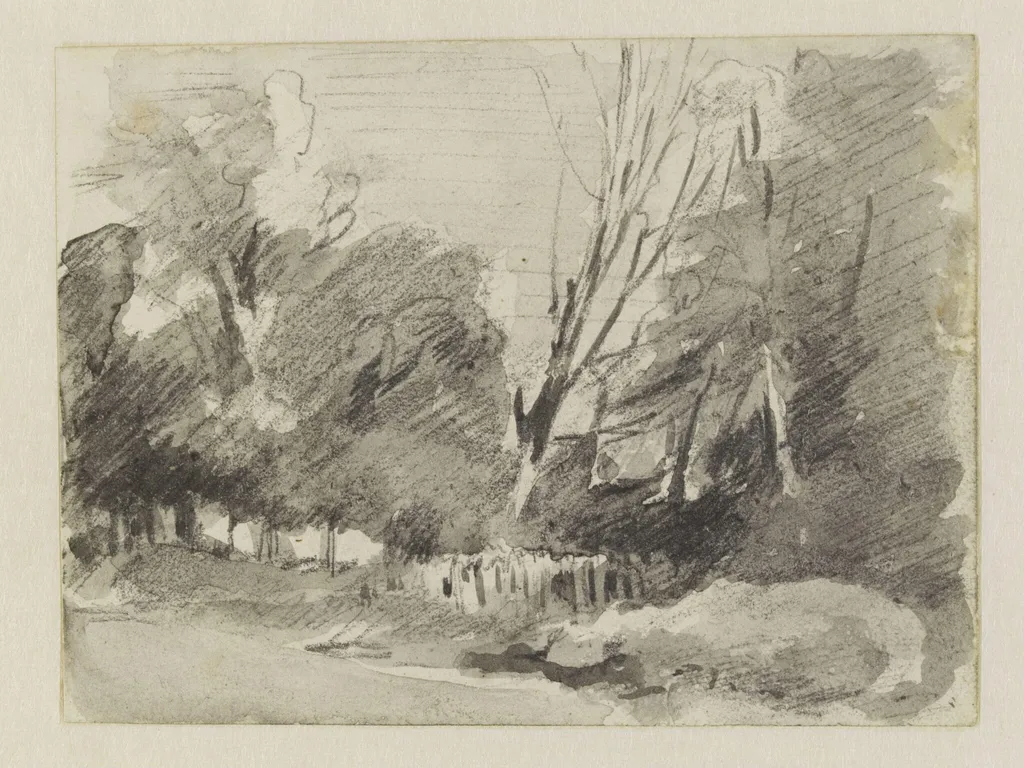
Two sketches on one sheet: a countryman walking, and a group of people beside two donkeys. is a watercolor work on paper by the Romanticist artist John Constable. It dates from 1821 and is held in the collection of the Victoria and Albert Museum. This sheet contains two informal watercolour sketches on the front, accompanied by a third, fainter landscape on the reverse.
About this work
Overview
The drawings are executed with minimal detail, using loose brushwork and diluted pigments to suggest form rather than define it.
This sheet contains two informal watercolour sketches on the front, accompanied by a third, fainter landscape on the reverse. The drawings are executed with minimal detail, using loose brushwork and diluted pigments to suggest form rather than define it. The paper shows signs of age—frayed edges, subtle fading—indicating it was handled and stored over time, likely as part of a working notebook rather than a finished piece.
Subject & Meaning
One sketch captures a solitary rural figure walking from behind, moving along a path bordered by trees and a low wall. Adjacent, a cluster of indistinct figures stands near two donkeys, suggesting a moment of pause in daily travel or labor. Neither scene is dramatized; instead, they record ordinary rural life with quiet observation, emphasizing movement and stillness as part of the natural rhythm of the countryside.
Technique & Style
The artist employed rapid, fluid watercolour strokes, allowing pigment to bleed and pool slightly, creating soft edges and atmospheric depth. Forms are implied rather than outlined, with minimal detail reserved for key elements like the donkeys’ outlines or the path’s direction. The technique reflects a spontaneous, observational approach—more concerned with capturing light and motion than with precision or finish.
History & Provenance
The sheet likely originated from a sketchbook used during fieldwork, possibly by an artist traveling through the English countryside. Its worn condition and lack of formal presentation suggest it was not intended for public display. No documented ownership history is known, but its style aligns with 19th-century British artists who recorded everyday scenes as preparatory studies.
Context
During the early 1800s, artists increasingly turned to direct observation of rural life, moving away from idealized landscapes. These sketches reflect that shift—unembellished, unpolished records of labor and movement in the countryside. They sit alongside the broader trend of documenting ordinary moments, a practice later refined by contemporaries like Constable, who transformed such studies into larger compositions.
Legacy
Though unsigned and undated, the sheet contributes to an understanding of how artists engaged with the natural world through immediacy and simplicity. Its value lies not in grandeur but in its honesty—a quiet testament to the practice of sketching as a means of seeing. It remains a representative example of the informal, working drawings that underpinned more finished works of the period.
Artist & collection
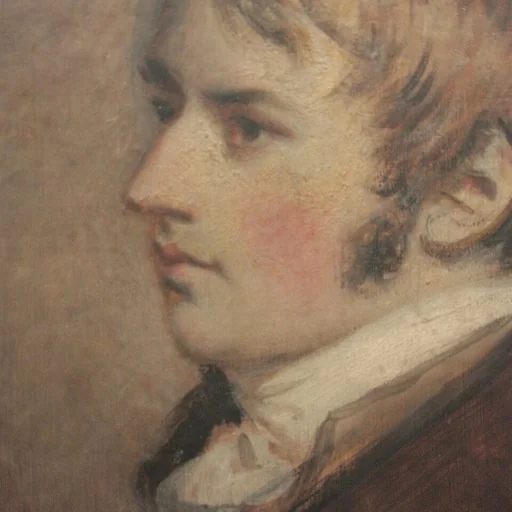
Artist
John Constable (; 11 June 1776 – 31 March 1837) was an English landscape painter in the Romantic tradition.

 Trees
Trees Untitled
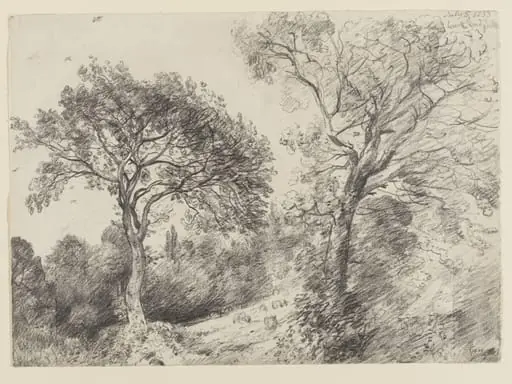 Trees in West End Fields, Hampstead
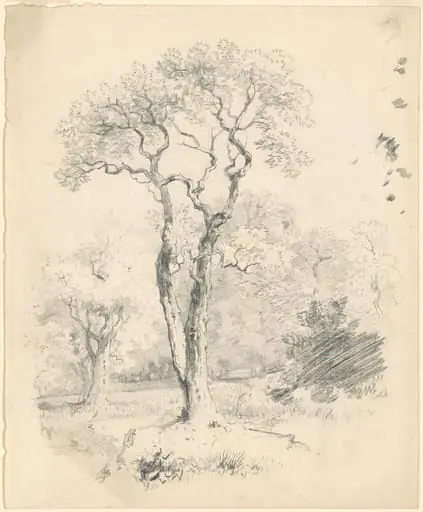 A Glade of Trees
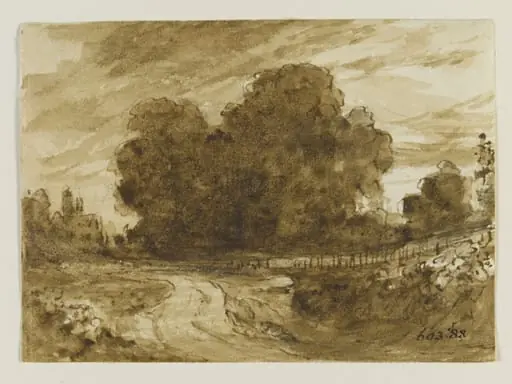 A country road with elm trees
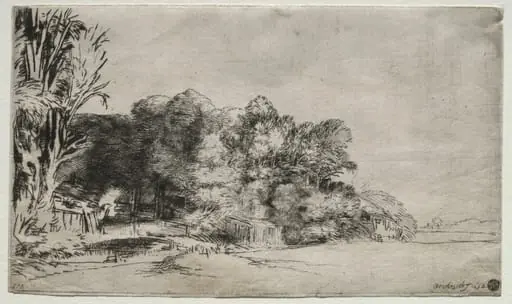 Clump of Trees with a Vista
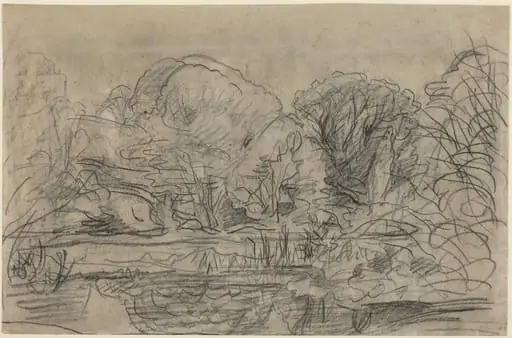 A Woodland Pond
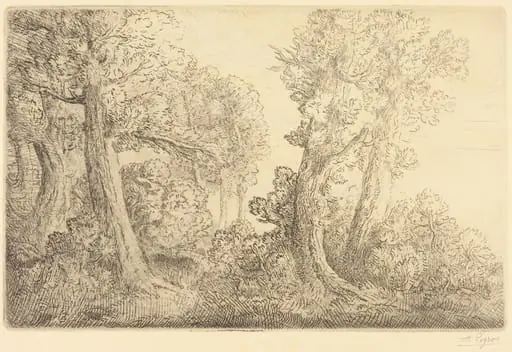 Near the Woods, Veronne (Pres du bois, Veronne)
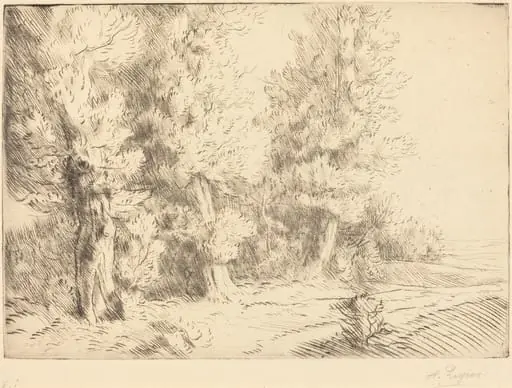 In the Forest of Fontainebleau (Dans la foret de Fontainebleau)
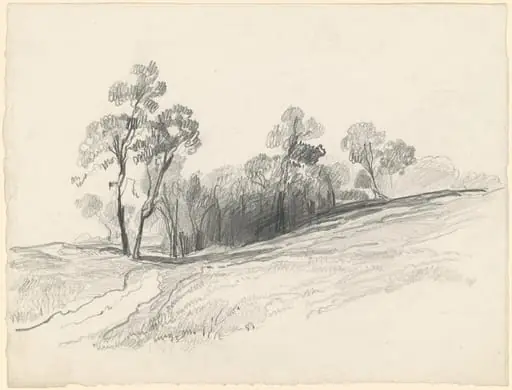 Landscape
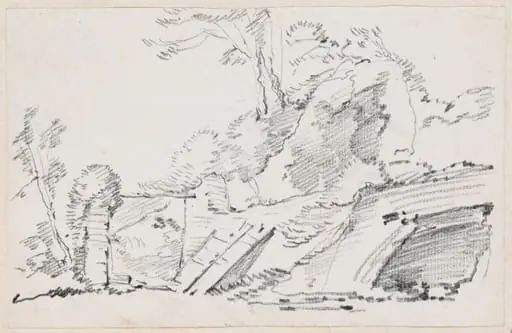 An Ancient Wall with a Ruined Gate
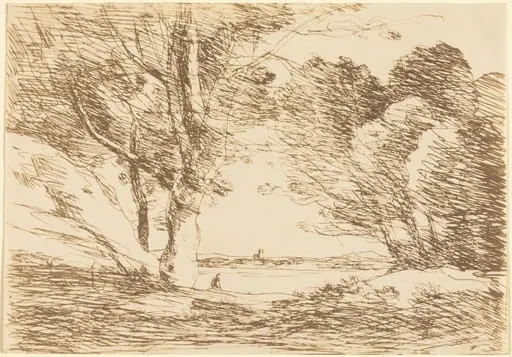 Tower on the Horizon of a Lake (Tour a l'horizon d'un lac)