Artwork
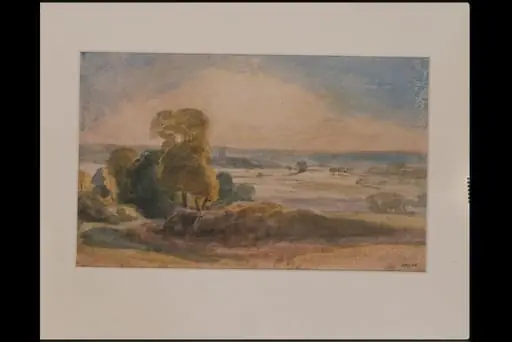
View over a wide landscape, with trees in the foreground
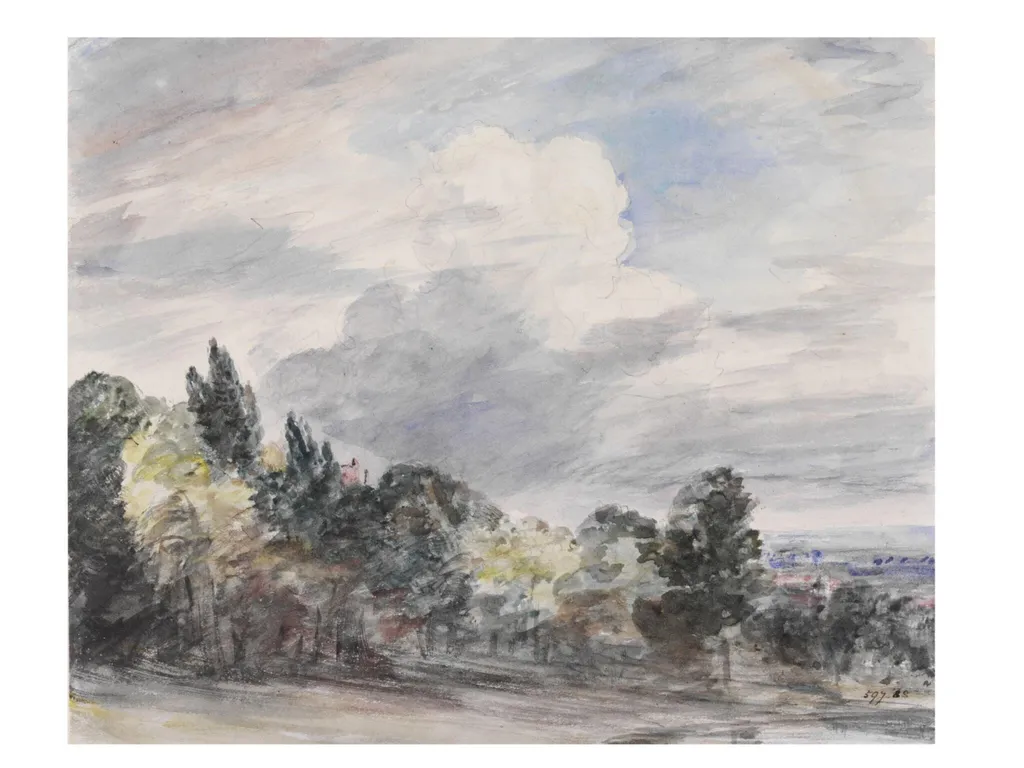
View over a wide landscape, with trees in the foreground is a watercolor work on paper by the Romanticist artist John Constable. It dates from 1832 and is held in the collection of the Victoria and Albert Museum.
About this work
Overview
Created in 1832, this watercolor by John Constable captures an expansive rural scene with a dense band of trees anchoring the foreground.
Created in 1832, this watercolor by John Constable captures an expansive rural scene with a dense band of trees anchoring the foreground. Executed in translucent pigments, the work reflects Constable’s interest in capturing transient natural effects. It was among several pieces he submitted to the Royal Academy that year, demonstrating his continued engagement with landscape as a serious artistic subject beyond oil painting.
Subject & Meaning
The composition presents an unidealized stretch of English countryside, emphasizing the quiet rhythm of nature rather than dramatic narrative. The foreground trees frame the view without dominating it, while the sky, filled with drifting clouds, suggests shifting weather and time. There is no human presence, reinforcing a focus on the land itself as a subject worthy of quiet observation.
Technique & Style
Constable employed watercolor with loose, rapid brushwork that preserves the spontaneity of outdoor study. The medium’s fluidity allows subtle blends of muted greens and grays, while deliberate strokes define tree forms and cloud edges. Areas of pale yellow light suggest sunlight breaking through, achieved through reserved paper rather than added pigment, a hallmark of his atmospheric approach.
History & Provenance
This watercolor was part of Constable’s 1832 Royal Academy submissions, a year in which he exhibited both oils and works on paper. Though less celebrated than his large-scale oils, these smaller watercolors were critical to his practice, serving as studies and independent works. Its survival and current location reflect its status as a documented part of his exhibition record.
Context
In the early 1830s, watercolor was widely used by British artists for field sketches and topographical records. Constable elevated the medium beyond documentation, using it to explore light and movement. His approach contrasted with more polished, finished watercolors of the time, favoring immediacy and naturalism over idealized composition.
Legacy
Constable’s watercolors from this period influenced later generations of landscape artists who valued direct observation over studio refinement. His willingness to embrace the medium’s inherent transparency and spontaneity helped redefine watercolor as a vehicle for serious artistic expression, not merely preliminary study.
Artist & collection
Artist
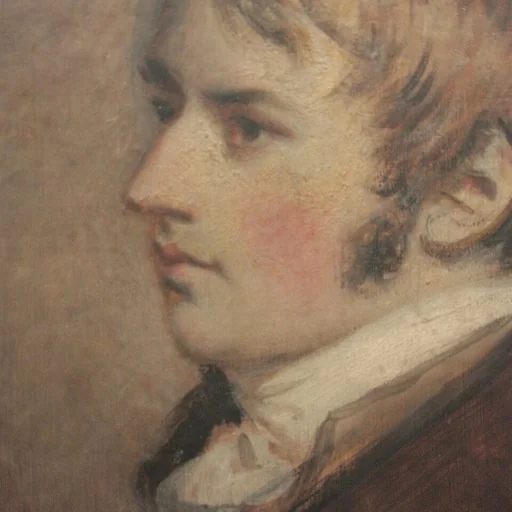
John Constable (; 11 June 1776 – 31 March 1837) was an English landscape painter in the Romantic tradition.

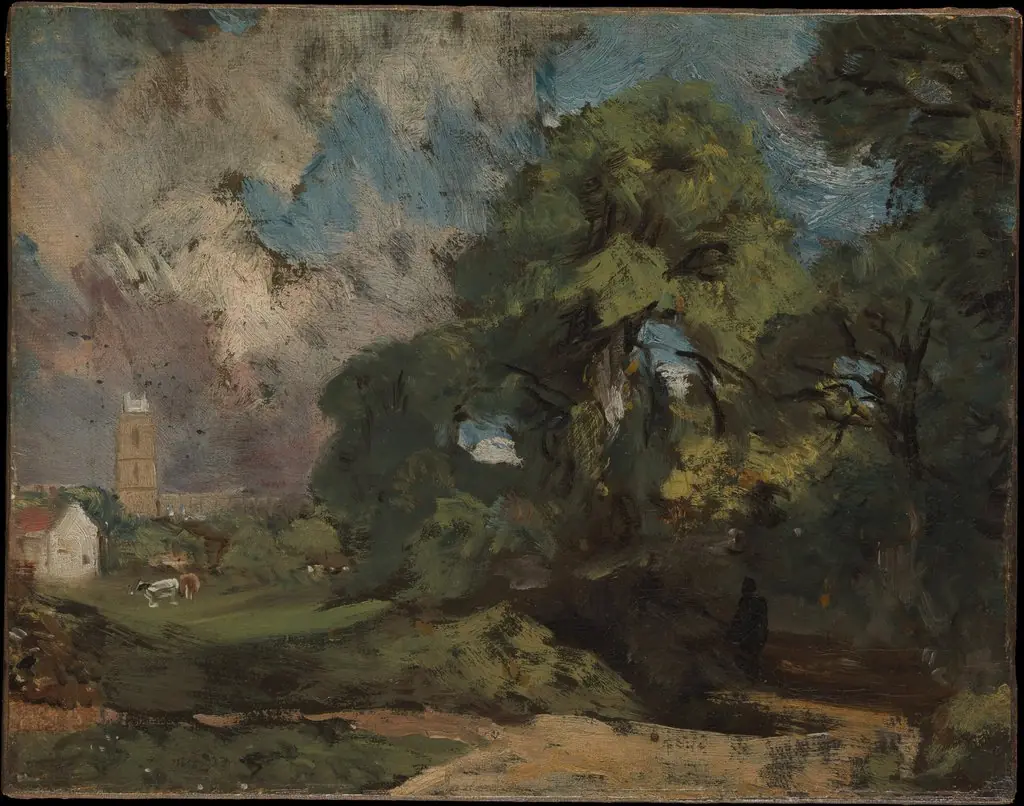
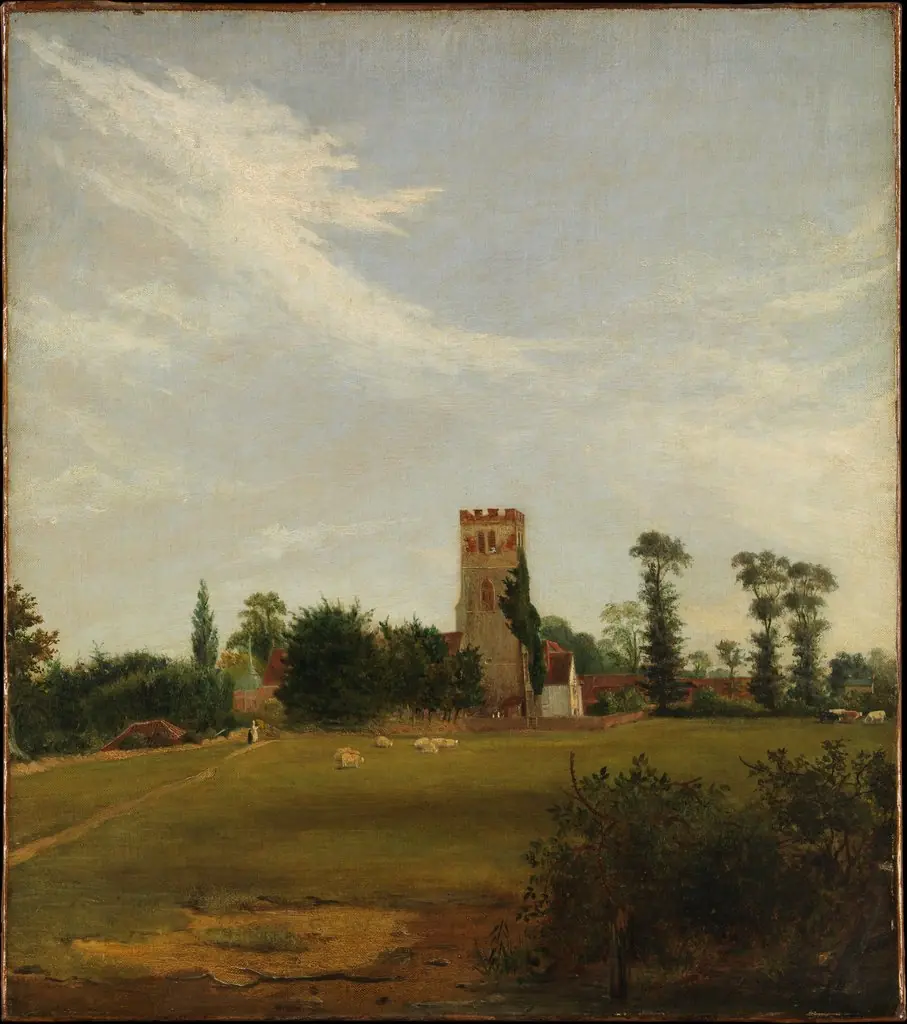
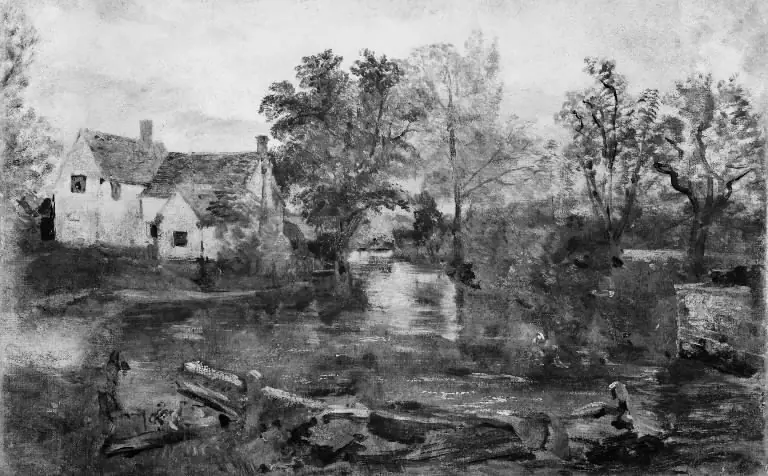
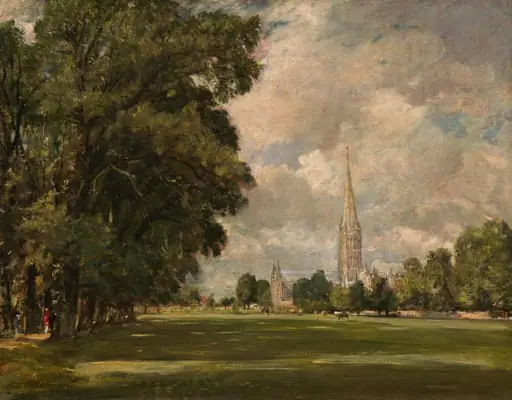
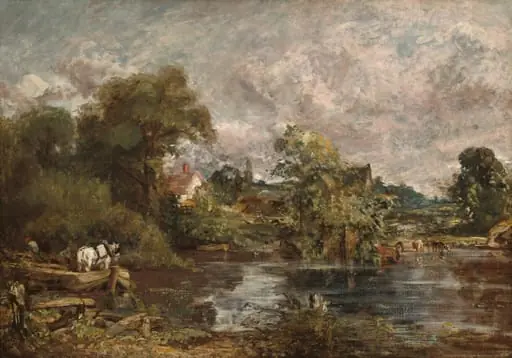
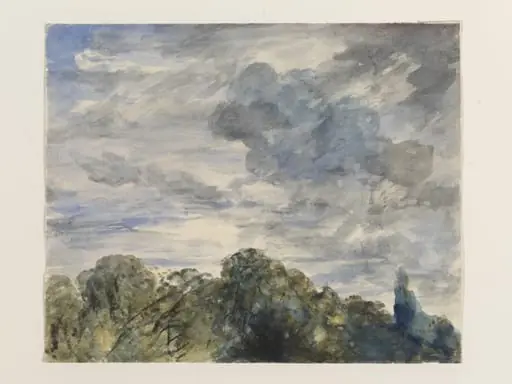 Study of sky effect
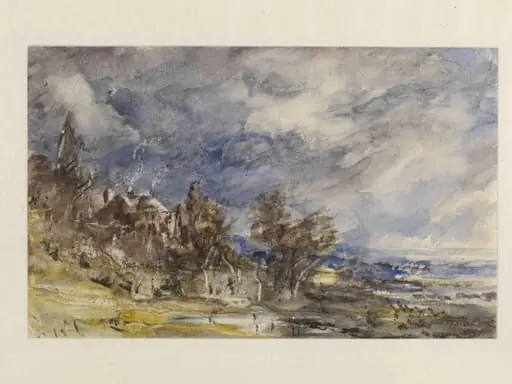 Hampstead Heath, from near Well Walk
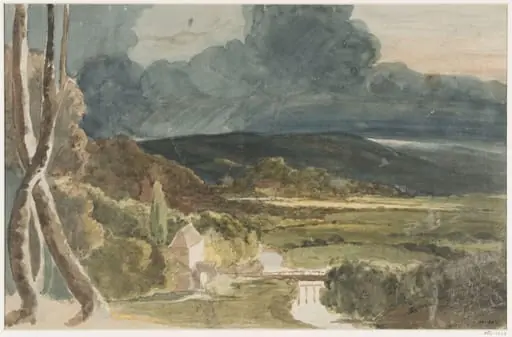 Landscape with river and mountains
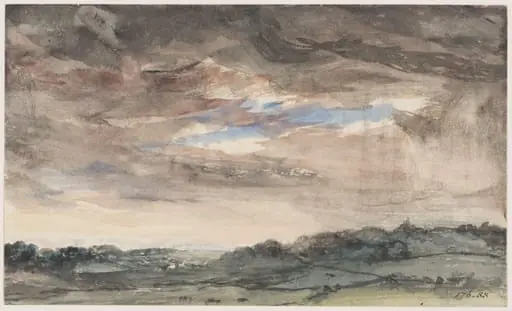 View over hilly country, with a stormy sky
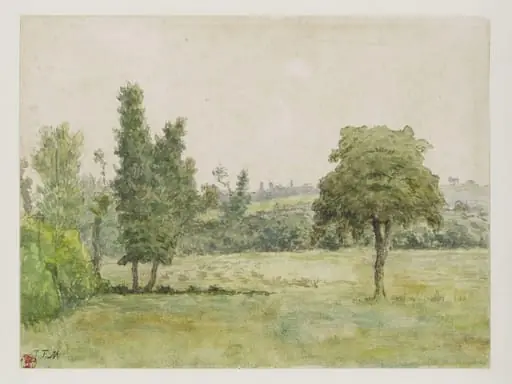 Meadow with trees
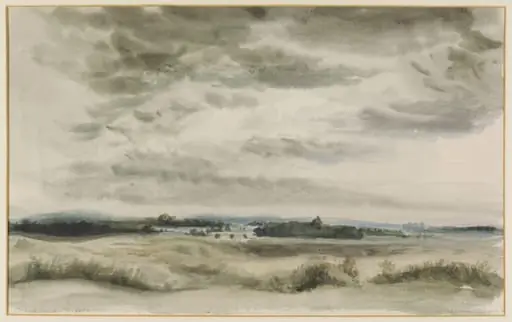 Breckland
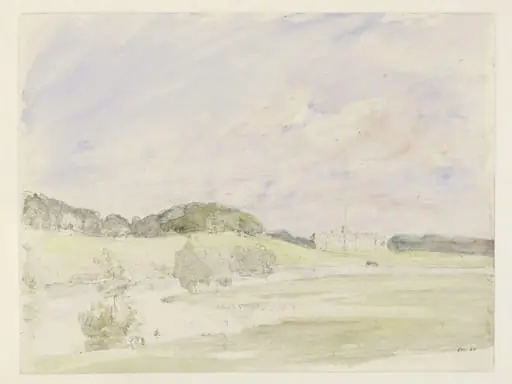 Petworth House from the Park
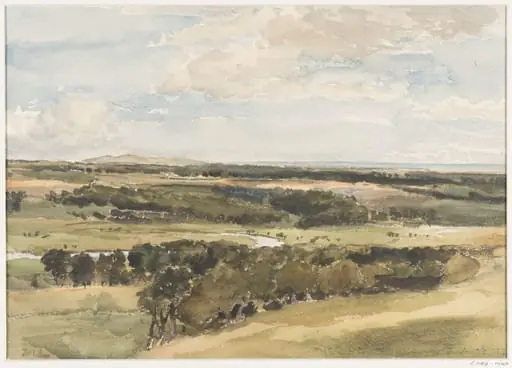 Arundel Park
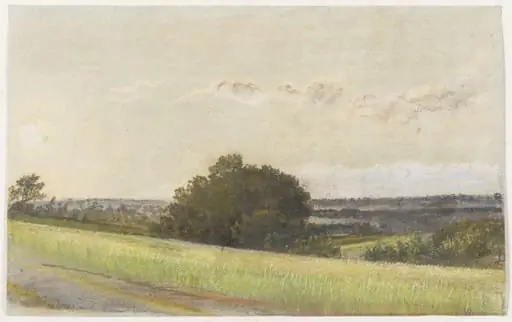 Landscape with evening effect, Abinger, Surrey
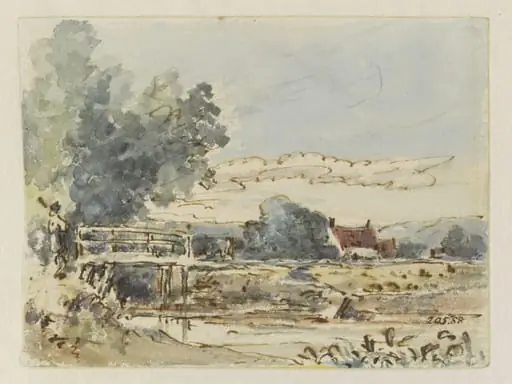 A bridge over a stream, with a cottage behind
 Dedham Vale
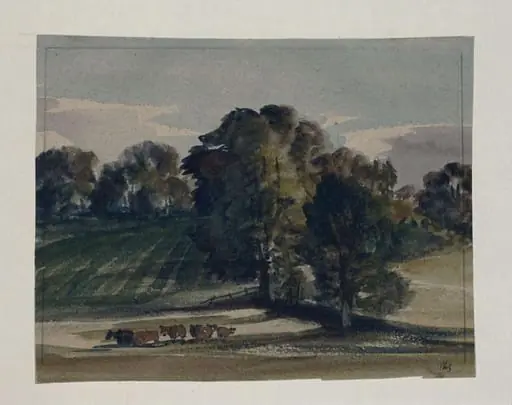 Coneycroft Farm, Compton