Artwork
Hampstead Heath, from near Well Walk
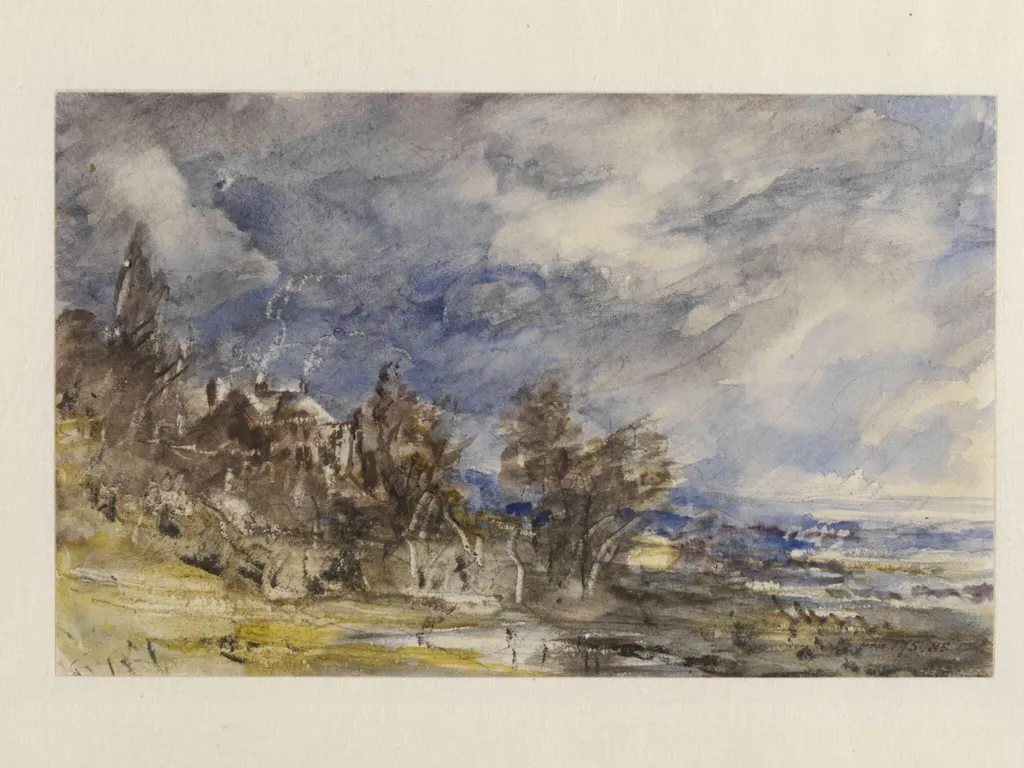
Hampstead Heath, from near Well Walk is a watercolor work on paper by the Romanticist artist John Constable. It dates from 12 and is held in the collection of the Victoria and Albert Museum.
About this work
Overview
It was among three watercolours he exhibited at the Royal Academy in 1834, reflecting his sustained focus on natural observation over idealized composition.
John Constable created this watercolour on Hampstead Heath, capturing a transient moment in the English countryside. Executed with fluid brushwork, the piece conveys atmospheric movement through damp earth, dense foliage, and a sky dominated by turbulent clouds. It was among three watercolours he exhibited at the Royal Academy in 1834, reflecting his sustained focus on natural observation over idealized composition.
Subject & Meaning
The scene presents Hampstead Heath as a living, shifting environment rather than a static panorama. Rolling terrain, mist-laden air, and scattered trees suggest a quiet, unstructured wilderness. Distant horizons hint at human presence—faint structures or vessels—without disrupting the dominance of nature. The work conveys a sense of solitude and impermanence, aligning with Constable’s interest in weather’s emotional resonance.
Technique & Style
Constable employed loose, rapid brushstrokes to render shifting light and moisture. Washes of diluted pigment create soft transitions between sky and land, while areas of heavier application define tree trunks and rocky outcrops. Unfinished passages and blurred edges preserve the immediacy of sketching outdoors, rejecting polished finish in favor of dynamic, sensory truth.
History & Provenance
Painted in 1834, this watercolour was included in Constable’s Royal Academy exhibition that year, alongside other works from his travels, including views of Old Sarum and Stoke Poges Church. He spent much of the year moving between locations such as Arundel and Petworth, documenting landscapes with consistent attention to meteorological conditions. The piece remained within his personal collection until after his death.
Context
During the 1830s, Constable increasingly turned to watercolour for its spontaneity, contrasting with the oil paintings he exhibited publicly. His Hampstead studies formed part of a broader effort to record the English sky and terrain with scientific precision and emotional honesty. These works stood apart from the romanticized landscapes popular at the time, prioritizing direct observation over narrative embellishment.
Legacy
This watercolour exemplifies Constable’s influence on later landscape traditions, particularly in how it treats nature as a subject worthy of intimate, unembellished study. His emphasis on transient weather and tactile terrain prefigured Impressionist concerns with light and atmosphere. Though not widely exhibited in his lifetime, such works became foundational to modern understandings of landscape as a record of perception.
Own this work as a print
Artist & collection
Artist
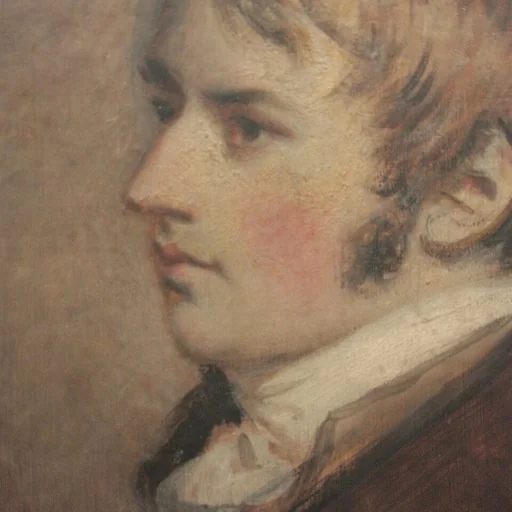
John Constable (; 11 June 1776 – 31 March 1837) was an English landscape painter in the Romantic tradition.

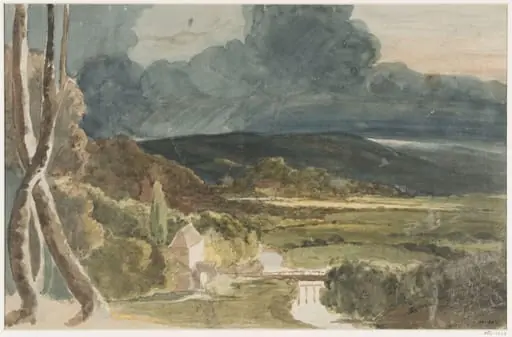 Landscape with river and mountains
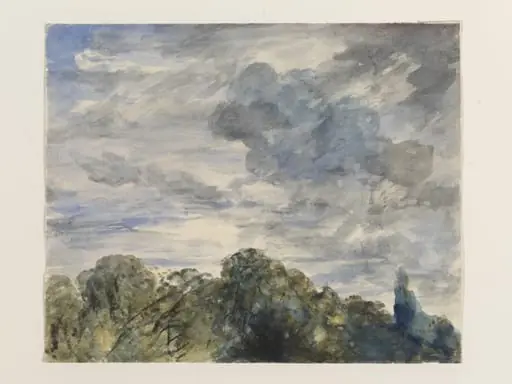 Study of sky effect
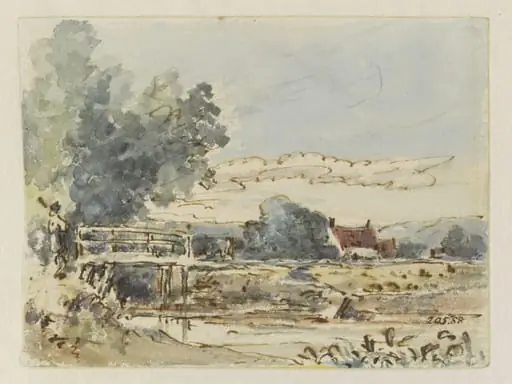 A bridge over a stream, with a cottage behind
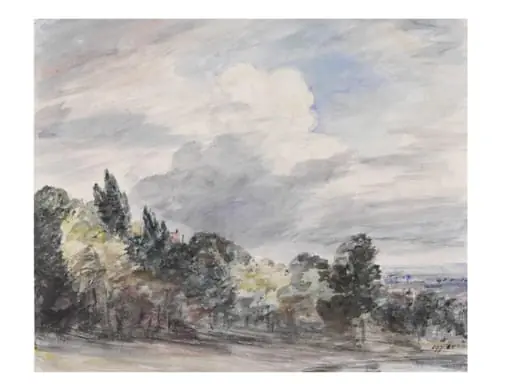 View over a wide landscape, with trees in the foreground
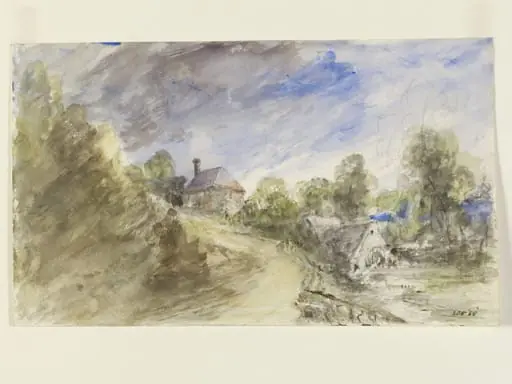 A cottage and water-mill at Bignor
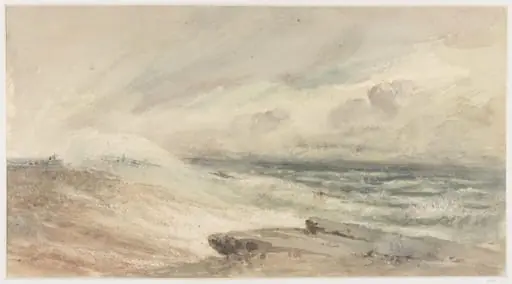 Sea from the Coast
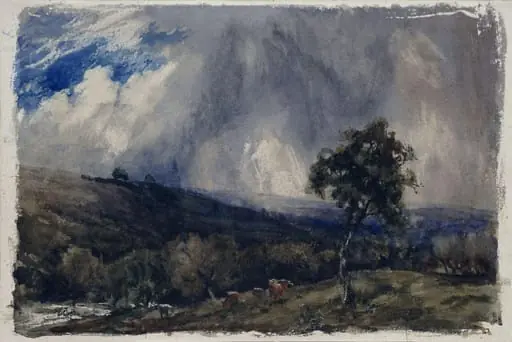 In the Wharfedale, Yorkshire
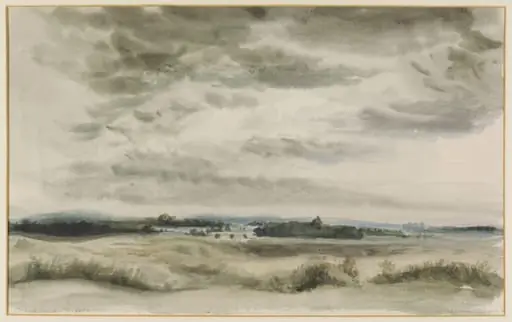 Breckland
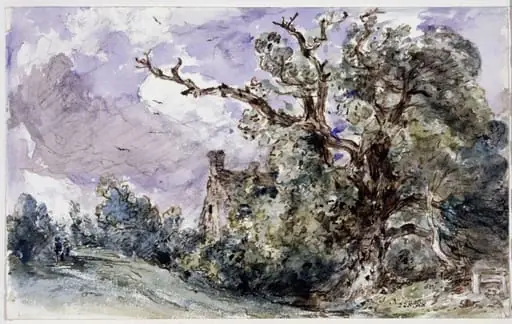 A cottage by a wood at Findon, Sussex
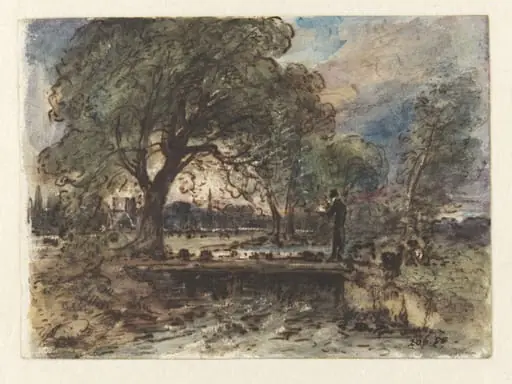 Archdeacon John Fisher with his dogs, Salisbury
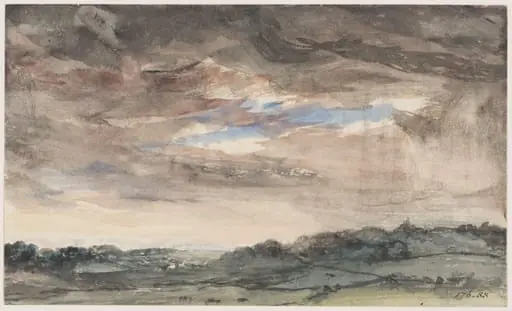 View over hilly country, with a stormy sky
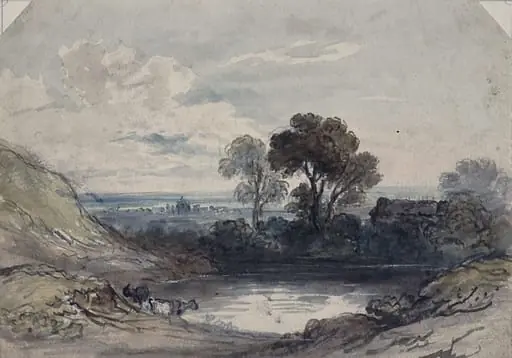 London from Hampstead Heath