Artwork
Ο τοίχος της ζωής
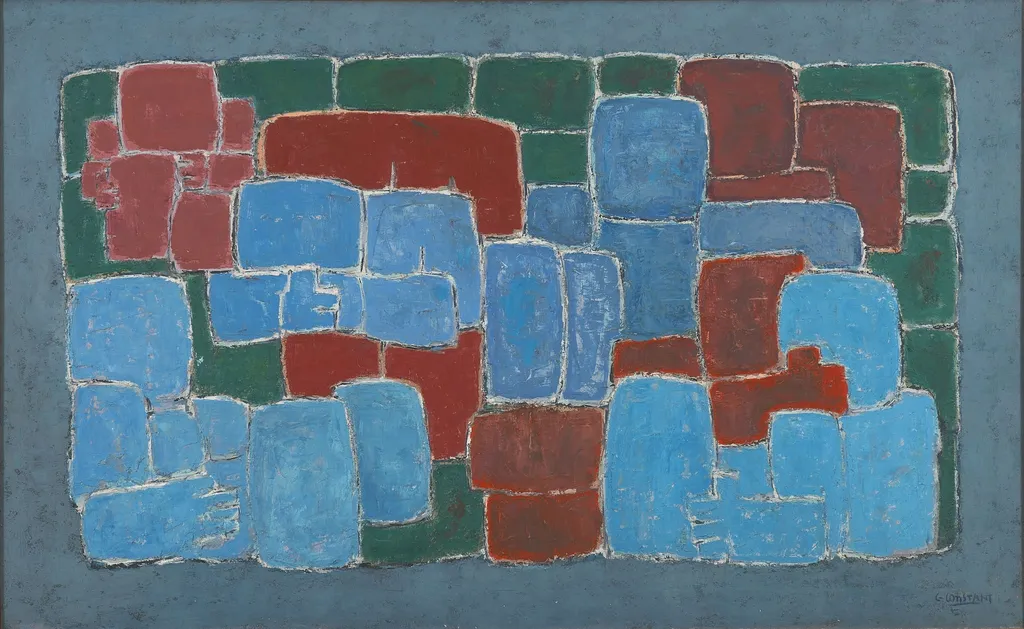
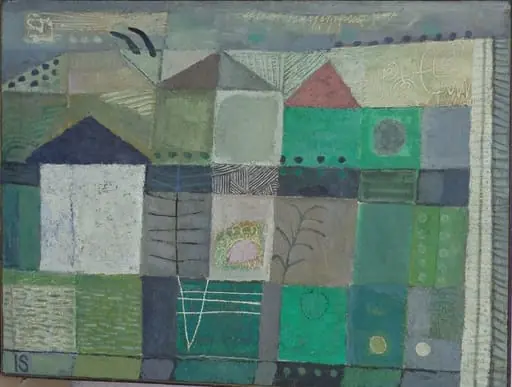
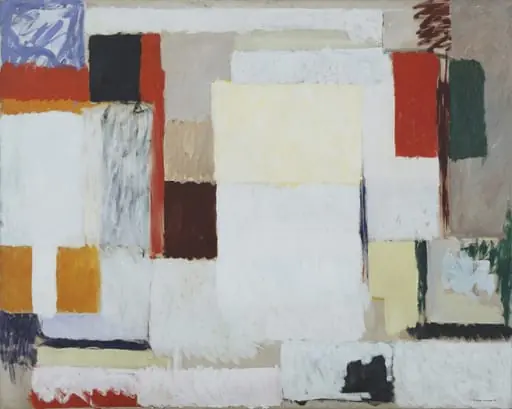
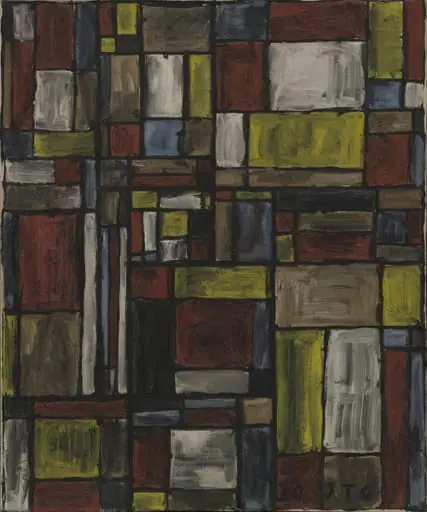
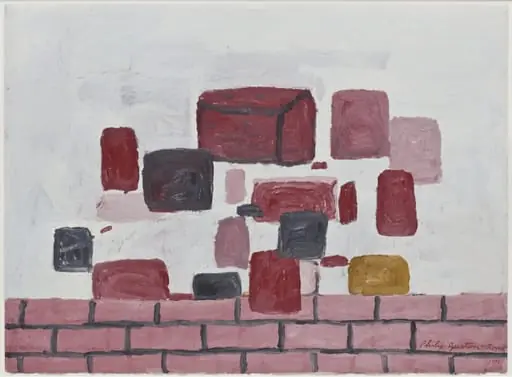
Ο τοίχος της ζωής is an unspecified painting by George Constant. It is held in the collection of the Metropolitan Organisation of Museums of Visual Arts of Thessaloniki – MOMus. The painting depicts a fragmented wall constructed from irregularly shaped blocks in vivid blue, red, and green.
About this work
Overview
The surface appears textured and hastily applied, emphasizing physicality over precision, evoking a sense of urgency or impermanence.
The painting depicts a fragmented wall constructed from irregularly shaped blocks in vivid blue, red, and green. The composition lacks symmetry, with blocks stacked, tilted, or overlapping in a haphazard manner. Gaps between the forms suggest decay or incomplete construction. The surface appears textured and hastily applied, emphasizing physicality over precision, evoking a sense of urgency or impermanence.
Subject & Meaning
The wall functions as a metaphor for structure and fragmentation, possibly reflecting societal or personal boundaries in flux. Its disjointed arrangement resists order, hinting at instability or resilience amid disorder. The absence of figures or narrative elements directs focus to the materiality of the wall itself, inviting interpretation as a symbol of endurance, isolation, or the raw conditions of existence.
Technique & Style
The artist employs thick, uneven brushwork to build each block, creating a tactile surface reminiscent of impasto. Colors are applied boldly without blending, preserving their raw intensity. Edges are deliberately blurred or jagged, rejecting smooth finishes. The lack of perspective and flattened space aligns with expressive abstraction, prioritizing emotional impact over realistic representation.
History & Provenance
The work’s origin remains undocumented in public records. No exhibition history or collector lineage is publicly verified. Its attribution to a specific artist or period is unconfirmed, though its visual language suggests mid-20th century postwar abstraction. The piece exists only as a referenced image without archival documentation or physical provenance.
Context
Emerging in a period when artists increasingly explored materiality and non-traditional forms, the painting aligns with movements that valued gesture and texture over illusion. Its use of primary colors and structural fragmentation echoes contemporaneous experiments in muralism and abstract expressionism, though it diverges by rejecting scale and public intent, focusing instead on intimate, almost domestic disarray.
Legacy
Though not widely exhibited or cited in art historical texts, the work contributes to a broader dialogue on the symbolic potential of architectural fragments. Its raw aesthetic has influenced later artists interested in decay, impermanence, and the poetry of the unfinished. It remains a quiet example of how simple forms can carry complex emotional weight without narrative.
Artist & collection
Artist
George Constant was a man of contrasts, with a life that seemed to blend different worlds.
Museum
Metropolitan Organisation of Museums of Visual Arts of Thessaloniki – MOMus
Continue through works from the same source collection.