Artwork
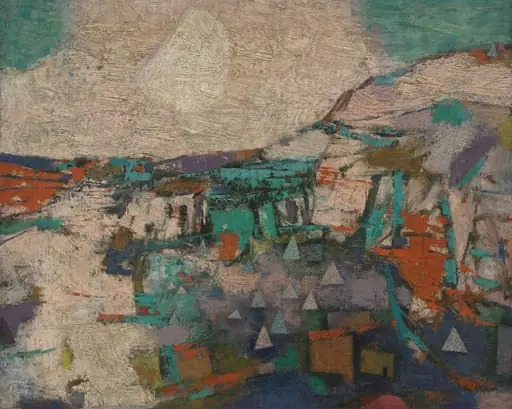
Peisaj rural constructivist
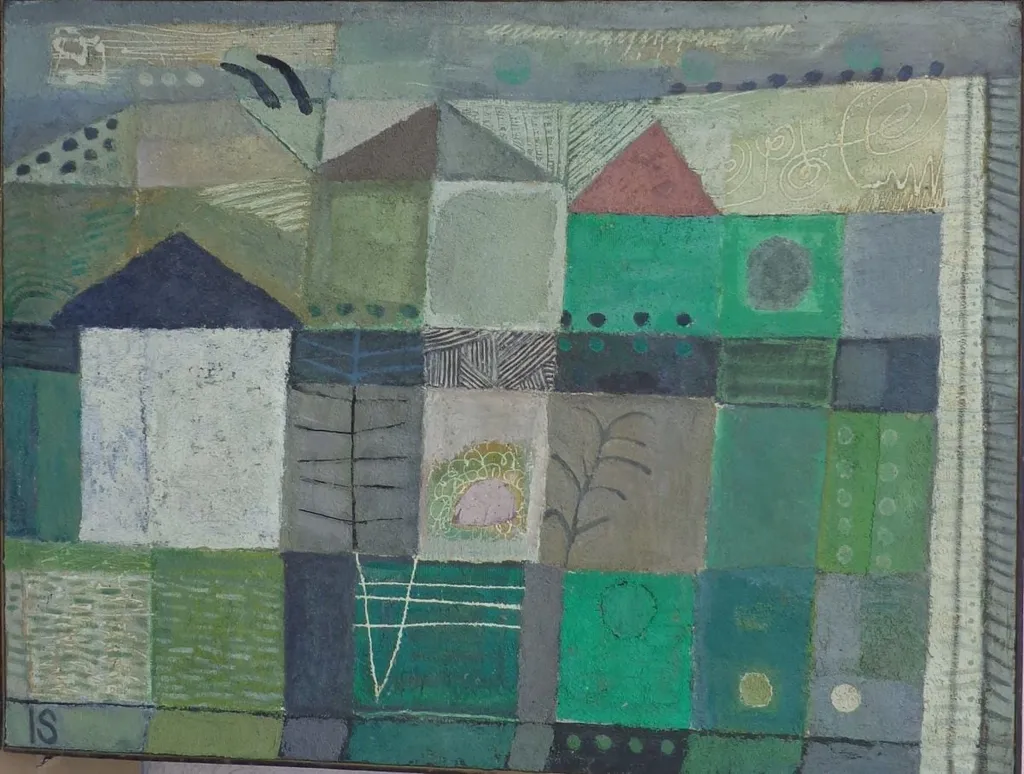
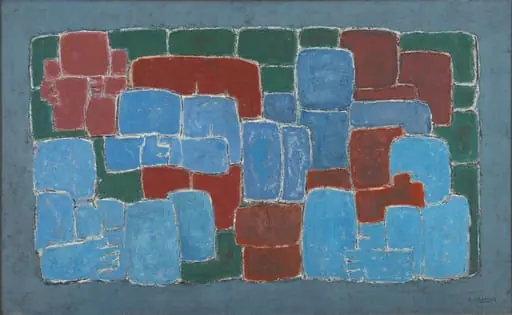
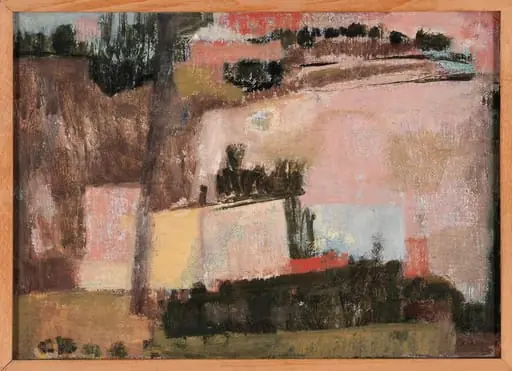
Peisaj rural constructivist is a print by Ion Sălișteanu. It is held in the collection of the Bucharest Municipality Museum. This rural landscape presents a village rendered through abstracted geometric forms.
About this work
Overview
A pale sky and textured ground anchor the scene, while isolated elements like a lone tree introduce quiet focal points.
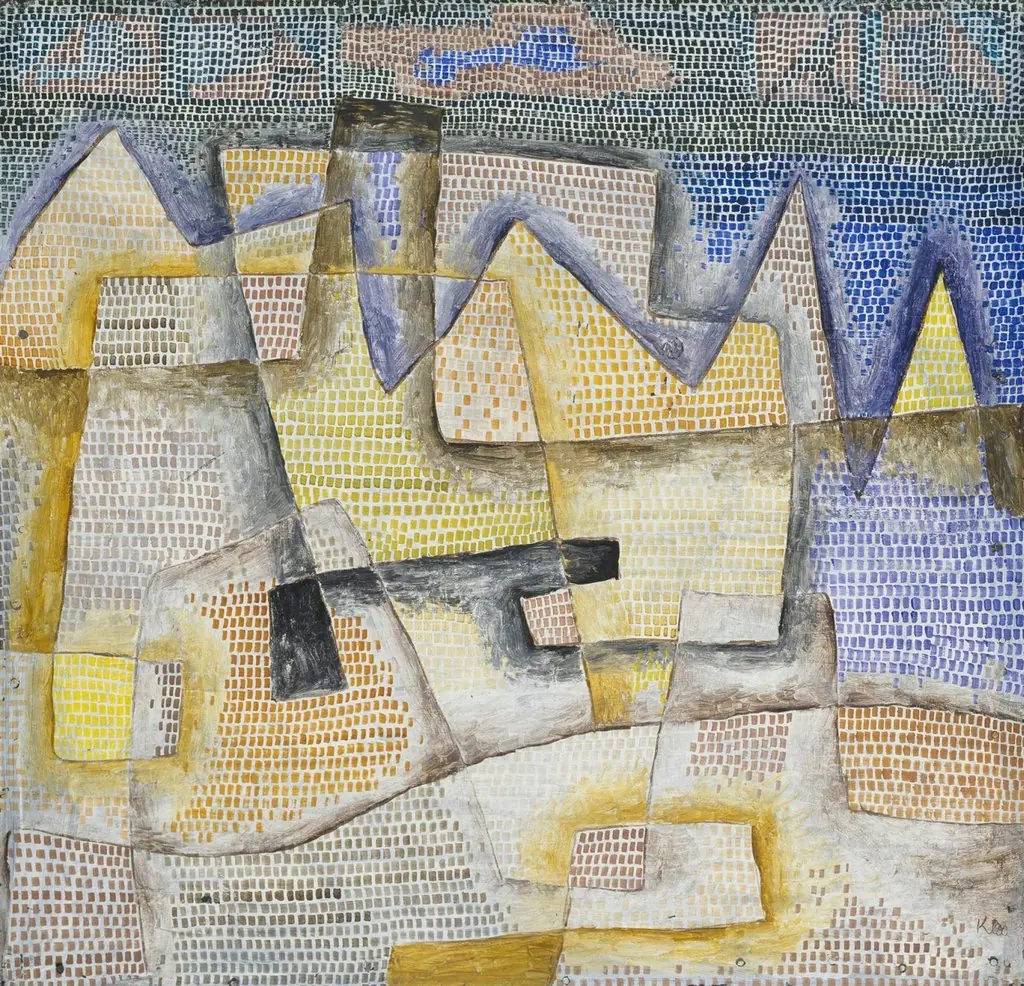
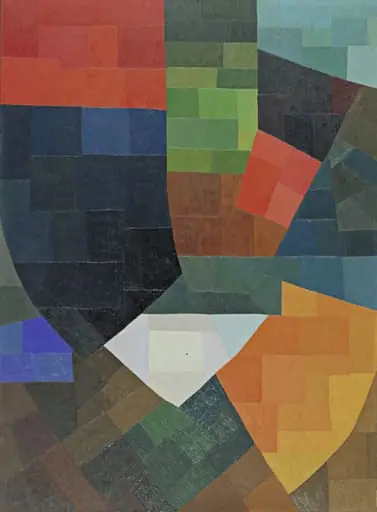
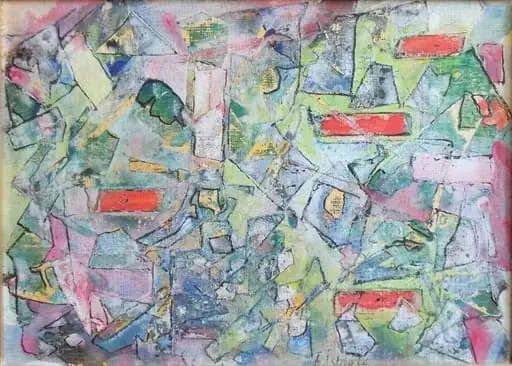
This rural landscape presents a village rendered through abstracted geometric forms. Color blocks in blues, greens, and grays define structures and terrain, arranged without strict alignment. The composition balances deliberate structure with irregularity, suggesting a handcrafted approach. A pale sky and textured ground anchor the scene, while isolated elements like a lone tree introduce quiet focal points.
Subject & Meaning
The painting depicts a modest rural settlement, not as a realistic record but as a rearranged assembly of visual elements. Buildings, trees, and terrain are simplified into non-naturalistic shapes, emphasizing spatial relationships over narrative detail. The absence of human figures and the quiet isolation of the tree suggest a contemplative, almost silent presence of rural life.
Technique & Style
Flat, unmodulated colors are applied with visible, uneven brushwork, creating a tactile surface. Shapes overlap irregularly, avoiding rigid symmetry. The ground is built with rough, layered strokes, contrasting with the smoother wash of the sky. This blend of controlled geometry and spontaneous texture gives the work a deliberate, artisanal quality.
History & Provenance
The work originates from a mid-20th century movement that sought to reinterpret traditional landscapes through modernist abstraction. While specific provenance details are not documented, its stylistic traits align with regional artists exploring Constructivist principles in rural contexts, distancing from academic realism in favor of structural experimentation.
Context
Emerging in a period when many artists reexamined folk and rural themes through avant-garde lenses, this piece reflects a broader trend of integrating local subject matter with geometric abstraction. It responds to urban modernism by grounding it in the rhythms and forms of village life, without romanticizing it.
Legacy
The painting contributes to a lesser-known branch of modernist art that fused Constructivist form with regional identity. Its influence is seen in later works that treat landscape as a field of interacting shapes rather than a window onto nature. It remains a quiet example of how abstraction can evoke place without literal representation.
Artist & collection
Artist
Ion Sălișteanu made prints and paintings that capture Romania’s landscapes in bold, orderly shapes.