Artwork
Pasture in Normandy
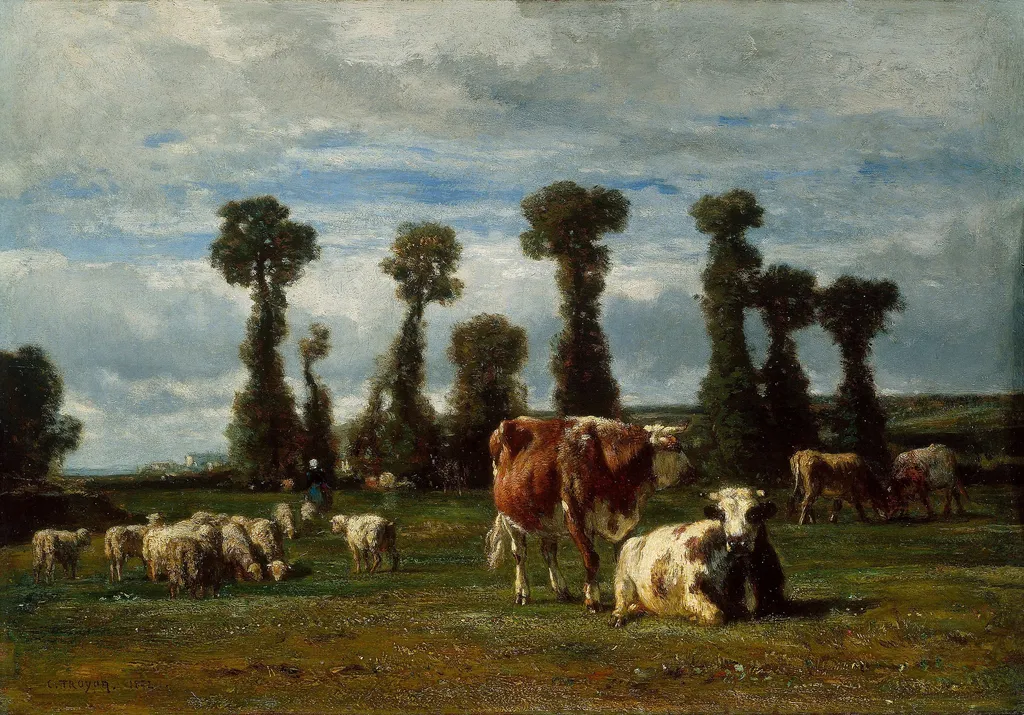
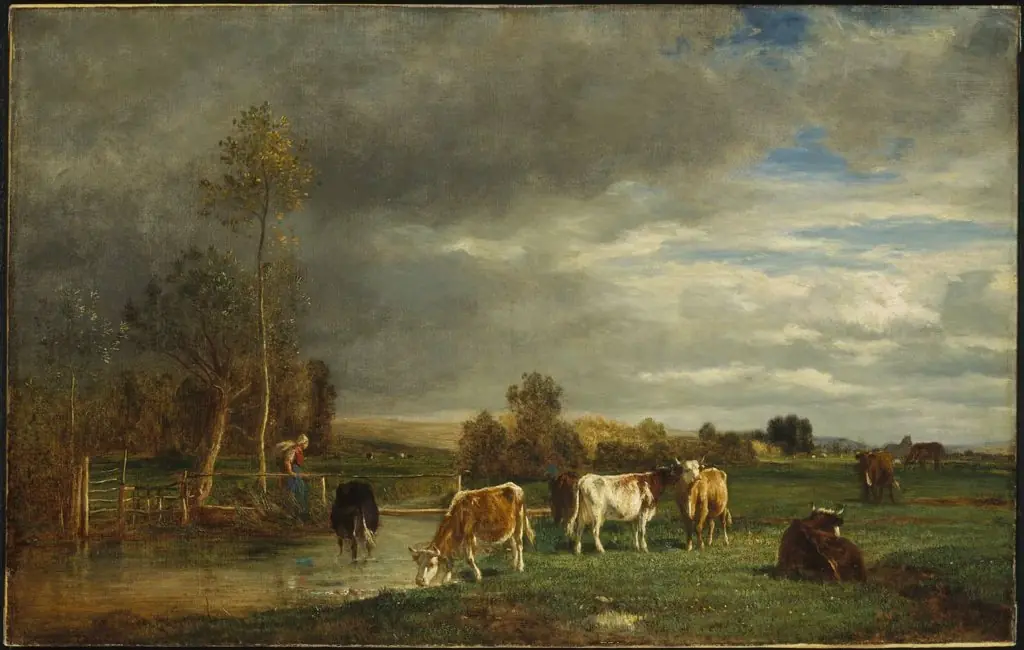
Pasture in Normandy is an oil painting by the Barbizon school artist Constant Troyon. It dates from 1852 and is held in the collection of the Art Institute of Chicago.
About this work
The artist's skillful brushstrokes bring the scene to life, inviting the viewer to step into the peaceful world of the pasture.
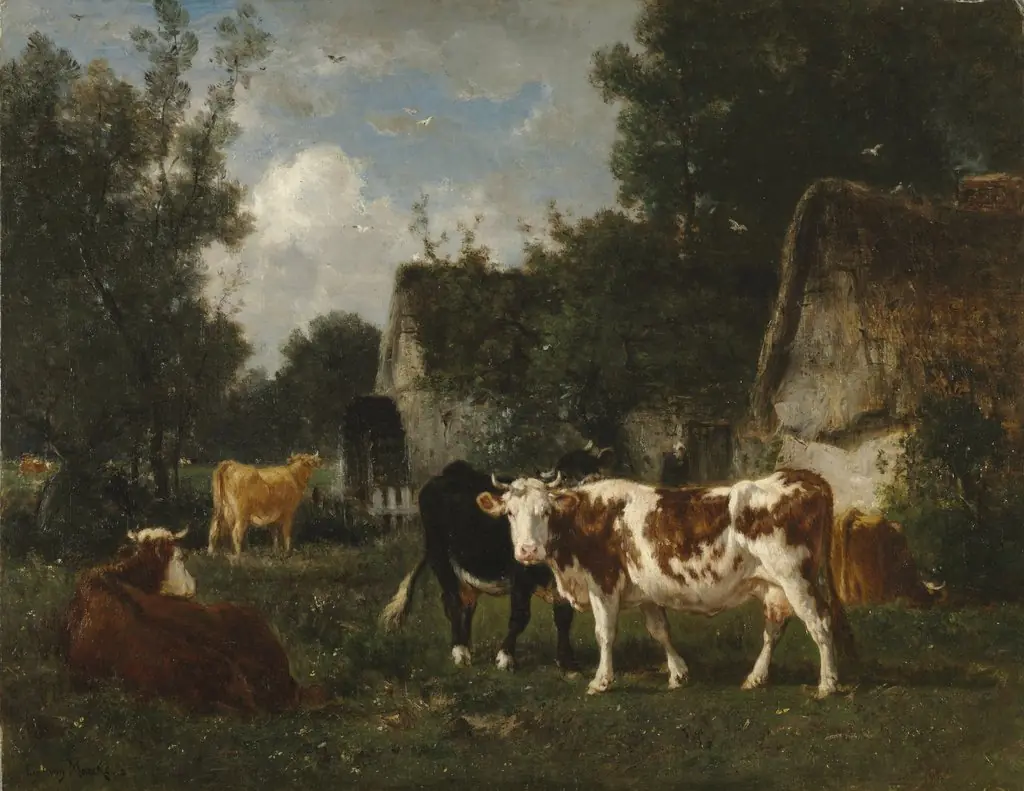
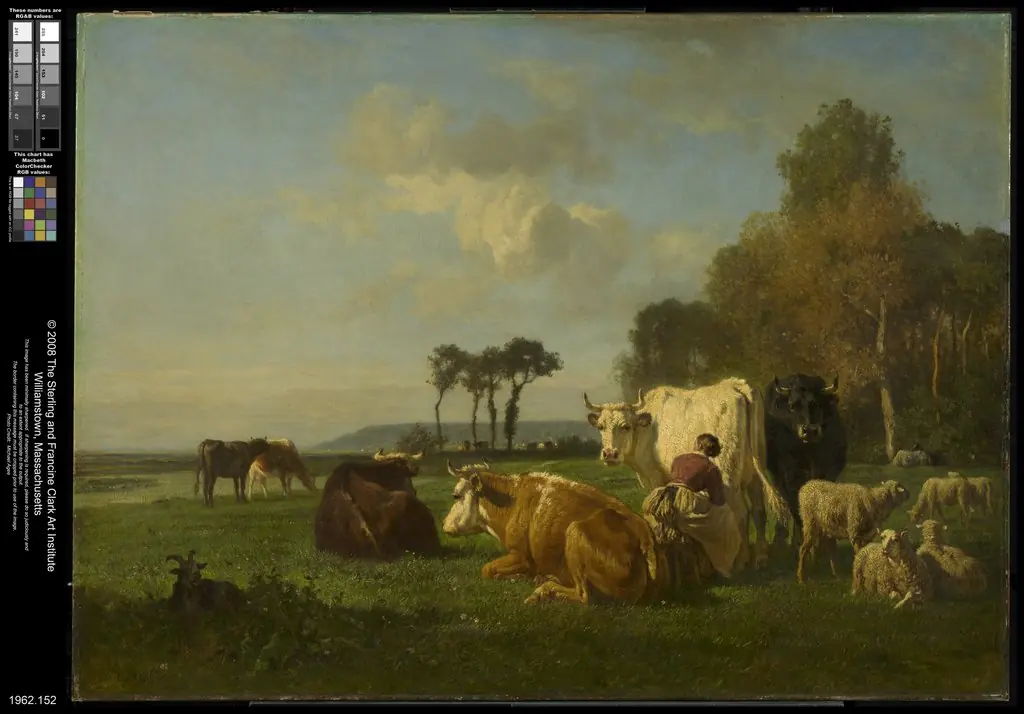
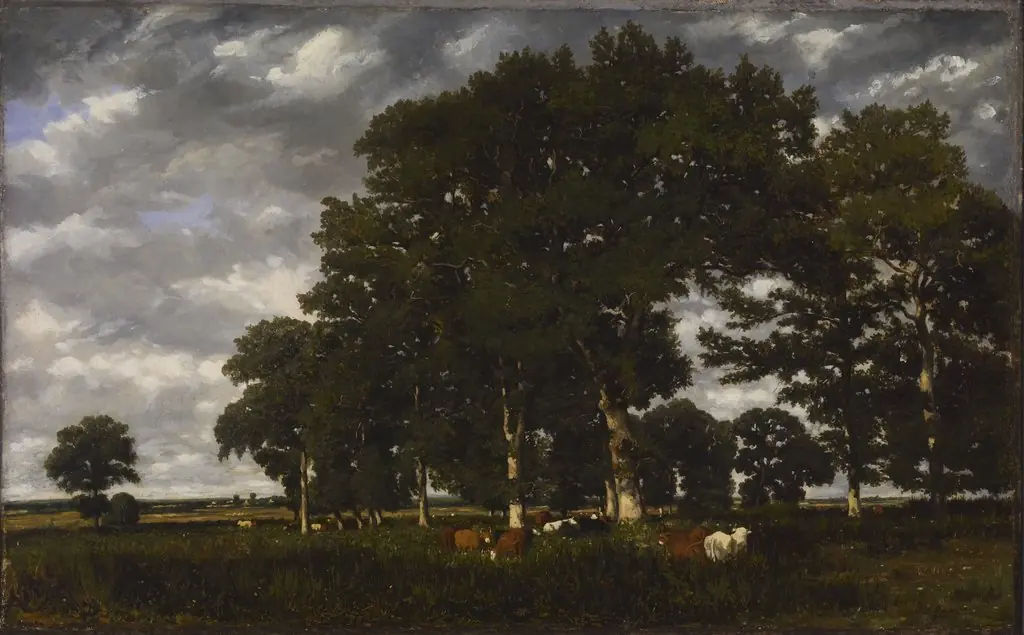
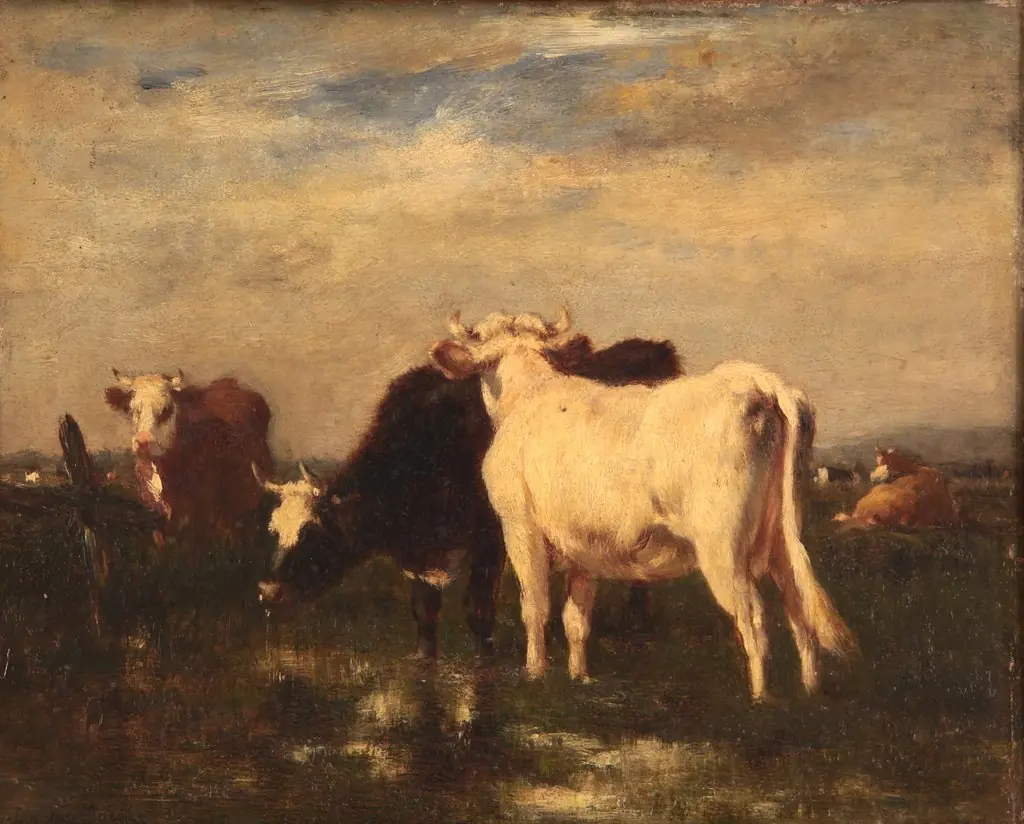
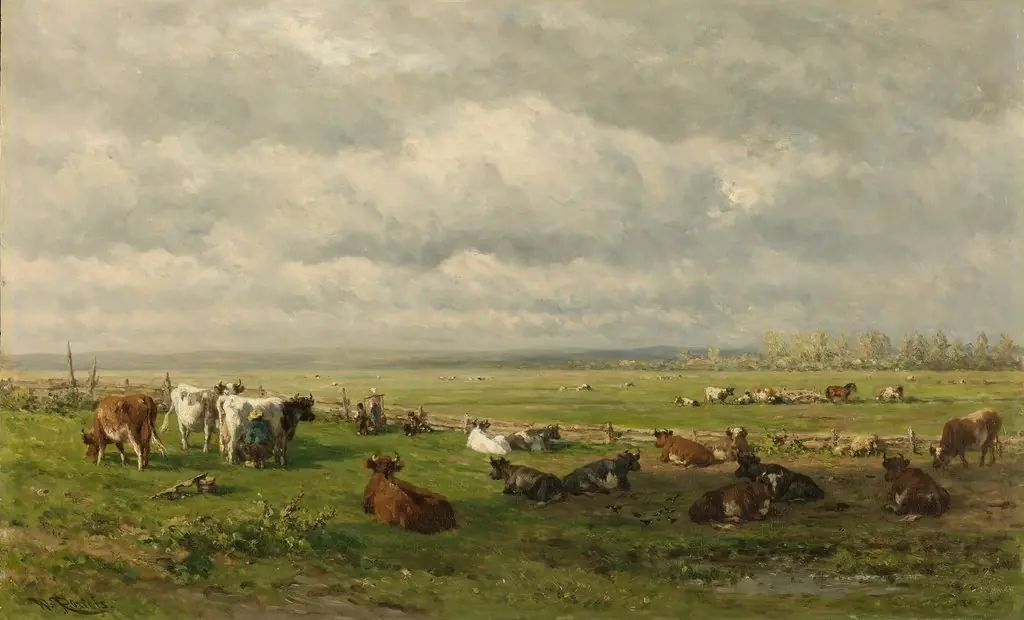
The painting "Pasture in Normandy" by Constant Troyon, created in 1852, showcases a serene landscape. In the foreground, a few cows are depicted in a lush green field, with trees standing tall in the background. The sky above is filled with clouds, adding to the tranquil atmosphere of the scene.
One interesting aspect of the painting is the use of oil paint, which gives the image a rich and vibrant quality. The artist's skillful brushstrokes bring the scene to life, inviting the viewer to step into the peaceful world of the pasture.
To learn more about the artistic techniques used in this painting, explore the technique of glazing.
Overview
Painted in 1852, Pasture in Normandy is an oil-on-canvas landscape by French artist Constant Troyon. It depicts a quiet rural scene in the Normandy region, featuring grazing cattle and a broad, open field under a cloud-dappled sky. The work is part of the permanent collection at the Art Institute of Chicago, where it exemplifies Troyon’s focus on pastoral life and natural observation.
Subject & Meaning
The painting presents a humble agricultural setting, emphasizing the quiet rhythm of rural existence. Cows rest or graze in a verdant pasture, their forms grounded and unidealized. The absence of human figures underscores a sense of solitude and harmony with nature, reflecting the Barbizon School’s reverence for everyday rural landscapes as subjects worthy of serious artistic attention.
Technique & Style
Troyon employed oil paint with layered brushwork to capture the texture of grass, the softness of clouds, and the matte sheen of animal hides. His handling avoids sharp detail, favoring atmospheric blending and subtle tonal shifts. The use of glazing enhances depth in the shadows and luminosity in the sky, contributing to a sense of quiet, diffused light that characterizes his mature style.
History & Provenance
Created during Troyon’s peak period of artistic development, the painting was likely made in or near Normandy, where he frequently traveled to sketch from nature. It entered the Art Institute of Chicago’s collection in the early 20th century, acquired as part of a broader interest in 19th-century French landscape painting. Its provenance remains largely undocumented prior to its museum acquisition.
Context
Troyon was associated with the Barbizon School, a group of artists who rejected academic idealism in favor of direct observation of the natural world. Painted during a time of industrial expansion, Pasture in Normandy offers a contemplative counterpoint to urbanization, aligning with broader cultural currents that valued rural authenticity and ecological quietude.
Legacy
The painting contributes to Troyon’s reputation as a leading animalier painter of his era, blending naturalism with emotional restraint. While less widely known than some of his contemporaries, his works like this one influenced later generations of landscape painters who sought to portray the dignity of rural life without sentimentality.
Own this work as a print
Artist & collection

Artist
Constant Troyon (French pronunciation: ; August 28, 1810 – February 21, 1865) was a French painter of the Barbizon school.