Artwork
The Yard of the Abbey Arms Hotel, Festiniog, Merionethshire
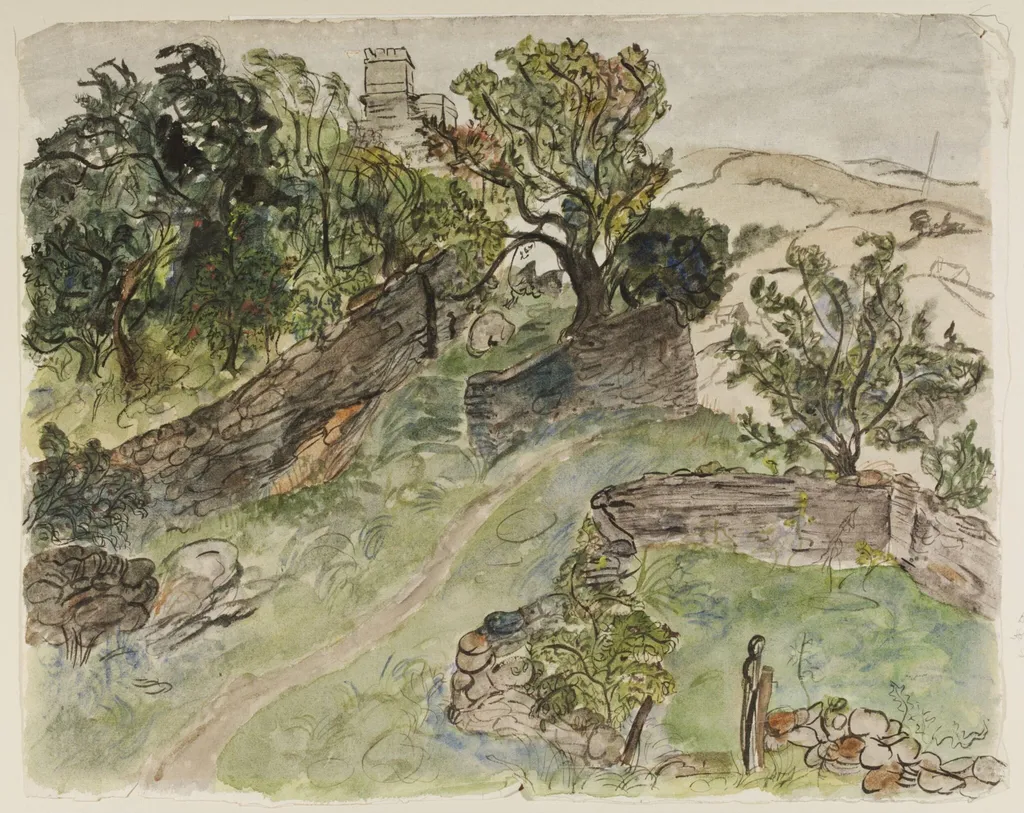
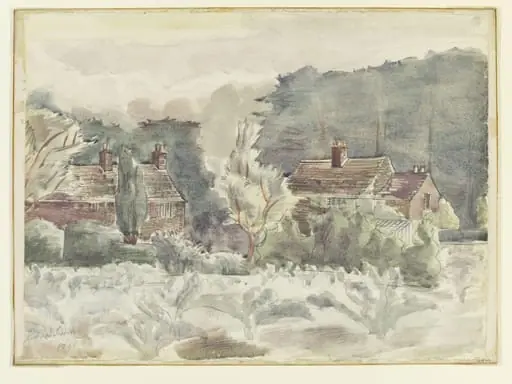
The Yard of the Abbey Arms Hotel, Festiniog, Merionethshire is a watercolor work on paper by the Impressionist artist Olive Muriel Cook. It dates from 1940 and is held in the collection of the Victoria and Albert Museum.
About this work
Overview
The project, initiated by Sir Kenneth Clark, sought to create a visual archive of British landscapes and architecture amid the uncertainties of wartime.
This watercolour depicts the courtyard of the Abbey Arms Hotel in Festiniog, Merionethshire, painted during the early 1940s as part of the *Recording Britain* initiative. The project, initiated by Sir Kenneth Clark, sought to create a visual archive of British landscapes and architecture amid the uncertainties of wartime. The work is one of many contributions by artists commissioned to document places deemed vulnerable to change or destruction, preserving a sense of place through quiet observation.
Subject & Meaning
The scene centers on the hotel’s courtyard, a modest yet enduring architectural space that reflects everyday British life. The inclusion of a solitary tree and the distant hills suggests a harmony between human structures and the natural environment. Rather than emphasizing grandeur, the painting conveys stillness and continuity, offering a quiet affirmation of local identity during a time when national stability felt precarious.
Technique & Style
Executed in watercolour, the work employs a restrained palette of soft greys, muted browns, and pale blues to evoke atmosphere rather than detail. Delicate washes suggest the texture of stone and the lightness of foliage, while the feathery rendering of the tree’s branches adds a sense of movement without disruption. The sky, lightly brushed with wisps of cloud, enhances the calm mood, reinforcing the painting’s contemplative tone through understated technique.
History & Provenance
Created as part of the *Recording Britain* project, this watercolour was commissioned between 1940 and 1943 to document scenes at risk from wartime development or neglect. The work entered the Victoria and Albert Museum’s collection alongside hundreds of similar pieces, forming a curated record of Britain’s vernacular architecture. Its survival and preservation reflect the project’s success in safeguarding cultural memory through artistic documentation.
Context
During the Second World War, fears of aerial bombardment and rapid modernization prompted efforts to record Britain’s architectural heritage. The *Recording Britain* initiative, supported by the Pilgrim Trust, employed artists to travel the country and capture scenes from rural villages to urban courtyards. This painting belongs to a broader movement that valued the ordinary as historically significant, countering the erasure of place through conflict and change.
Legacy
The *Recording Britain* collection remains a vital resource for understanding mid-20th-century British landscapes. This watercolour, like others in the series, offers a sober, unembellished view of a place that might otherwise have faded from public awareness. Its quiet documentation continues to inform historical and architectural studies, serving as a testament to the role of art in preserving collective memory during times of crisis.
Artist & collection
Artist
Olive Cook spent her life hovering between two worlds: the quiet Welsh hills and London’s sharp-edged art scene.

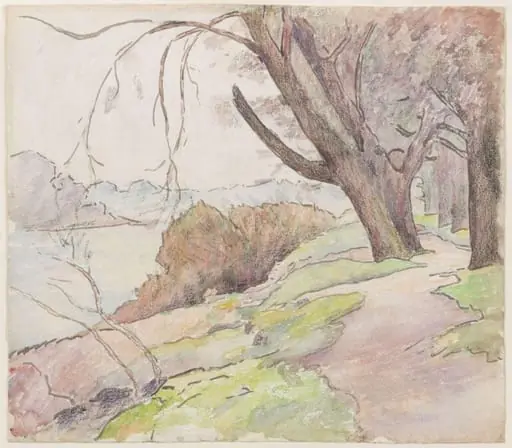 Towpath, Richmond, 1913
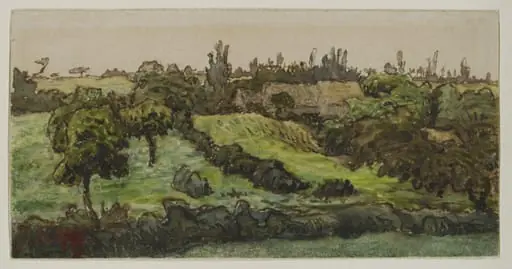 Landscape with farm buildings
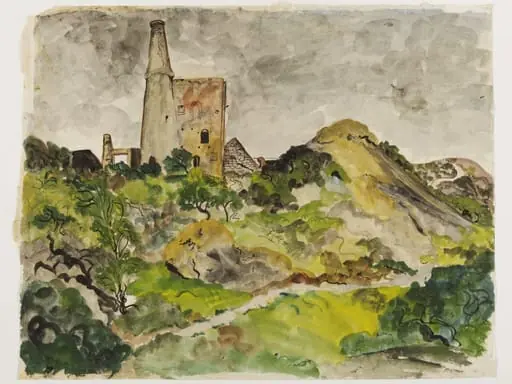 Disused Tin Mine, St. Agnes, Cornwall
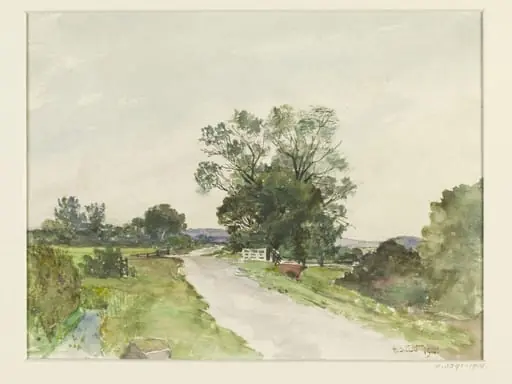 Landscape with road in flat country
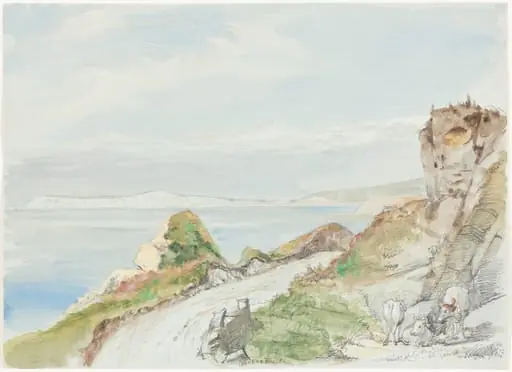 Freshwater Bay, Isle of Wight
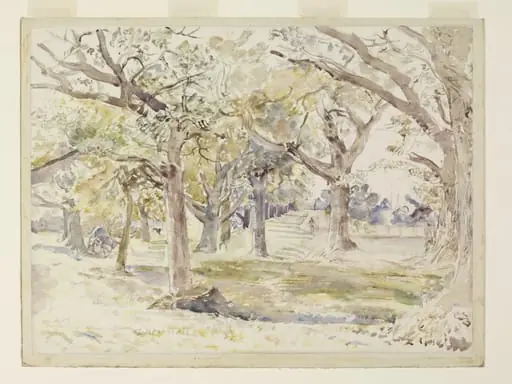 The Avenue, Bucklebury
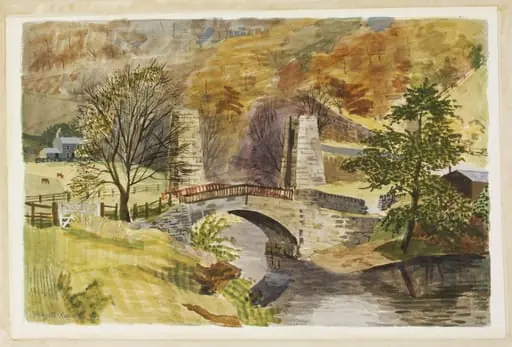 Bridge to Cox's Farm, Ashopton
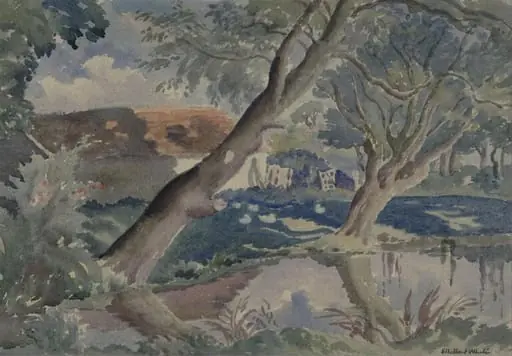 A pond overshadowed by two trees; buildings in the background
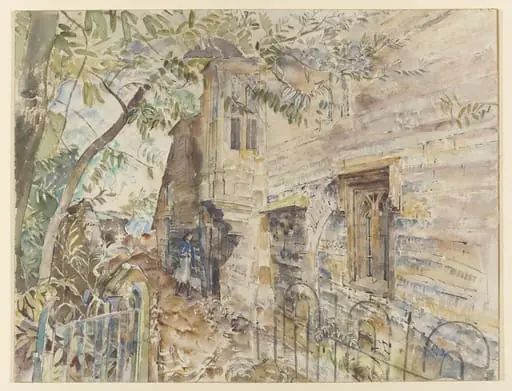 The Guest House, Cerne Abbas
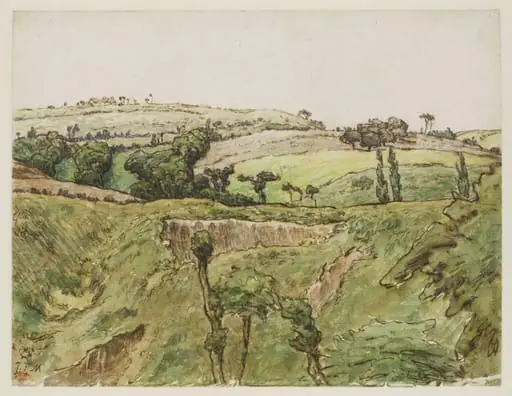 A hilly landscape with trees
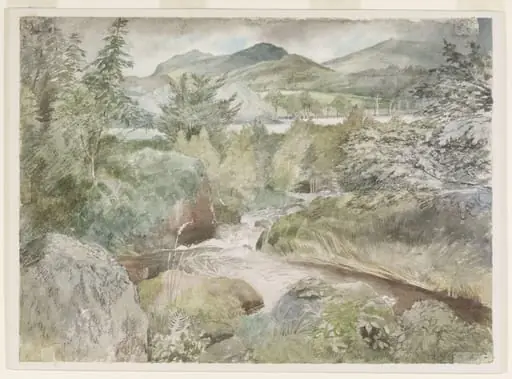 Garn Dolbenmaen, Caernarvonshire
 Cottages at Norton, No.5