Artwork
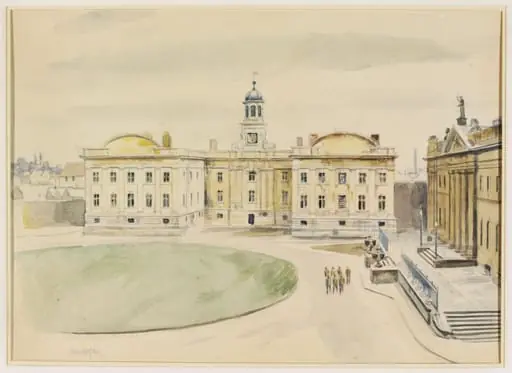
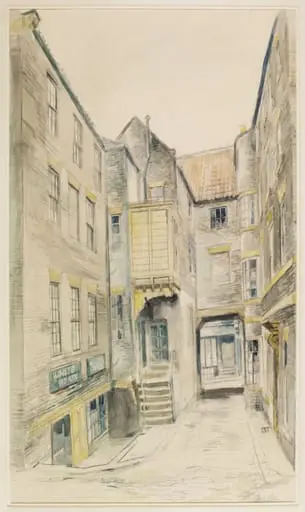
Town Hall, Whitby
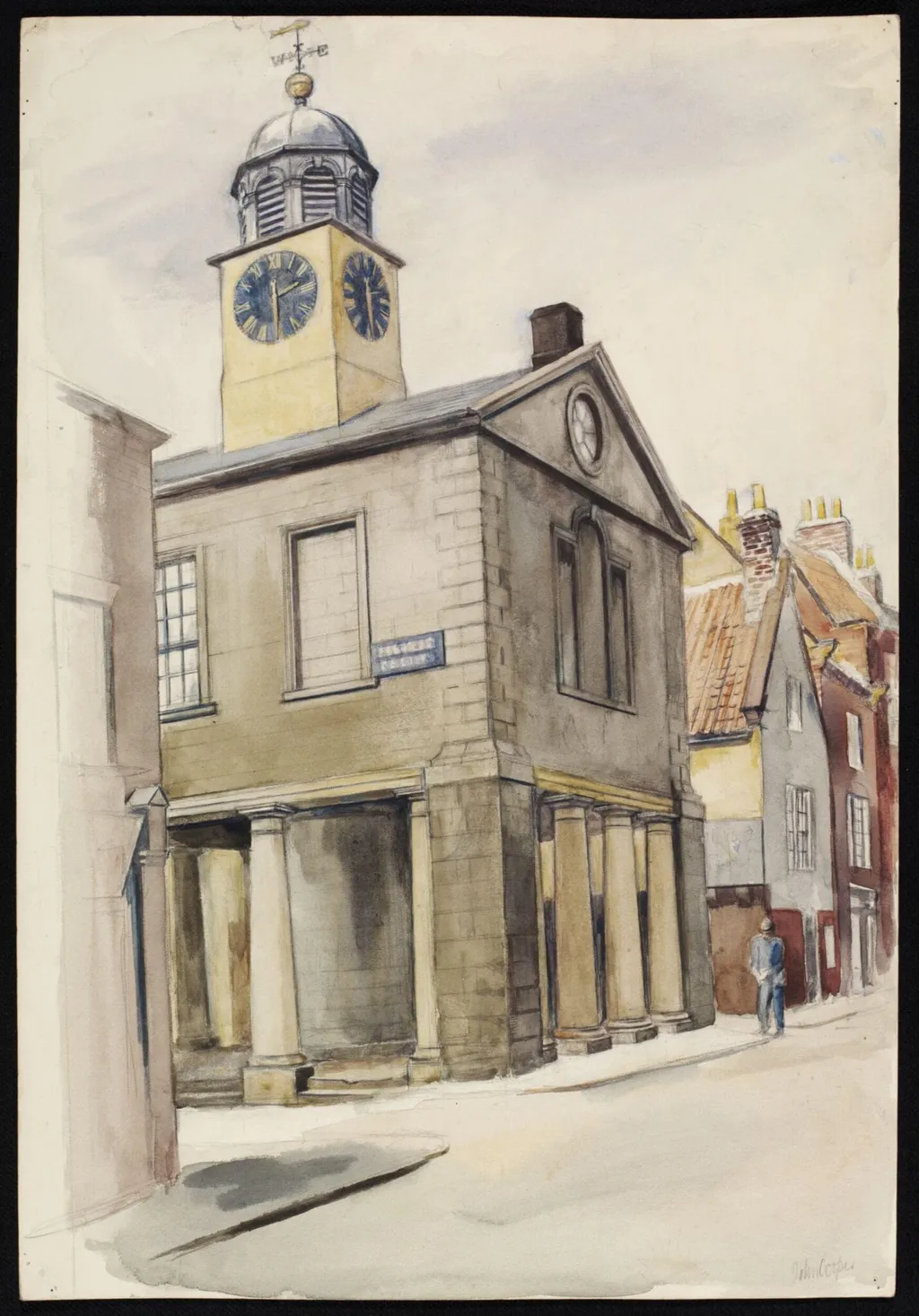
Town Hall, Whitby is a watercolor work on paper by the Social Realist artist John Cooper. It dates from 1940 and is held in the collection of the Victoria and Albert Museum.
About this work
Overview
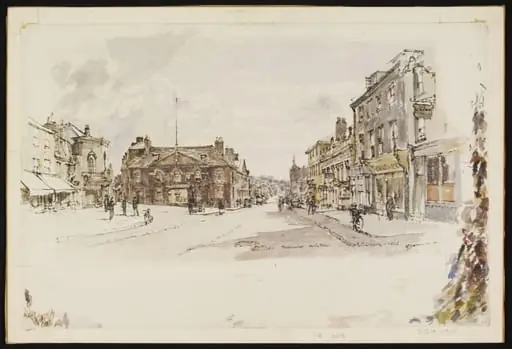
John Cooper's 1940 watercolour captures Whitby Town Hall, a modest Neoclassical building in the North Yorkshire coastal town.
John Cooper's 1940 watercolour captures Whitby Town Hall, a modest Neoclassical building in the North Yorkshire coastal town. Executed during the Second World War, the piece was commissioned as part of the 'Recording Britain' project, which sought to preserve visual records of places deemed at risk from wartime disruption. The work belongs to a larger archive of over 1,500 watercolours created by nearly 100 artists between 1940 and 1943, all aimed at documenting the quiet character of British architecture and landscape.
Subject & Meaning
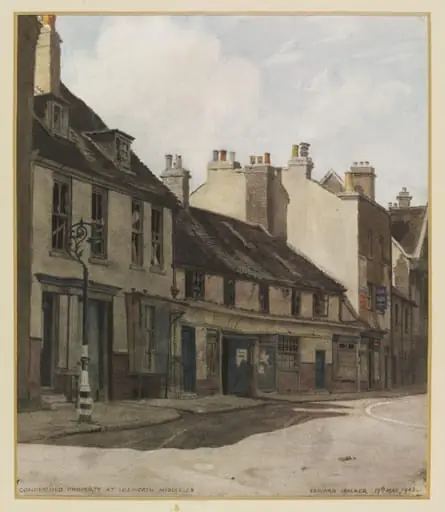
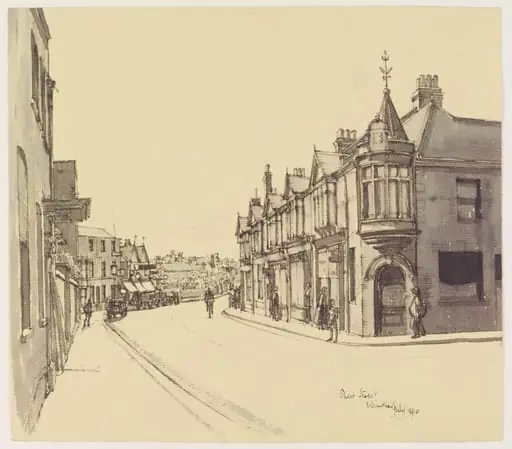
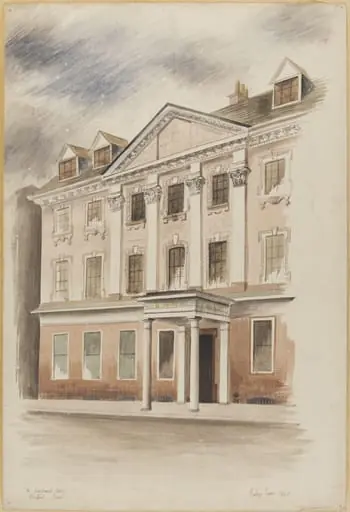
The painting centers on the town hall’s functional yet dignified form: a stone structure with a clock tower, arched colonnade, and weathered surfaces. A solitary pedestrian walks along the narrow street, emphasizing the building’s integration into daily life. Rather than dramatizing its architecture, Cooper highlights its ordinary presence—its aged stone, unadorned details, and quiet surroundings—suggesting a quiet reverence for the enduring, unremarkable structures that anchor community identity.
Technique & Style
Cooper employed loose, fluid brushwork and muted, earth-toned washes to convey the texture of weathered stone and the soft light of a typical day. The composition avoids theatricality, focusing instead on subtle gradations of tone and the delicate rendering of architectural details like the clock faces and column capitals. The absence of sharp lines and the transparency of the watercolour medium lend the scene a sense of immediacy, as if capturing a fleeting, unposed moment in time.
History & Provenance
The painting was produced under the 'Recording Britain' initiative, a government-backed effort administered by the Pilgrim Trust and the Ministry of Labour and National Service. It was created to preserve visual records of Britain’s architectural heritage amid wartime threats. The work entered the collection of the Victoria and Albert Museum, where it remains part of the project’s comprehensive archive, alongside other watercolours documenting threatened landscapes and vernacular buildings.
Context
During the early 1940s, Britain faced widespread destruction and social upheaval. The 'Recording Britain' project emerged as a cultural response, urging artists to record places that might vanish—rural cottages, market squares, historic facades. Whitby, a town with medieval roots and maritime significance, was one of many locations chosen for its symbolic connection to enduring British identity. Cooper’s depiction reflects this ethos: a quiet, unheroic tribute to local architecture under threat.
Legacy
The painting endures as part of a significant historical archive that reshaped how Britain’s built heritage was valued during times of crisis. Unlike grand monuments, these works emphasized the quiet dignity of everyday structures. Today, Cooper’s watercolour contributes to ongoing discussions about preservation, memory, and the role of art in documenting social continuity. It remains accessible through the Victoria and Albert Museum’s collection, offering insight into wartime cultural priorities.
Artist & collection
Artist
John Cooper specialized in quiet watercolor views of northern England from the 1940s.