Artwork
High Street and Rutland Arms, Newmarket
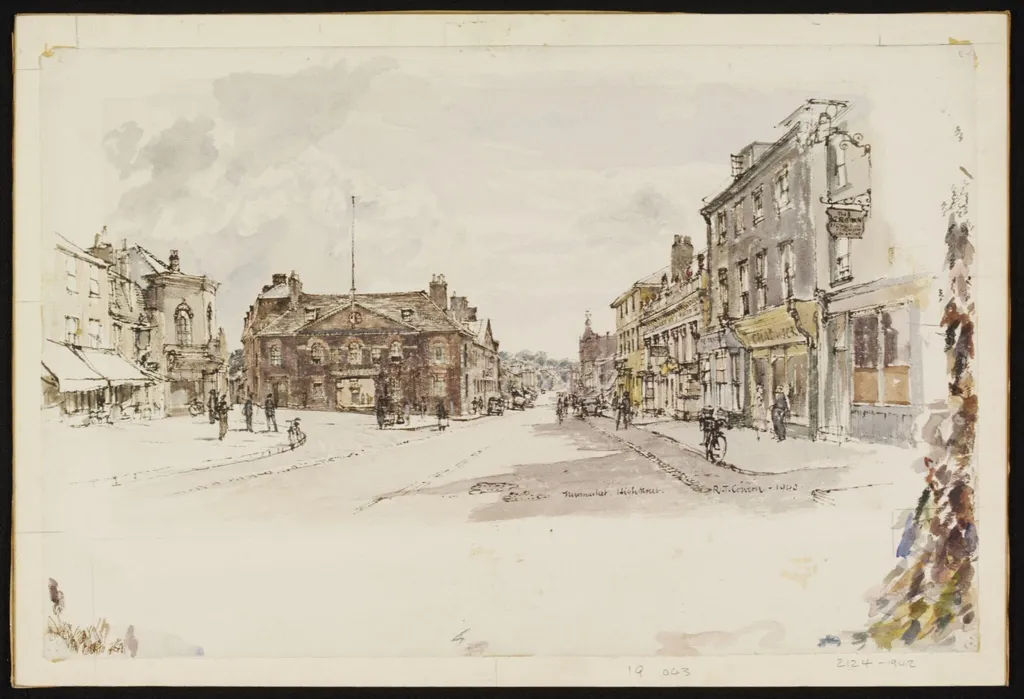
High Street and Rutland Arms, Newmarket is a watercolor work on paper by the Social Realist artist Raymond Cowern. It dates from 1940 and is held in the collection of the Victoria and Albert Museum. Raymond T.
About this work
This watercolour shows a quiet street scene in Newmarket. Painted in 1940, it’s one of three works the artist made for Recording Britain. The empty road hints at wartime limits on daily life.
The artist focused on Newmarket’s role as a market town, not its famous racecourse. The empty street might reflect the war’s quiet streets.
Look up the artist Cowern, Raymond.
Overview
Raymond T. Cowern created this watercolour in 1940 as part of the Recording Britain project, which documented everyday landscapes during wartime. Unlike depictions emphasizing Newmarket’s racing heritage, Cowern chose to focus on its commercial core. The scene captures High Street and the Rutland Arms with minimal activity, reflecting the subdued atmosphere of wartime England.
Subject & Meaning
The painting presents a quiet, nearly empty street, foregrounding the town’s identity as a market center rather than a racing destination. The absence of pedestrians and vehicles suggests the impact of wartime restrictions—curfews, rationing, and reduced travel. This stillness transforms the ordinary into a quiet testament to civilian life under strain.
Technique & Style
Cowern employed transparent watercolour to render the buildings with restrained precision, using soft washes to suggest light and texture without heavy detail. The composition is balanced and orderly, with the Rutland Arms anchoring the scene. The lack of vibrant color and motion reinforces the somber mood, aligning with the project’s documentary intent.
History & Provenance
This work was commissioned by the Recording Britain scheme, initiated in 1939 to preserve visual records of the British landscape amid wartime threats. Cowern produced three watercolours of Newmarket for the collection, all centered on its market function. The piece entered the Victoria and Albert Museum’s holdings as part of the project’s archive.
Context
During 1940, Britain faced air raids, travel limitations, and economic austerity. Public spaces grew quieter as resources were redirected and daily routines disrupted. Cowern’s depiction aligns with other Recording Britain works that captured ordinary places stripped of their usual bustle, offering a quiet counterpoint to wartime propaganda.
Legacy
Cowern’s watercolour remains part of a significant historical archive that prioritized unremarkable urban scenes over grand monuments. Its value lies in its understated record of civilian life during crisis. Today, it contributes to broader understandings of how ordinary places were experienced and preserved during a pivotal moment in British history.
Artist & collection
Artist
Raymond Cowern painted quiet English life in watercolour during the 1940s. His brush captured High Street and the Rutland Arms in Newmarket, the neat gardens of Dalham in Suffolk, and the village of Hartest bathed in…

 Sheet Street, Windsor
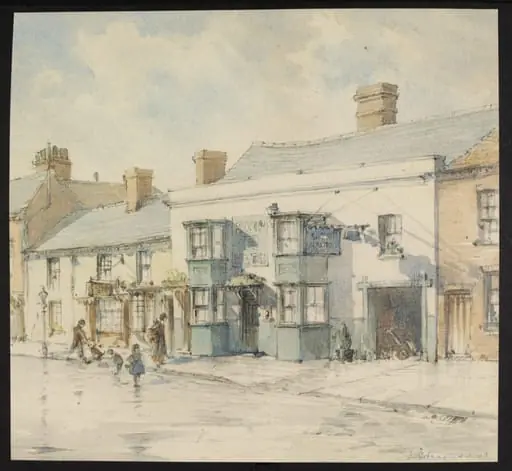 The Ship Inn, Tenbury Wells
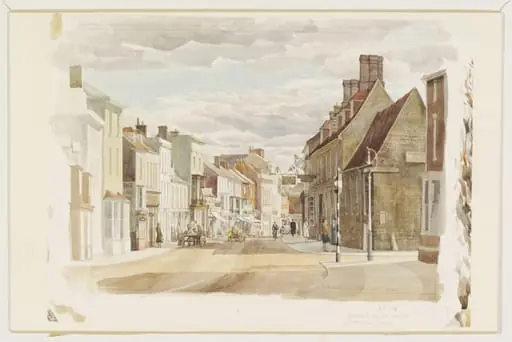 Towcester High Street from the Pomfret Arms Corner, Northamptonshire
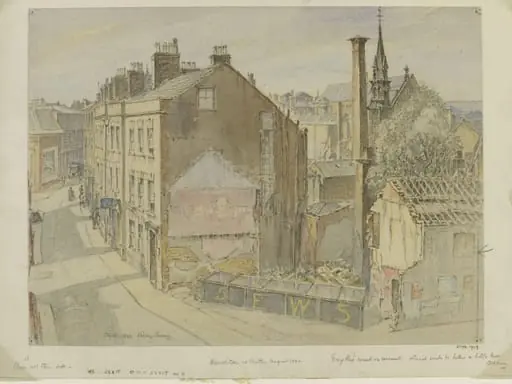 Demolition at Chester 1942
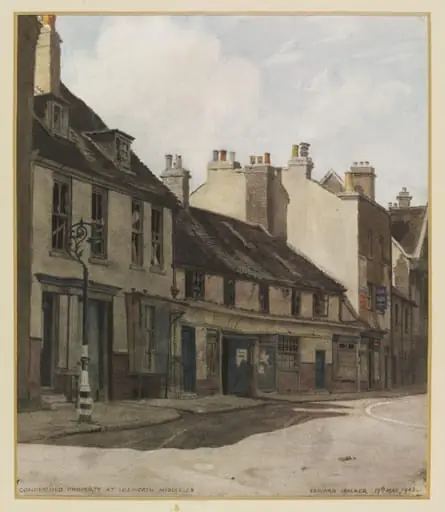 Condemned Property at Isleworth
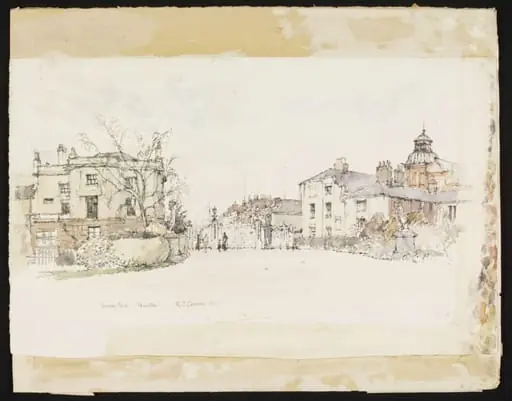 Vivary Park, Taunton
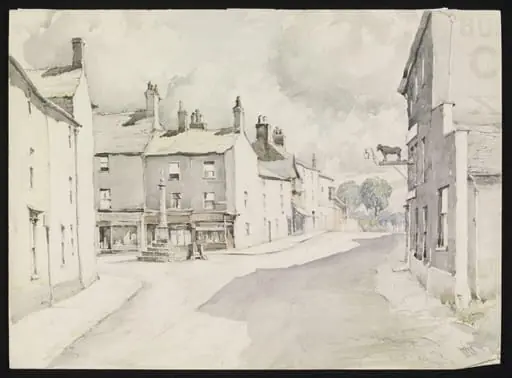 Market Place, Poulton-le-fylde, near Blackpool
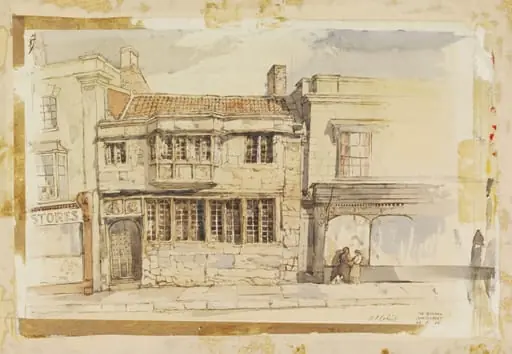 The Tribunal, Glastonbury
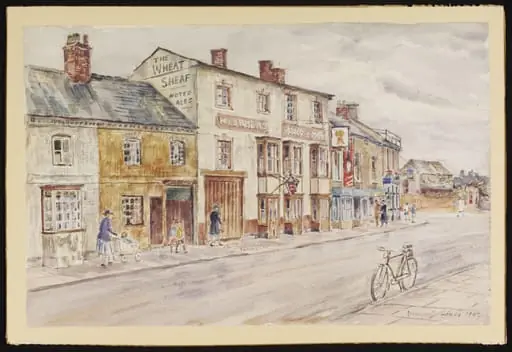 The Wheatsheaf Inn and Cottages, Newport Road, Swindon
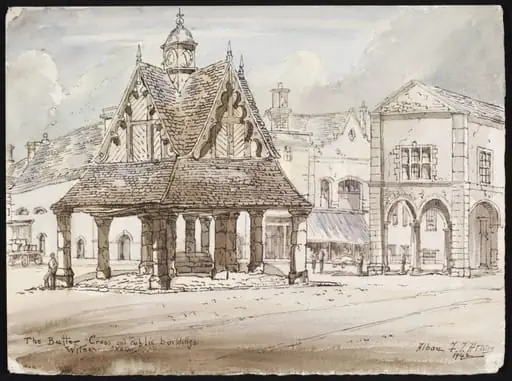 The Butter Cross and Public Buildings, Witney