Artwork
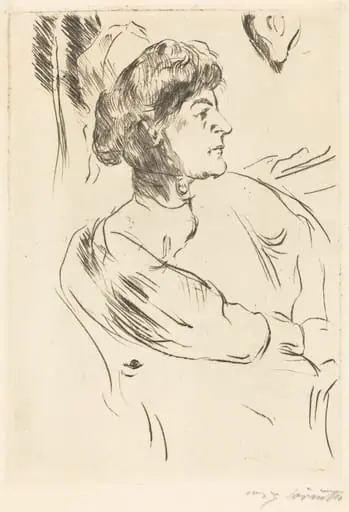
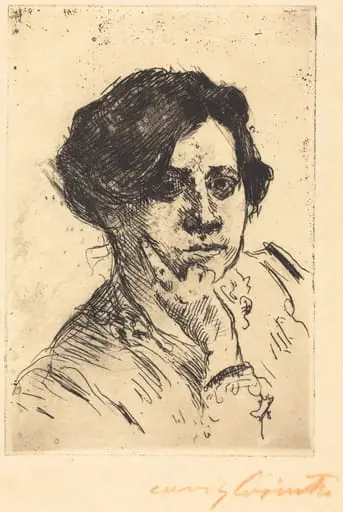
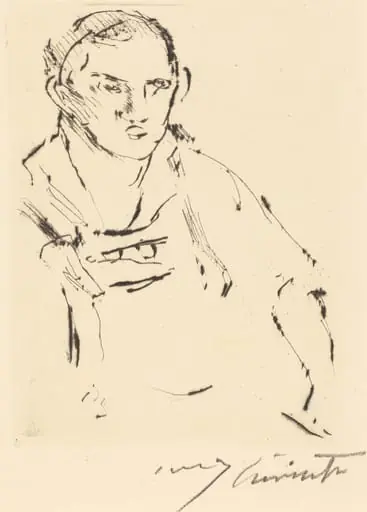
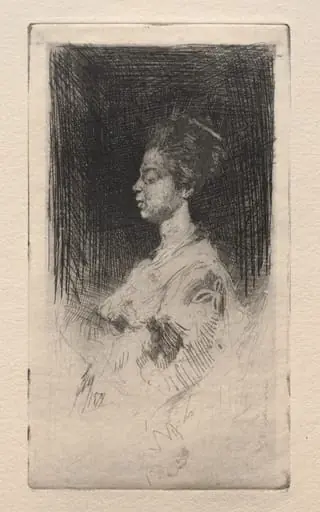
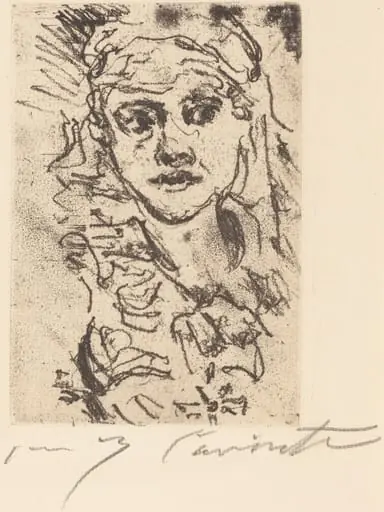
Bildnis einer Jungen Dame—Anneliese Halbe (Portrait of a Young Woman—Anneliese Halbe)
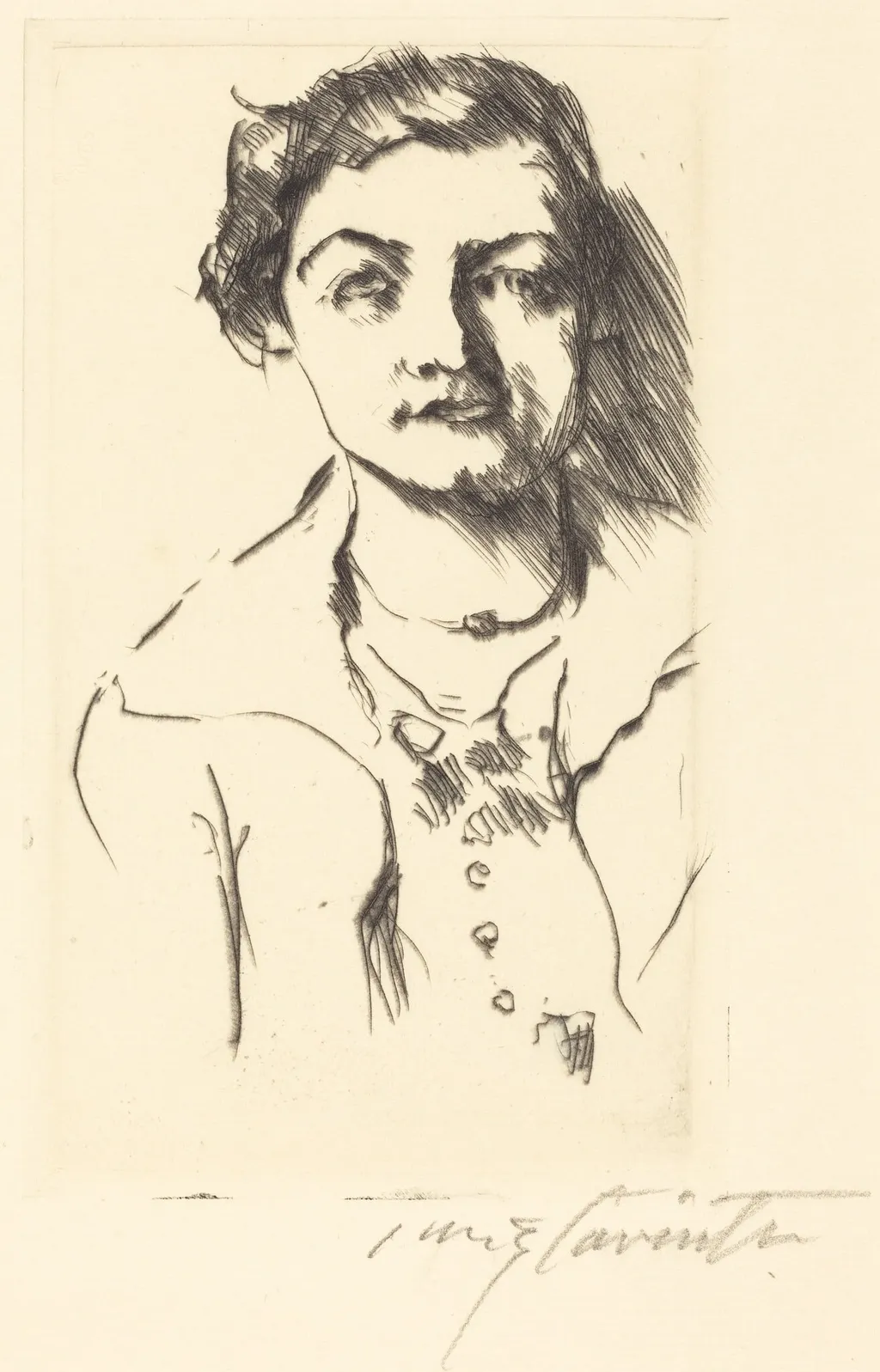
Bildnis einer Jungen Dame—Anneliese Halbe (Portrait of a Young Woman—Anneliese Halbe) is an ink print by Lovis Corinth. It dates from 1918 and is held in the collection of the National Gallery of Art.
About this work
Overview
Lovis Corinth's 1918 drypoint print, Bildnis einer Jungen Dame—Anneliese Halbe, is a portrait of a young woman executed in black on laid paper. The work showcases Corinth's skill in printmaking and his mature style, developed after a stroke in 1911.
Subject & Meaning
The portrait depicts Anneliese Halbe with a calm and gentle expression, gazing directly at the viewer. The depiction conveys a sense of quiet intimacy, suggesting that Halbe was someone significant to Corinth.
Technique & Style
Corinth employed drypoint, a technique involving scratching a design into a plate, to create the portrait. His use of line and expressive qualities reflects a blend of impressionist and expressionist techniques characteristic of his mature period.
History & Provenance
Corinth was associated with the Berlin Secession, an art movement he later led as president after Max Liebermann. The portrait was created in 1918, during a period when Corinth's style had evolved significantly following his stroke in 1911.
Artist & collection

Artist
Lovis Corinth was a German artist and writer whose mature work as a painter and printmaker realized a synthesis of impressionism and expressionism.