Artwork
Das Gastmahl des Trimalchio: pl. XI (The Banquet of Trimalchio: pl. XI)
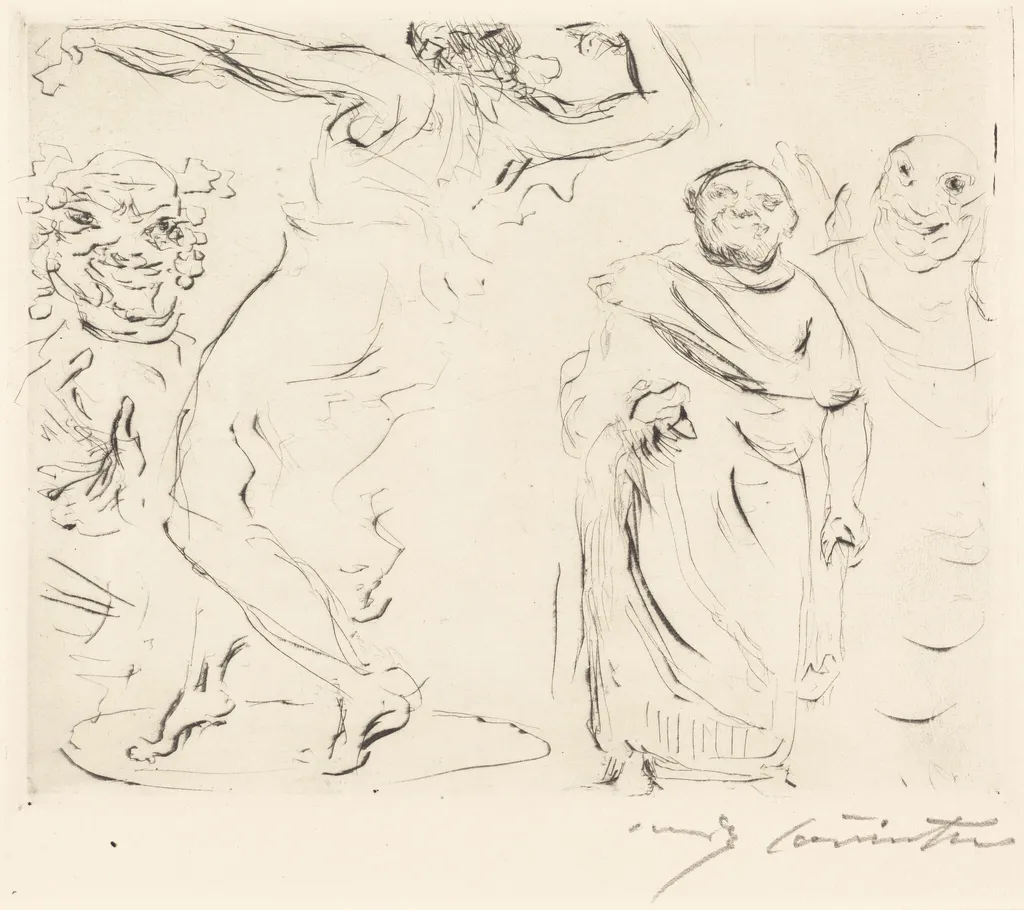
Das Gastmahl des Trimalchio: pl. XI (The Banquet of Trimalchio: pl. XI) is an ink print by Lovis Corinth. It dates from 1919 and is held in the collection of the National Gallery of Art.
About this work
Overview
Zanders wove paper, the print reflects his mature style following a stroke in 1911, which prompted a shift toward more vigorous, emotionally charged imagery.
Lovis Corinth created this drypoint in 1919 as part of a series inspired by ancient Roman literature. Executed on J. W. Zanders wove paper, the print reflects his mature style following a stroke in 1911, which prompted a shift toward more vigorous, emotionally charged imagery. The work is one of eleven plates in a suite illustrating scenes from Petronius’s *Satyricon*, showcasing Corinth’s renewed focus on narrative and historical themes in his later years.
Subject & Meaning
The scene depicts Trimalchio, a wealthy freedman from Petronius’s satire, hosting an ostentatious banquet. Corinth captures the absurdity and excess of the gathering—guests in formal attire, piled dishes, a dog scavenging beneath the table, and a figure drinking from a large jug. Rather than idealizing antiquity, Corinth emphasizes the grotesque and chaotic, aligning with Petronius’s critique of social pretension and moral decay among the newly rich.
Technique & Style
Corinth employed drypoint, scratching directly into a metal plate with a sharp needle to create dense, textured lines. The resulting print features bold, irregular strokes that convey movement and urgency, contrasting with the precision of traditional etching. The inked lines retain a raw, tactile quality, evoking the expressive energy of Rembrandt’s prints while reflecting Corinth’s post-stroke emphasis on spontaneity and emotional intensity over refinement.
History & Provenance
Produced in 1919, this print emerged during Corinth’s final creative period, after his move from Berlin to the countryside following his illness. The *Trimalchio* series was among his last major print projects. The National Gallery of Art in Washington holds an impression, acquired as part of its broader collection of modern European prints, preserving Corinth’s engagement with classical texts through modernist graphic techniques.
Context
Corinth’s choice of Trimalchio’s banquet reflects a broader postwar European fascination with classical satire as a lens for critiquing contemporary society. In the aftermath of World War I, the decadence and instability of ancient Rome resonated with the social upheaval of Weimar Germany. His reinterpretation of Petronius’s text served not as historical reconstruction but as a psychological and moral commentary on excess and human folly.
Legacy
The *Trimalchio* series stands as a significant contribution to early 20th-century printmaking, bridging classical narrative with modernist expression. Corinth’s use of drypoint to convey psychological tension and social critique influenced later artists exploring the grotesque and the satirical. The series remains a key example of how historical subjects could be reimagined through deeply personal, emotionally charged visual language.
Artist & collection

Artist
Lovis Corinth was a German artist and writer whose mature work as a painter and printmaker realized a synthesis of impressionism and expressionism.

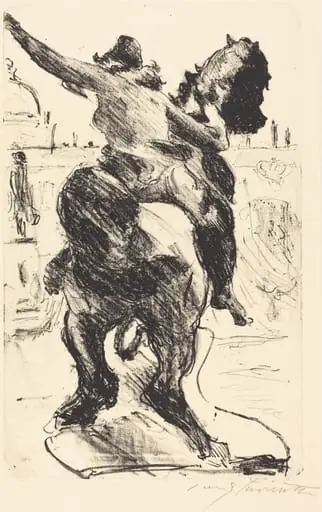 Amazonenstatue auf der Freitreppe des Alten Museums (Statue of an Amazon at the Alte Museum)
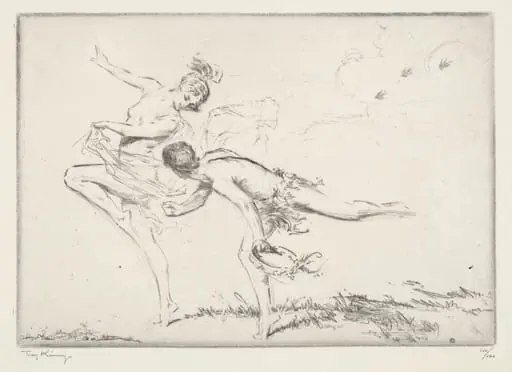 Swallows
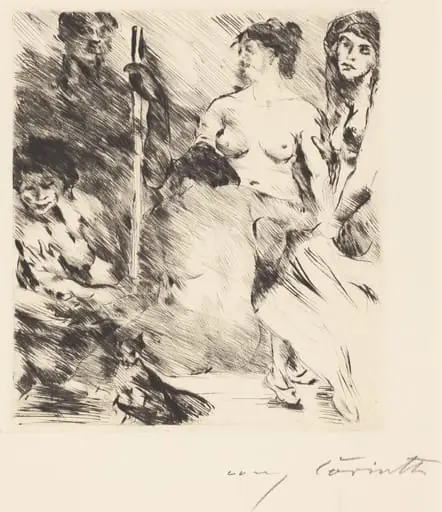 Der Harem (The Harem)
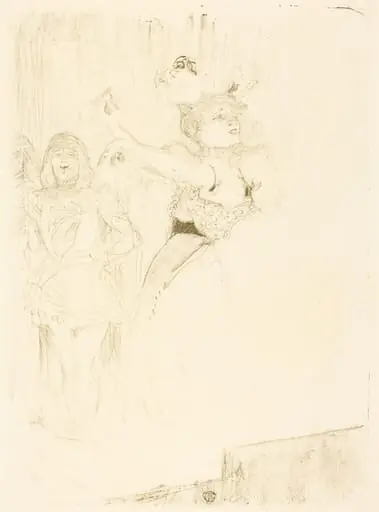 Lender Dancing the Bolero in "Chilperic" (Lender dansant le pas du boléro dans "Chilpéric")
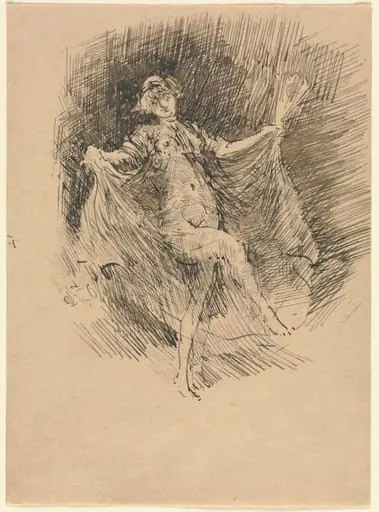 The Dancer, No. 1
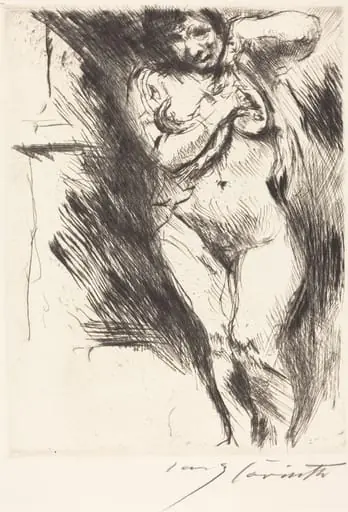 Akt mit hochgehobenem Hemd (Woman Undressing)
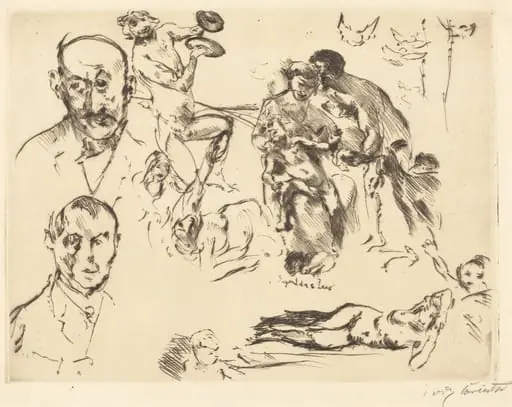 Sketches of Men, including Max Liebermann
 Salome
 Untitled
 Studies of Victory for "Death and Victory"